7 Backyard Landscaping Tips for a Home That Blends Seamlessly with the Golf Course
Picture this: stepping out your back door and feeling like you’re walking directly onto the 18th green of Augusta National. The transition is so smooth that neighbors wonder where your property ends and the golf course begins. This dream scenario isn’t reserved for multi-million dollar estates—it’s achievable with the right landscaping strategy and attention to detail.
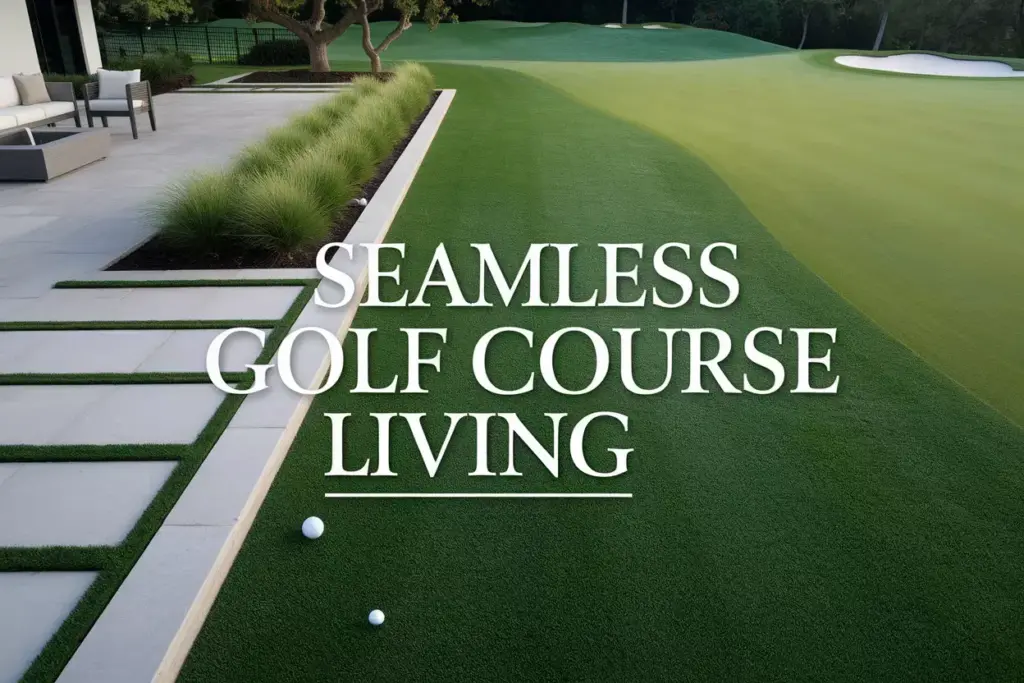
Living adjacent to a golf course offers unique opportunities to create a backyard oasis that feels like an extension of the pristine fairways beyond your property line. However, achieving this seamless integration requires more than simply planting grass and hoping for the best. These 7 backyard landscaping tips for a home that blends seamlessly with the golf course will transform your outdoor space into a cohesive, elegant extension of the manicured landscape that lies just beyond your fence.
Key Takeaways
- Grass continuity is essential—match or complement the golf course turf varieties for visual flow
- Strategic plant selection using native species and golf course-appropriate vegetation creates natural harmony
- Professional irrigation systems ensure your landscape maintains the same pristine condition as the course
- Thoughtful hardscaping with materials and colors that echo golf course aesthetics enhances the overall design
- Sustainable practices aligned with modern golf course management protect the environment while maintaining beauty
Understanding Golf Course Design Principles
Before diving into specific landscaping strategies, it’s crucial to understand what makes golf course landscapes so visually appealing and professionally maintained. Golf courses represent the pinnacle of landscape design, combining aesthetic beauty with functional performance across hundreds of acres.
Golf course designers focus on creating visual continuity through carefully planned sight lines, strategic use of elevation changes, and thoughtful plant placement. The color palette typically features various shades of green punctuated by seasonal flowers, natural stone, and water features. Maintenance standards are exceptionally high, with daily care ensuring every element looks pristine.
The key principle underlying successful golf course design is harmony with the natural environment. Rather than fighting against existing topography and native ecosystems, the best courses work with these elements to create landscapes that feel both manicured and natural.
“The most successful residential landscapes adjacent to golf courses are those that respect and complement the design philosophy of the course itself.” – American Society of Landscape Architects
1. Create Continuous Turf Transitions
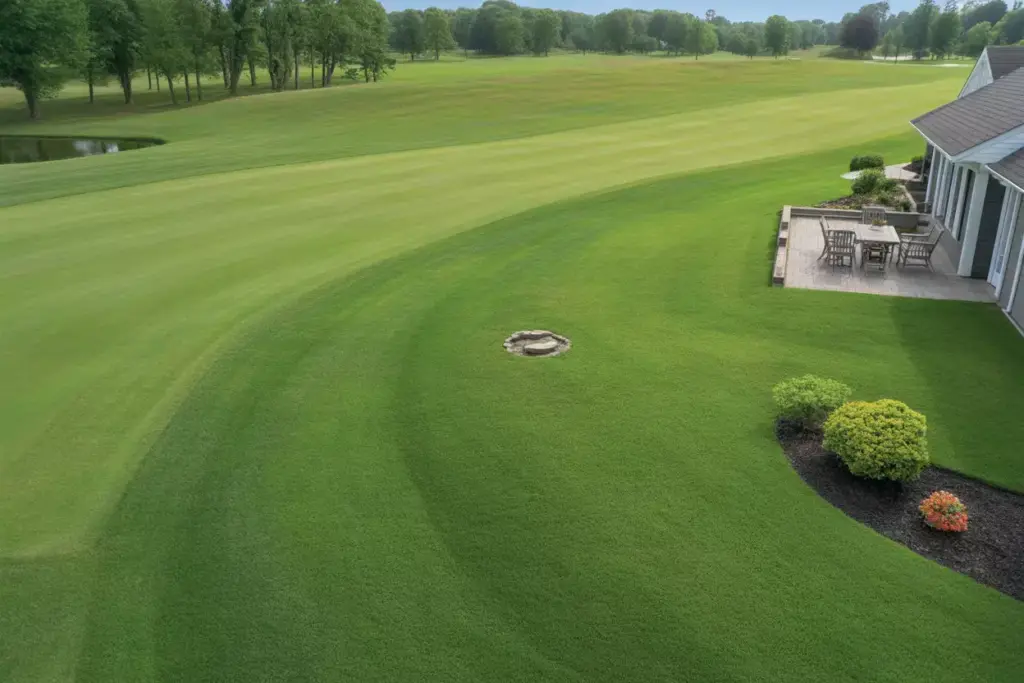
The foundation of any successful integration between your backyard and the golf course lies in creating seamless grass transitions. This first tip among the 7 backyard landscaping tips for a home that blends seamlessly with the golf course focuses on achieving visual continuity through strategic turf management.
Identify the Golf Course Grass Type
Start by determining what type of grass the adjacent golf course uses. Common varieties include:
- Bentgrass: Premium cool-season grass with fine texture
- Bermuda grass: Warm-season variety popular in southern regions
- Zoysia grass: Durable option that handles moderate traffic
- Fescue: Hardy cool-season grass often used in rough areas
Match or Complement the Existing Turf
Once you’ve identified the course grass, you have two options:
- Exact matching: Plant the identical grass variety for perfect continuity
- Strategic complementing: Choose a compatible grass that transitions naturally
For exact matching, contact local golf course suppliers who can provide the same seed or sod varieties. This approach creates the most seamless visual flow but may require more intensive maintenance to match professional standards.
Establish Proper Grading
Create gentle elevation transitions that mirror the golf course’s natural contours. Avoid abrupt level changes that create obvious property boundaries. Professional landscapers recommend:
- Gradual slopes no steeper than 3:1 ratio
- Smooth transitions between different lawn areas
- Strategic mounding to create visual interest while maintaining flow
Maintenance Synchronization
Align your lawn care schedule with the golf course maintenance routine. This includes:
| Maintenance Task | Frequency | Golf Course Standard |
|---|---|---|
| Mowing | 3-5 times weekly | Daily during season |
| Fertilization | Monthly | Bi-weekly |
| Aeration | Twice yearly | 3-4 times yearly |
| Overseeding | Annual | Seasonal as needed |
2. Implement Strategic Plant Selection and Placement
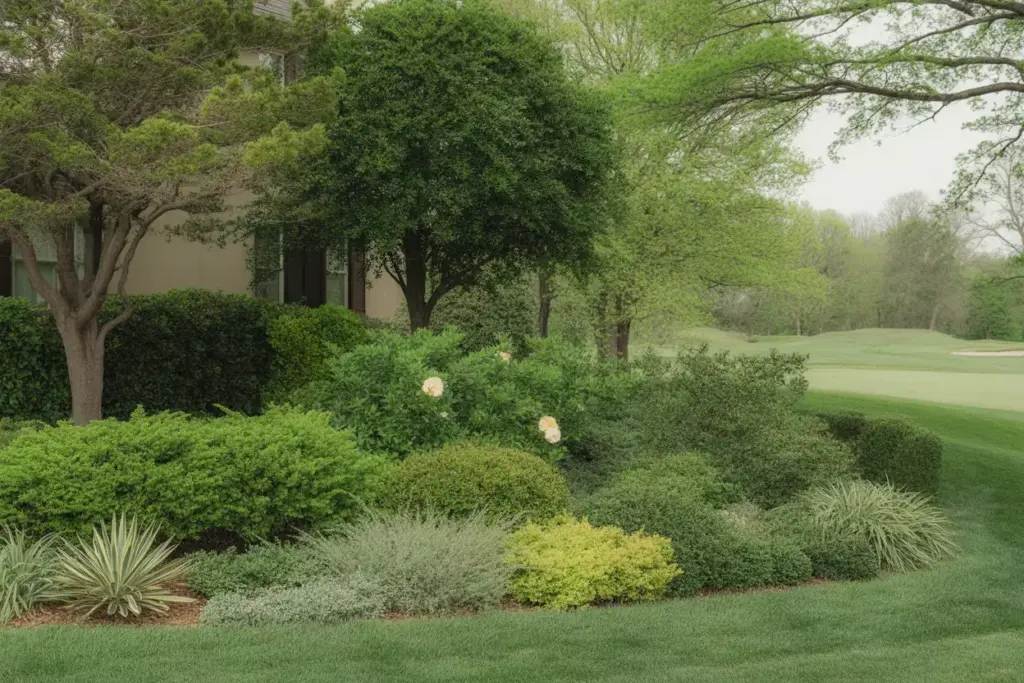
The second essential element in these 7 backyard landscaping tips for a home that blends seamlessly with the golf course involves choosing and positioning plants that complement the course’s existing vegetation while enhancing your property’s unique character.
Study the Course’s Plant Palette
Golf courses typically feature a carefully curated selection of plants that serve both aesthetic and functional purposes. Common elements include:
- Native ornamental grasses that provide movement and texture
- Evergreen shrubs for year-round structure and color
- Seasonal flowering plants that add controlled bursts of color
- Mature shade trees strategically placed for both beauty and function
Choose Golf Course-Appropriate Species
Select plants that would naturally appear on a well-designed golf course:
Trees for Structure and Shade 🌳
- Live oaks for southern regions
- Maple varieties for northern climates
- Pine species for evergreen structure
- Ornamental fruit trees for seasonal interest
Shrubs for Foundation and Borders
- Boxwood for formal hedging
- Azaleas and rhododendrons for spring color
- Native holly varieties for year-round interest
- Ornamental grasses like fountain grass and pampas grass
Create Natural Transitions
Position plants to create graduated height transitions from your home to the golf course boundary. This layered approach mimics professional landscape design:
- Tallest elements (mature trees) closest to the house
- Medium shrubs in the middle zones
- Low groundcover and grasses near the property boundary
- Open lawn areas that flow toward the golf course
Seasonal Color Strategy
Plan for year-round interest while avoiding overwhelming color displays that would look out of place next to a golf course:
- Spring: Subtle bulb plantings and flowering trees
- Summer: Green foliage with occasional white or pale yellow flowers
- Fall: Trees and shrubs with natural autumn color
- Winter: Evergreen structure and interesting bark textures
3. Install Professional-Grade Irrigation Systems
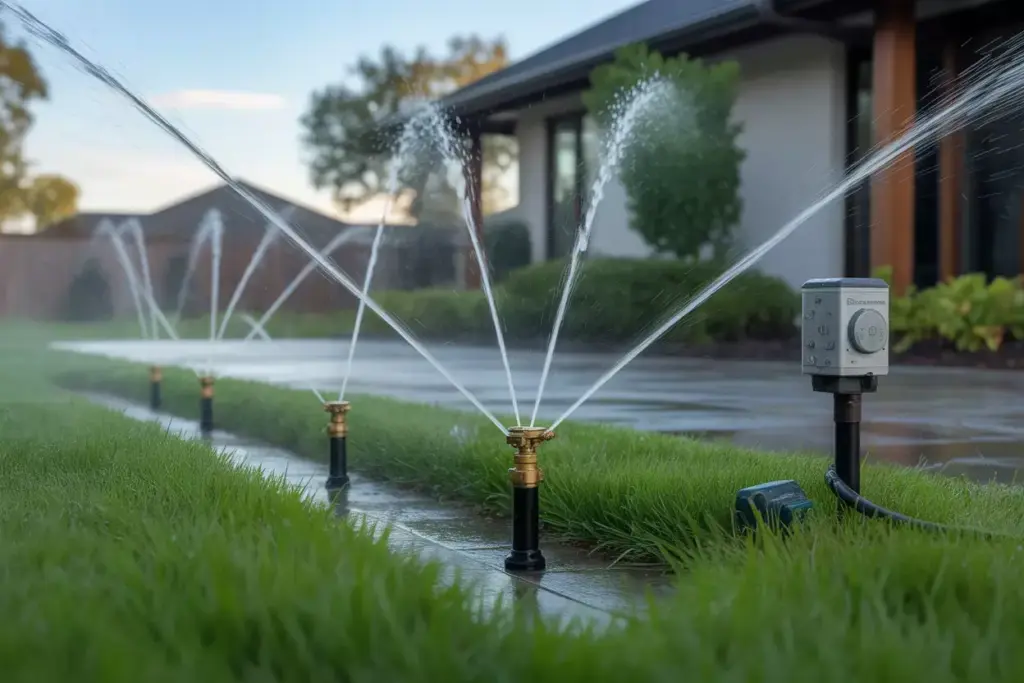
Water management represents a critical component of these 7 backyard landscaping tips for a home that blends seamlessly with the golf course. Professional irrigation ensures your landscape maintains the same pristine appearance as the adjacent course while promoting healthy plant growth and water conservation.
Design for Comprehensive Coverage
Golf courses utilize sophisticated irrigation systems with multiple zones designed for different plant needs. Your residential system should mirror this approach:
Zone-Based Watering Strategy
- Turf zones: High-frequency, shallow watering for grass areas
- Shrub zones: Less frequent, deeper watering for established plants
- Tree zones: Infrequent, deep watering for root development
- Annual zones: Flexible watering for seasonal plantings
Choose Professional-Quality Components
Invest in commercial-grade irrigation equipment that can handle daily use and provide consistent performance:
| Component | Residential Grade | Professional Grade |
|---|---|---|
| Sprinkler heads | Plastic construction | Brass and stainless steel |
| Control systems | Basic timer | Smart weather-based |
| Pipe materials | PVC standard | High-pressure rated |
| Coverage radius | 15-20 feet | 25-40 feet |
Implement Smart Technology
Modern golf courses use weather-based irrigation controllers that adjust watering schedules based on:
- Real-time weather data 🌦️
- Soil moisture sensors
- Evapotranspiration rates
- Seasonal plant needs
These systems can reduce water usage by 20-50% while maintaining optimal growing conditions.
Establish Proper Drainage
Effective drainage prevents the waterlogged conditions that can ruin even the best landscaping:
- French drains in low-lying areas
- Proper grading to direct water away from structures
- Permeable surfaces for walkways and patios
- Rain gardens to capture and filter runoff
Maintenance and Monitoring
Regular system maintenance ensures consistent performance:
- Monthly inspections of all sprinkler heads
- Seasonal adjustments to watering schedules
- Annual professional servicing of control systems
- Immediate repairs of any damaged components
4. Design Cohesive Hardscaping Elements
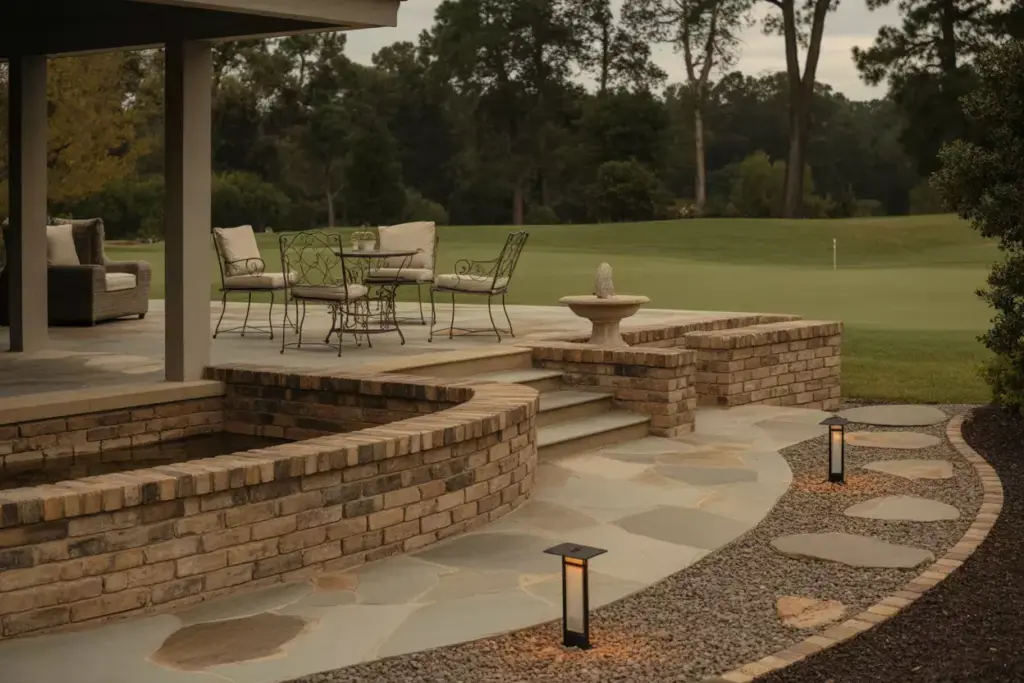
The fourth strategy in these 7 backyard landscaping tips for a home that blends seamlessly with the golf course focuses on creating hardscaping elements that complement the course’s aesthetic while providing functional outdoor living spaces for your family.
Select Materials That Echo Golf Course Aesthetics
Golf courses typically feature natural materials that age gracefully and blend with the landscape. Choose hardscaping materials that reflect this philosophy:
Stone and Masonry Options
- Natural flagstone for patios and walkways
- Weathered brick for retaining walls and borders
- River rock for drainage areas and decorative accents
- Decomposed granite for informal pathways
Color Palette Considerations
Stick to earth tones that won’t compete with the natural landscape:
- Warm grays and taupes
- Soft browns and tans
- Muted greens and sage colors
- Cream and off-white accents
Create Functional Outdoor Spaces
Design hardscaping elements that enhance your enjoyment of the golf course views:
Elevated Viewing Areas 🏌️
- Raised patios for better sightlines to the course
- Terraced seating that follows natural slopes
- Observation decks positioned for optimal views
- Fire pit areas for evening entertainment
Pathways and Circulation
- Curved walkways that mirror golf cart paths
- Natural stone stepping stones through planted areas
- Gravel paths for informal garden access
- Boardwalks through sensitive landscape areas
Integrate Water Features Thoughtfully
Water elements can enhance the golf course connection when designed appropriately:
- Natural-looking ponds that could exist on a course
- Subtle fountains with simple, classic designs
- Stream beds using native stone and plantings
- Reflecting pools that mirror the sky and surrounding landscape
Lighting for Evening Ambiance
Landscape lighting should be subtle and sophisticated:
- Path lighting for safety and navigation
- Uplighting for specimen trees and architectural features
- Moonlighting techniques that create natural shadow patterns
- Water feature lighting for evening drama
Avoid overly decorative or colorful lighting that would look out of place next to a golf course.
5. Establish Natural Boundaries and Transitions
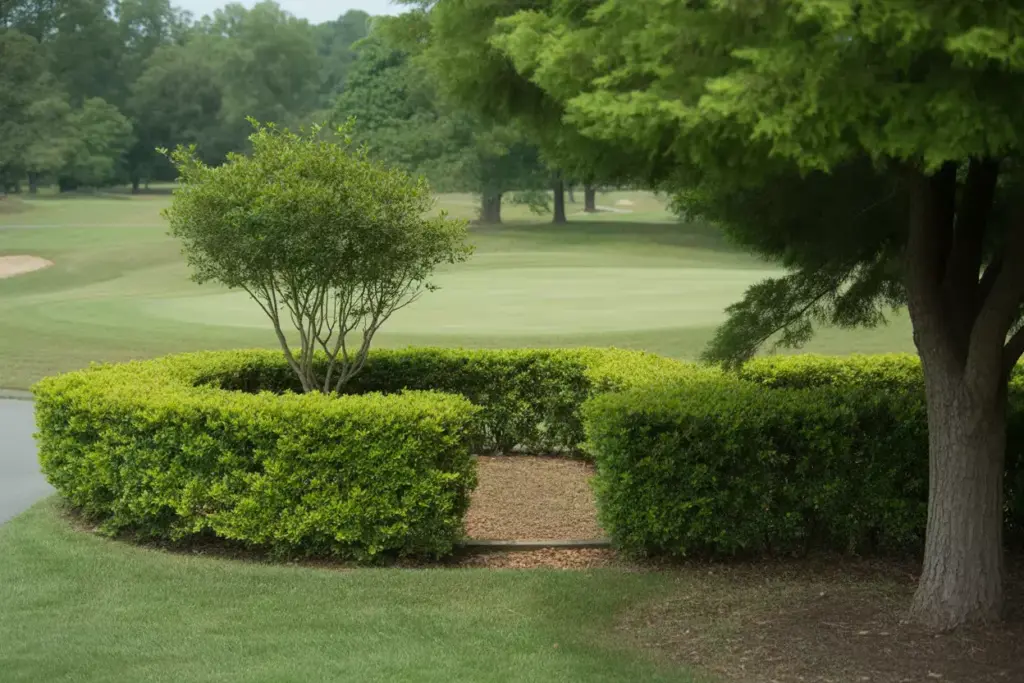
Creating seamless transitions while maintaining clear property boundaries represents a delicate balance in these 7 backyard landscaping tips for a home that blends seamlessly with the golf course. The goal is to define your space without creating jarring visual interruptions.
Use Living Boundaries
Instead of traditional fencing, consider natural boundary markers that blend with the golf course environment:
Hedge Options for Natural Screening
- Boxwood hedges for formal, low-maintenance borders
- Privet hedges that can be shaped and maintained easily
- Native shrub borders using local species
- Mixed plantings that create informal, natural-looking boundaries
Strategic Tree Placement
Position trees to create implied boundaries without blocking views:
- Specimen trees at property corners
- Small groves that define different outdoor rooms
- Understory trees that provide mid-level screening
- Evergreen sentries for year-round definition
Incorporate Subtle Physical Markers
When some form of physical boundary is necessary, choose options that complement rather than compete with the golf course aesthetic:
Low-Profile Fencing Options
- Split-rail fencing with natural weathering
- Stone walls using local materials
- Wrought iron with simple, classic designs
- Living fences combining plants with minimal structural elements
Decorative Boundary Elements
- Boulder placement that appears naturally occurring
- Dry creek beds that could extend onto the course
- Native stone markers at key transition points
- Artistic elements that enhance rather than dominate
Create Graduated Privacy Levels
Design different levels of privacy throughout your landscape:
- Public zones near the golf course with minimal screening
- Semi-private areas with selective visual barriers
- Private spaces with more substantial but attractive screening
- Intimate zones fully enclosed for family activities
Maintain Sightlines to the Course
Preserve key views of the golf course while creating necessary privacy:
- Frame views with strategic plant placement
- Create windows in hedge lines for specific vistas
- Use transparent materials where solid barriers are needed
- Position seating to take advantage of the best views
6. Plan for Seasonal Interest and Maintenance
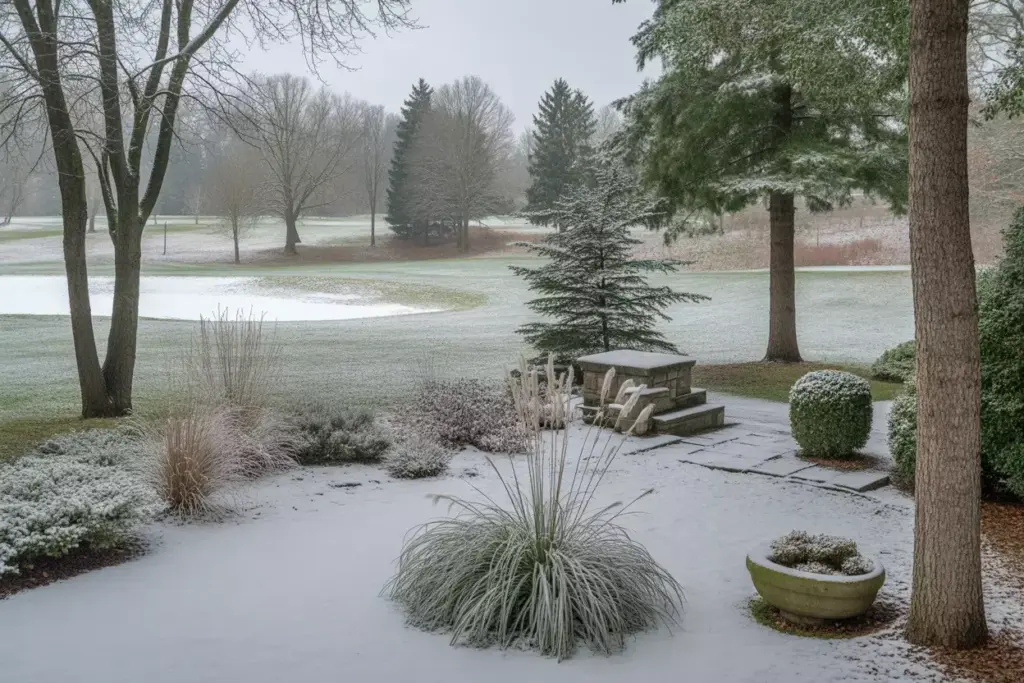
The sixth principle in these 7 backyard landscaping tips for a home that blends seamlessly with the golf course addresses the importance of creating year-round beauty while maintaining the high standards expected in a golf course community.
Develop a Four-Season Planting Strategy
Golf courses maintain visual interest throughout the year through careful plant selection and seasonal management. Your landscape should follow the same principle:
Spring Awakening 🌸
- Early bulbs like crocuses and daffodils for first color
- Flowering trees such as cherry, dogwood, and redbud
- Fresh green emergence from ornamental grasses
- Clean-up activities that prepare for the growing season
Summer Abundance
- Lush green lawns at peak growing condition
- Subtle flower color from perennials and annuals
- Full foliage providing shade and structure
- Water features offering cooling visual relief
Autumn Transition
- Fall foliage from carefully selected deciduous trees
- Ornamental grasses reaching peak texture and movement
- Late-season flowers like asters and chrysanthemums
- Seed heads and berries providing natural interest
Winter Structure
- Evergreen backbone maintaining year-round presence
- Interesting bark textures from trees like birch and maple
- Persistent seed heads left for winter wildlife
- Hardscaping elements becoming more prominent features
Establish Professional Maintenance Standards
Golf course-adjacent properties require higher maintenance standards than typical residential landscapes:
Weekly Maintenance Tasks
- Lawn mowing with sharp blades for clean cuts
- Edge trimming along all hardscaping and planting beds
- Deadheading flowers and removing spent blooms
- Weed removal before problems become established
Monthly Deep Maintenance
- Fertilization according to soil test recommendations
- Pruning of shrubs and small trees as needed
- Irrigation system inspection and adjustment
- Pest and disease monitoring with prompt treatment
Seasonal Major Projects
- Spring cleanup and bed preparation
- Fall leaf removal and winter preparation
- Annual plantings refresh for seasonal color
- Hardscaping maintenance including cleaning and repairs
Budget for Professional Services
Consider investing in professional landscape maintenance to achieve golf course standards:
| Service | Frequency | Typical Cost Range |
|---|---|---|
| Lawn care | Weekly | $75-150 per visit |
| Pruning | Seasonal | $200-500 per session |
| Fertilization | Monthly | $50-100 per application |
| Irrigation maintenance | Annual | $300-800 per year |
7. Incorporate Sustainable and Eco-Friendly Practices
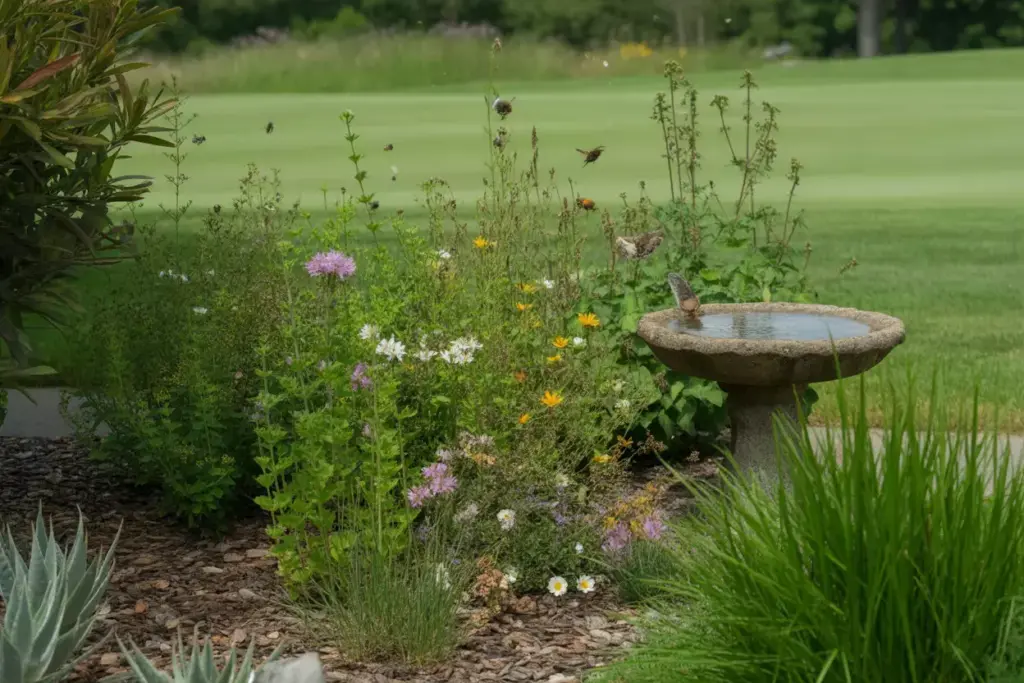
The final element in these 7 backyard landscaping tips for a home that blends seamlessly with the golf course focuses on implementing sustainable practices that align with modern golf course management while protecting the environment for future generations.
Embrace Native Plant Communities
Modern golf courses increasingly incorporate native plant species that require less water, fertilizer, and maintenance while providing habitat for local wildlife:
Benefits of Native Landscaping 🌿
- Reduced water requirements by 30-50% compared to exotic species
- Lower fertilizer needs due to adaptation to local soil conditions
- Natural pest resistance reducing need for chemical interventions
- Wildlife habitat creation supporting local ecosystems
Regional Native Plant Selections
Choose natives appropriate for your specific climate zone:
Southeastern Regions
- Southern magnolia for evergreen structure
- Native azaleas for spring color
- Wiregrass for naturalistic groundcover
- Longleaf pine for tall canopy elements
Southwestern Regions
- Desert willow for drought tolerance and flowers
- Native bunch grasses for texture and movement
- Palo verde for distinctive bark and spring blooms
- Agave species for architectural form
Northern Regions
- Sugar maple for fall color and shade
- Wild bergamot for pollinator support
- Little bluestem grass for four-season interest
- Eastern red cedar for evergreen structure
Implement Water Conservation Strategies
Golf courses are leaders in water conservation technology and practices:
Xeriscaping Principles
- Group plants by water requirements
- Use mulch to retain soil moisture and suppress weeds
- Install rain sensors on irrigation systems
- Capture rainwater for landscape irrigation
Soil Health Management
Healthy soil requires fewer inputs and supports more robust plant growth:
Organic Matter Enhancement
- Compost application annually to improve soil structure
- Mulching with organic materials that decompose naturally
- Cover crops in unused areas during off-seasons
- Reduced tillage to preserve soil microorganism communities
Integrated Pest Management (IPM)
Follow golf course IPM practices that minimize chemical use:
- Monitor regularly for pest and disease issues
- Identify problems accurately before treating
- Use biological controls when possible
- Apply targeted treatments only when necessary
- Evaluate results and adjust strategies accordingly
Energy-Efficient Landscape Features
Incorporate energy-saving elements that reduce your home’s environmental impact:
- Strategic tree placement for natural cooling and heating
- Solar-powered lighting for pathway and accent illumination
- Permeable paving to reduce stormwater runoff
- Native plant windbreaks to reduce heating and cooling costs
Wildlife-Friendly Design
Create landscapes that support local wildlife while maintaining golf course aesthetics:
Pollinator Support 🦋
- Native flowering plants throughout the growing season
- Avoid pesticide use during blooming periods
- Provide water sources like shallow dishes or fountains
- Create nesting sites with appropriate plant selections
Bringing It All Together: Your Golf Course-Inspired Backyard
Successfully implementing these 7 backyard landscaping tips for a home that blends seamlessly with the golf course requires careful planning, attention to detail, and ongoing commitment to maintenance excellence. The result is a landscape that not only enhances your property value but also provides daily enjoyment of golf course-quality beauty right outside your door.
Start with a Master Plan
Before beginning any work, develop a comprehensive landscape plan that addresses:
- Existing conditions including soil, drainage, and microclimates
- Desired outcomes for each area of your property
- Budget considerations for both installation and ongoing maintenance
- Timeline for implementation over multiple seasons
Phase Your Implementation
Large landscape projects are best completed in logical phases:
Phase 1: Infrastructure
- Irrigation system installation
- Drainage improvements
- Major grading and soil preparation
Phase 2: Structural Elements
- Tree planting and major shrub installation
- Hardscaping projects
- Boundary establishment
Phase 3: Finishing Details
- Lawn establishment or renovation
- Perennial and annual plantings
- Lighting and water feature installation
Monitor and Adjust
Even the best-planned landscapes require ongoing refinement:
- Seasonal observations of what works and what needs improvement
- Plant performance evaluation and replacement of unsuccessful species
- Maintenance routine adjustment based on actual requirements
- Technology updates as new irrigation and lighting options become available
Conclusion
Creating a backyard landscape that blends seamlessly with an adjacent golf course represents the pinnacle of residential landscape design. These 7 backyard landscaping tips for a home that blends seamlessly with the golf course provide a comprehensive roadmap for achieving this goal while maintaining the high standards expected in golf course communities.
The key to success lies in understanding and respecting the design principles that make golf courses so visually appealing: continuity, quality, sustainability, and harmony with the natural environment. By implementing continuous turf transitions, strategic plant selection, professional-grade irrigation, cohesive hardscaping, natural boundaries, seasonal planning, and sustainable practices, homeowners can create outdoor spaces that rival the beauty of the world’s finest golf courses.
Your Next Steps:
- Assess your current landscape and identify areas for improvement
- Consult with landscape professionals experienced in golf course-adjacent properties
- Develop a comprehensive plan that addresses all seven key areas
- Begin implementation with infrastructure improvements
- Commit to ongoing maintenance that upholds golf course standards
Remember that creating a golf course-quality landscape is an investment in both your property value and your quality of life. The daily pleasure of living surrounded by such beauty, combined with the pride of ownership that comes from maintaining exceptional standards, makes this effort worthwhile for years to come.
Start your transformation today, and soon you’ll be enjoying a backyard that seamlessly extends the beauty and elegance of the golf course into your personal outdoor sanctuary. 🏌️♂️🌿