7 Fun & Safe Backyard Golf Ideas for Kids That Encourage a Love for the Game
Picture this: your child discovers the joy of golf not on an intimidating 18-hole course, but in the comfort and safety of your own backyard. With the right approach, transforming your outdoor space into a golf wonderland can spark a lifelong passion for the sport while keeping safety as the top priority. These 7 Fun & Safe Backyard Golf Ideas for Kids That Encourage a Love for the Game will help parents create engaging golf experiences that build confidence, develop skills, and most importantly, make learning golf an absolute blast! 🏌️♂️
Key Takeaways
- Safety first approach: All activities prioritize child safety with foam balls, plastic clubs, and protective barriers
- Progressive skill building: Ideas range from basic putting to advanced swing techniques suitable for different age groups
- Budget-friendly solutions: Most activities use common household items and affordable golf equipment
- Family bonding opportunities: Activities designed to involve parents and siblings in the learning process
- Long-term engagement: Each idea builds foundation skills that translate directly to real golf courses
Getting Started: Essential Safety Considerations for Backyard Golf
Before diving into the specific activities, establishing a safe playing environment is crucial for any backyard golf setup. The foundation of successful backyard golf lies in creating boundaries, using appropriate equipment, and setting clear rules that protect both players and property.
Safety Equipment Checklist ✅
Essential safety items include:
- Foam or plastic golf balls (never use real golf balls)
- Child-sized plastic or foam golf clubs
- Safety nets or barriers
- First aid kit readily available
- Proper footwear with good grip
- Designated playing boundaries
The key to successful backyard golf is supervision and preparation. Always ensure adequate space between players and establish clear swing zones to prevent accidents. Consider the proximity to windows, vehicles, and neighbors’ property when designing activities.
Creative DIY Golf Course Ideas That Build Fundamental Skills
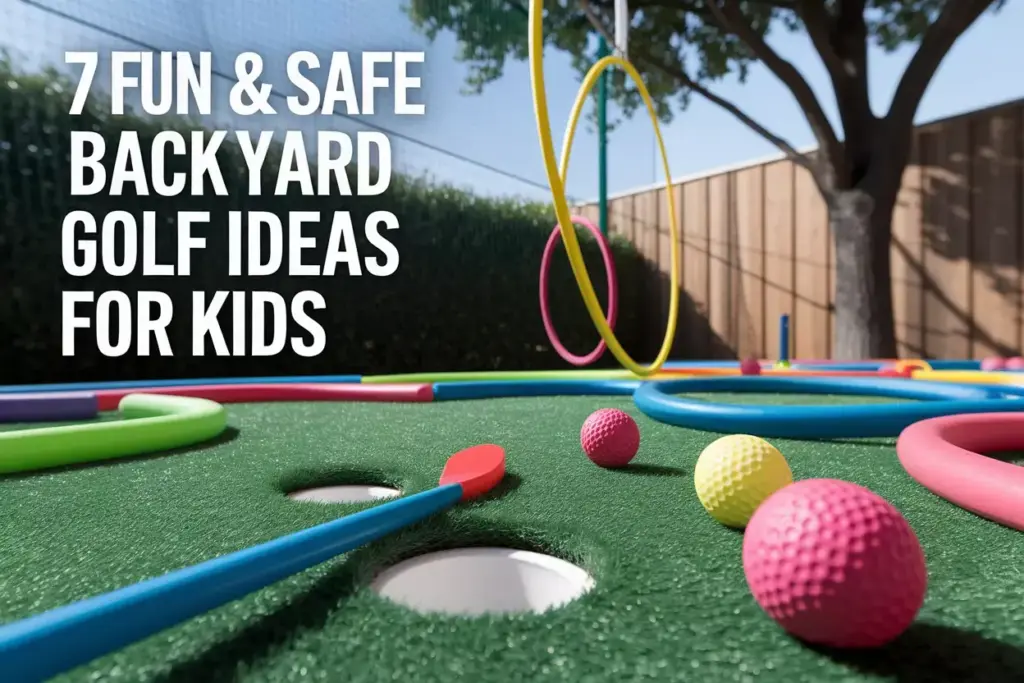
1. Pool Noodle Putting Paradise
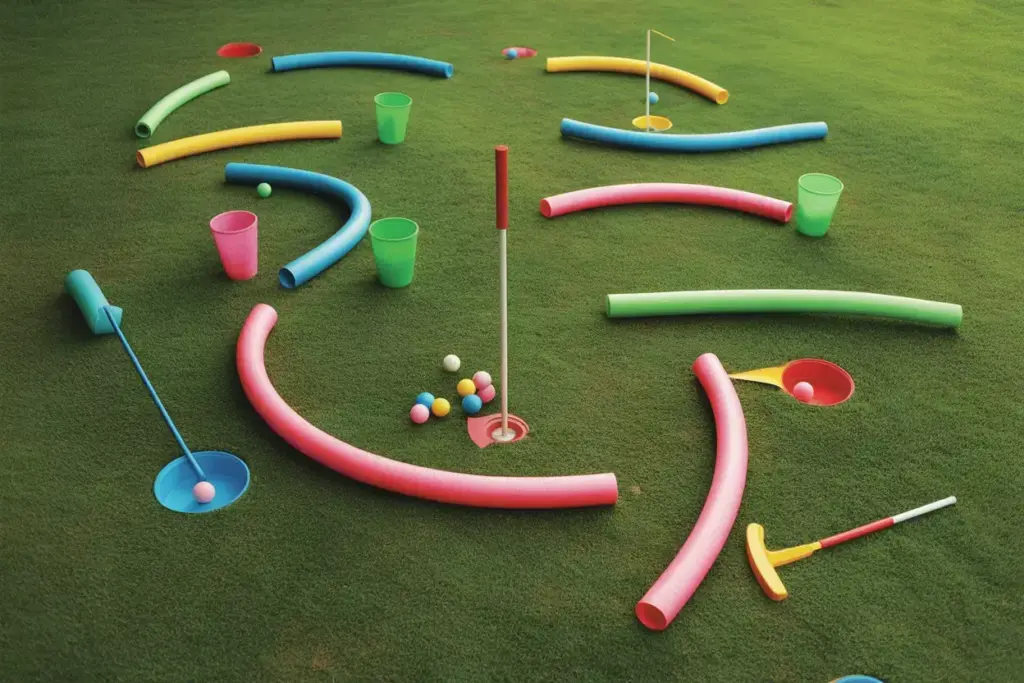
Transform ordinary pool noodles into an exciting putting course that challenges kids while developing their short game precision. This activity requires minimal investment but delivers maximum entertainment value.
Materials needed:
- 4-6 pool noodles (various colors)
- Duct tape
- Plastic cups or small containers
- Foam golf balls
- Child-sized putters
Setup instructions:
Cut pool noodles in half and create curved obstacles by taping them to the ground in various formations. Design multiple pathways leading to different “holes” (plastic cups). The colorful noodles create visual interest while teaching kids to read the green and plan their shots strategically.
Skill development focus:
- Hand-eye coordination
- Distance control
- Strategic thinking
- Patience and focus
2. Hula Hoop Target Challenge
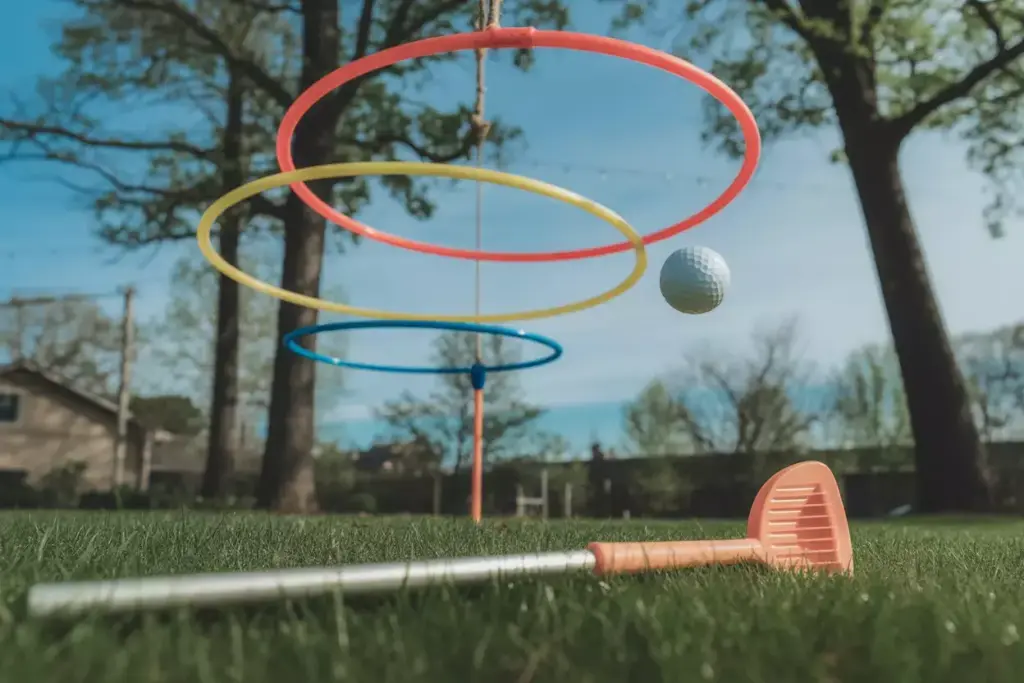
Elevate the excitement with suspended hula hoops at varying heights and distances. This activity develops accuracy and swing control while introducing kids to the concept of trajectory and ball flight.
Setup details:
Hang 3-4 hula hoops from tree branches, swing sets, or portable stands at heights ranging from 2-5 feet. Use different colored hoops to represent various point values, creating a competitive scoring system that motivates repeated practice.
Progressive difficulty levels:
- Beginner: Large hoops at low heights (2-3 feet)
- Intermediate: Medium hoops at moderate heights (3-4 feet)
- Advanced: Smaller hoops at higher elevations (4-5 feet)
Pro Tip: “Start with the largest hoop closest to the ground and gradually work up to smaller, higher targets. This builds confidence while naturally developing swing mechanics.” – Youth Golf Instructor
3. Obstacle Course Adventure Golf
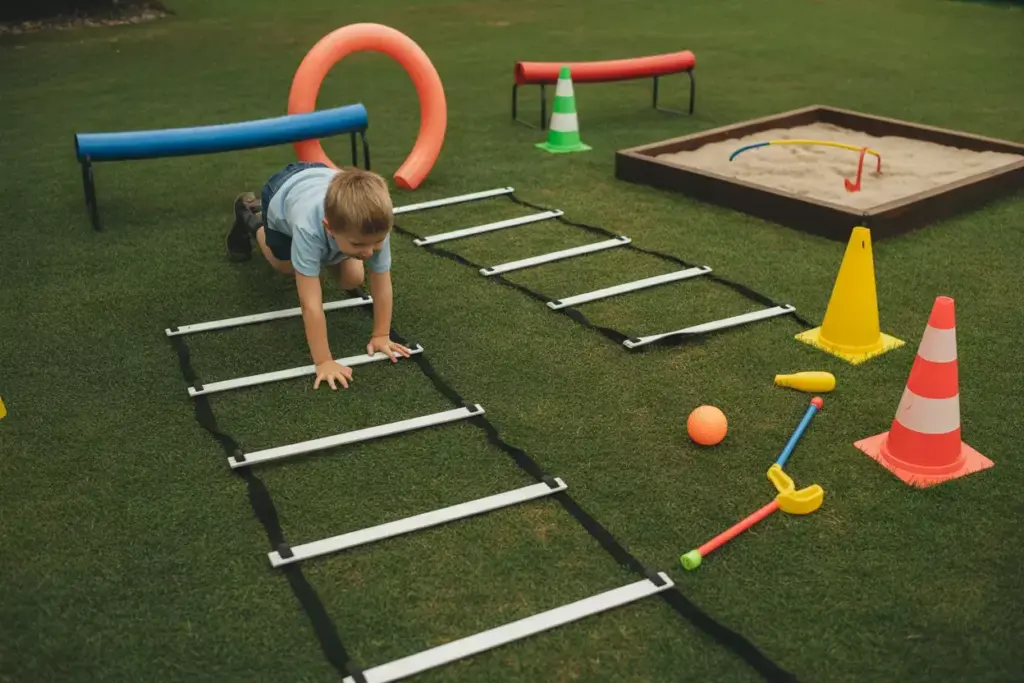
Combine golf skills with physical fitness by creating an adventure-style obstacle course that incorporates various golf shots and movement challenges.
Course elements:
- Crawl-under barriers before chip shots
- Hop through agility ladders between holes
- Balance beam walks while carrying clubs
- Cone weaving with ball control
- Sand trap simulation using sandbox sand
This approach keeps kids physically active while practicing golf fundamentals, making it perfect for children who need variety and movement to stay engaged.
4. Water Balloon Golf (Summer Special)
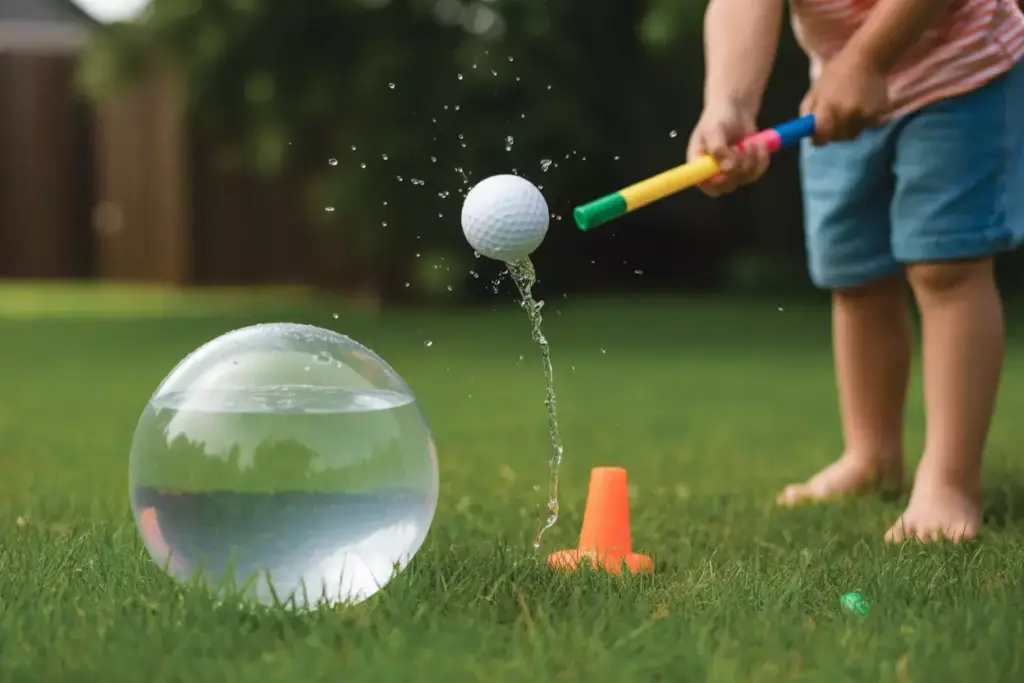
During hot summer months, incorporate water elements for cooling relief and added excitement. Use biodegradable water balloons as targets or obstacles, creating a refreshing twist on traditional golf practice.
Safety considerations:
- Use only biodegradable balloons
- Clean up all balloon pieces immediately
- Ensure non-slip surfaces when wet
- Have towels readily available
Learning objectives:
- Precision targeting
- Gentle swing control (to avoid balloon bursts)
- Environmental responsibility through cleanup
Advanced Backyard Golf Activities for Skill Development
5. Mini Driving Range Setup
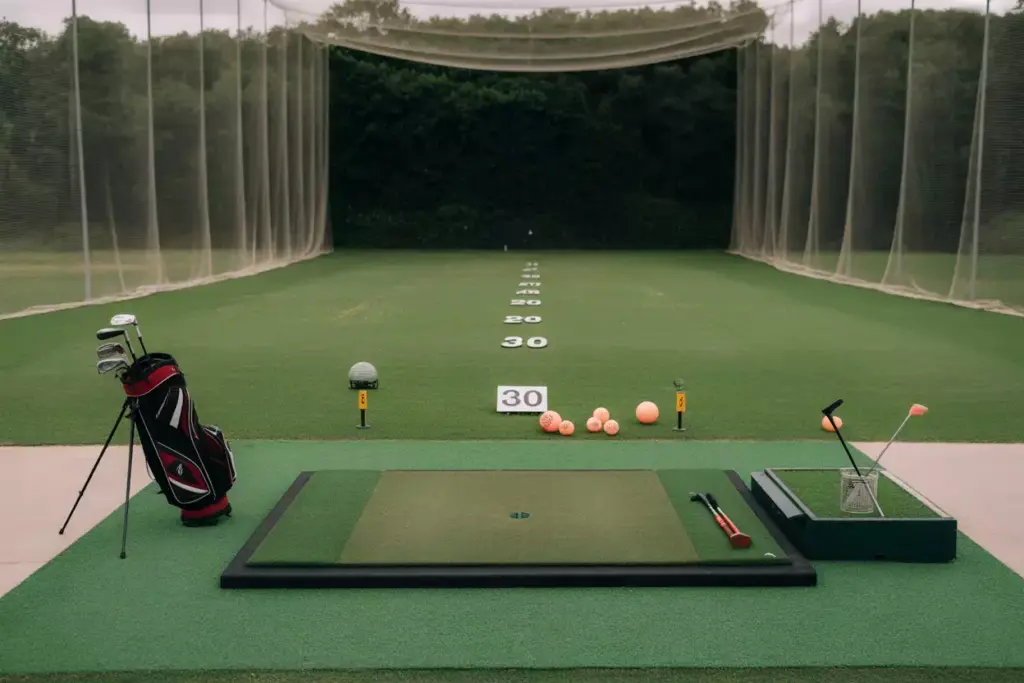
Create a scaled-down driving range that allows kids to practice full swings safely while building confidence with longer shots.
Essential components:
- Safety net barrier (10-12 feet high minimum)
- Artificial turf hitting mats
- Distance markers at 10, 20, and 30-yard intervals
- Foam practice balls designed for limited flight
- Various club options (drivers, irons, wedges in child sizes)
Skill progression framework:
- Week 1-2: Focus on stance and grip
- Week 3-4: Develop backswing mechanics
- Week 5-6: Coordinate downswing and follow-through
- Week 7+: Combine all elements for consistent contact
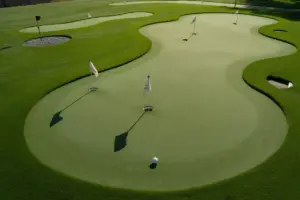
6. Putting Green Construction Project
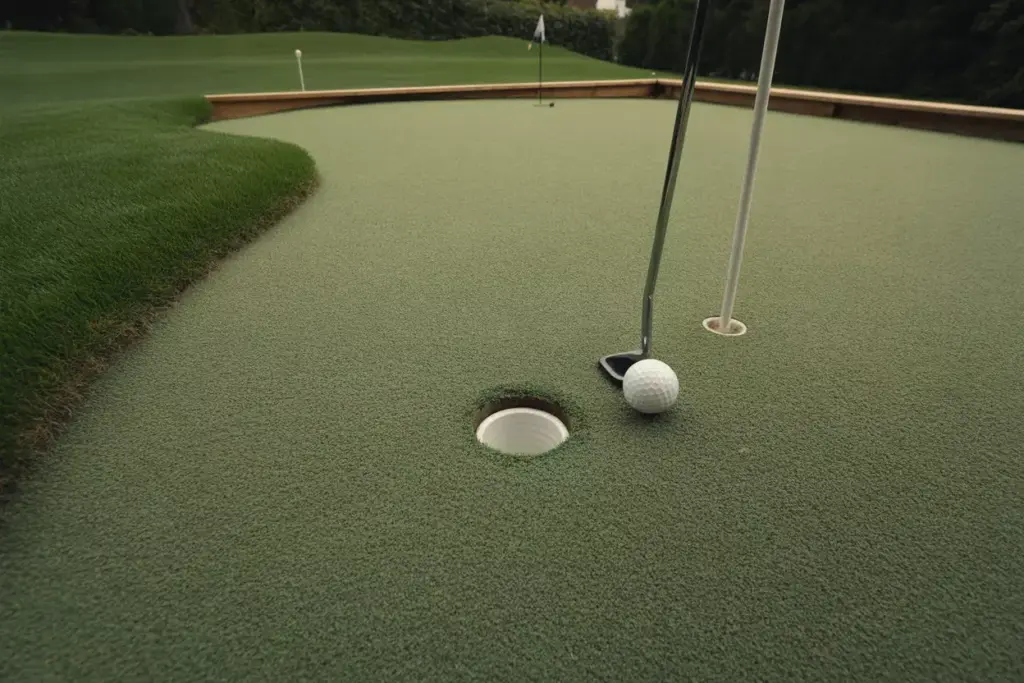
Building a semi-permanent putting green represents a significant investment in your child’s golf development and provides year-round practice opportunities.
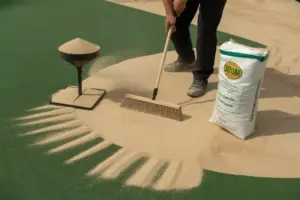
Construction materials:
- Artificial turf (golf-specific if budget allows)
- Sand base for leveling
- Border materials (wood, plastic edging)
- Multiple cup locations
- Undulation boards for slope variation
Design considerations:
- Size: Minimum 8×12 feet for effective practice
- Slopes: Include uphill, downhill, and sidehill putts
- Multiple holes: 3-4 cup locations with varying difficulty
- Maintenance access: Easy cleaning and seasonal storage
Long-term benefits:
Regular putting practice on a quality surface dramatically improves distance control and green reading skills, two crucial elements that translate directly to on-course success.
7. Golf Skills Assessment Station
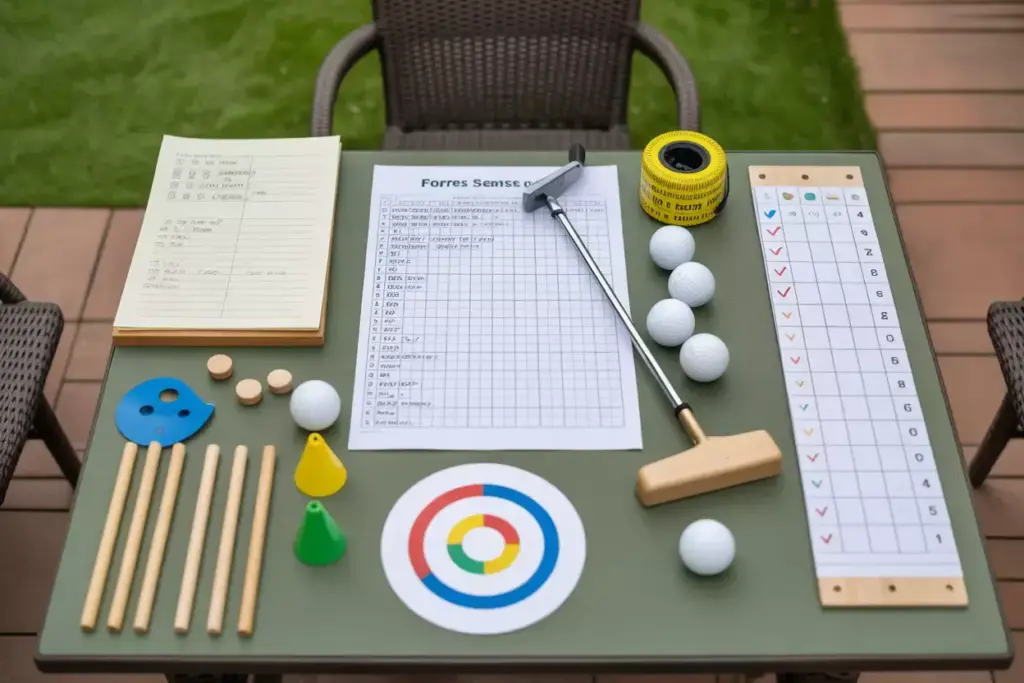
Develop a comprehensive skills testing area that tracks progress and identifies areas needing improvement. This systematic approach helps maintain motivation through measurable achievement.
Assessment categories:
- Putting accuracy: Percentage of putts made from various distances
- Chipping precision: Landing balls within target circles
- Driving distance: Consistent contact and ball flight
- Course management: Decision-making in simulated scenarios
Tracking methods:
Create a simple scorecard system that records weekly progress. Visual progress charts help kids see improvement over time, maintaining long-term engagement with the sport.
Safety Guidelines and Equipment Recommendations
Age-Appropriate Equipment Selection
Choosing the right equipment ensures both safety and skill development. Improperly sized clubs can lead to poor habits and potential injuries.
Equipment sizing chart:
| Age Group | Club Length | Ball Type | Special Considerations |
|---|---|---|---|
| 3-5 years | 24-26 inches | Foam only | Plastic clubs recommended |
| 6-8 years | 26-30 inches | Foam/soft plastic | Introduce proper grip size |
| 9-12 years | 30-36 inches | Limited flight balls | Begin real club introduction |
| 13+ years | Standard junior | Transition to real balls | Focus on proper mechanics |
Establishing Safe Play Zones
Boundary creation prevents accidents and protects property. Use visual markers like cones, rope, or temporary fencing to clearly define playing areas.
Essential safety zones:
- Swing areas: 6-foot radius around each player
- Ball flight paths: Clear corridors free of breakable items
- Spectator areas: Designated safe viewing locations
- Equipment storage: Organized club and ball storage
Building Long-Term Interest and Progression
Creating Positive Golf Experiences
The goal of these 7 Fun & Safe Backyard Golf Ideas for Kids That Encourage a Love for the Game extends beyond skill development. Focus on creating positive associations with golf through:
Celebration of effort over results: Praise improvement and persistence rather than perfect shots. This approach builds intrinsic motivation and resilience when facing challenges.
Family involvement: Include siblings, parents, and friends in activities. Golf becomes more appealing when it’s a shared family experience rather than isolated practice.
Variety and creativity: Rotate between different activities to prevent boredom. Kids learn best when they’re having fun and staying engaged.
Transitioning to Real Golf Courses
Once kids demonstrate consistent interest and basic skills, begin planning visits to real golf courses. Many facilities offer youth programs specifically designed for beginners.
Preparation steps:
- Visit driving ranges for larger-scale practice
- Try mini-golf courses for putting confidence
- Attend youth golf clinics for professional instruction
- Play executive or par-3 courses for first on-course experiences
Professional instruction benefits: While backyard practice builds foundation skills, professional lessons help refine technique and introduce course management concepts that backyard setups cannot fully replicate.
Seasonal Adaptations and Year-Round Engagement
Winter Golf Activities ❄️
Cold weather doesn’t have to end golf practice. Indoor adaptations of these activities maintain skill development during off-seasons:
Garage putting practice: Set up putting stations in garages or basements using artificial turf and foam balls.
Living room chipping: Use soft foam balls and plastic clubs for gentle indoor practice sessions.
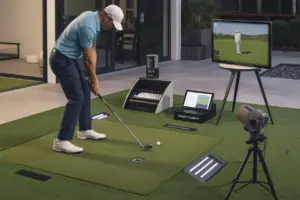
Golf simulation games: Combine physical practice with golf video games for comprehensive learning.
Summer Enhancements ☀️
Warm weather opens additional possibilities for enhanced backyard golf experiences:
Evening practice sessions: Install outdoor lighting for extended practice hours.
Water feature integration: Add sprinkler systems or water hazards for realistic course simulation.
Tournament organization: Host neighborhood kids’ golf tournaments in your backyard setup.
Measuring Success and Maintaining Motivation
Progress Tracking Systems
Implement simple measurement tools that help kids see their improvement over time:
Weekly skill assessments: Test putting accuracy, chipping precision, and swing consistency using standardized challenges.
Achievement badges: Create a reward system recognizing specific milestones like “10 putts in a row” or “hit the target 5 times.”
Photo documentation: Take pictures and videos of kids practicing to show technique improvements over time.
Building Golf Community
Connect with other families implementing similar backyard golf programs:
Neighborhood golf groups: Organize regular meetups where kids can practice together and learn from each other.
Online sharing: Join social media groups focused on youth golf development for ideas and encouragement.
Local golf connections: Contact nearby golf courses about youth programs and beginner-friendly events.
Conclusion
These 7 Fun & Safe Backyard Golf Ideas for Kids That Encourage a Love for the Game provide a comprehensive foundation for introducing children to golf in a safe, engaging environment. From simple putting courses using pool noodles to advanced driving range setups, each activity builds essential skills while prioritizing safety and fun.
The key to success lies in consistent practice, positive reinforcement, and gradual skill progression. Remember that every professional golfer started with basic fundamentals, and your backyard can provide the perfect launching pad for a lifelong love of the game.
Take action today by selecting one or two activities that match your child’s age and interest level. Start with basic putting challenges and gradually incorporate more complex elements as skills develop. Most importantly, participate alongside your children – your enthusiasm and encouragement will be the most powerful motivator in their golf journey.
Next steps:
- Choose age-appropriate activities from this list
- Gather necessary safety equipment and materials
- Set up your first backyard golf activity this weekend
- Establish a regular practice schedule that fits your family’s routine
- Begin planning visits to local golf facilities as skills develop
The investment in creating these backyard golf experiences pays dividends far beyond skill development. You’re building confidence, teaching patience, creating family memories, and potentially nurturing a passion that will bring joy for decades to come. 🏌️♀️