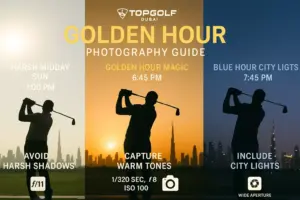
7 Pro Tips for Your Perfect Golf Aesthetic Photoshoot
Picture this: the morning sun casts a golden glow across emerald fairways, creating the perfect backdrop for capturing stunning golf photography that tells a story. Whether you’re a professional photographer, golf influencer, or simply passionate about combining two beloved pursuits, mastering the art of golf aesthetic photography can elevate your visual content to championship levels. These 7 Pro Tips for Your Perfect Golf Aesthetic Photoshoot will transform your approach to capturing the elegance, precision, and beauty that defines golf culture.

Golf photography goes beyond simple action shots—it’s about capturing the sophisticated lifestyle, the pristine environments, and the timeless appeal that makes golf such a visually compelling sport. From understanding the nuances of natural lighting on the course to selecting the perfect wardrobe that complements the setting, every element plays a crucial role in creating photographs that resonate with audiences and stand out in today’s competitive visual landscape.
Key Takeaways
- Golden hour timing provides the most flattering natural lighting for golf course photography, typically occurring within the first two hours after sunrise and the last two hours before sunset
- Strategic wardrobe selection using classic golf attire in complementary colors enhances the overall aesthetic while maintaining authenticity to golf culture
- Dynamic composition techniques including varied angles, depth of field, and the rule of thirds create visually engaging photographs that capture both action and atmosphere
- Professional equipment preparation ensures technical excellence while weather-appropriate gear protects investments and maintains shooting flexibility
- Post-processing consistency through established editing workflows and color grading creates a cohesive visual brand that enhances the natural beauty of golf environments
Planning and Preparation: The Foundation of Professional Golf Photography
1. Master the Art of Timing and Lighting for Your Golf Aesthetic Photoshoot
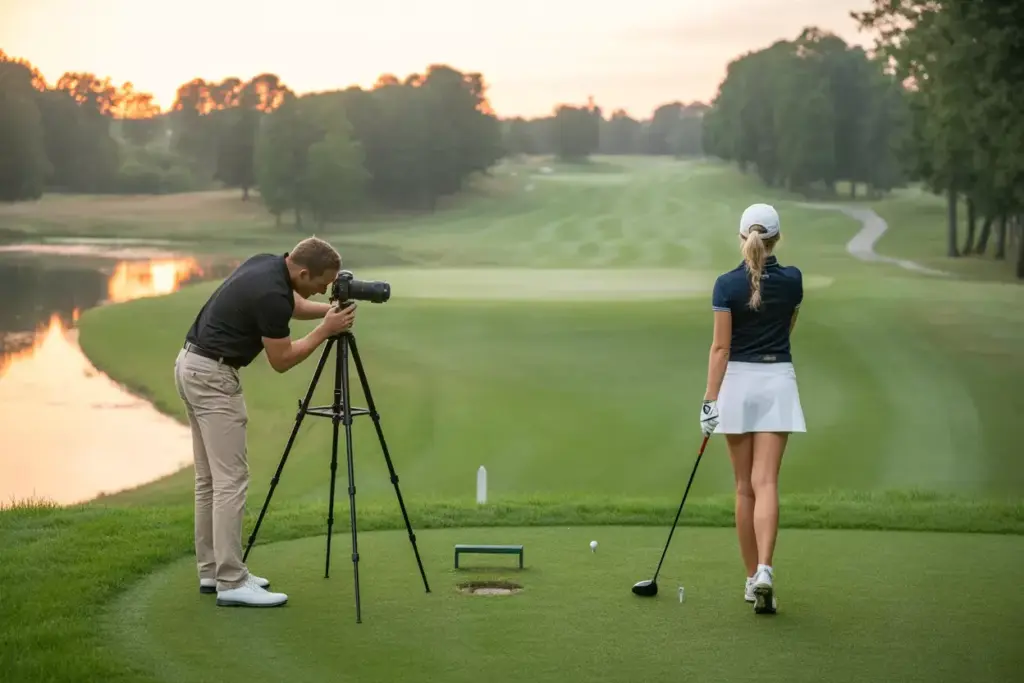
Timing is everything in golf photography, and understanding how light interacts with the golf course environment separates amateur snapshots from professional-quality images. The golden hour—that magical period just after sunrise and before sunset—provides the most flattering, warm lighting that enhances skin tones, creates dramatic shadows, and adds depth to landscape shots.
Morning sessions offer several distinct advantages for golf aesthetic photography:
- Softer shadows that don’t create harsh contrasts on faces
- Dewy grass that adds sparkle and texture to course shots
- Calmer weather conditions with less wind interference
- Fewer crowds allowing for uninterrupted shooting sessions
- Cooler temperatures keeping subjects comfortable and fresh-looking
Evening sessions provide their own unique benefits:
- Dramatic backlighting opportunities for silhouette shots
- Richer color saturation in the sky and landscape
- Longer shooting windows as the sun moves more slowly
- Warmer color temperatures that complement golf’s traditional aesthetic
💡 Pro Tip: Arrive at least 30 minutes before your planned shooting time to scout locations, test lighting conditions, and ensure all equipment is properly set up. This preparation time often yields the most natural, relaxed photographs.
Avoid midday shooting between 11 AM and 3 PM when possible, as harsh overhead sunlight creates unflattering shadows under eyes and hats, washes out colors, and makes subjects squint. If midday shooting is unavoidable, seek shaded areas under trees, clubhouse overhangs, or use reflectors to fill in harsh shadows.
2. Strategic Location Scouting and Course Selection
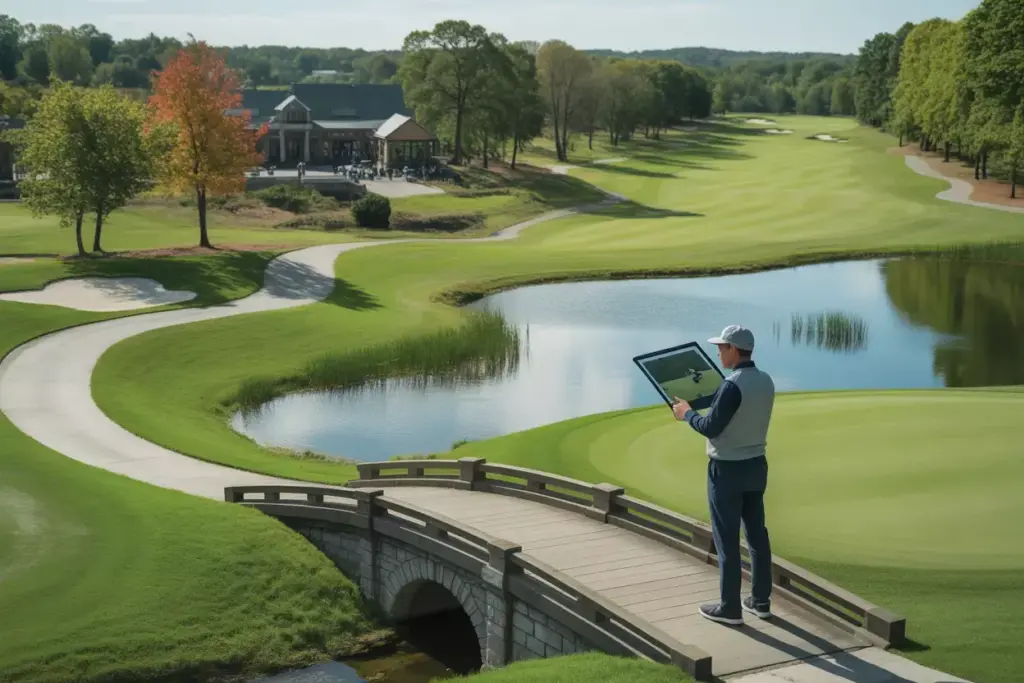
Not all golf courses are created equal when it comes to aesthetic photography. Championship-level courses often provide the most visually stunning backdrops, but many public and semi-private courses offer equally compelling photographic opportunities when you know what to look for.
Key elements to evaluate during location scouting:
| Feature | What to Look For | Photography Benefit |
|---|---|---|
| Fairway Conditions | Lush, well-maintained grass with consistent color | Creates clean, professional backgrounds |
| Water Features | Ponds, streams, or fountains | Adds reflective elements and visual interest |
| Elevation Changes | Hills, valleys, or raised tees | Provides varied shooting angles and perspectives |
| Architectural Elements | Clubhouses, bridges, or unique hole designs | Offers structured composition elements |
| Natural Landscaping | Mature trees, flower beds, or rock formations | Enhances the natural beauty and depth |
Research the course layout in advance using online course maps, aerial photography, or virtual tours. Identify signature holes that offer the most dramatic or visually appealing settings. Many courses have holes specifically designed to be photogenic, often featuring water hazards, elevated tees, or panoramic views.
Consider seasonal factors that can dramatically impact your golf aesthetic photoshoot:
- Spring: Fresh green growth and blooming flowers
- Summer: Lush, full foliage but potentially harsh lighting
- Fall: Dramatic color changes in deciduous trees
- Winter: Stark, minimalist beauty in dormant landscapes
Technical Excellence and Creative Execution
3. Equipment Selection and Technical Setup for Professional Results
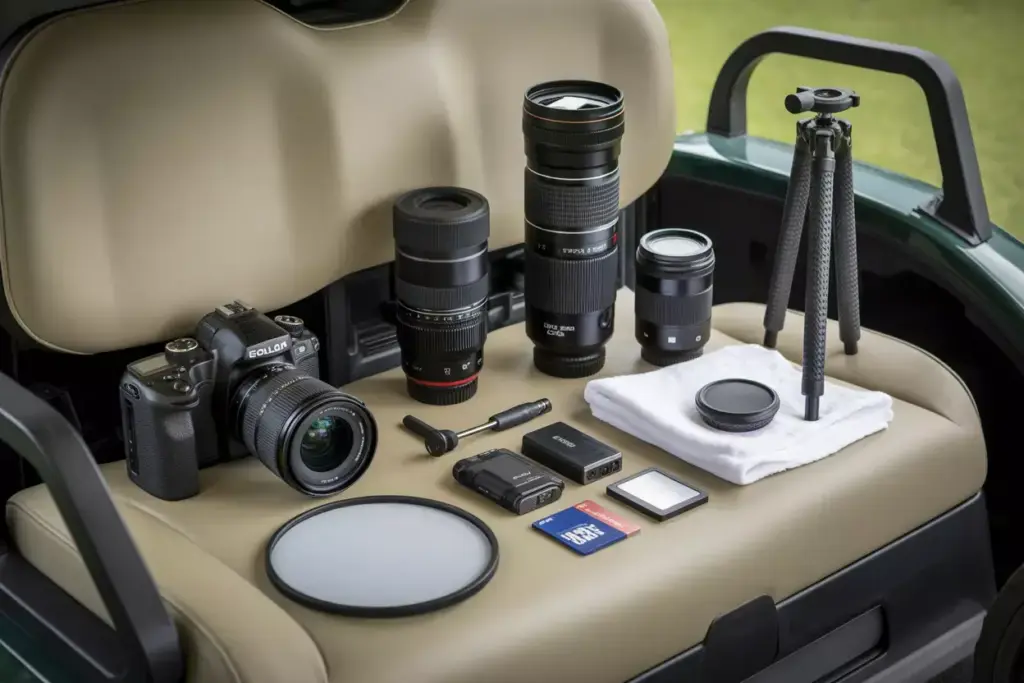
Camera selection plays a crucial role in achieving professional-quality golf photography. While high-end DSLR and mirrorless cameras offer the most flexibility and image quality, modern smartphones with advanced camera systems can also produce impressive results when used skillfully.
Essential equipment for golf aesthetic photography:
Camera Bodies:
- Full-frame sensors for superior low-light performance and shallow depth of field
- Weather sealing to protect against morning dew and unexpected weather
- High-resolution capabilities for detailed landscape shots and cropping flexibility
Lens Selection:
- 24-70mm f/2.8: Versatile for portraits and mid-range landscape shots
- 70-200mm f/2.8: Perfect for capturing action from a distance without interfering with play
- 16-35mm f/2.8: Ideal for dramatic wide-angle course photography
- 85mm or 135mm prime: Excellent for portrait work with beautiful bokeh
Support and Accessories:
- Sturdy tripod for landscape shots and long exposures
- Polarizing filter to reduce glare from water and enhance sky contrast
- Neutral density filters for creative long-exposure effects
- Reflectors to fill in shadows during portrait sessions
- Extra batteries as cold morning conditions drain power quickly
🎯 Technical Setting Recommendations: Start with aperture priority mode (A/Av), using f/5.6-f/8 for landscape shots to ensure sharp focus throughout the scene, and f/2.8-f/4 for portraits to achieve pleasing background blur while maintaining subject sharpness.
4. Composition Techniques That Elevate Golf Photography
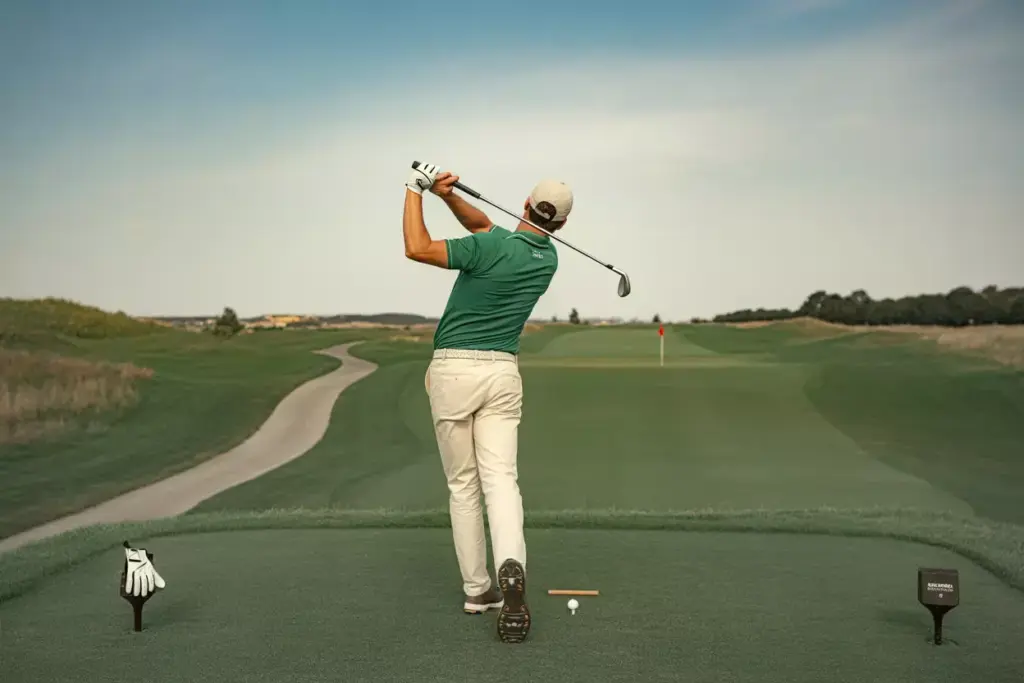
Mastering composition transforms ordinary golf course photography into compelling visual narratives. The principles of strong composition become even more critical in golf photography, where the expansive landscapes and repetitive elements can easily create boring, static images.
The Rule of Thirds in Golf Settings:
Divide your frame into nine equal sections and place key elements along these lines or at their intersections:
- Horizon lines on the upper or lower third, never centered
- Golfers positioned at intersection points for maximum visual impact
- Flagsticks or other vertical elements along the vertical third lines
- Water features or sand bunkers as leading lines toward focal points
Depth and Layering Techniques:
- Foreground Interest: Include golf clubs, tees, or course markers in the immediate foreground
- Middle Ground Action: Position the main subject (golfer) in the middle distance
- Background Context: Showcase the course landscape or clubhouse architecture
- Leading Lines: Use cart paths, fairway edges, or water hazards to guide the viewer’s eye
Dynamic Angles and Perspectives:
- Low angles make golfers appear more powerful and dramatic against sky backgrounds
- High angles showcase course layout and provide context for hole strategy
- Side angles during swings capture the full extension and follow-through motion
- Behind-the-golfer shots create viewer engagement and course perspective
Creative Framing Opportunities:
Golf courses offer numerous natural framing elements that add depth and focus to compositions:
- Tree branches creating natural vignettes around subjects
- Architectural elements like clubhouse windows or bridge openings
- Equipment framing using golf bags or carts as compositional elements
- Shadow patterns from trees or structures adding geometric interest
5. Wardrobe and Styling Choices That Enhance Golf Aesthetics

Authentic golf attire not only respects course dress codes but also contributes significantly to the overall aesthetic appeal of your photographs. The key is balancing traditional golf style with contemporary fashion sensibilities while ensuring colors and patterns complement rather than compete with the natural golf course environment.
Color Palette Strategies:
Classic Combinations That Always Work:
- Navy and white with khaki accents
- Forest green and cream that harmonizes with course colors
- Burgundy and gray for sophisticated autumn shoots
- Soft pastels (pink, light blue, lavender) for spring photography
Colors to Approach Carefully:
- Bright neon colors that can clash with natural settings
- All-black outfits that may appear too stark in bright outdoor lighting
- Busy patterns that distract from the overall composition
- Colors that blend too closely with course conditions (all green on green courses)
Styling Elements That Enhance Photography:
For Men:
- Well-fitted polo shirts in premium fabrics that photograph well
- Tailored golf pants or shorts that create clean lines
- Classic golf shoes that add authenticity without distraction
- Subtle accessories like watches, belts, or hats that complement the outfit
For Women:
- Golf dresses or skorts that provide movement and femininity
- Coordinated separates that offer versatility for different shots
- Appropriate footwear that’s both stylish and functional for course terrain
- Minimal jewelry that catches light without creating distractions
💄 Styling Pro Tip: Bring multiple outfit options and consider how different colors will photograph against various course backgrounds. What looks perfect against the clubhouse may clash with the natural landscape settings.
6. Capturing Action and Emotion in Golf Photography
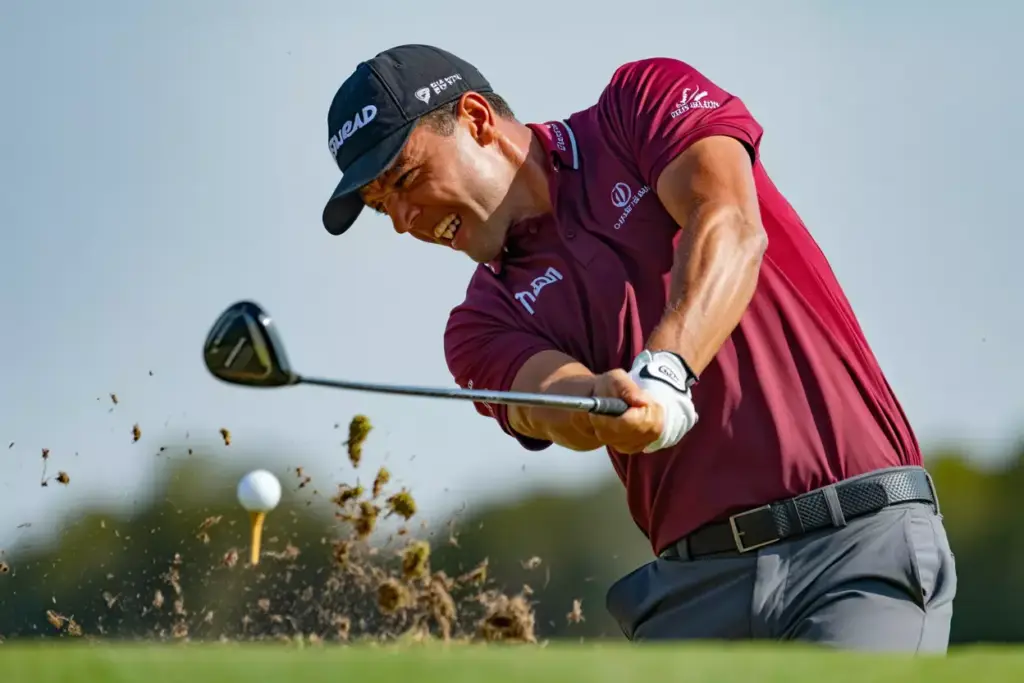
Dynamic action shots require a combination of technical skill, timing, and anticipation. Golf swings happen quickly, but they follow predictable patterns that allow skilled photographers to capture peak moments of power, grace, and concentration.
Swing Sequence Photography:
Address Position:
- Focus on posture and pre-shot routine
- Capture concentration and mental preparation
- Include full body positioning and club alignment
- Emphasize the calm before the athletic explosion
Backswing Peak:
- Maximum extension creates dramatic silhouettes
- Club position at the top of the swing arc
- Body coil showing stored energy and potential
- Facial concentration demonstrating focus and determination
Impact Zone:
- Moment of contact between club and ball
- Power transfer visible through body position
- Divot action adding dynamic movement to the frame
- Intense concentration captured in facial expressions
Follow-Through:
- Full extension toward the target
- Balanced finish demonstrating proper technique
- Club wrap around the body showing complete swing
- Eyes tracking the ball flight path
Technical Settings for Action:
- Shutter Priority Mode: 1/500s minimum for sharp action
- Continuous Autofocus: Track moving subjects effectively
- Burst Mode: Capture multiple frames during swing sequence
- Higher ISO: Maintain fast shutter speeds in varying light conditions
7. Post-Processing Techniques for Consistent Golf Aesthetic
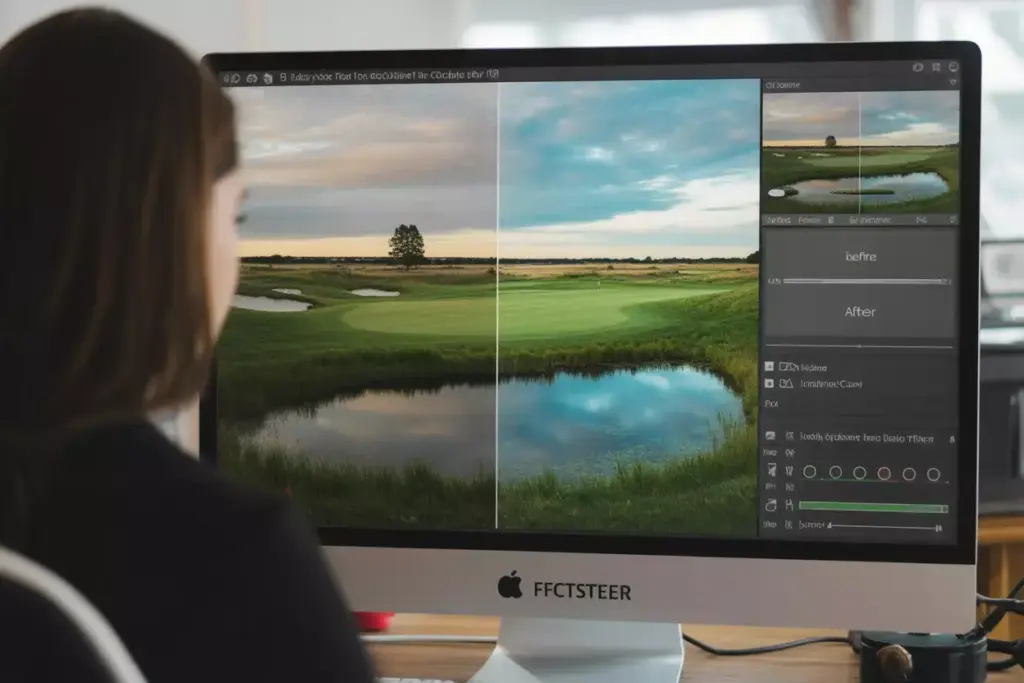
Professional post-processing transforms good golf photographs into exceptional visual content that maintains consistency across your entire portfolio. The goal is enhancement, not manipulation—bringing out the natural beauty of the golf environment while maintaining authenticity.
Color Grading for Golf Photography:
Enhance Natural Greens:
- Increase vibrance in grass and foliage without oversaturation
- Adjust luminance to make greens appear lush and healthy
- Fine-tune hue to ensure consistent green tones across different lighting conditions
- Protect skin tones while enhancing landscape colors
Sky and Water Enhancement:
- Polarization effects to increase contrast between clouds and blue sky
- Graduated filters to balance exposure between bright sky and darker landscape
- Reflection enhancement in water hazards and ponds
- Sunset/sunrise warming for golden hour photography
Professional Workflow Essentials:
RAW File Processing:
- Exposure correction for optimal highlight and shadow detail
- White balance adjustment for accurate color reproduction
- Lens corrections for distortion and vignetting removal
- Noise reduction for high-ISO shots in challenging lighting
Local Adjustments:
- Radial filters to draw attention to subjects
- Masking tools for selective color and exposure adjustments
- Brush adjustments for detailed enhancement of specific areas
- Gradient filters for sky and foreground balance
Consistency Techniques:
- Preset development for similar lighting conditions
- Color matching across series of photographs
- Crop ratios that work well for intended social media platforms
- Export settings optimized for print and digital display
🎨 Post-Processing Philosophy: The best golf photography enhancement feels invisible—viewers should notice the beauty of the scene and subjects, not the editing techniques used to capture that beauty.
Mobile Editing Solutions:
For photographers using smartphones or tablets, several professional-quality apps provide powerful editing capabilities:
- Lightroom Mobile: Full RAW processing with desktop sync
- VSCO: Film-inspired presets perfect for golf aesthetics
- Snapseed: Google’s comprehensive free editing platform
- Adobe Photoshop Express: Quick adjustments and corrections
Advanced Strategies for Professional Golf Photography
Creating Storytelling Through Environmental Context
Golf photography becomes truly compelling when it tells a story that extends beyond individual shots or poses. The most engaging golf aesthetic photography captures the culture, tradition, and lifestyle that surrounds the game, creating images that resonate with both golfers and non-golfers alike.
Lifestyle Integration Techniques:
Pre-Round Preparation:
- Equipment arrangement shots showing premium clubs and accessories
- Locker room moments capturing the ritual of preparation
- Practice range sessions demonstrating dedication and skill development
- Social interactions between playing partners or instructors
Course Experience Documentation:
- Walking between holes showing the journey and course navigation
- Strategic discussions during course management decisions
- Weather challenges demonstrating resilience and adaptability
- Victory celebrations capturing genuine emotion and achievement
Post-Round Traditions:
- Clubhouse dining and social interaction
- Equipment care and maintenance rituals
- Scorecards and memories documenting the round’s story
- Sunset departures ending the day with satisfied exhaustion
Weather Adaptation and Creative Opportunities
Challenging weather conditions often provide the most dramatic and memorable golf photography opportunities. Rather than avoiding difficult conditions, professional golf photographers learn to embrace and utilize weather as a creative tool.
Overcast Conditions:
- Even, soft lighting perfect for portrait work
- Saturated colors that appear richer without harsh sunlight
- Moody atmospheres that add drama to landscape shots
- Comfortable subjects without squinting or harsh shadows
Rain and Storm Photography:
- Dramatic skies with interesting cloud formations
- Reflective surfaces on wet cart paths and equipment
- Authentic moments showing dedication to the game
- Equipment protection becomes part of the visual story
Fog and Mist Conditions:
- Ethereal, dreamlike quality in landscape photography
- Layered depth as fog obscures and reveals course features
- Mysterious atmosphere that adds intrigue to compositions
- Soft, diffused lighting that flatters subjects naturally
Building Your Golf Photography Brand and Portfolio
Developing a Signature Style
Consistency in aesthetic approach helps establish recognition and builds a professional reputation in golf photography. This doesn’t mean every photograph should look identical, but rather that viewers can identify your work through consistent quality, composition, and post-processing choices.
Style Development Elements:
Color Palette Consistency:
- Signature color grading that enhances golf’s natural beauty
- Consistent white balance approach across different lighting conditions
- Harmonious color relationships that complement golf course environments
- Seasonal adaptation while maintaining core aesthetic principles
Compositional Signatures:
- Preferred shooting angles that become recognizable
- Consistent use of depth of field for subject isolation or environmental context
- Framing preferences that create visual continuity across portfolios
- Movement and energy captured in distinctive ways
Professional Presentation and Portfolio Development
High-quality portfolio presentation distinguishes professional golf photographers from enthusiastic amateurs. Every image included should meet professional standards and contribute to the overall narrative of your golf photography expertise.
Portfolio Curation Guidelines:
Image Selection Criteria:
- Technical excellence in focus, exposure, and composition
- Emotional impact that engages viewers immediately
- Variety in subjects while maintaining consistent quality
- Storytelling capability that communicates golf’s appeal
Presentation Formats:
- Online galleries optimized for various devices and connection speeds
- Print portfolios for in-person client meetings and exhibitions
- Social media presence tailored to platform-specific requirements
- Professional websites showcasing range and expertise
Conclusion
Mastering these 7 Pro Tips for Your Perfect Golf Aesthetic Photoshoot provides the foundation for creating compelling, professional-quality golf photography that captures both the technical excellence and emotional appeal of this timeless sport. From understanding the critical importance of golden hour lighting to developing post-processing workflows that enhance natural beauty, each element contributes to photographs that stand out in today’s competitive visual landscape.
The key to exceptional golf photography lies in preparation, technical skill, and creative vision working together seamlessly. By scouting locations thoroughly, selecting appropriate equipment, and understanding how wardrobe choices impact overall aesthetics, photographers can consistently produce images that resonate with audiences and effectively communicate golf’s sophisticated appeal.
Action Steps for Implementation:
- Schedule your next golf photoshoot during optimal lighting conditions, planning to arrive early for location scouting and equipment setup
- Invest in essential equipment starting with a versatile zoom lens and basic accessories like reflectors and extra batteries
- Develop a consistent editing workflow using professional software to enhance your images while maintaining natural authenticity
- Build relationships with local golf courses and professionals who can provide access to premium locations and authentic subjects
- Create a portfolio that demonstrates your range while maintaining consistent quality and aesthetic appeal
Remember that exceptional golf photography combines technical excellence with genuine appreciation for the sport’s culture and traditions. Whether you’re capturing the intense concentration of a crucial putt or the serene beauty of morning mist across pristine fairways, these professional techniques will elevate your golf aesthetic photography to championship levels.
The golf photography market continues to grow as social media platforms prioritize high-quality visual content and golf’s popularity expands globally. By implementing these proven strategies and continuously refining your approach, you’ll be well-positioned to succeed in this exciting and rewarding photography niche.
Start applying these 7 Pro Tips for Your Perfect Golf Aesthetic Photoshoot on your next course visit, and watch as your golf photography transforms from simple documentation to compelling visual storytelling that captures the true essence of this beloved sport.