8 Chipping Tips Golf Pros Use to Get Up & Down Every Time
Picture this: You’re standing 30 yards from the pin, your approach shot came up short, and you need to save par. The difference between a frustrated bogey and a confident par save often comes down to one crucial skill—chipping. While amateur golfers struggle with inconsistent contact and unpredictable results around the greens, professionals seem to effortlessly get up and down from anywhere. The secret isn’t magic; it’s mastering the 8 chipping tips golf pros use to get up and down every time.
These proven techniques have been refined by tour professionals and top instructors who understand that a strong short game can transform your entire golf experience. Whether you’re dealing with tight lies, thick rough, or tricky pin positions, these fundamental principles will give you the confidence to attack every chip shot with precision.
Key Takeaways
- Master the descending blow by striking the ball first with your swing arc positioned after the golf ball for clean, consistent contact
- Optimize your setup with proper weight distribution (70% on lead side), ball position, and stance to promote better angle of attack
- Develop core-driven consistency using your midsection for more reliable chip shots while maintaining firm wrists through impact
- Adapt your technique to course conditions and pin positions using the Three Release System for varied trajectories
- Practice with purpose by dedicating focused time to chipping fundamentals and club selection strategies
The Foundation: Setup and Stance Fundamentals
1. Perfect Your Ball Position and Weight Distribution

The first of the 8 chipping tips golf pros use to get up and down every time starts before you even swing the club. Professional golfers understand that ball position controls trajectory and determines the quality of contact you’ll achieve [2].
Position the ball slightly off your back foot, roughly in front of your big toe, for lower and more controlled chip shots. This setup naturally promotes the descending blow that’s essential for clean contact. When you need a longer chip with a softer landing, move the ball slightly forward in your stance [2].
Weight distribution is equally critical. Maintain at least 70% of your weight on your lead side throughout the entire shot [2]. This forward weight bias ensures:
- ✅ Consistent contact with the ball first
- ✅ Proper angle of attack
- ✅ Better distance control
- ✅ Reduced chunking and thin shots
2. Adopt the Professional Stance Setup
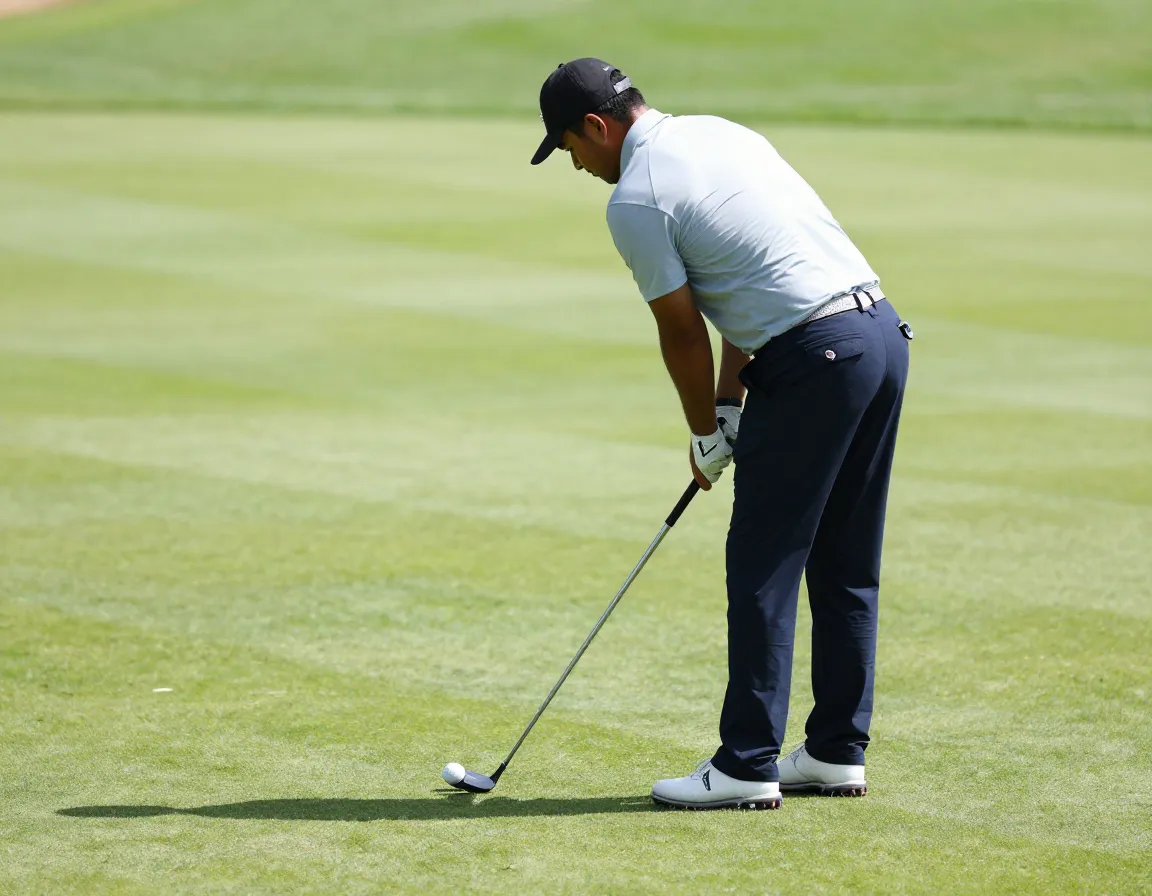
Tour professionals use a narrow, slightly open stance that amateur golfers often overlook. Drop your front foot back from the target line with your heels positioned close together [2]. This stance modification serves multiple purposes:
Benefits of the open stance:
- Promotes a steeper angle of attack
- Creates cleaner ball-first contact
- Improves visibility to the target
- Enhances body rotation through impact
Stand closer to the ball than you would for a full swing, and raise your hands slightly. Position your nose ahead of the ball to shift your swing arc forward, ensuring you strike down on the ball rather than trying to help it into the air [1].
3. Lower Your Hands on the Grip

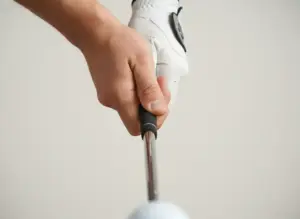
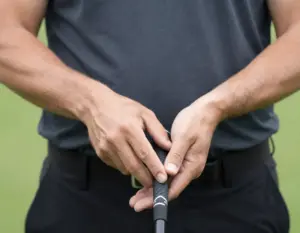
One of the most overlooked aspects of professional chipping technique is grip positioning. Lower your hands down the club shaft to promote a more controlled, straight-back-and-through stroke [2].
This adjustment provides several advantages:
- 🎯 Better feel and distance control
- 🎯 More consistent strike pattern
- 🎯 Reduced wrist action
- 🎯 Improved accuracy
The shorter grip length naturally creates a more compact swing, making it easier to control both distance and direction.
Advanced Techniques and Modern Methods
4. Master the Descending Blow

The descending blow is absolutely essential for professional-level chipping [1]. This means striking the ball first, not the ground behind it, with the bottom of your swing arc positioned after the golf ball.
Many amateur golfers make the mistake of trying to “help” the ball into the air by scooping at impact. Professionals understand that the club’s loft will provide the necessary trajectory when you strike down through the ball.
Key elements of the descending blow:
- Strike the ball with a downward angle of attack
- Keep your hands ahead of the clubhead at impact
- Allow the club to continue down after ball contact
- Trust the loft to get the ball airborne
5. Use Core-Driven Motion for Consistency

A significant trend in 2026 golf instruction emphasizes chipping with core muscles rather than relying primarily on hand and arm action [4]. This approach, popularized by leading instructors, focuses on using your belly button and core for more consistent chip shots.
How to implement core-driven chipping:
- Engage your core before starting the backswing
- Rotate your midsection to initiate the swing motion
- Keep arms connected to your body rotation
- Maintain steady head position throughout
This technique reduces the variables in your chipping motion and creates more repeatable results, especially under pressure.
6. Implement the Three Release System

The Three Release System represents cutting-edge chipping instruction for 2026 [3]. This method teaches golfers to use three different release points for varied chip shot requirements:
| Release Point | Ball Flight | Best Used For |
|---|---|---|
| Front Section | Low flight “nips” | Tight lies, running shots |
| Middle Section | Soft landings | Standard pin positions |
| Trailing Section | Higher lofted shots | Over bunkers, short pins |
Practice each release point to develop versatility around the greens. The key is matching your release timing to the shot requirements rather than using the same technique for every situation.
7. Keep Wrists Firm Through Impact

Professional golfers maintain firm wrists through impact to avoid the scooping motion that plagues amateur players [2]. Focus on keeping a quiet right hand and firm left wrist throughout the entire chipping motion.
Wrist control checkpoints:
- ✅ Maintain the angle between your left wrist and forearm
- ✅ Avoid any flipping or scooping action
- ✅ Keep your right hand passive through impact
- ✅ Feel like you’re “trapping” the ball against the turf
This firm wrist action ensures consistent contact and prevents the thin and chunked shots that result from trying to help the ball into the air.
8. Master Club Selection and Course Adaptation
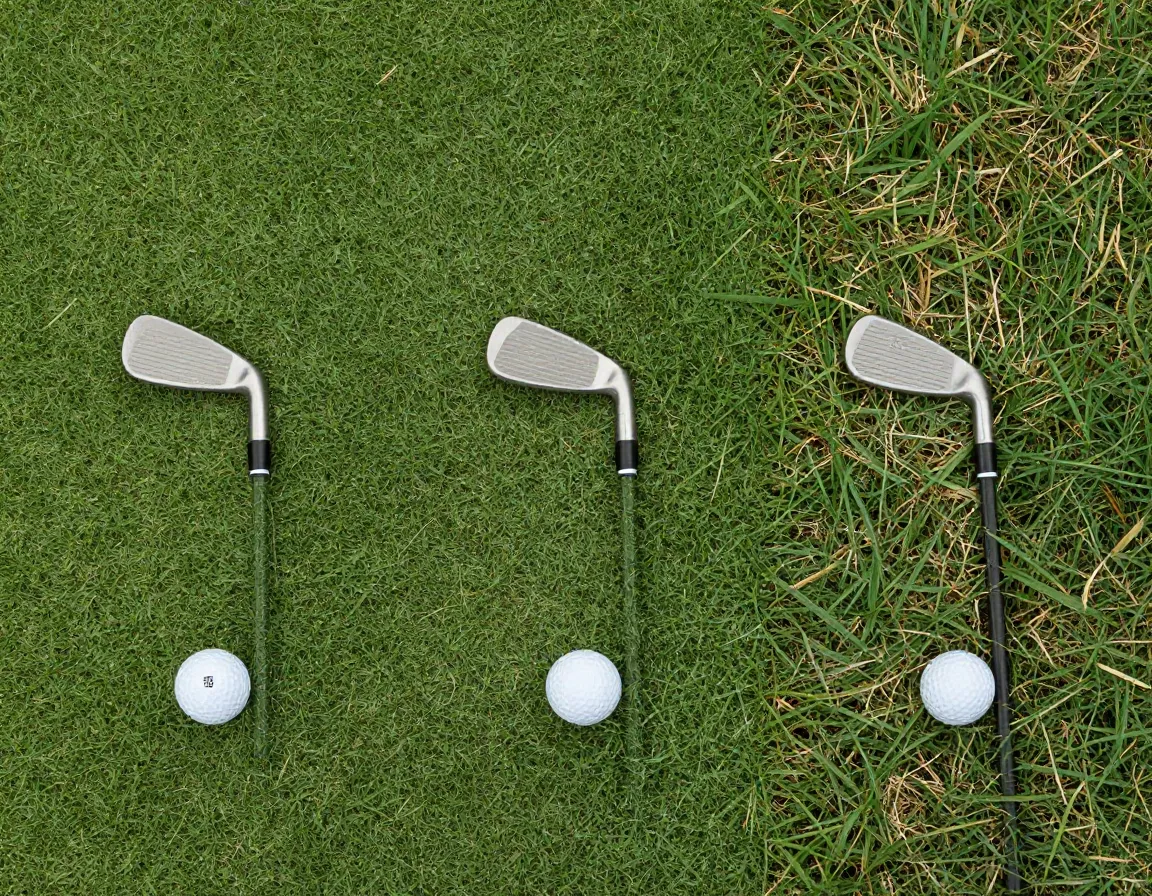
The final element of the 8 chipping tips golf pros use to get up and down every time involves intelligent club selection and course condition adaptation. Professionals don’t just grab their favorite wedge for every chip shot—they analyze the situation and select the optimal club.
Club selection guidelines:
- Pitching wedge: Lower trajectory, more roll
- Sand wedge: Medium trajectory, balanced flight and roll
- 9-iron: Lowest trajectory, maximum roll
Course condition adaptations:
- Thick rough: Use more loft or steeper angles of attack
- Tight lies: Demand precision and controlled low points
- Wet conditions: Adjust for less roll and softer landings
- Fast greens: Focus on landing area and spin control
Practice with your preferred clubs to build consistency and confidence. As Padraig Harrington advocates, spend at least 20 additional minutes on the chipping area during practice sessions to improve your short game and lower your scores [7].
Conclusion
Mastering these 8 chipping tips golf pros use to get up and down every time will transform your short game and significantly lower your scores. The key is understanding that professional chipping success comes from fundamentals: proper setup, descending blow contact, core-driven motion, and intelligent course management.
Your next steps:
- Practice the setup fundamentals with proper ball position, weight distribution, and stance
- Work on the descending blow by focusing on ball-first contact
- Develop core-driven consistency through dedicated practice sessions
- Experiment with the Three Release System to add versatility to your short game
- Spend focused time on the practice green, following Harrington’s advice of at least 20 extra minutes per session
Remember, the difference between amateur and professional chipping isn’t talent—it’s technique and practice. Implement these proven strategies consistently, and you’ll soon find yourself getting up and down with the confidence of a tour professional. Your playing partners will notice the difference, and more importantly, your scorecard will reflect the improvement.
References
[1] The secret to chipping no one is teaching you – https://www.dannymaude.com/blog/The%20Secret%20To%20Chipping%20No%20One%20Is%20Teaching%20You
[2] Mastering Your Chipping Game Techniques For Better Control – https://riversedgegolfbend.com/playing-tips/mastering-your-chipping-game-techniques-for-better-control/
[3] Watch – https://www.youtube.com/watch?v=SfaxE8Ec-hk
[4] Best 10 Short Game Golf Instructions Tips On Golfpass Golfers Choice 2026 – https://www.golfpass.com/travel-advisor/best-of/best-10-short-game-golf-instructions-tips-on-golfpass-golfers-choice-2026
[7] 4417258350254 1 Tip To Instantly Fix Your Chipping 5 Key Tips For 2026 – https://local.newsbreak.com/golf-com-318483527/4417258350254-1-tip-to-instantly-fix-your-chipping-5-key-tips-for-2026