8 DIY Backyard Putt Putt Golf Ideas for Family Fun
Picture this: it’s a beautiful Saturday afternoon, and instead of hearing the familiar refrain “I’m bored!” from the kids, laughter and friendly competition fill your backyard as the whole family enjoys a round of mini golf on a course you built together. Creating your own backyard putt putt golf course transforms an ordinary outdoor space into an entertainment destination that brings families together while encouraging creativity and physical activity.
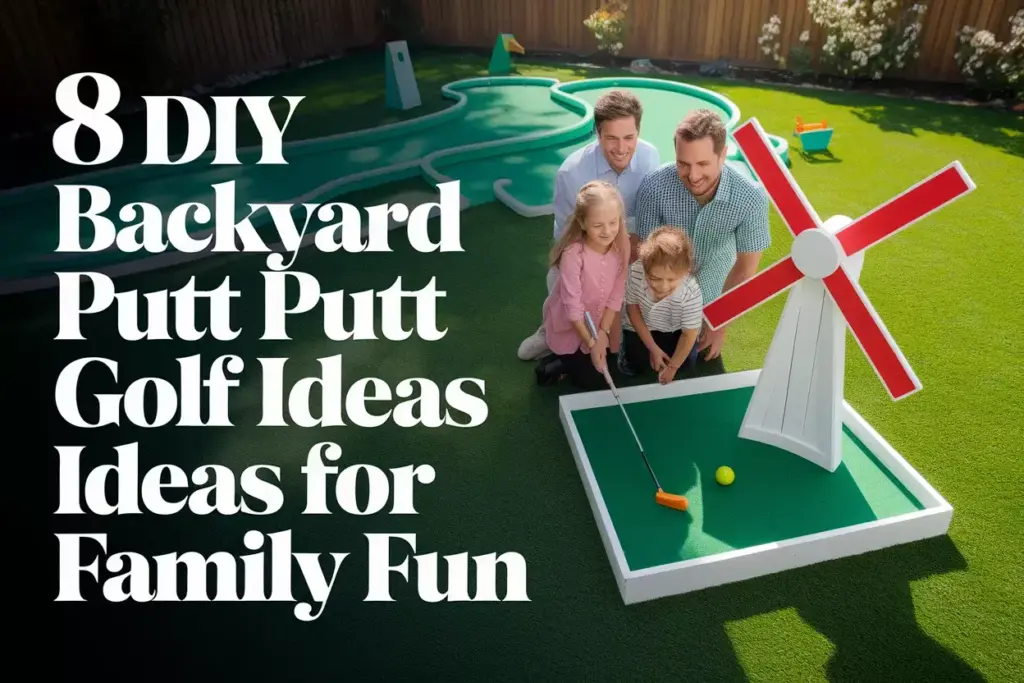
These 8 DIY Backyard Putt Putt Golf Ideas for Family Fun offer endless possibilities for customization, skill-building, and memory-making right in your own yard. Whether you’re working with a small patio or a sprawling lawn, these creative solutions can be adapted to fit any space and budget.
Key Takeaways
- Budget-friendly entertainment: Most DIY putt putt obstacles can be built using common household items and inexpensive materials from hardware stores
- Customizable difficulty levels: Design holes that challenge different skill levels, from toddler-friendly straight shots to complex multi-obstacle courses for teens and adults
- Year-round family bonding: A permanent or semi-permanent backyard course provides ongoing entertainment and encourages regular family activity
- Educational opportunities: Building and maintaining the course teaches kids basic construction skills, problem-solving, and mathematical concepts like angles and distances
- Space-efficient design: Even small backyards can accommodate creative mini golf holes using vertical obstacles and compact layouts
Planning Your DIY Backyard Mini Golf Course
Before diving into specific DIY Backyard Putt Putt Golf Ideas for Family Fun, successful course planning requires thoughtful consideration of your available space, family needs, and long-term maintenance requirements.
Assessing Your Space and Setting Goals
Start by measuring your backyard and identifying areas suitable for mini golf holes. Consider factors like:
- Available square footage for each hole (minimum 6 feet by 12 feet recommended)
- Natural landscape features that can be incorporated as obstacles
- Drainage patterns to avoid water accumulation issues
- Sun exposure throughout the day for comfortable playing conditions
- Storage requirements for equipment and seasonal course elements
Choosing Materials and Tools
Most DIY mini golf projects require basic tools and materials that many homeowners already possess:
Essential Tools:
- Measuring tape and level
- Drill with various bits
- Circular saw or hand saw
- Hammer and screwdrivers
- Spray paint for marking
Common Materials:
- Pressure-treated lumber for permanent structures
- PVC pipes for tunnels and barriers
- Artificial turf or outdoor carpet
- Sand for bunkers and leveling
- Concrete pavers for stable putting surfaces
Safety Considerations
Family safety should guide every design decision. Ensure all obstacles have:
- Smooth, rounded edges to prevent cuts and scrapes
- Stable construction that won’t tip or collapse during play
- Non-slip surfaces on ramps and elevated areas
- Adequate spacing between holes to prevent crowding
- Proper lighting for evening play sessions
Creative Obstacle Ideas: 8 DIY Backyard Putt Putt Golf Ideas for Family Fun
1. The Classic Windmill Challenge
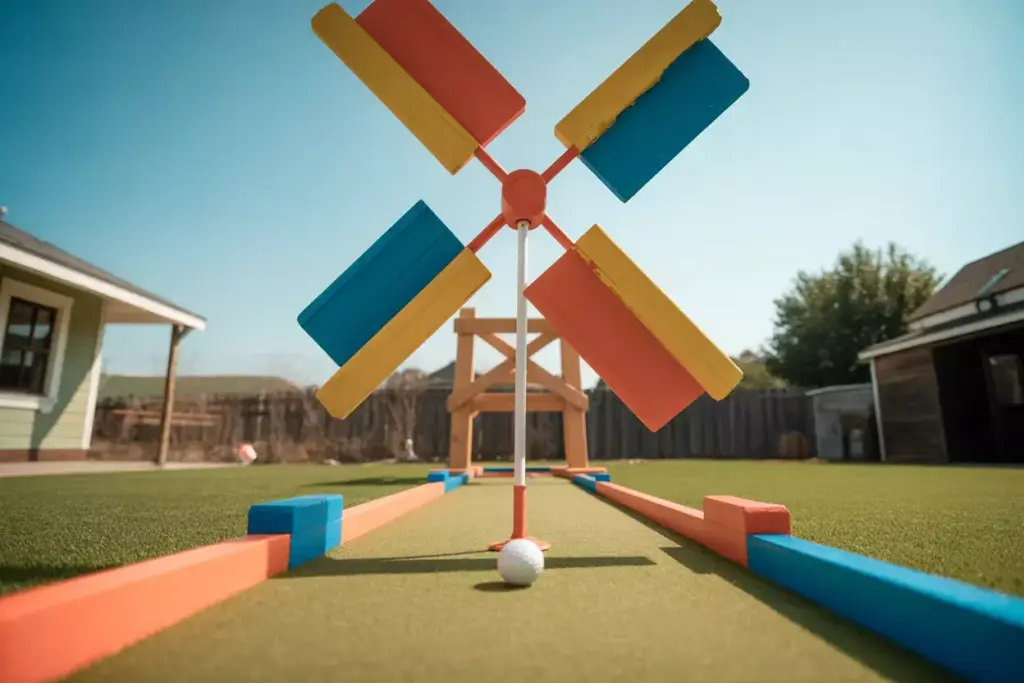
Transform your backyard into a traditional mini golf experience with a rotating windmill obstacle that requires precise timing and skill. This iconic feature combines visual appeal with genuine difficulty.
Construction Details:
Build the windmill base using a 2×4 wooden frame, approximately 3 feet tall. Create the rotating blades from lightweight plywood or plastic sheeting attached to a central axle made from PVC pipe. Install a small motor (optional) or design it to rotate with wind power.
Gameplay Elements:
Position the windmill so its blades sweep across the putting path at golf ball height. Players must time their putts to pass through the gap between rotating blades. Add difficulty by adjusting rotation speed or creating multiple windmills in sequence.
Family Fun Factor:
This obstacle appeals to all ages, with younger children enjoying the visual spectacle while older family members appreciate the skill challenge. Consider painting the windmill in bright colors or adding LED lights for evening play.
2. Tunnel Vision Adventure

Create an exciting underground journey using PVC pipes, cardboard tubes, or wooden tunnels that add mystery and precision challenges to your course.
Design Variations:
- Straight-through tunnels: Simple PVC pipes (6-8 inch diameter) buried partially underground
- Curved pathways: Flexible drainage pipe that creates gentle turns
- Multi-level systems: Elevated tunnels with ramps leading up and down
- Branching options: T-junctions where players choose their route
Construction Tips:
Ensure tunnel entrances are wide enough for easy ball entry but narrow enough to require accuracy. Secure all tunnel sections to prevent movement during play. Add visual interest with painted designs or themed decorations around tunnel entrances.
Skill Development:
Tunnel obstacles teach players about angles, force control, and spatial reasoning. Younger children develop hand-eye coordination while adults enjoy the strategic challenge of choosing optimal entry angles.
3. The Great Ramp Escape
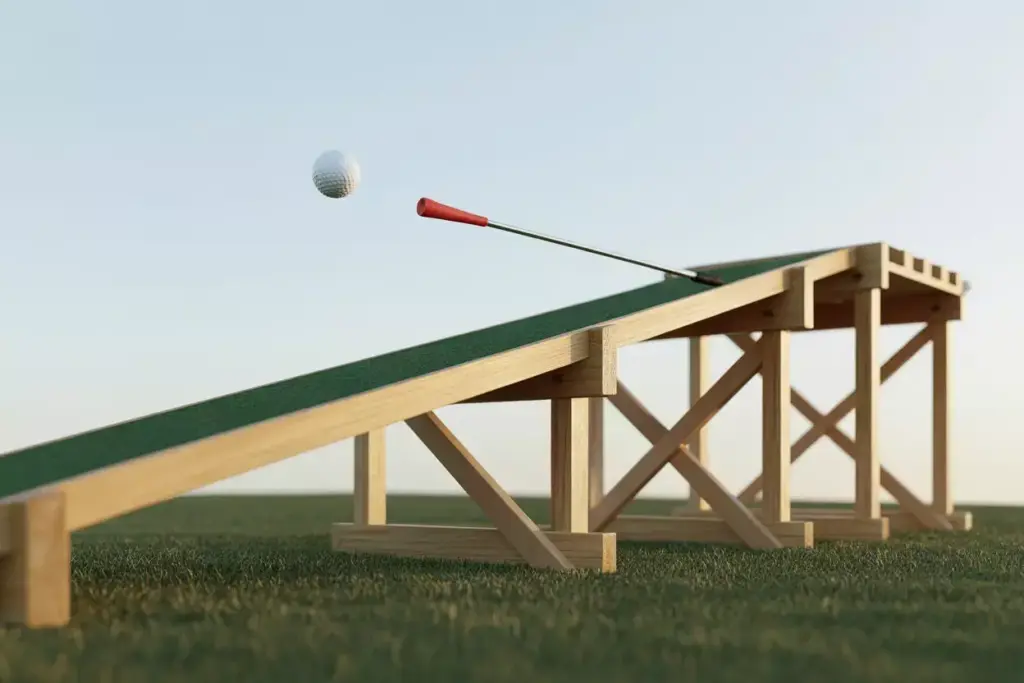
Elevated obstacles add vertical excitement to your course while creating opportunities for spectacular shots and dramatic near-misses.
Ramp Construction:
Build ramps using plywood supported by 2×4 lumber frames. Create various heights (6 inches to 18 inches) and angles (15 to 45 degrees) to offer different difficulty levels. Cover surfaces with outdoor carpet or artificial turf for consistent ball roll.
Advanced Features:
- Loop-the-loops: Curved ramps that create complete circles
- Jump gaps: Ramps that launch balls across small water features or sand traps
- Multi-tier platforms: Connected ramps creating complex elevation changes
- Spiral towers: Corkscrew-shaped ramps for extended elevated travel
Safety and Stability:
Anchor all ramp structures securely to prevent tipping. Use weather-resistant materials and finishes to ensure longevity. Install safety barriers along elevated sections to prevent balls from flying off course.
4. Water Hazard Spectacle
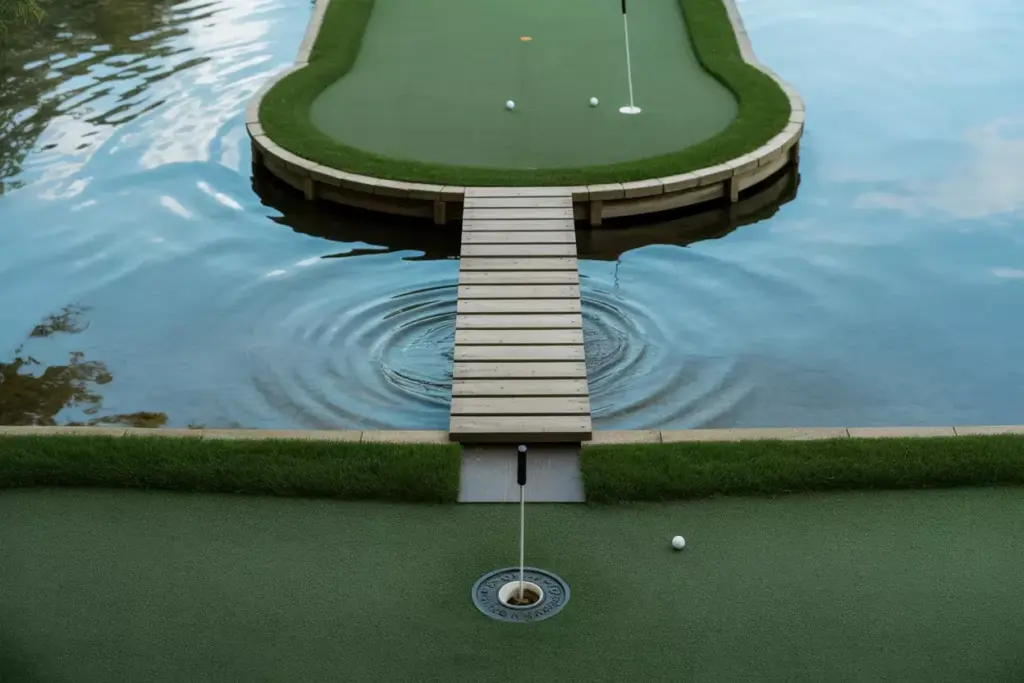
Incorporate water features that add visual appeal and strategic complexity while providing cooling relief on hot summer days.
Simple Water Features:
- Shallow pans: Large baking dishes or plant saucers filled with water
- Stream crossings: Garden hoses or PVC pipes creating flowing water obstacles
- Fountain challenges: Small pumps creating water sprays that deflect balls
- Bridge crossings: Narrow wooden planks over water-filled trenches
Advanced Water Systems:
Install recirculating pumps to create moving water that affects ball trajectory. Design islands in larger water hazards that serve as intermediate targets. Add floating obstacles that move with water currents.
Maintenance Considerations:
Use mosquito dunks or small pumps to prevent stagnant water issues. Design water features with easy drainage for seasonal shutdown. Consider using colored water or floating decorations for enhanced visual appeal.
5. Sand Trap Challenges
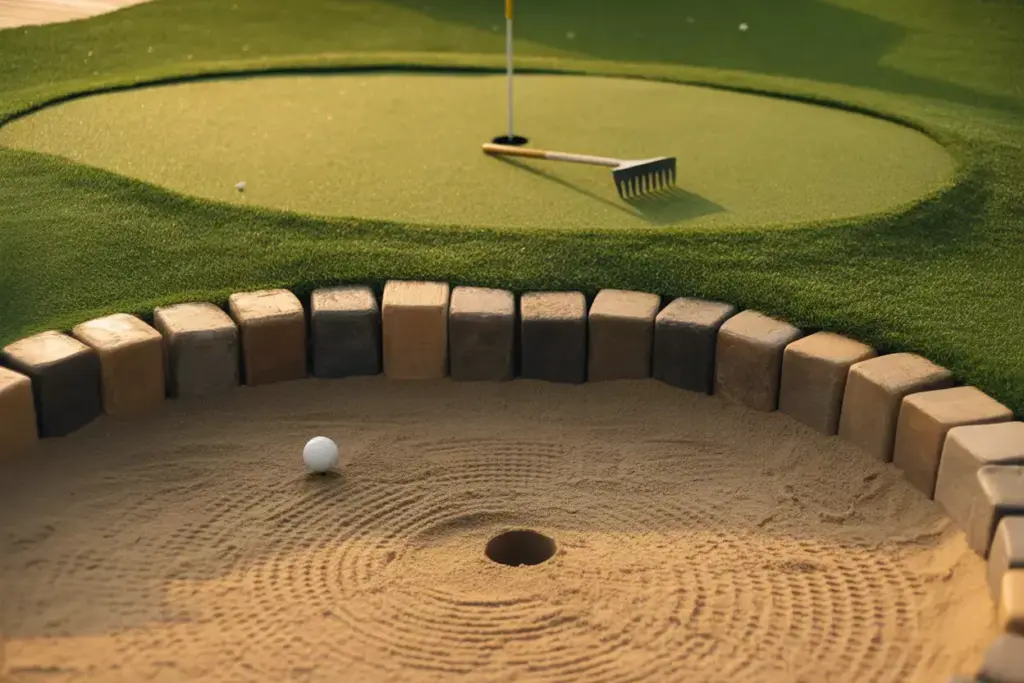
Create beach-like obstacles that test precision and add authentic golf course elements to your backyard design.
Sand Trap Construction:
Excavate shallow depressions (2-4 inches deep) and line with landscape fabric before adding clean play sand. Create defined borders using landscape timbers, stones, or decorative edging materials.
Varied Sand Obstacles:
- Traditional bunkers: Large sand areas that penalize inaccurate shots
- Sand rivers: Narrow channels filled with sand that balls must cross
- Volcano features: Raised sand mounds with crater-like centers
- Maze patterns: Interconnected sand paths with multiple route options
Playing Rules:
Establish clear rules for sand trap penalties, such as adding strokes or requiring shots from designated drop zones. Provide small rakes for course maintenance and teach children proper sand trap etiquette.
6. Tire and Tube Obstacles
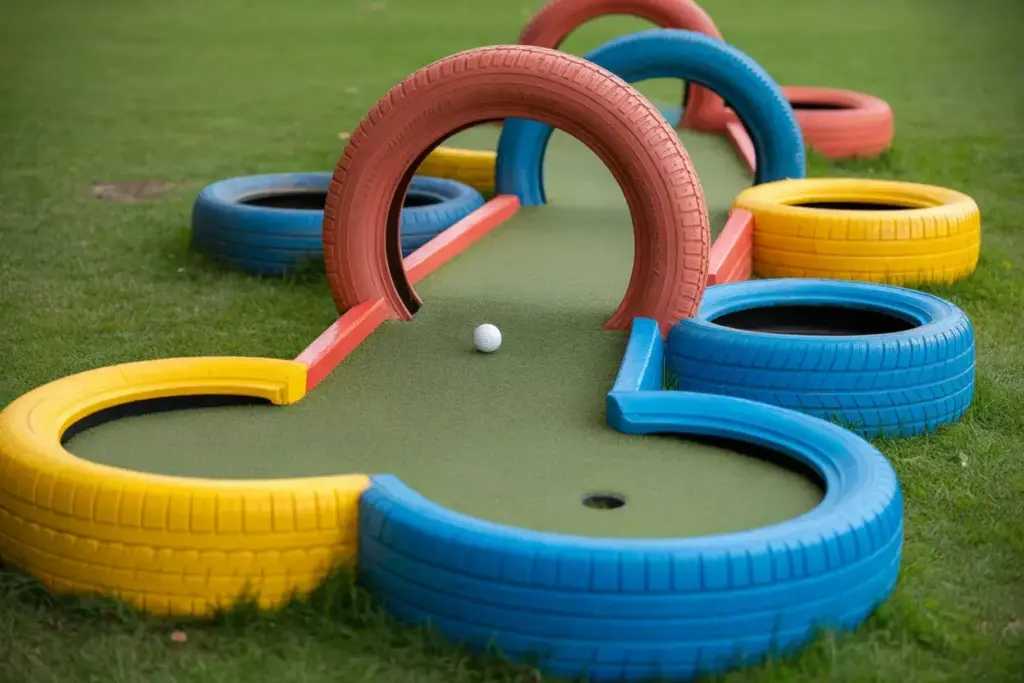
Repurpose old tires, inner tubes, and circular materials to create rolling, bouncing, and ricocheting challenges throughout your course.
Tire Obstacle Variations:
- Rolling barriers: Partially buried tires that balls must navigate around
- Tire tunnels: Large tractor tires positioned as pass-through obstacles
- Stacked challenges: Multiple tires creating multi-level obstacles
- Spinning wheels: Mounted tires that rotate when struck by golf balls
Inner Tube Features:
Use inflated inner tubes as bumpers that redirect balls in unexpected directions. Create tube mazes where balls bounce between multiple inflated obstacles. Design launching systems where balls roll through tubes to reach elevated areas.
Creative Repurposing:
Paint tires in bright colors or team themes. Add reflective tape for nighttime visibility. Incorporate tire planters that serve dual purposes as obstacles and garden features.
7. Moving Target Madness
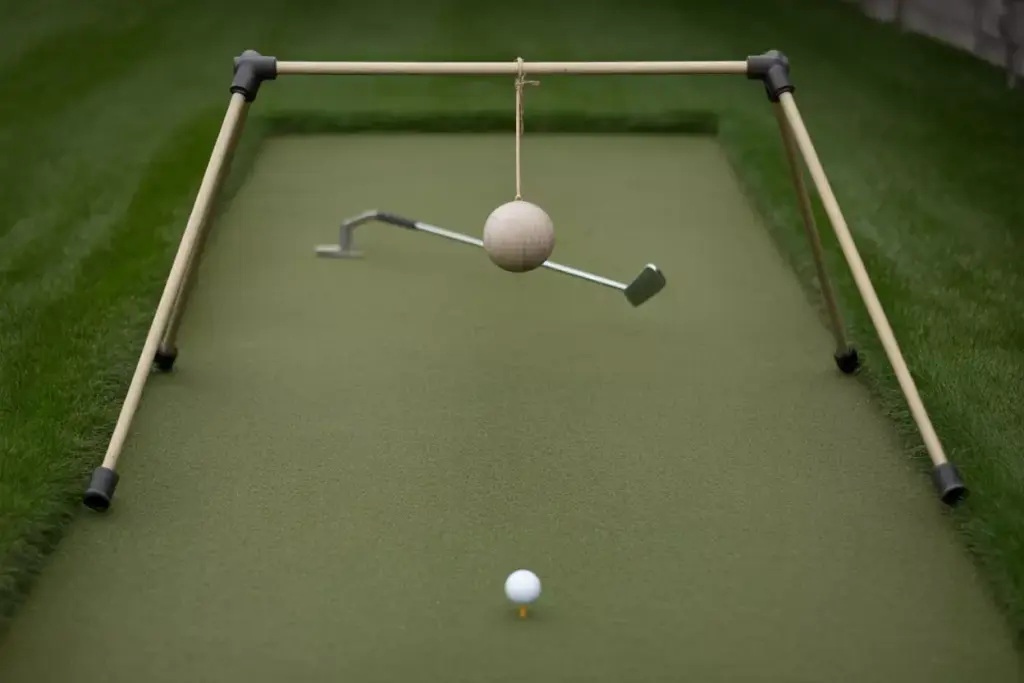
Introduce dynamic elements that change during play, creating excitement and requiring adaptability from players of all skill levels.
Pendulum Obstacles:
Suspend lightweight balls, foam shapes, or fabric strips from overhead structures to create swinging barriers. Use varying lengths and weights to create different swing patterns and timing challenges.
Rotating Platforms:
Build circular platforms that slowly rotate, changing the target area throughout each player’s turn. Use lazy Susan hardware or motorized systems for consistent movement.
Sliding Barriers:
Create obstacles that slide back and forth across the putting path using simple pulley systems or manual operation by family members.
Interactive Elements:
Design obstacles that respond to successful shots, such as bells that ring when balls pass through specific areas or flags that raise when targets are hit accurately.
8. Themed Adventure Holes
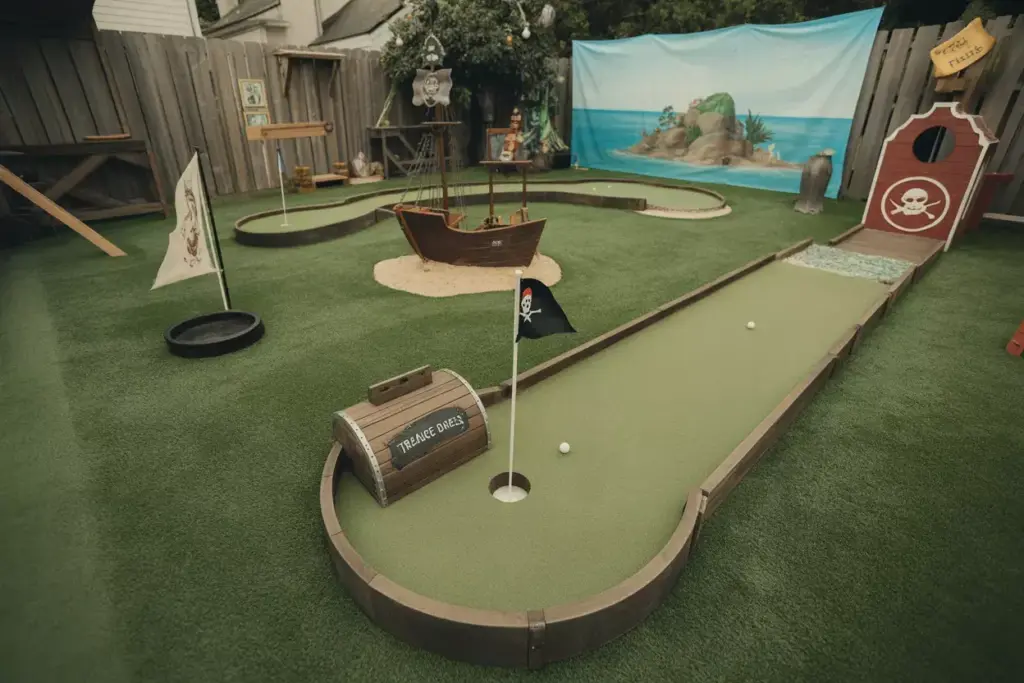
Transform individual holes into immersive experiences that tell stories and capture imaginations while providing unique gameplay challenges.
Popular Theme Ideas:
- Pirate Adventure: Treasure chests, ship obstacles, and island targets
- Space Exploration: Rocket ships, planet obstacles, and alien encounters
- Fairy Tale Forest: Mushroom houses, dragon caves, and enchanted bridges
- Sports Stadium: Goal posts, basketball hoops, and team-colored obstacles
- Dinosaur Discovery: Fossil dig sites, prehistoric plant obstacles, and volcano features
Theme Implementation:
Use themed decorations, appropriate color schemes, and story-based hole names. Create scorecards that include theme-related facts or challenges. Encourage family members to dress in theme-appropriate costumes during special tournament days.
Educational Integration:
Incorporate learning opportunities related to each theme, such as geography lessons with world landmark holes or science concepts with space-themed obstacles.
Course Maintenance and Seasonal Adaptations
Maintaining your DIY Backyard Putt Putt Golf Ideas for Family Fun ensures long-lasting enjoyment and safe playing conditions throughout the year.
Regular Maintenance Tasks
Weekly Maintenance:
- Sweep debris from putting surfaces
- Check obstacle stability and tighten loose connections
- Refill sand traps and water features as needed
- Inspect safety features and barrier integrity
Monthly Deep Cleaning:
- Power wash artificial turf and hard surfaces
- Re-level putting areas that have settled
- Touch up paint on wooden obstacles
- Lubricate moving parts on dynamic obstacles
Seasonal Preparations:
- Spring: Inspect winter damage and make necessary repairs
- Summer: Add shade structures and ensure adequate water for cooling features
- Fall: Clear leaves regularly and prepare for winter storage
- Winter: Protect or store removable obstacles in harsh climates
Weather-Resistant Design
Choose materials and finishes that withstand local climate conditions. Use marine-grade hardware for coastal areas, UV-resistant paints for sunny climates, and proper drainage systems for regions with heavy rainfall.
Storage Solutions
Design obstacles with easy disassembly for off-season storage. Create dedicated storage areas in garages, sheds, or basements. Label components clearly for quick reassembly when playing season returns.
Conclusion
Creating your own backyard mini golf course using these 8 DIY Backyard Putt Putt Golf Ideas for Family Fun transforms ordinary outdoor space into a hub of family entertainment, creativity, and skill development. From classic windmill challenges to themed adventure holes, each obstacle offers unique opportunities for family bonding while encouraging physical activity and friendly competition.
The beauty of DIY mini golf lies in its adaptability—start with simple obstacles using household materials, then gradually expand and enhance your course as skills and enthusiasm grow. Whether you’re building a single hole for weekend fun or designing an elaborate 18-hole championship course, the memories created and skills developed will provide lasting value for your entire family.
Ready to start building? Begin with one simple obstacle this weekend, involve every family member in the design and construction process, and watch as your backyard transforms into the neighborhood’s favorite entertainment destination. Remember, the best mini golf course is one that brings your family together, challenges players of all skill levels, and grows more exciting with each improvement you make.