
8 Golf Swing Tips for Beginners That Fix 90% of Common Mistakes
Picture this: You step up to the first tee, confident and ready to impress your playing partners. But instead of that perfect drive you’ve been practicing, you watch helplessly as your ball slices into the rough—again. If this scenario sounds familiar, you’re not alone. Most golf beginners struggle with the same fundamental mistakes that turn what should be an enjoyable round into a frustrating experience.

The good news? These 8 golf swing tips for beginners that fix 90% of common mistakes can transform your game faster than you might think. The golf swing operates as a “cause and effect based self-contained eco-system” where understanding the logical sequence prevents lifelong struggles with common faults like casting, scooping, swinging over the top, and slicing[1]. Instead of spending years battling inconsistent shots, let’s address the root causes that create lasting improvement.
Key Takeaways
- Master the fundamentals first – Proper stance, grip, and posture form the foundation for every successful golf swing
- Focus on tempo over power – Controlled, smooth swings generate more distance and accuracy than aggressive, fast swings
- Practice with purpose – Use specific drills and methods rather than mindlessly hitting balls at the range
- Balance is everything – A balanced finish position indicates proper weight transfer and swing mechanics
- The short game matters most – Chipping and putting account for the majority of your total strokes
Understanding Why Most Beginners Struggle
Before diving into the specific techniques, it’s crucial to understand why so many golfers struggle with consistency. Many golfers rush to advanced techniques without fully mastering fundamentals, leading to inconsistent shots and frustration[2]. This approach creates a shaky foundation that makes improvement nearly impossible.
The golf swing involves multiple moving parts that must work together in perfect harmony. When one element is off, it creates a domino effect that impacts every other aspect of your swing. That’s why these 8 golf swing tips for beginners that fix 90% of common mistakes focus on building a solid foundation rather than quick fixes.
The Foundation: Essential Setup Tips
1. Master Your Stance and Posture

Your stance is the foundation of every great golf shot. A good stance requires balanced feet, relaxed knees, and posture that feels natural, not forced[2]. Here’s how to set up properly:
Feet Position:
- Stand with feet shoulder-width apart
- Weight evenly distributed on the balls of your feet
- Slight flex in your knees (never locked)
Posture Checklist:
- Straight back with a slight bend at the hips
- Arms hanging naturally from your shoulders
- Head positioned behind the ball at address
One critical element many beginners miss is proper axis tilt at address. Create a slight hip bump toward the target while keeping your head in place and dropping your right shoulder (for right-handed golfers). This allows proper hand positioning while maintaining good posture[1].
2. Perfect Your Grip Pressure
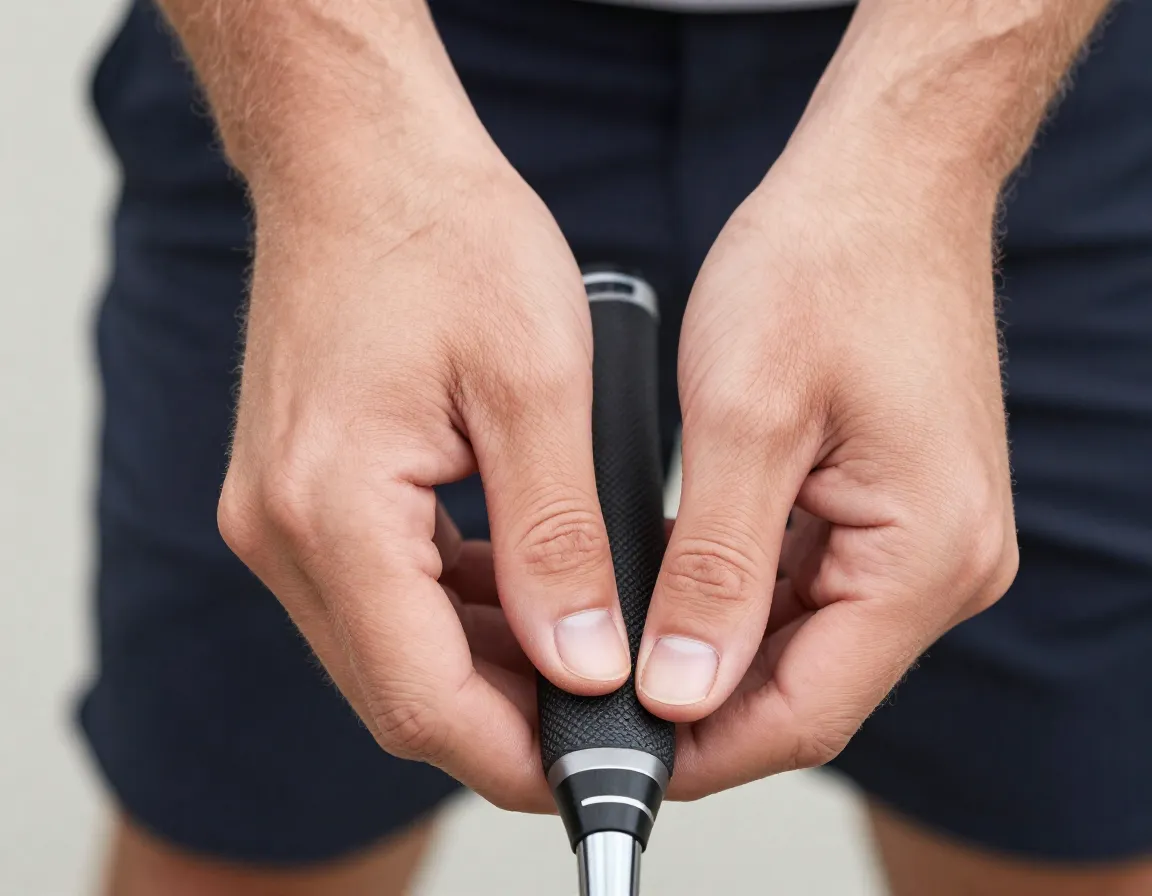
Grip pressure might be the most underestimated aspect of the golf swing. A tight grip restricts wrist movement and causes tension throughout your entire swing. Professionals describe the ideal grip pressure as holding a tube of toothpaste without squeezing any out—relaxed enough to allow natural clubhead release[2].
The Perfect Grip Formula:
- Pressure level: 4 out of 10 (where 10 is death grip)
- Hand position: Left hand shows 2-3 knuckles when looking down
- Right hand: Sits more in the fingers than the palm
- Connection: Both hands work as a single unit
Remember, distance comes from technique, not strength. Proper weight transfer from back foot to front foot and correct hip and shoulder rotation create speed without extra effort or strain[2].
Swing Mechanics That Transform Your Game
3. Start with a Simple Takeaway

The takeaway sets the tone for your entire swing. A simple 2-inch shoulder blade glide prevents swaying and keeps you centered while focusing on moving your body, not just your arms[1].
Perfect Takeaway Steps:
- Initiate with a slight shoulder turn
- Keep the clubhead low to the ground for the first 12 inches
- Maintain the triangle formed by your arms and shoulders
- Avoid lifting the club straight up with your hands
This fundamental move prevents the dreaded “over the top” swing that causes slices and weak contact.
4. Embrace Smooth Tempo Over Speed

Here’s a counterintuitive truth: slowing your swing slightly can actually increase both distance and accuracy. Professional golfers use controlled tempo that allows the club to return to impact squarely[2].
Tempo Training Tips:
- Count “1-2-3” during your backswing
- Pause slightly at the top
- Let gravity help start your downswing
- Focus on acceleration through impact, not at the start
“The golf swing is not about hitting the ball hard; it’s about hitting the ball well.” – Golf Professional
5. Focus on Weight Transfer

Proper weight transfer is what separates good golfers from great ones. During your backswing, approximately 60% of your weight should shift to your back foot. During the downswing, this weight dramatically shifts to your front foot through impact.
Weight Transfer Drill:
- Address: Weight evenly distributed
- Backswing: Feel weight move to back foot
- Downswing: Aggressively shift weight to front foot
- Follow-through: 90% of weight on front foot
6. Achieve a Balanced Finish Position

If you’re falling forward or backward after impact, your balance is off. A balanced finish is a clear sign of a good swing[2]. You should be able to hold your finish position for several seconds without wobbling.
Balanced Finish Checklist:
- ✅ Weight completely on front foot
- ✅ Back foot up on toes
- ✅ Belt buckle facing the target
- ✅ Hands high and around your body
- ✅ Eyes following ball flight
Advanced Fundamentals for Consistent Improvement
7. Develop Your Short Game Foundation

Chipping and putting make up a large portion of your total strokes, yet most beginners spend 90% of their practice time on full swings[2]. This is backwards thinking that keeps scores high.
Chipping Fundamentals:
- Keep hands slightly ahead of the ball at address
- Use a putting stroke motion with minimal wrist action
- Let the club do the work rather than trying to lift the ball
- Practice different clubs for various distances
Putting Basics:
- Setup: Eyes directly over the ball
- Stroke: Pendulum motion with shoulders
- Follow-through: Equal length to backswing
8. Practice with Purpose Using the “Feel vs. Real” Method

Avoid simply hitting balls without purpose. The most effective practice method uses “Feel vs. Real” training: take 5 practice swings focusing on a specific feel, then hit 5 full shots, repeated for 20 shots total. Then randomize clubs and targets to simulate actual course conditions[3].
Structured Practice Session:
- Warm-up: 10 minutes of stretching and easy swings
- Short game: 20 minutes on chipping and putting
- Full swing: 30 minutes using Feel vs. Real method
- Course simulation: 10 minutes hitting different clubs to various targets
This approach focuses on cause-and-effect coaching that holds up under pressure, simplifying your swing to avoid mental overload[4].
Putting It All Together
These 8 golf swing tips for beginners that fix 90% of common mistakes work because they address the root causes rather than symptoms. The golf swing operates as an interconnected system where each element affects the others[1]. By mastering these fundamentals in order, you’ll build a reliable, repeatable swing that improves with practice rather than falling apart under pressure.
Remember, improvement in golf is not linear. Some days will feel better than others, but consistent practice of these fundamentals will lead to steady progress. Focus on one tip at a time rather than trying to implement everything at once.
Conclusion
Mastering these 8 golf swing tips for beginners that fix 90% of common mistakes will transform your golf game from frustrating to enjoyable. The key is understanding that golf improvement comes from building solid fundamentals rather than searching for quick fixes or advanced techniques.
Start with your setup—perfect your stance, grip, and posture before worrying about swing mechanics. Focus on smooth tempo over power, develop proper weight transfer, and always finish in balance. Don’t neglect your short game, as it’s where you’ll see the fastest score improvements.
Your next steps:
- Choose one tip to focus on during your next practice session
- Use the “Feel vs. Real” method for purposeful practice
- Track your progress by noting improvements in ball contact and consistency
- Be patient with the process—lasting improvement takes time
Remember, every professional golfer started as a beginner who struggled with these same fundamentals. The difference between golfers who improve and those who stay frustrated is commitment to practicing the basics correctly. Take these tips to the course, stay patient with your progress, and watch as your golf game transforms from a source of frustration into a lifetime of enjoyment.
References
[1] Golf Swing Tips For Beginners – https://rotaryswing.com/golf-swing-tips-for-beginners
[2] Golf Tips For Enthusiasts 2026 Pro Secrets Swing Fixes Beginner – https://www.golfbaytown.com/blog/golf-tips-for-enthusiasts-2026-pro-secrets-swing-fixes-beginner/
[3] The 2026 Golf Blueprint To Lower Scores – https://golftipsmag.com/the-2026-golf-blueprint-to-lower-scores/
[4] Watch – https://www.youtube.com/watch?v=Ts4rvrno-a4