8 Historic Golf Courses in Scotland Every Golfer Must Pilgrimage To
Scotland’s ancient links courses whisper tales of golf’s earliest days, where shepherds first swung primitive clubs across windswept coastal terrain more than 600 years ago. These hallowed grounds have witnessed the evolution of the sport from humble beginnings to the global phenomenon we know today. For passionate golfers seeking to connect with the very soul of the game, 8 Historic Golf Courses in Scotland Every Golfer Must Pilgrimage To represent the ultimate journey through golf’s most sacred sites.

Key Takeaways
- St Andrews Old Course remains the most iconic pilgrimage destination, featuring the legendary Road Hole and Swilcan Bridge
- Championship venues like Muirfield and Royal Troon offer world-class challenges on courses that have hosted multiple majors
- Ancient links layouts preserve traditional Scottish golf architecture with natural hazards, pot bunkers, and coastal elements
- Booking requirements vary significantly, with some courses requiring advance planning up to one year ahead
- Cultural significance extends beyond golf, offering insights into Scottish heritage, traditions, and the sport’s historical development
1. The Crown Jewel: St Andrews Old Course 🏆

The Old Course at St Andrews stands as golf’s most revered shrine, earning its place as the undisputed leader among the 8 Historic Golf Courses in Scotland Every Golfer Must Pilgrimage To. Dating back to the 15th century, this ancient links has hosted 29 Open Championships and continues to challenge golfers with its unique double greens, strategic pot bunkers, and infamous Road Hole [1].
What Makes St Andrews Special
The Old Course’s 18th hole provides one of golf’s most emotional finishes, with the iconic Swilcan Bridge serving as a ceremonial crossing point for champions and weekend warriors alike. The course’s shared fairways and massive double greens create strategic decisions unlike anywhere else in golf.
“St Andrews is the alpha and omega of golf. No golfer has played the game until they’ve experienced the Old Course.” – Golf historian Herbert Warren Wind
Key Features:
- Established: 15th century
- Par: 72 (6,721 yards)
- Notable holes: Road Hole (17th), Tom Morris (18th)
- Booking: Ballot system or advanced reservations
- Green fees: £270-£290 (2025 rates)
Planning Your St Andrews Pilgrimage
Securing a tee time requires patience and planning. The daily ballot system offers walk-up opportunities, while advance bookings open exactly one year prior to play dates. Many golfers combine their Old Course experience with rounds on the New Course, Jubilee Course, or Castle Course to maximize their St Andrews experience.
2. Muirfield: The Honourable Company’s Masterpiece
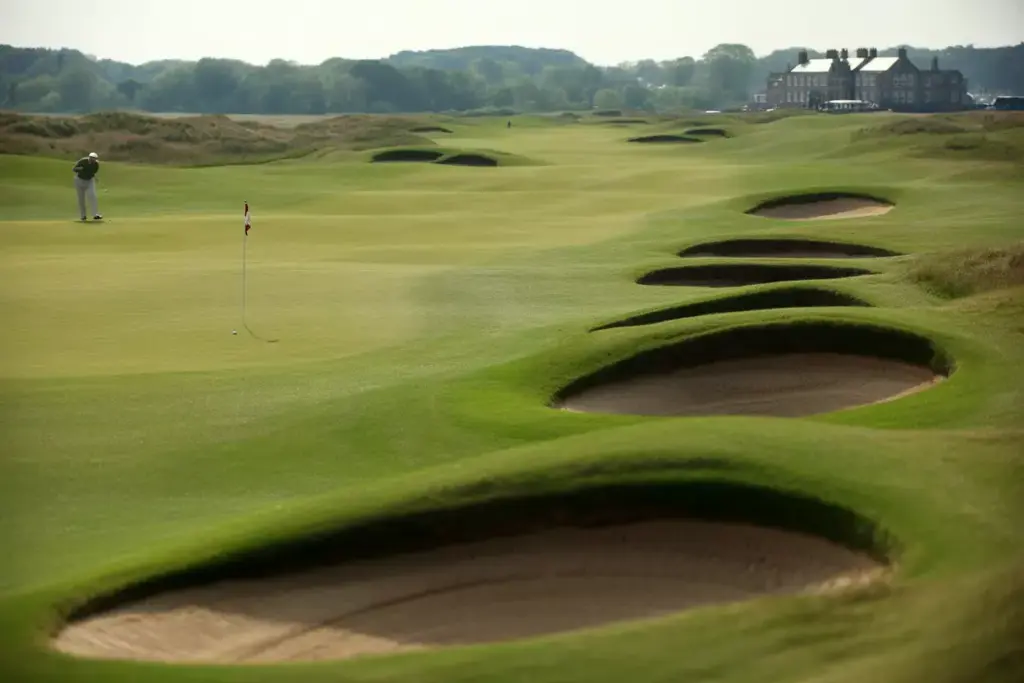
Muirfield Golf Club, home to The Honourable Company of Edinburgh Golfers, represents pure championship golf among Scotland’s most prestigious venues. This East Lothian links has hosted 16 Open Championships since 1892, including memorable victories by legends like Jack Nicklaus, Gary Player, and Tom Watson [2].
Championship Pedigree and Design Excellence
The course’s clockwise routing ensures golfers face varying wind conditions throughout their round, while strategically placed bunkers and firm, fast conditions demand precision over power. Muirfield’s immaculate conditioning and traditional links features create an authentic Scottish golf experience.
Course Highlights:
- Yardage: 7,245 yards (Championship tees)
- Par: 71
- Designer: Tom Morris Sr. (original layout)
- Open Championships: 16 (most recent: 2013)
- Signature feature: Perfectly manicured fairways with strategic bunkering
Visitor Access and Etiquette
Muirfield maintains strict dress codes and traditional protocols. Visitors must be accompanied by members or book through authorized tour operators. The club’s historic clubhouse showcases golf memorabilia and maintains the formal atmosphere befitting its championship heritage.
3. Royal Troon: Where Champions Are Made

Royal Troon Golf Club combines two exceptional courses – the Old Course and Portland Course – creating a comprehensive links experience on Scotland’s Ayrshire coast. The Old Course has hosted 10 Open Championships, including Henrik Stenson’s record-breaking victory in 2016 [3].
The Postage Stamp and Other Legendary Holes
The 8th hole, known as the “Postage Stamp,” measures just 123 yards but has humbled countless professionals with its tiny green surrounded by deep bunkers. This par-3 masterpiece exemplifies how strategic design trumps raw distance in traditional Scottish golf.
Notable Features:
- 8th hole “Postage Stamp”: 123-yard par-3 terror
- Railway holes: Coastal stretch from 9th-11th
- Portland Course: Excellent warm-up or alternative round
- Royal designation: Granted in 1978
- Total yardage: 7,175 yards (Old Course)
Wind and Weather Challenges
Royal Troon’s exposed coastal location subjects golfers to fierce winds that can transform club selection and strategy dramatically. The outward nine plays along the coastline, while the inward nine turns inland, creating contrasting challenges that test every aspect of a golfer’s game.
4. Carnoustie Golf Links: The Toughest Test
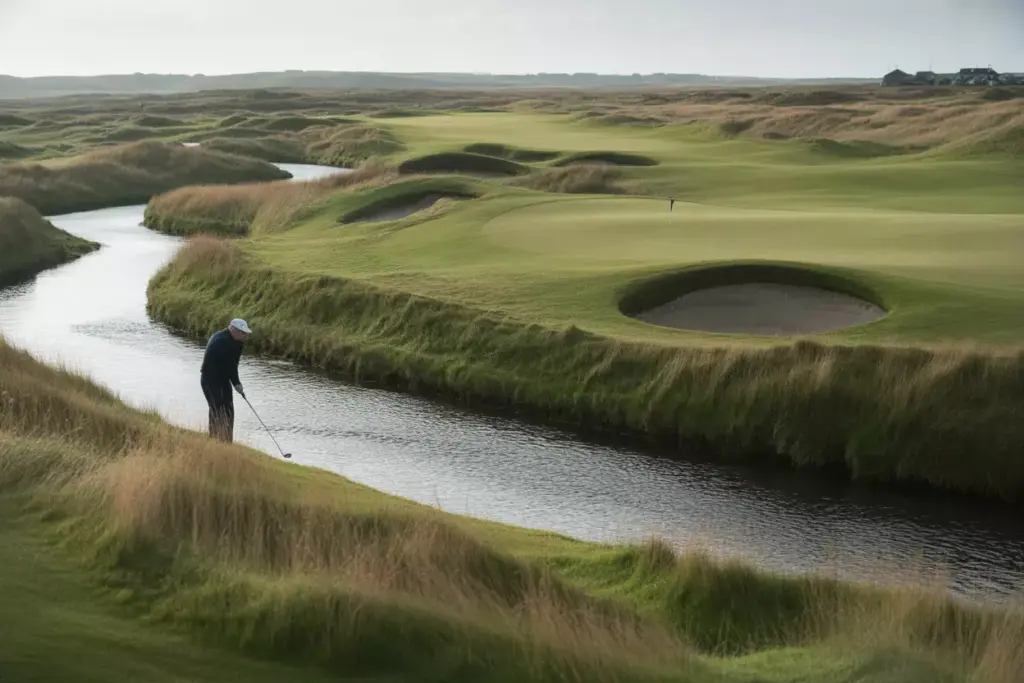
Carnoustie Golf Links has earned its reputation as “Golf’s Greatest Test” through decades of challenging the world’s best players. This Angus links has hosted 8 Open Championships and consistently ranks among the most difficult courses in professional golf [4].
The Championship Course Challenge
Carnoustie’s Championship Course stretches over 7,400 yards and features the treacherous Barry Burn snaking through multiple holes. The 18th hole has witnessed dramatic conclusions, including Jean van de Velde’s infamous collapse in 1999.
Championship Statistics:
- Length: 7,421 yards (Championship tees)
- Par: 72
- Water hazards: Barry Burn affects 6 holes
- Rough: Notoriously thick and penal
- Wind factor: Constant coastal influence
Beyond the Championship Course
The facility includes the Burnside Course and Buddon Links, offering alternative experiences while maintaining Carnoustie’s challenging character. These courses provide excellent preparation for tackling the Championship layout or serve as worthy destinations in their own right.
Essential Planning Guide for Scotland’s Historic Golf Pilgrimage
Successfully experiencing these 8 Historic Golf Courses in Scotland Every Golfer Must Pilgrimage To requires careful planning and preparation. Each venue presents unique booking challenges, seasonal considerations, and cultural protocols that enhance the overall experience.
Booking Strategies and Timing
Advance Planning Timeline:
- 12 months ahead: St Andrews Old Course reservations open
- 6-8 months ahead: Major championship venues (Muirfield, Royal Troon)
- 3-4 months ahead: Secondary courses and backup options
- 1 month ahead: Final confirmations and weather contingencies
Seasonal Considerations
Peak Season (May-September):
- Advantages: Longest daylight, warmest weather, optimal course conditions
- Disadvantages: Highest green fees, crowded courses, difficult bookings
- Recommendation: Book early, expect premium pricing
Shoulder Season (April, October):
- Advantages: Lower fees, fewer crowds, dramatic Scottish weather
- Disadvantages: Shorter days, unpredictable conditions
- Recommendation: Pack layers, embrace authentic Scottish golf experience
5. Prestwick Golf Club: The Original Open Venue

Prestwick Golf Club holds the distinguished honor of hosting the first 12 Open Championships from 1860-1872, establishing many traditions that continue today. This Ayrshire links features blind shots, railway boundaries, and quirky holes that reflect golf’s earliest strategic principles [5].
Historical Significance and Unique Features
The 3rd hole “Cardinal” requires a blind tee shot over a massive sand hill, while the 17th hole “Alps” demands an approach shot over a towering dune to a hidden green. These original design elements showcase how early golf architects worked with natural terrain rather than against it.
Historic Highlights:
- First Open Championship: 1860 (won by Willie Park Sr.)
- Signature holes: Cardinal (3rd), Alps (17th)
- Length: 6,544 yards
- Par: 71
- Unique features: Railway boundary, blind shots, ancient bunkers
Preserving Golf’s Heritage
Prestwick maintains its original character despite modern pressures to lengthen and standardize courses. The club’s commitment to historical preservation offers golfers an authentic glimpse into how the game was played during its formative years.
6. North Berwick Golf Club: The Redan Template

North Berwick Golf Club contributed several template holes to golf architecture, most notably the 15th hole “Redan” that has been copied worldwide. This East Lothian links combines spectacular scenery with strategic golf along the Firth of Forth coastline [6].
Architectural Innovation and Influence
The Redan hole features an angled green that rewards precise approach shots while punishing wayward attempts. This design concept has influenced golf course architects for over a century, appearing on courses from National Golf Links of America to Shinnecock Hills.
Course Characteristics:
- Redan hole: 15th, 192-yard par-3
- Coastal views: Bass Rock and Firth of Forth
- Length: 6,420 yards
- Par: 71
- Architectural significance: Template hole designs
Natural Beauty and Golf Heritage
The course’s seaside setting provides constant visual drama, with Bass Rock serving as a dramatic backdrop. Tantallon Castle ruins overlook several holes, connecting golfers to Scotland’s rich history beyond the game itself.
7. Royal Dornoch Golf Club: Highland Perfection
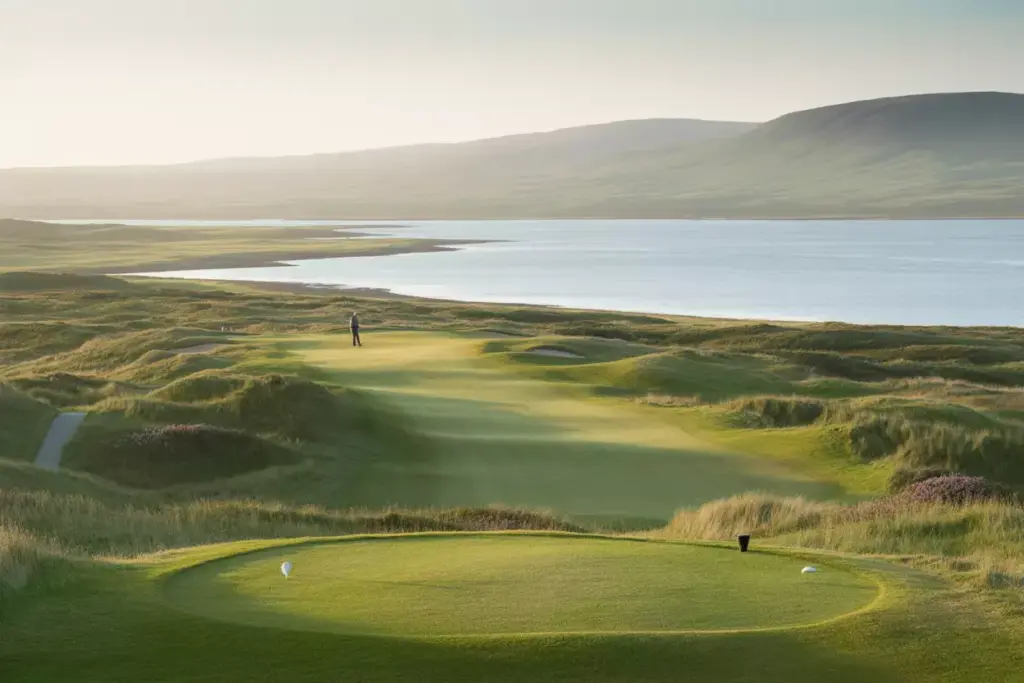
Royal Dornoch Golf Club represents links golf at its most pure and natural, carved from the sandy soil of the Scottish Highlands. This remote gem has influenced golf course design worldwide and consistently ranks among the planet’s finest courses [7].
Natural Links Perfection
The Championship Course flows seamlessly across natural dunes and valleys, with elevated tees and plateau greens creating dramatic shot values. The 14th hole “Foxy” exemplifies strategic design, requiring precise positioning for the best approach angle.
Highland Excellence:
- Location: Sutherland, Scottish Highlands
- Length: 6,745 yards
- Par: 70
- Designer: Tom Morris Sr. (original routing)
- Royal designation: 1906
Remote Beauty and Tranquility
Royal Dornoch’s isolated location ensures uncrowded rounds and pristine conditions. The Dornoch Firth provides stunning water views, while the Highland landscape creates a sense of golfing in nature’s cathedral.
8. The Old Course at Ballybunion: Links Perfection
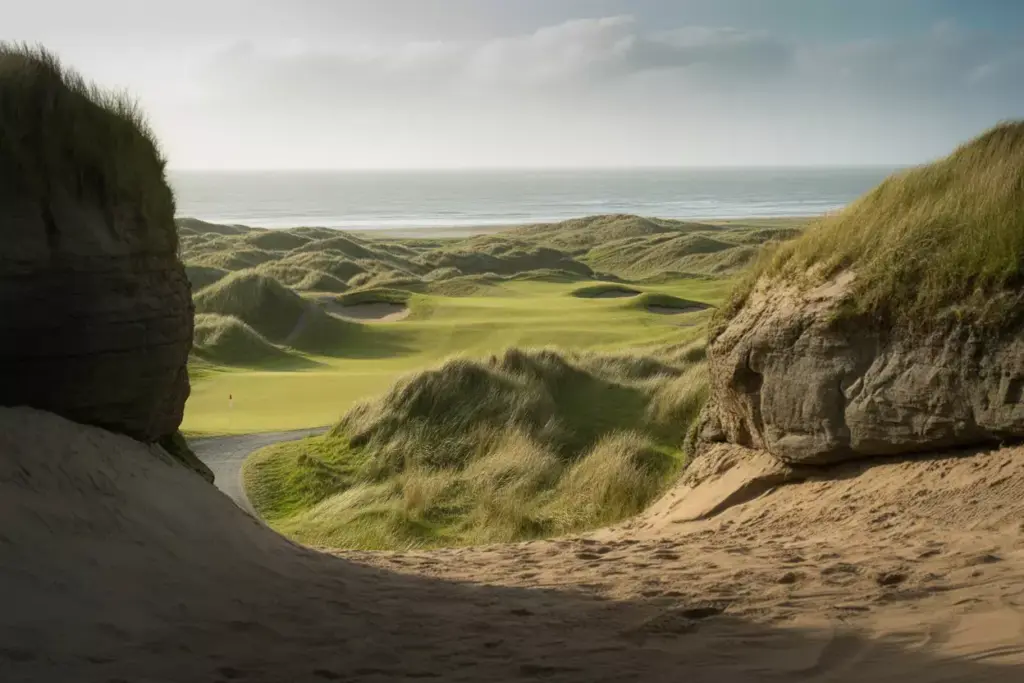
While technically located in Ireland, Ballybunion Golf Club deserves inclusion among Scotland’s historic pilgrimage sites due to its pure links character and strategic brilliance. This County Kerry masterpiece showcases how traditional links golf principles create timeless challenges [8].
Strategic Brilliance and Natural Beauty
The Old Course winds through towering sand dunes along the Atlantic coast, with each hole presenting unique challenges and spectacular vistas. The 11th hole ranks among the world’s finest par-4s, requiring precise navigation through dune-framed fairways.
Links Characteristics:
- Dunes: Massive natural sand hills
- Atlantic exposure: Constant wind factor
- Length: 6,593 yards
- Par: 71
- Signature holes: 7th, 11th, 17th
Cultural Immersion and Golf Traditions
Experiencing these 8 Historic Golf Courses in Scotland Every Golfer Must Pilgrimage To extends beyond the golf itself into Scotland’s rich cultural heritage. Each venue offers opportunities to connect with local traditions, sample regional cuisine, and understand golf’s role in Scottish society.
Traditional Scottish Golf Etiquette
Pace of Play: Scottish golf emphasizes efficient play and course respect
Dress Codes: Traditional attire expected at prestigious venues
Clubhouse Protocol: Formal dining areas and member spaces require appropriate behavior
Caddies: Local knowledge enhances the experience and supports community traditions
Regional Specialties and Accommodations
St Andrews: Historic town with university atmosphere and golf shops
Ayrshire Coast: Whisky distilleries and coastal villages
East Lothian: Edinburgh proximity and cultural attractions
Highlands: Remote beauty and traditional Scottish hospitality
Conclusion: Your Scottish Golf Pilgrimage Awaits
The 8 Historic Golf Courses in Scotland Every Golfer Must Pilgrimage To represent more than exceptional golf experiences – they offer connections to the sport’s deepest roots and most cherished traditions. From St Andrews’ ancient links to Royal Dornoch’s Highland perfection, each course provides unique insights into how golf evolved from humble Scottish origins into a global passion.
Your Next Steps:
- Prioritize your must-play venues based on personal interests and available time
- Begin booking process 6-12 months in advance for popular courses
- Research cultural attractions and accommodations in each region
- Prepare for Scottish weather with appropriate clothing and equipment
- Embrace the experience beyond golf scores – focus on history, tradition, and natural beauty
These legendary courses await your footsteps, ready to share their stories and challenge your game. Whether you’re walking across the Swilcan Bridge at St Andrews or navigating Carnoustie’s treacherous burns, your Scottish golf pilgrimage will create memories that last a lifetime and deepen your appreciation for golf’s magnificent heritage.
References
[1] R&A World Golf Museum. “History of St Andrews Old Course.” Royal and Ancient Golf Club of St Andrews, 2025.
[2] The Honourable Company of Edinburgh Golfers. “Muirfield Championship History.” Official Club Records, 2025.
[3] Royal Troon Golf Club. “Open Championship Heritage.” Club Archives, 2025.
[4] Carnoustie Golf Links. “Championship Course Statistics.” Official Course Guide, 2025.
[5] Prestwick Golf Club. “The First Open Championships.” Historical Society Records, 2025.
[6] North Berwick Golf Club. “Architectural Influence and the Redan Hole.” Club History, 2025.
[7] Royal Dornoch Golf Club. “Highland Links Golf Heritage.” Official Club Publications, 2025.
[8] Ballybunion Golf Club. “Old Course Design and Strategy.” Course Management Records, 2025.