8 Smart Golf Course Backyard Fence Ideas for Privacy and Style
Living adjacent to a golf course offers stunning views and open space, but it also presents unique challenges when it comes to maintaining privacy and protecting your outdoor living areas. Whether you’re dealing with wayward golf balls, curious golfers peering into your yard, or simply wanting to create a more intimate outdoor space, the right fencing solution can transform your golf course backyard into a private oasis without sacrificing style.
Disclosure: This post contains affiliate links. As an Amazon Associate, we earn from qualifying purchases, and at no extra cost to you.
Key Takeaways
- Strategic fence placement along golf course boundaries can provide privacy while maintaining scenic views through careful height and material selection
- Multi-functional designs combine privacy, ball protection, and aesthetic appeal using materials like composite panels, decorative metal, and living hedges
- Height considerations typically range from 6-8 feet for optimal privacy while respecting community guidelines and maintaining neighborly relationships
- Material choices should withstand golf ball impacts while complementing your home’s architecture and the natural golf course landscape
- Professional installation ensures proper placement, drainage, and compliance with both HOA regulations and local building codes
Privacy-Focused Fence Solutions for Golf Course Properties
Creating privacy in a golf course backyard requires thoughtful planning and strategic design choices. These 8 Smart Golf Course Backyard Fence Ideas for Privacy and Style address the unique challenges of golf course living while enhancing your property’s value and appeal.
1. Tall Wooden Privacy Panels with Decorative Tops
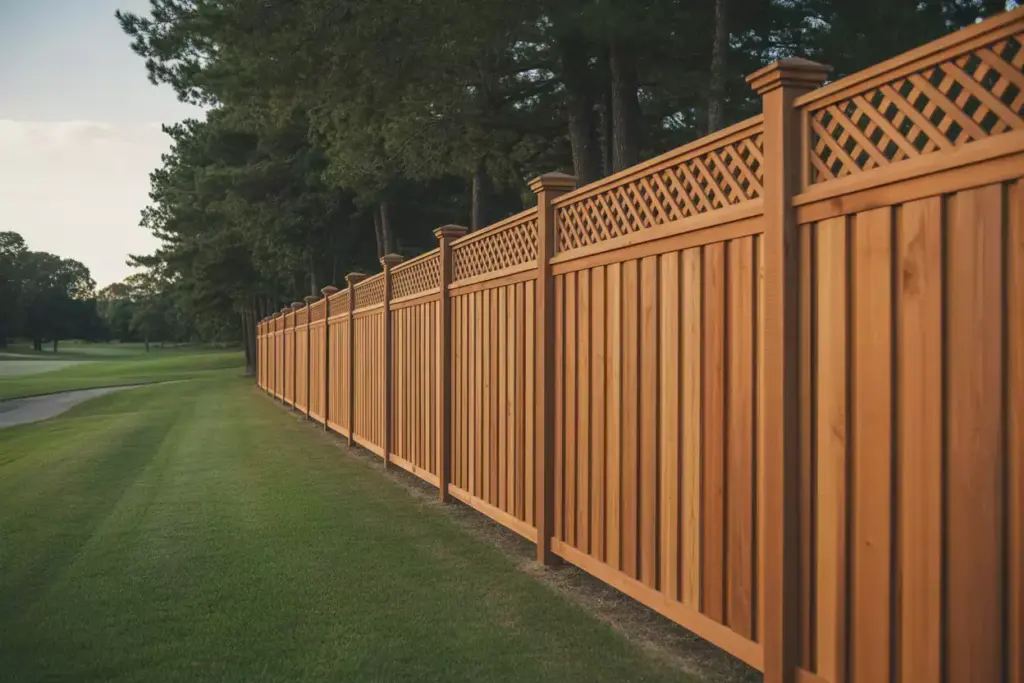
Solid wood privacy fencing remains one of the most effective solutions for golf course properties. Cedar or pressure-treated pine panels standing 6-8 feet tall create an immediate privacy barrier while offering excellent protection from golf balls.
Key Features:
- Height flexibility from 6-8 feet depending on local regulations
- Decorative top options including lattice work, curved cuts, or stepped designs
- Natural weather resistance when properly treated and maintained
- Cost-effective installation compared to many alternative materials
The beauty of wooden privacy panels lies in their versatility. Homeowners can choose from various wood types, stain colors, and decorative elements to match their home’s exterior. Adding a lattice top section provides additional height for privacy while maintaining an open, less imposing appearance.
Pro Tip: Install panels with the finished side facing your property for maximum aesthetic appeal, and consider adding a cap rail to prevent water damage and extend fence life.
2. Composite Privacy Fencing for Low Maintenance
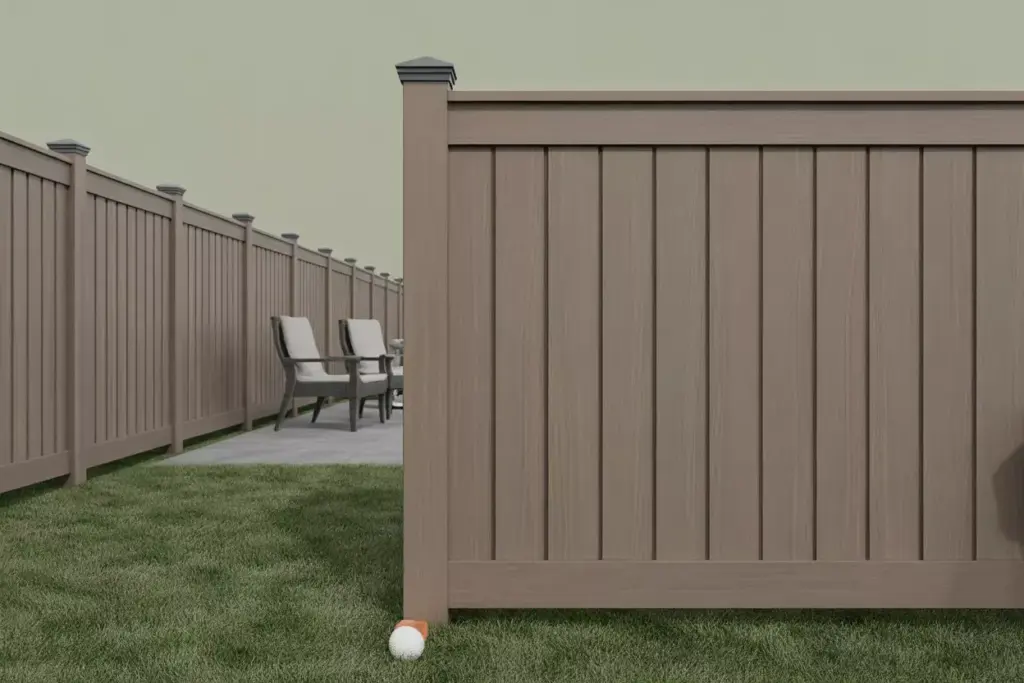
Composite fencing materials offer the appearance of natural wood without the ongoing maintenance requirements. These engineered products combine recycled wood fibers with plastic polymers, creating durable panels that resist fading, warping, and insect damage.
Advantages of Composite Fencing:
- Weather resistance withstands harsh sun, rain, and temperature fluctuations
- No annual staining or sealing required
- Consistent appearance maintains color and texture over time
- Golf ball impact resistance due to flexible yet strong construction
Modern composite options come in various colors and textures, from traditional wood grains to contemporary smooth finishes. While the initial investment is higher than natural wood, the long-term savings on maintenance make composite fencing an intelligent choice for busy homeowners.
3. Living Privacy Hedges with Structural Support
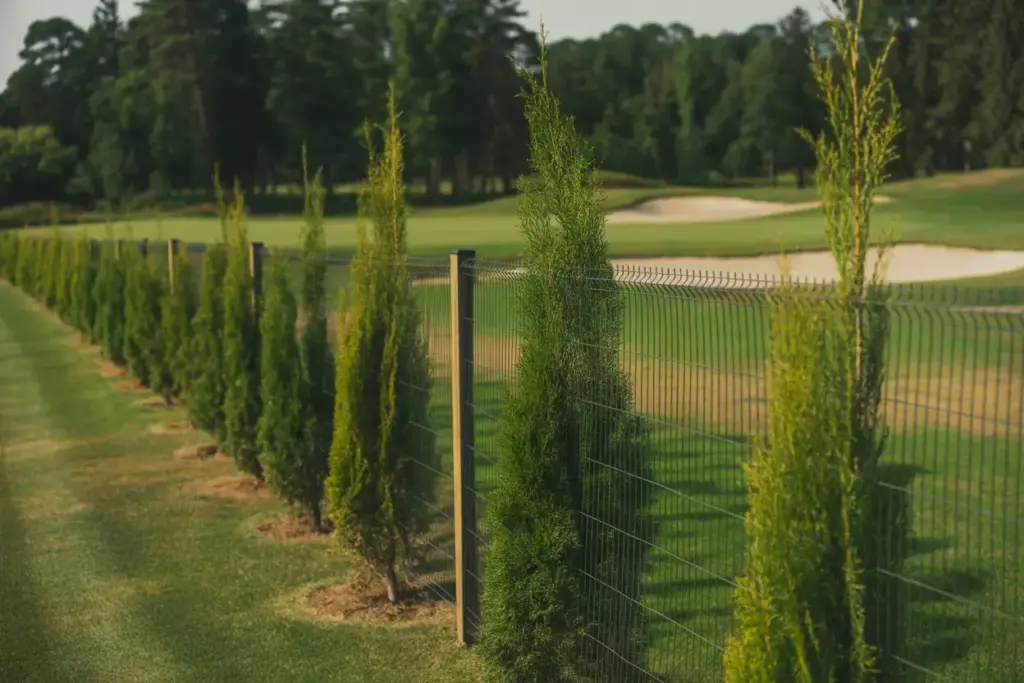
Natural hedge barriers provide privacy while maintaining the organic feel of the golf course environment. Fast-growing evergreen species like Leyland Cypress, Green Giant Arborvitae, or Bamboo create dense screening that improves over time.
Popular Hedge Options:
- Leyland Cypress: Fast growth (3-4 feet annually), dense coverage
- Green Giant Arborvitae: Cold hardy, maintains color year-round
- Clumping Bamboo: Rapid growth, exotic appearance, natural sound barrier
- Privet Hedging: Traditional choice, responds well to pruning
Living hedges require 3-5 years to reach full screening potential, so many homeowners combine them with temporary fencing or install them behind existing structures. The natural appearance blends seamlessly with golf course landscaping while providing habitat for local wildlife.
Installation Tip: Plant hedges 3-4 feet apart for faster coverage, and consider installing a temporary screen fence while plants establish.
Stylish Decorative Options That Enhance Curb Appeal
Beyond basic privacy, these 8 Smart Golf Course Backyard Fence Ideas for Privacy and Style include decorative elements that transform functional barriers into attractive landscape features.
4. Ornamental Iron with Privacy Screening
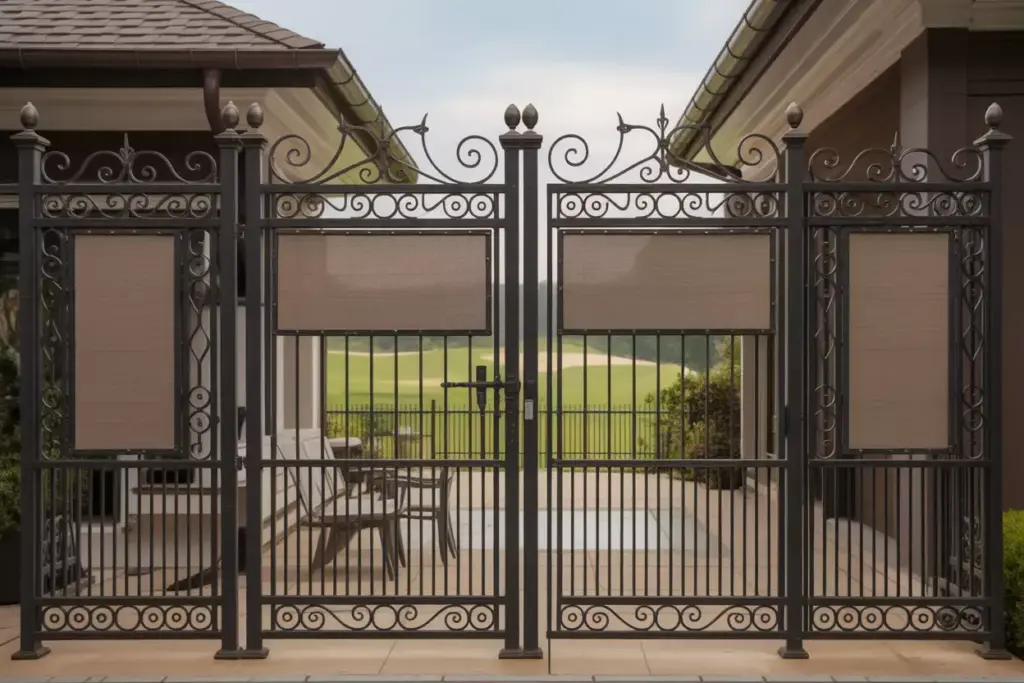
Decorative metal fencing combines the elegance of traditional ironwork with modern privacy solutions. Ornamental aluminum or steel frameworks support privacy panels, screens, or climbing plants while maintaining sophisticated curb appeal.
Design Elements:
- Custom scrollwork and decorative finials
- Powder-coated finishes in various colors
- Integrated privacy panels of wood, composite, or metal
- Low maintenance requirements with proper coating
This approach works particularly well for upscale golf course communities where architectural guidelines favor more refined fencing solutions. The metal framework provides structural integrity while privacy inserts can be customized or replaced as needed.
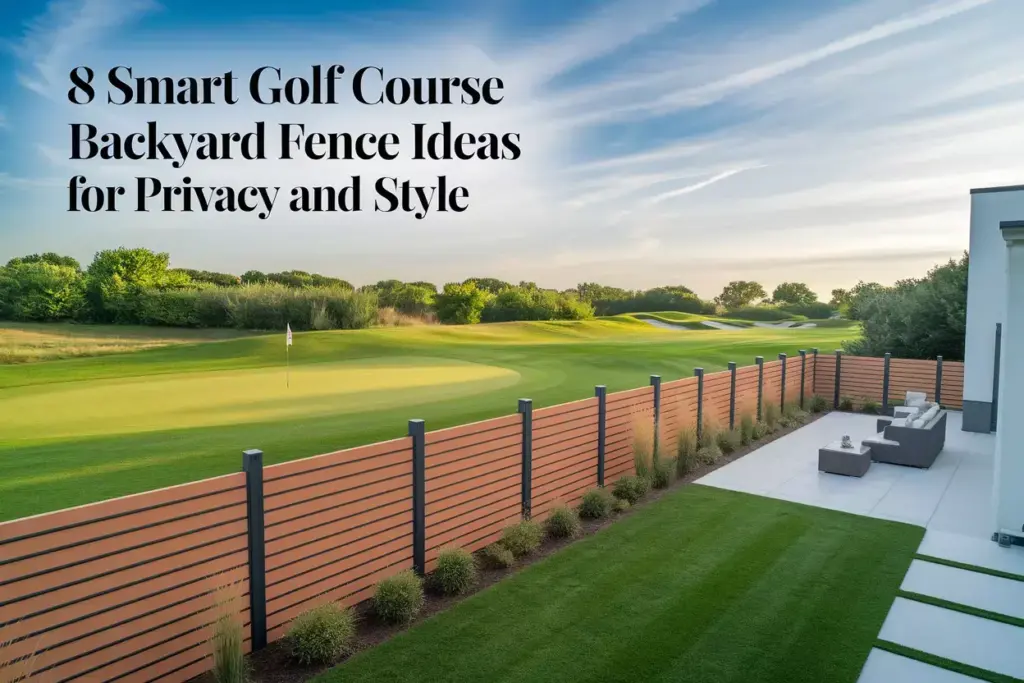
5. Horizontal Slat Fencing for Modern Appeal
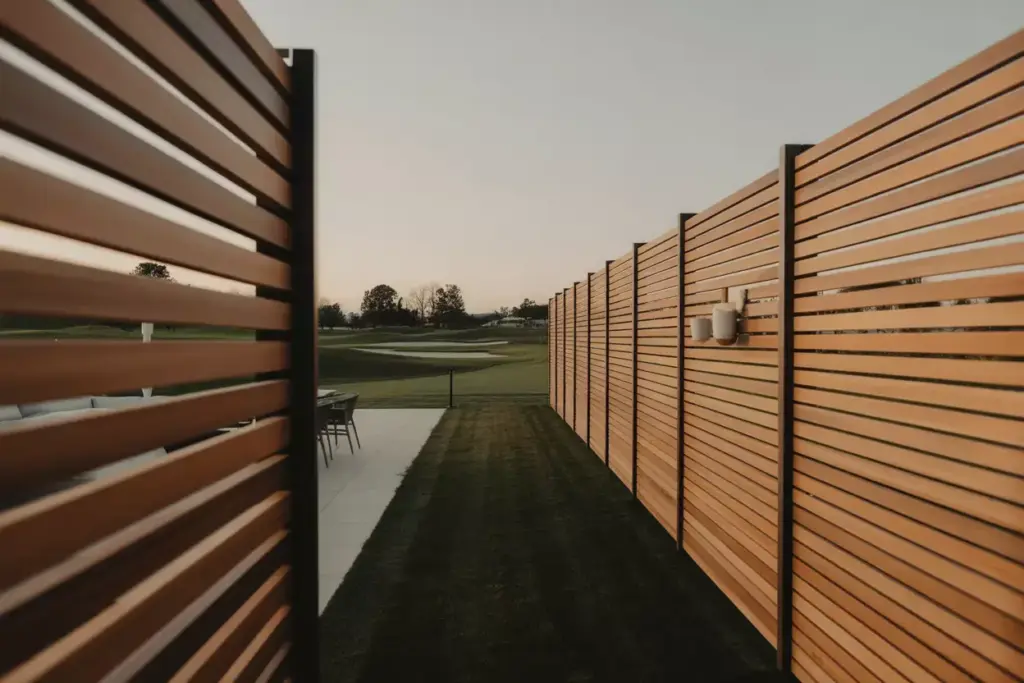
Contemporary horizontal designs offer a fresh alternative to traditional vertical fencing. Horizontal slats create clean lines that complement modern architecture while providing excellent privacy coverage.
Material Options:
- Cedar horizontal slats with natural or stained finishes
- Composite horizontal panels in various colors
- Metal slat systems with powder-coated finishes
- Mixed material designs combining wood and metal elements
The horizontal orientation creates visual width, making yards appear larger while providing the privacy needed for golf course properties. Spacing between slats can be adjusted to balance privacy with airflow and light penetration.
6. Stone Pillars with Panel Inserts
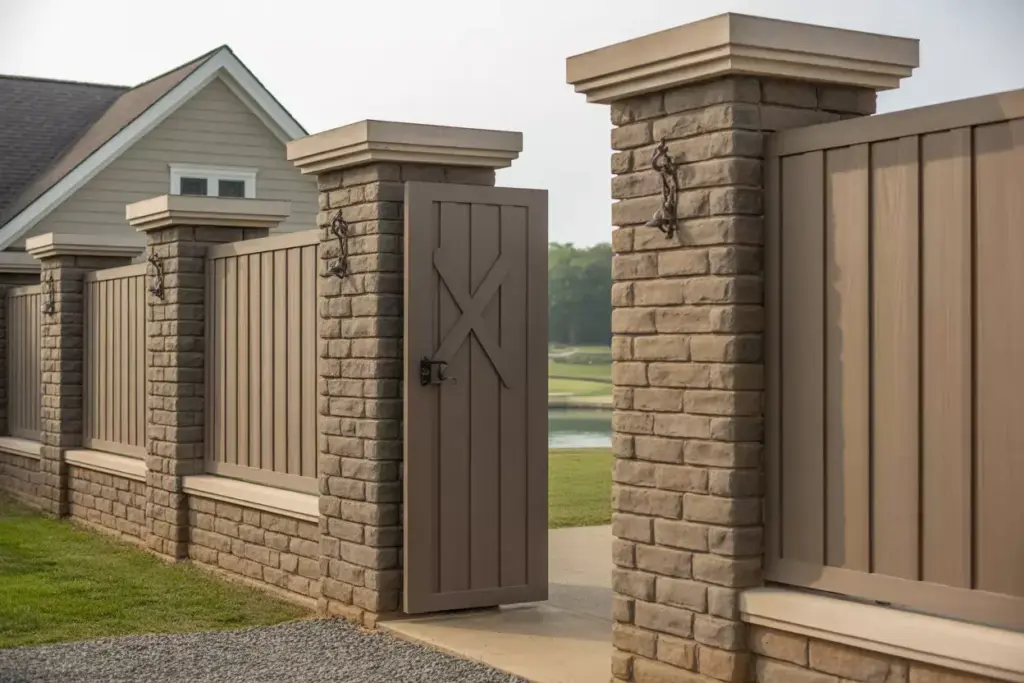
Masonry and panel combinations create substantial, permanent privacy solutions with exceptional curb appeal. Stone or brick pillars support wood, composite, or metal panels while adding architectural interest and property value.
Construction Benefits:
- Permanent installation increases property value
- Weather resistance of masonry components
- Design flexibility with various panel materials
- Professional appearance suitable for upscale communities
Stone pillar fencing works exceptionally well on golf course properties because it echoes the substantial landscaping and architecture common in these communities. The pillars can incorporate lighting, address numbers, or decorative elements.
7. Bamboo Screening for Natural Privacy
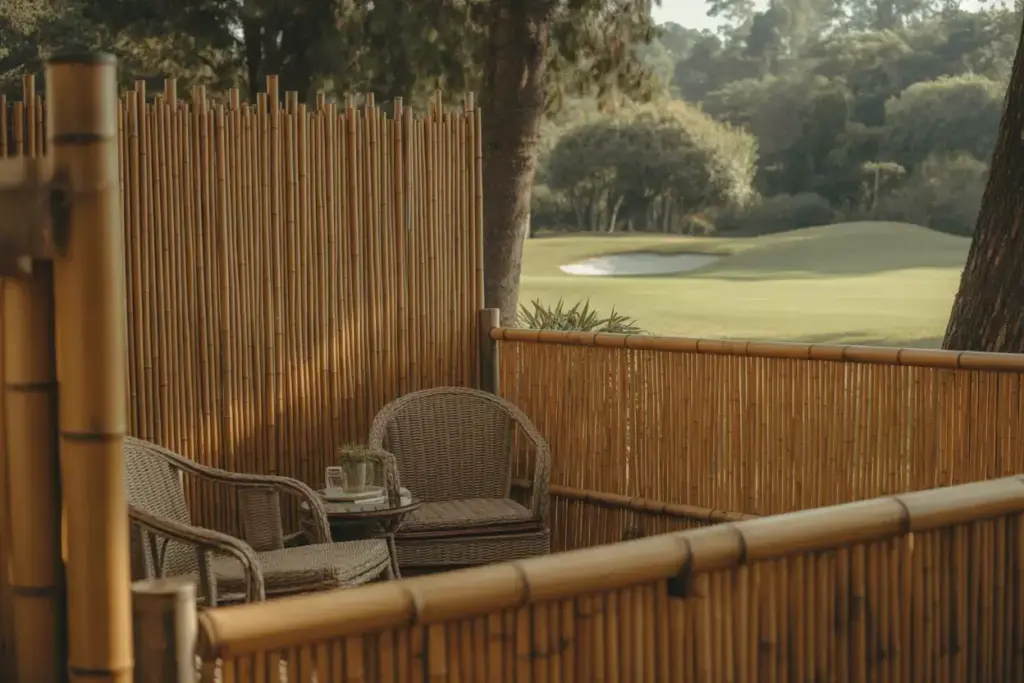
Bamboo fencing panels provide instant privacy with an organic, spa-like aesthetic. Natural bamboo screens or living bamboo plants create dense barriers that complement the natural golf course environment.
Bamboo Advantages:
- Rapid installation with pre-made panels
- Natural sound dampening reduces golf course noise
- Sustainable material choice
- Unique aesthetic appeal
Important Consideration: Choose clumping bamboo varieties rather than running bamboo to prevent unwanted spreading. Natural bamboo panels require periodic replacement, while living bamboo provides long-term screening with proper variety selection.
8. Multi-Level Fencing with Integrated Landscaping
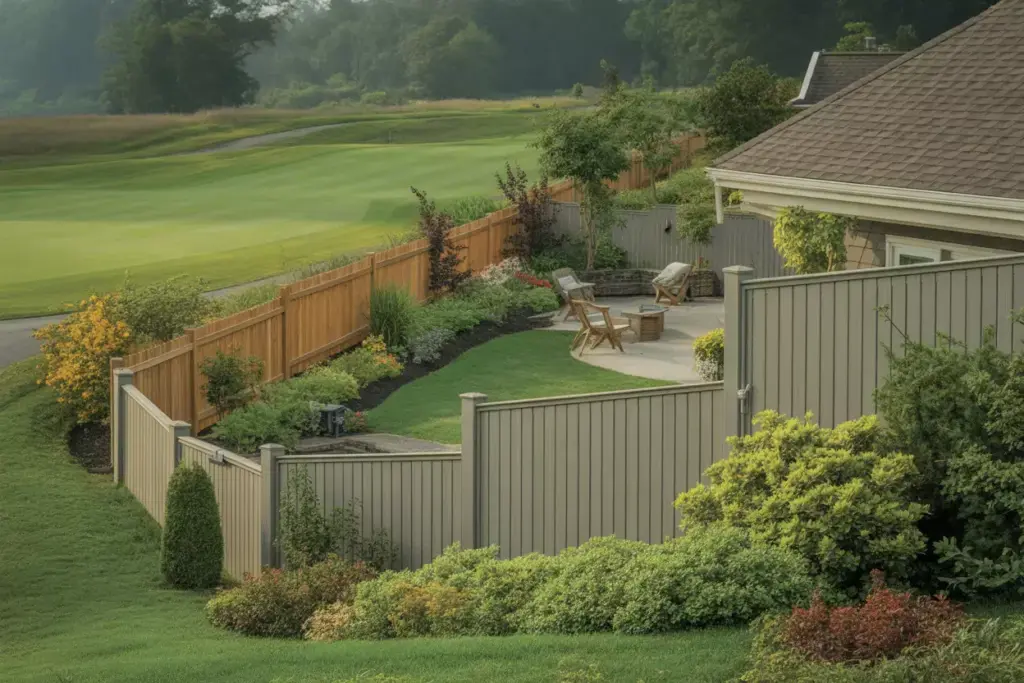
Terraced privacy solutions combine different fence heights with integrated landscaping for maximum visual appeal. This approach creates depth and interest while addressing varying privacy needs across the property.
Design Components:
- Stepped fence heights following natural terrain
- Integrated planting beds with privacy shrubs and perennials
- Multiple material combinations for visual interest
- Functional zones for different outdoor activities
Multi-level designs work particularly well on sloped lots common near golf courses. Lower sections maintain views while taller sections provide privacy for patios, pools, or other intimate spaces.
Installation Considerations and Professional Tips
Implementing these 8 Smart Golf Course Backyard Fence Ideas for Privacy and Style requires careful planning and attention to local regulations, property lines, and community guidelines.
Planning and Permits
Before beginning any fencing project, research local building codes and HOA regulations. Many golf course communities have specific guidelines regarding fence height, materials, and placement. Contact your local building department to determine permit requirements and setback regulations.
Essential Planning Steps:
- Survey property lines to ensure accurate placement
- Check utility locations before digging post holes
- Review HOA covenants for material and height restrictions
- Consider neighbor relationships and shared boundary agreements
Professional vs. DIY Installation
While some fence types lend themselves to DIY installation, golf course properties often benefit from professional installation due to terrain challenges, soil conditions, and the importance of proper drainage around golf course boundaries.
Professional Installation Benefits:
- Proper drainage design to prevent water issues
- Terrain management on sloped or uneven lots
- Code compliance assurance
- Warranty protection on materials and labor
Maintenance and Longevity
Different fence materials require varying maintenance approaches. Natural wood needs annual cleaning and periodic staining, while composite and metal options require minimal upkeep. Consider long-term maintenance costs when selecting materials.
Maintenance Schedules:
- Wood fencing: Annual inspection, cleaning, and staining every 2-3 years
- Composite fencing: Annual washing, periodic panel inspection
- Metal fencing: Annual inspection, touch-up painting as needed
- Living hedges: Regular pruning, fertilizing, and pest management
Cost Analysis and Budget Planning
Investment in quality fencing pays dividends in privacy, property value, and enjoyment of outdoor spaces. Understanding cost factors helps homeowners make informed decisions about materials and installation approaches.
Material Cost Comparisons
| Fence Type | Cost per Linear Foot | Lifespan | Maintenance |
|---|---|---|---|
| Pressure-treated wood | $15-25 | 10-15 years | Moderate |
| Cedar privacy panels | $25-40 | 15-20 years | Moderate |
| Composite fencing | $35-55 | 25-30 years | Low |
| Ornamental iron | $40-80 | 20-25 years | Low |
| Stone pillar/panel | $50-100 | 30+ years | Very low |
Long-term Value Considerations
Quality fencing represents a significant investment that enhances property value, particularly in desirable golf course communities. Well-designed privacy solutions can increase property values by 5-10% while dramatically improving quality of life.
Value-Adding Features:
- Professional installation with proper permits
- Quality materials appropriate for local climate
- Aesthetic integration with existing landscaping
- Functional design addressing specific privacy needs
Conclusion
These 8 Smart Golf Course Backyard Fence Ideas for Privacy and Style provide comprehensive solutions for homeowners seeking to enhance their outdoor living experience while maintaining the benefits of golf course proximity. From traditional wooden privacy panels to innovative multi-level designs, each option addresses specific needs while contributing to property value and aesthetic appeal.
The key to successful golf course fence installation lies in balancing privacy requirements with community standards, selecting appropriate materials for local conditions, and ensuring professional installation that complies with all regulations. Whether choosing natural hedging for organic appeal, composite panels for low maintenance, or ornamental iron for sophisticated style, the right fence transforms your golf course backyard into a private retreat.
Next Steps:
- Assess your specific privacy needs and budget parameters
- Research local regulations and HOA requirements
- Consult with fencing professionals for site evaluation and quotes
- Select materials that complement your home’s architecture and local climate
- Plan installation timing to minimize disruption to your outdoor activities
Investing in quality fencing solutions enhances both the functionality and beauty of your golf course property while providing years of enhanced privacy and enjoyment.