6 Genius Golf Yard Design Plans to Practice Your Short Game at Home
Picture this: It’s 6 AM on a Tuesday, and instead of rushing to the crowded driving range before work, you step into your backyard where a perfectly manicured putting green awaits. The morning dew glistens on your custom chipping area, and your practice bunker sits ready for another session of perfecting those tricky sand shots. This isn’t a fantasy—it’s the reality that thousands of golfers are creating with 6 Genius Golf Yard Design Plans to Practice Your Short Game at Home.
Disclosure: This post contains affiliate links. As an Amazon Associate, we earn from qualifying purchases, and at no extra cost to you.
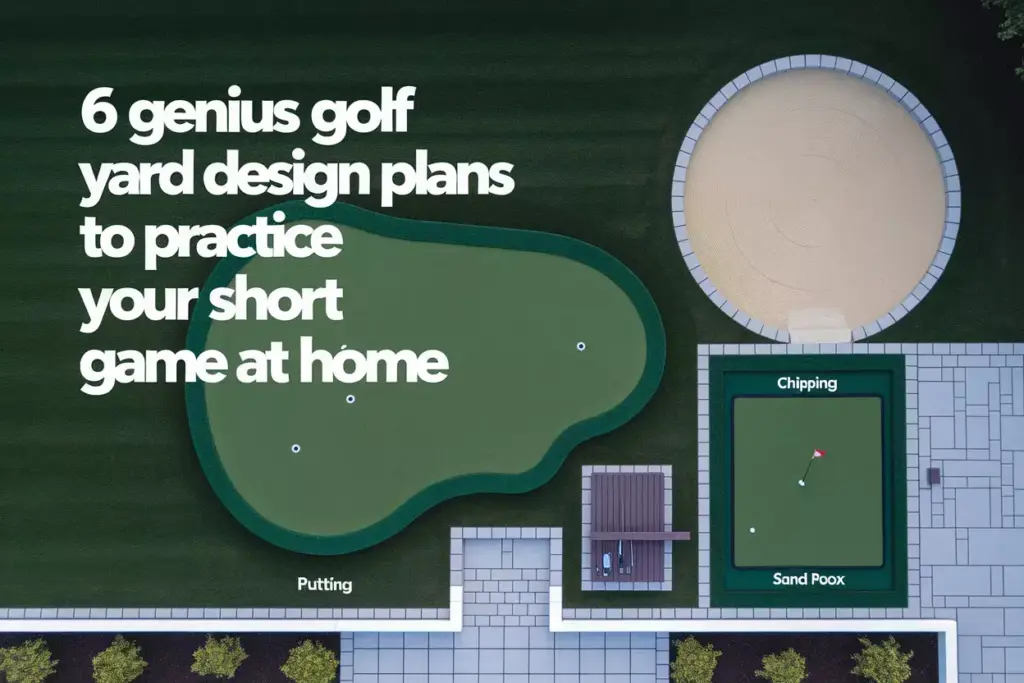
The short game accounts for roughly 60% of all golf shots, yet most amateur golfers spend less than 20% of their practice time working on these crucial skills. By transforming your backyard into a personal golf practice sanctuary, you can flip this equation and watch your scores plummet. Whether you’re working with a sprawling suburban lot or a compact urban space, these innovative design plans will help you create a practice area that rivals any country club facility.
Key Takeaways
- Space optimization is crucial: Even small yards can accommodate effective short game practice areas with smart design choices
- Multi-functional designs maximize value: The best backyard golf setups serve multiple purposes and integrate seamlessly with existing landscaping
- Quality materials ensure longevity: Investing in professional-grade artificial turf and proper drainage systems pays dividends over time
- Lighting and technology enhance practice: Modern additions like LED lighting and ball-tracking systems extend practice hours and improve feedback
- Professional installation vs. DIY: Understanding which elements require expert installation versus DIY-friendly components helps optimize budgets
Understanding the Fundamentals of Backyard Golf Design
Before diving into the 6 Genius Golf Yard Design Plans to Practice Your Short Game at Home, it’s essential to understand the core principles that make these installations successful. The most effective backyard golf practice areas share several common characteristics that separate amateur weekend projects from professional-quality installations.
Space Assessment and Planning 🏠
The foundation of any successful backyard golf project begins with a thorough assessment of available space. Most homeowners underestimate how much practice value can be extracted from even modest yard dimensions. A space as small as 15×20 feet can accommodate a functional putting green and chipping area when designed correctly.
Key measurements to consider include:
- Minimum putting green size: 12×15 feet for basic practice
- Chipping area requirements: 8×10 feet minimum landing zone
- Safety clearances: 5-foot buffer zones around active practice areas
- Storage integration: 3×4 feet for equipment storage solutions
Drainage and Foundation Considerations
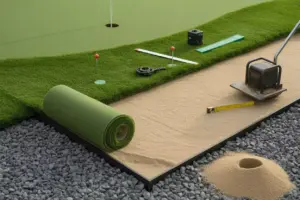
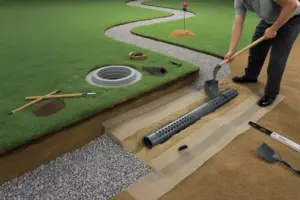
Professional-quality installations require proper drainage systems to prevent water accumulation and ensure year-round usability. The most common mistake in DIY projects is neglecting subsurface preparation, which leads to uneven surfaces and premature wear.
Essential drainage elements include:
- Gravel base layer: 4-6 inches of compacted gravel
- Sand leveling course: 2-3 inches of fine sand for precise grading
- Perimeter drainage: French drain systems for water management
- Surface slope: 1-2% grade away from structures
Plan 1: The Compact Champion – Maximizing Small Spaces
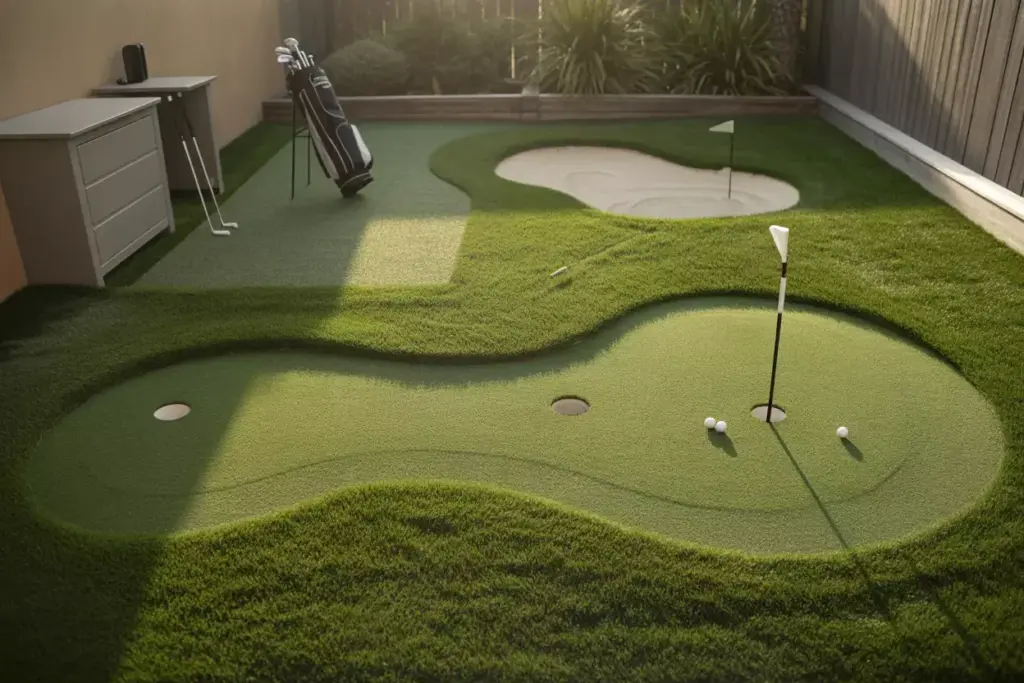
The first of our 6 Genius Golf Yard Design Plans to Practice Your Short Game at Home addresses the most common challenge facing urban and suburban golfers: limited space. The Compact Champion design proves that size doesn’t determine effectiveness when it comes to short game improvement.
Design Specifications
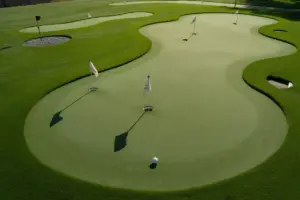
This ingenious layout fits comfortably in spaces as small as 20×25 feet while providing comprehensive short game practice opportunities. The design centers around a kidney-shaped putting green that flows seamlessly into a dedicated chipping area, creating the illusion of a larger space through clever visual design.
| Component | Dimensions | Key Features |
|---|---|---|
| Putting Green | 12×18 feet | 3 holes, subtle undulation |
| Chipping Area | 8×12 feet | Multiple target zones |
| Sand Trap | 4×6 feet | Regulation depth bunker |
| Storage | 3×4 feet | Built-in equipment cabinet |
Material Selection and Installation
The Compact Champion utilizes premium synthetic turf with varying pile heights to simulate different course conditions. The putting surface features 15mm pile height for true roll characteristics, while the chipping area uses 25mm turf to replicate fairway conditions.
Cost Breakdown
- Materials: $3,500-$5,000
- Professional installation: $2,000-$3,500
- DIY installation: $800-$1,200 (labor savings)
- Total investment: $4,300-$8,500
The return on investment becomes apparent quickly when considering that a family of golfers might spend $200-$400 monthly on range fees and practice rounds.
Plan 2: The Multi-Level Master – Advanced Terrain Simulation
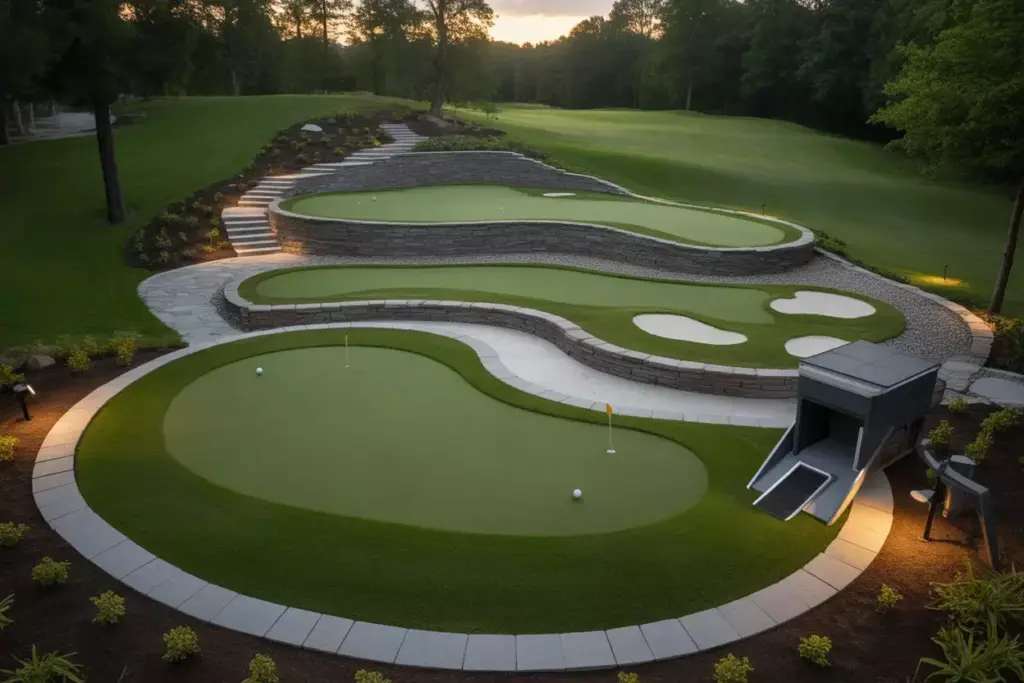
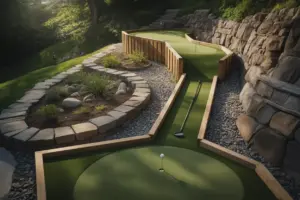
The second design in our 6 Genius Golf Yard Design Plans to Practice Your Short Game at Home takes advantage of natural or created elevation changes to provide advanced practice scenarios. The Multi-Level Master design incorporates different elevations to simulate uphill, downhill, and sidehill lies that golfers encounter on actual courses.
Elevation Integration Strategy
This sophisticated design works exceptionally well on sloped lots but can also be created on flat terrain through strategic earth moving and retaining wall construction. The key innovation lies in creating multiple practice zones at different elevations, connected by natural walking paths that enhance the overall landscape aesthetic.
Zone Configuration
- Upper Level Tee Area (elevation +3 feet): Provides downhill chipping practice to various targets
- Main Putting Green (base elevation): 400 square foot undulating green with 4 hole locations
- Lower Bunker Complex (elevation -2 feet): Simulates greenside bunkers with varying depths
- Intermediate Chipping Zones: Multiple landing areas at different elevations
Advanced Features
The Multi-Level Master incorporates several premium features that distinguish it from basic installations:
- Automated irrigation system: Keeps surfaces in optimal condition
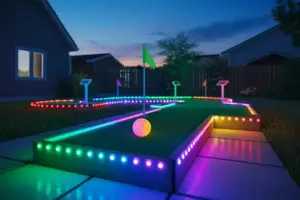
- LED accent lighting: Extends practice hours into evening
- Ball return mechanisms: Reduces time spent collecting balls
- Weather monitoring station: Tracks conditions for optimal practice timing
Construction Considerations
Creating elevation changes requires careful planning and often professional excavation services. Proper retaining wall construction ensures long-term stability and prevents erosion issues that could compromise the installation.
Plan 3: The Technology Integration Hub – Smart Practice Solutions
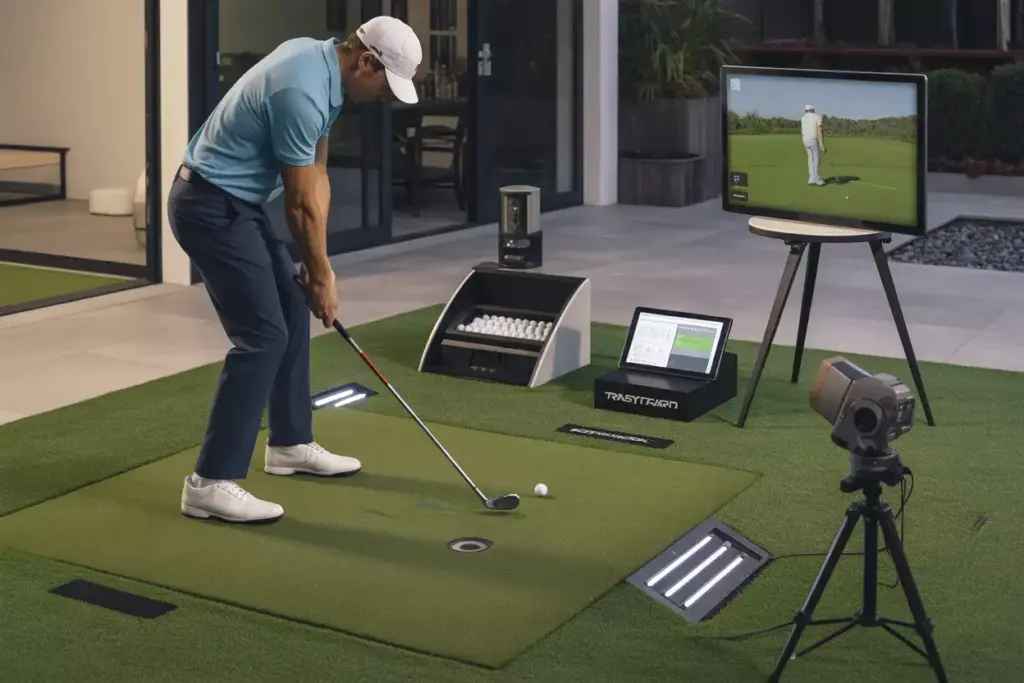
Modern golfers demand more than just basic practice facilities, which brings us to the third of our 6 Genius Golf Yard Design Plans to Practice Your Short Game at Home. The Technology Integration Hub combines traditional practice elements with cutting-edge technology to provide data-driven feedback and enhanced learning opportunities.
Smart Technology Components
This forward-thinking design incorporates various technological elements that transform casual practice into structured improvement sessions. The integration feels seamless and enhances rather than complicates the practice experience.
Core Technology Features:
- Launch monitor integration: TrackMan or SkyTrak systems for precise shot analysis
- Automated ball dispensing: Reduces interruptions during practice sessions
- Mobile app connectivity: Tracks progress and suggests practice routines
- Video analysis stations: Multiple camera angles for swing review
- LED target systems: Programmable targets that respond to successful shots
Practice Optimization Software
The Technology Integration Hub utilizes specialized software that creates personalized practice routines based on individual skill assessments. The system tracks improvement over time and adjusts difficulty levels automatically, ensuring continuous challenge and growth.
Installation Requirements
Technology integration requires careful planning for power supply, weather protection, and connectivity. Most systems require dedicated electrical circuits and weather-resistant housing for sensitive electronic components.
Performance Tracking Capabilities
Advanced tracking systems provide detailed analytics on:
- Putting accuracy: Distance control and directional precision
- Chipping consistency: Landing zone accuracy and spin rates
- Bunker play effectiveness: Escape percentage and proximity to target
- Overall improvement trends: Long-term skill development tracking
Plan 4: The Family Entertainment Complex – Multi-Generational Design
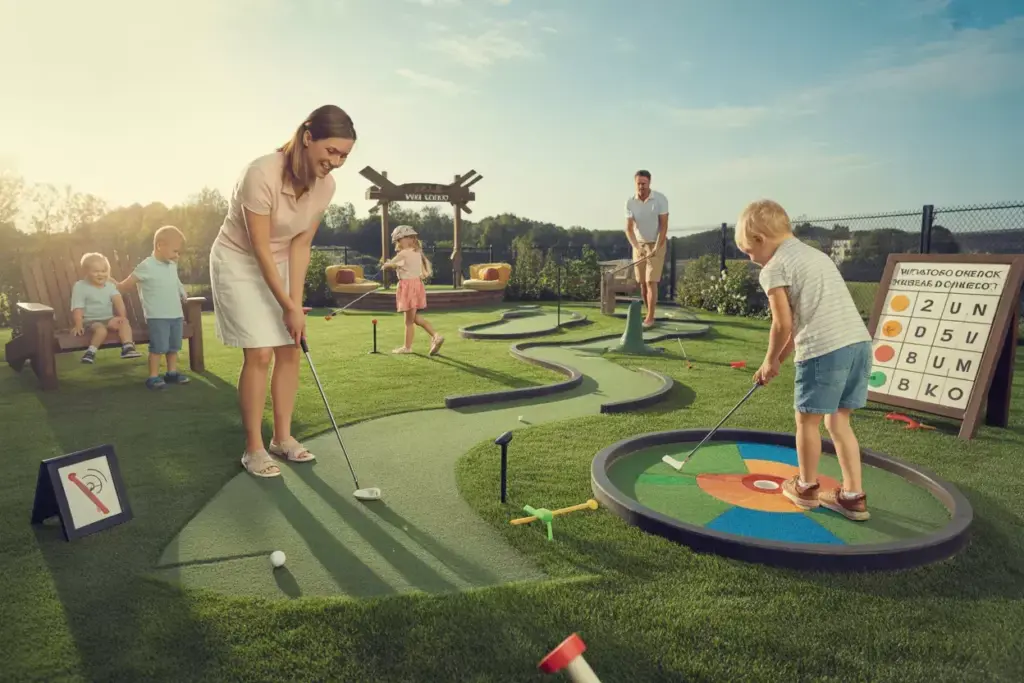
The fourth plan among our 6 Genius Golf Yard Design Plans to Practice Your Short Game at Home recognizes that the best backyard golf installations serve the entire family. The Family Entertainment Complex design creates engaging practice opportunities for golfers of all ages and skill levels while maintaining serious practice capabilities for dedicated players.
Age-Appropriate Design Elements
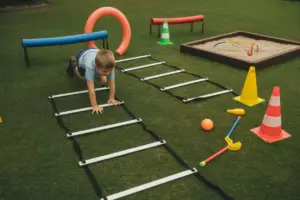
This inclusive design incorporates features that make golf practice enjoyable and accessible for children while providing challenging practice opportunities for adults. The key lies in creating multiple difficulty levels within the same physical space.
Family-Friendly Features:
- Adjustable tee heights: Accommodate different player sizes
- Color-coded target zones: Visual learning aids for beginners
- Mini-golf integration: Fun elements that don’t compromise serious practice
- Safety considerations: Soft boundaries and impact-resistant materials
- Spectator seating: Comfortable areas for family members to watch and encourage
Educational Components
The Family Entertainment Complex includes educational elements that help new golfers learn proper techniques and course etiquette:
- Instructional signage: Weather-resistant displays with basic technique tips
- Distance markers: Help players understand club selection and distance control
- Rules education area: Interactive displays teaching golf rules and etiquette
- Progress tracking boards: Visual representations of improvement for motivation
Maintenance Accessibility
Family-oriented designs must be easy to maintain since they typically see heavier use than individual practice areas. The design incorporates low-maintenance materials and simple cleaning procedures that family members can easily manage.
Plan 5: The All-Weather Warrior – Year-Round Practice Solutions
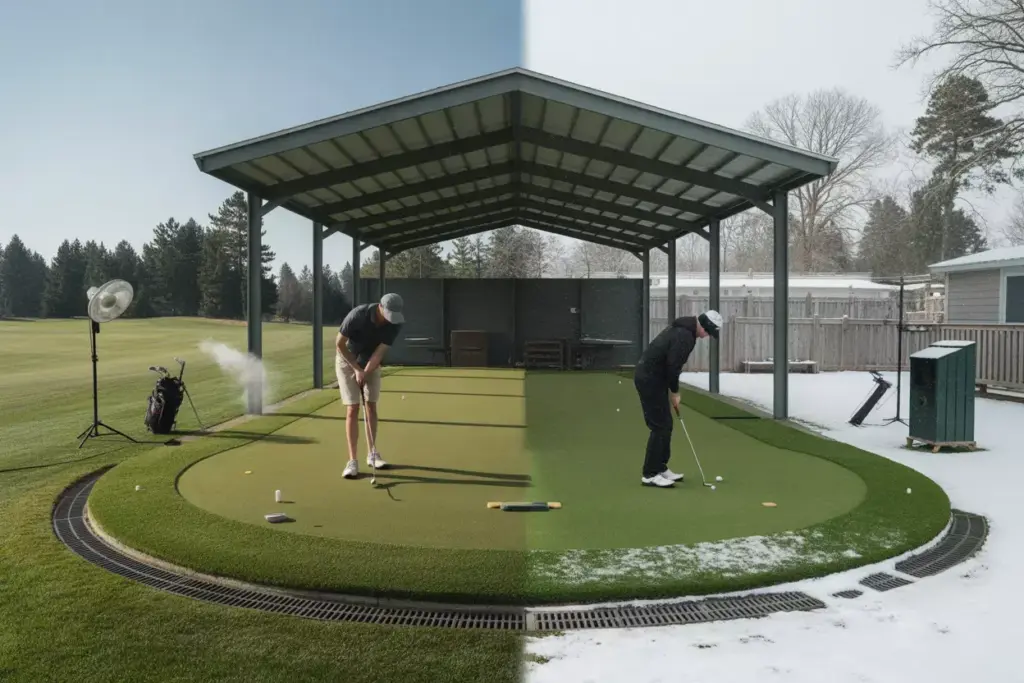
Climate shouldn’t limit golf practice, which is why the fifth of our 6 Genius Golf Yard Design Plans to Practice Your Short Game at Home focuses on all-weather capability. The All-Weather Warrior design ensures consistent practice opportunities regardless of seasonal conditions or weather challenges.
Weather-Resistant Materials and Design
This robust design utilizes materials and construction techniques that withstand extreme weather conditions while maintaining optimal playing characteristics. The focus on durability ensures long-term performance and minimal maintenance requirements.
Climate-Specific Adaptations:
Cold Weather Regions:
- Heated putting surfaces for winter practice
- Snow removal considerations in design layout
- Freeze-resistant drainage systems
- Covered practice areas for extreme conditions
Hot Climate Adaptations:
- UV-resistant materials to prevent fading and degradation
- Cooling systems for comfort during summer practice
- Shade structures for extended practice sessions
- Heat-reflective surface treatments
Wet Climate Solutions:
- Advanced drainage systems for heavy rainfall areas
- Quick-drying surface materials
- Covered storage to protect equipment
- Non-slip surfaces for safety
Seasonal Maintenance Programs
The All-Weather Warrior design includes comprehensive maintenance protocols that ensure optimal conditions throughout the year. These programs address seasonal challenges proactively rather than reactively.
Winter Preparation Checklist:
- Drainage system inspection and cleaning
- Surface protection for freezing conditions
- Equipment winterization procedures
- Heating system activation and testing
Summer Maintenance Schedule:
- Intensive cleaning and sanitization
- UV protection application
- Irrigation system optimization
- Heat stress monitoring and mitigation
Plan 6: The Professional-Grade Performance Center
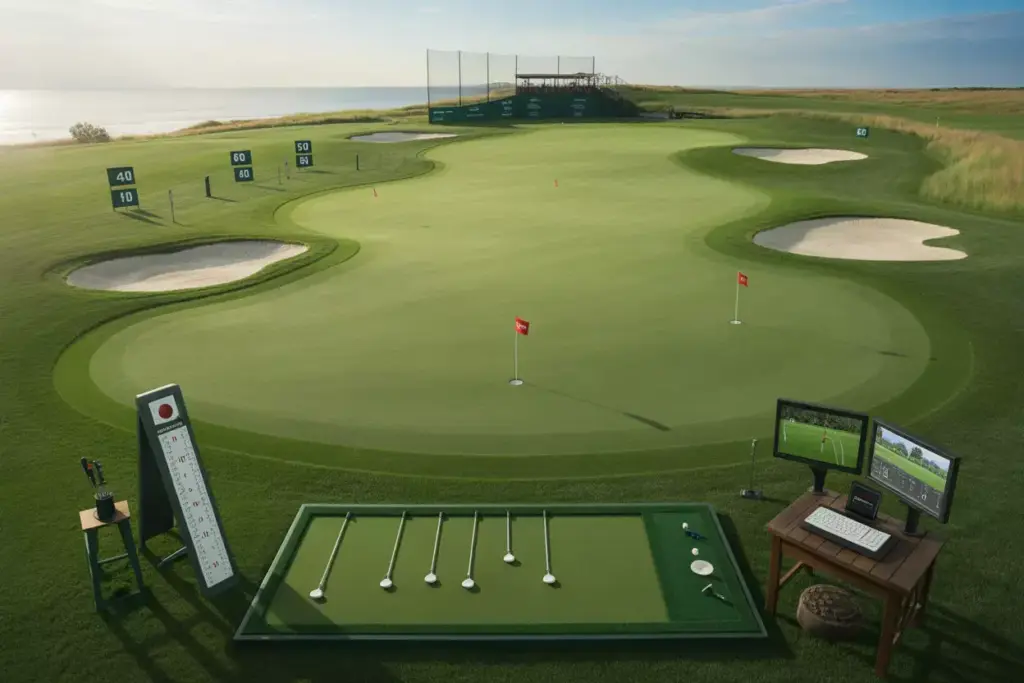
The final design in our 6 Genius Golf Yard Design Plans to Practice Your Short Game at Home represents the ultimate in backyard golf practice facilities. The Professional-Grade Performance Center rivals country club practice facilities and provides tournament-level preparation opportunities.
Championship-Level Specifications
This premium installation incorporates the highest quality materials and most advanced features available in residential golf practice design. Every element is selected for performance, durability, and authenticity to tournament conditions.
Premium Material Selection:
- Tour-grade synthetic turf: Identical to surfaces used on professional tours
- Regulation sand composition: Matches major championship bunker specifications
- Professional-grade drainage: Ensures playability within hours of heavy rain
- Tournament-quality hole cups: Regulation depth and diameter specifications
Advanced Practice Features
The Professional-Grade Performance Center includes sophisticated practice elements that provide comprehensive short game development:
Putting Complex:
- 1,200 square foot undulating green with 6 hole locations
- Stimpmeter-tested surface speed consistency
- Multiple break patterns for diverse practice scenarios
- Professional-grade hole cutting and maintenance equipment
Short Game Practice Areas:
- Regulation-depth practice bunkers with various sand textures
- Multiple chipping areas with different lie conditions
- Rough simulation areas with varying grass heights
- Target greens at various distances (20, 40, 60, 80 yards)
Performance Monitoring Systems
Professional-grade installations include comprehensive monitoring systems that provide detailed feedback on all aspects of short game performance. These systems rival those used by touring professionals and college golf programs.
Data Collection Capabilities:
- Putting analysis: Green reading accuracy, stroke mechanics, speed control
- Chipping precision: Carry distance, landing angle, spin rate measurement
- Bunker play metrics: Exit velocity, trajectory, sand interaction analysis
- Overall performance trends: Statistical analysis and improvement tracking
Installation Considerations and Professional Services
Implementing any of the 6 Genius Golf Yard Design Plans to Practice Your Short Game at Home requires careful consideration of installation options, professional services, and ongoing maintenance requirements. The complexity of these projects often exceeds typical DIY capabilities, making professional consultation valuable even for experienced homeowners.
Professional vs. DIY Installation Analysis
The decision between professional installation and DIY approaches depends on several factors including technical complexity, available time, tool requirements, and quality expectations. Understanding these factors helps homeowners make informed decisions about their investment.
Professional Installation Advantages:
- Guaranteed quality and warranty coverage
- Access to commercial-grade materials and equipment
- Proper drainage and foundation installation
- Code compliance and permit management
- Time efficiency and project completion certainty
DIY Installation Considerations:
- Significant cost savings on labor (typically 40-60% of total project cost)
- Personal satisfaction and customization control
- Extended project timeline and learning curve
- Tool and equipment rental or purchase requirements
- Responsibility for permits and code compliance
Permit and Code Requirements
Most municipalities require permits for significant landscape modifications, especially those involving drainage systems, electrical work, or structural elements. Professional installers typically handle permit applications and ensure code compliance, while DIY projects require homeowner research and application.
Common Permit Requirements:
- Electrical permits for lighting and technology integration
- Grading permits for significant elevation changes
- Drainage permits for subsurface water management systems
- Setback compliance for permanent structures
Maintenance and Long-Term Care Strategies
The longevity and performance of backyard golf installations depend heavily on proper maintenance and care protocols. Each of the 6 Genius Golf Yard Design Plans to Practice Your Short Game at Home requires specific maintenance approaches based on materials, complexity, and usage patterns.
Daily and Weekly Maintenance Tasks
Consistent basic maintenance prevents major issues and ensures optimal playing conditions. These routine tasks require minimal time investment but provide significant benefits in terms of surface quality and equipment longevity.
Daily Maintenance Checklist:
- Surface debris removal (leaves, twigs, foreign objects)
- Ball collection and equipment organization
- Visual inspection for damage or wear areas
- Weather protection activation when necessary
Weekly Maintenance Schedule:
- Thorough surface cleaning and sanitization
- Turf grooming and pile direction correction
- Drainage system inspection and clearing
- Equipment cleaning and maintenance
Seasonal Maintenance Programs
Comprehensive seasonal maintenance ensures long-term performance and prevents costly repairs or premature replacement. These programs address specific challenges associated with different weather conditions and usage patterns.
Spring Preparation:
- Complete system inspection after winter conditions
- Deep cleaning and surface restoration
- Drainage system testing and optimization
- Equipment calibration and replacement as needed
Summer Maintenance Intensification:
- Increased cleaning frequency due to higher usage
- UV protection and heat management protocols
- Irrigation system optimization for hot weather
- Safety inspection and hazard mitigation
Fall Winterization:
- Comprehensive cleaning before dormant season
- Drainage system preparation for freeze conditions
- Equipment storage and protection protocols
- Surface protection installation where appropriate
Cost Analysis and Return on Investment
Understanding the financial aspects of implementing 6 Genius Golf Yard Design Plans to Practice Your Short Game at Home helps homeowners make informed decisions about their investment. The costs vary significantly based on design complexity, material quality, and installation approach, but the long-term benefits often justify the initial expenditure.
Comprehensive Cost Breakdown by Design Plan
| Design Plan | Materials | Professional Installation | DIY Installation | Total Range |
|---|---|---|---|---|
| Compact Champion | $3,500-$5,000 | $2,000-$3,500 | $800-$1,200 | $4,300-$8,500 |
| Multi-Level Master | $8,000-$12,000 | $5,000-$8,000 | $2,000-$3,000 | $10,000-$20,000 |
| Technology Hub | $15,000-$25,000 | $8,000-$12,000 | $3,000-$5,000 | $18,000-$37,000 |
| Family Complex | $6,000-$10,000 | $3,500-$6,000 | $1,500-$2,500 | $7,500-$16,000 |
| All-Weather Warrior | $10,000-$18,000 | $6,000-$10,000 | $2,500-$4,000 | $12,500-$28,000 |
| Professional Center | $25,000-$50,000 | $15,000-$25,000 | $5,000-$8,000 | $30,000-$75,000 |
Long-Term Financial Benefits
The return on investment for backyard golf practice facilities extends beyond simple cost recovery through reduced range fees. These installations provide multiple financial benefits that compound over time.
Quantifiable Savings:
- Range fee elimination: $200-$500 monthly savings for active golfers
- Reduced travel costs: Gas and time savings from eliminating range trips
- Lower golf lesson costs: Improved practice efficiency reduces required instruction
- Tournament performance: Better scores lead to lower handicaps and competitive success
Property Value Enhancement
Well-designed backyard golf installations typically increase property values, especially in golf-oriented communities. Real estate professionals report that quality golf practice facilities can add 3-7% to home values, depending on local market conditions and installation quality.
Factors Affecting Property Value Impact:
- Quality of installation and materials used
- Integration with existing landscape design
- Local market appreciation for golf amenities
- Maintenance condition and visual appeal
- Flexibility for conversion to other uses
Conclusion
The 6 Genius Golf Yard Design Plans to Practice Your Short Game at Home represent more than just backyard improvements—they’re investments in golf performance, family entertainment, and property value. From the space-efficient Compact Champion to the tournament-quality Professional-Grade Performance Center, these designs prove that serious golf practice doesn’t require country club membership or expensive range fees.
The key to success lies in selecting the design plan that best matches your space, budget, skill level, and family needs. Whether you’re a weekend warrior looking to shave a few strokes off your handicap or a serious competitor preparing for tournament play, these innovative designs provide the foundation for consistent improvement and enjoyable practice sessions.
Actionable Next Steps:
- Assess your space: Measure your available yard area and identify any constraints or opportunities
- Define your goals: Determine whether you prioritize serious practice, family entertainment, or property enhancement
- Set your budget: Consider both initial investment and long-term maintenance costs
- Consult professionals: Get quotes from qualified installers and discuss permit requirements
- Plan for maintenance: Establish realistic maintenance protocols to protect your investment
The transformation from ordinary backyard to personal golf practice sanctuary begins with a single decision to invest in your game. With proper planning, quality materials, and attention to detail, any of these 6 Genius Golf Yard Design Plans to Practice Your Short Game at Home can become the foundation for years of improved performance and golf enjoyment.
Remember that the best short game practice happens consistently, conveniently, and in conditions that challenge your skills. By bringing that practice opportunity to your backyard, you’re not just improving your golf game—you’re creating a lifestyle enhancement that benefits your entire family while adding lasting value to your property.