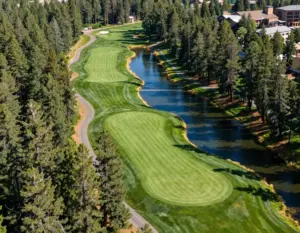
6 Stunning Utah Golf Courses That Redefine Desert and Mountain Play
Utah’s golf scene offers something truly extraordinary—a rare combination of desert drama and alpine majesty that creates some of the most visually stunning and challenging golf experiences in America. These 6 stunning Utah golf courses that redefine desert and mountain play showcase the state’s incredible geographical diversity, from red rock canyons that seem pulled from a Western movie to high-altitude mountain courses where snow-capped peaks serve as your backdrop.
Disclosure: This post contains affiliate links. As an Amazon Associate, we earn from qualifying purchases, and at no extra cost to you.
Key Takeaways
- Utah’s unique geography creates golf courses with both desert and mountain characteristics, offering unparalleled scenic diversity
- Elevation changes from 4,000 to over 7,000 feet provide varying playing conditions and breathtaking views
- Year-round playability varies by course, with desert courses extending seasons and mountain courses offering summer escapes
- World-class design by renowned architects takes full advantage of Utah’s natural terrain features
- Value proposition remains strong compared to similar caliber courses in other western states
The Magic of Utah’s Diverse Golf Terrain 🏔️
Utah’s position at the crossroads of the Great Basin Desert and the Rocky Mountains creates a golfer’s paradise unlike anywhere else in the world. The state’s 6 stunning Utah golf courses that redefine desert and mountain play take advantage of dramatic elevation changes, from the red rock country around St. George to the alpine meadows near Park City.
The geological diversity means golfers can experience vastly different playing conditions within the same day. Morning rounds might feature desert-style target golf through sagebrush and sandstone, while afternoon play could involve mountain course challenges with thin air and dramatic elevation changes.
Climate Advantages
Utah’s semi-arid climate provides over 300 days of sunshine annually in many regions [1]. This creates extended golf seasons, particularly in the southern desert regions where winter golf remains comfortable. The low humidity levels mean that even summer temperatures in the 90s feel more manageable than in humid climates.
Temperature Ranges by Region:
- Southern Utah (Desert): 40-95°F playing season
- Northern Utah (Mountain): 35-85°F playing season
- High Alpine: 30-80°F playing season
1. Sand Hollow Golf Course – Hurricane, Utah

Carved directly into the red rock landscape of southern Utah, Sand Hollow represents the pinnacle of desert golf architecture. This championship course redefines desert play with holes that wind through natural sandstone formations and offer views that belong on postcards.
Course Highlights:
- Designer: John Daly Design
- Elevation: 2,800 feet
- Signature Hole: Par-3 17th plays over red rock canyon
- Playing Season: Year-round
- Slope Rating: 147 from championship tees
The course features multiple tee options that allow golfers to choose their level of challenge while still experiencing the dramatic desert landscape. The black volcanic rock and red sandstone create natural hazards that are as beautiful as they are challenging.
“Sand Hollow isn’t just a golf course—it’s a journey through some of the most spectacular terrain in America. Every hole offers a new perspective on what desert golf can be.” – Golf Digest Course Review
What Makes It Special
The integration with the natural landscape sets Sand Hollow apart. Rather than fighting the terrain, the design embraces the natural washes, rock formations, and elevation changes. Water features are strategically placed to reflect the surrounding red rocks, creating mirror-like surfaces that double the visual impact.
Playing Tips:
- Club selection is critical due to elevation and wind factors
- Target golf mentality essential – focus on specific landing areas
- Course management more important than distance
- Hydration crucial during summer months
2. Entrada at Snow Canyon Country Club – St. George, Utah
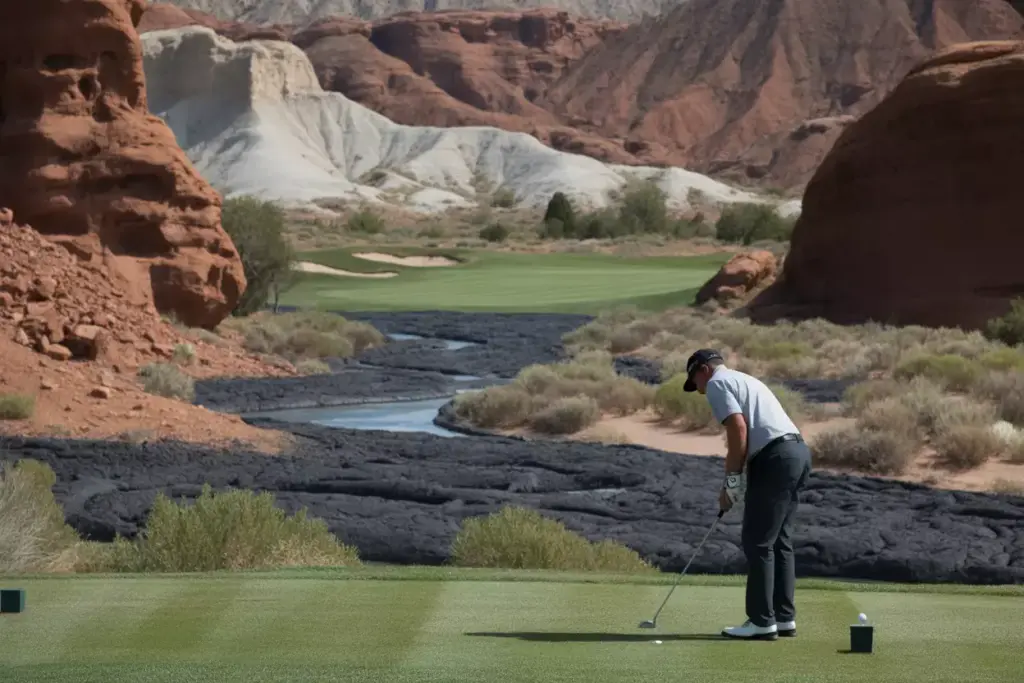
Located at the mouth of Snow Canyon State Park, Entrada showcases how desert and mountain elements can blend seamlessly in golf course design. The course features holes that play through actual lava rock formations while offering distant views of towering red cliffs.
Course Details:
- Designer: Johnny Miller
- Par: 72
- Length: 7,200 yards from tips
- Elevation: 2,680 feet
- Notable Features: Lava rock carries, natural desert washes
The black lava rock scattered throughout the course creates a striking contrast against the green fairways and red rock backdrop. Several holes require carries over these ancient lava flows, adding both visual drama and strategic complexity.
Signature Experiences
Hole 13 stands out as one of Utah’s most photographed golf holes. This par-4 plays through a natural corridor of red and white sandstone, with the fairway appearing to glow against the dark volcanic rock. The approach shot must clear a wash while avoiding the towering rock formations that guard the green.
Environmental Integration:
- Native desert vegetation preserved throughout
- Natural water features enhanced, not created
- Wildlife corridors maintained
- Sustainable irrigation practices
3. Montage Deer Valley Golf Course – Park City, Utah
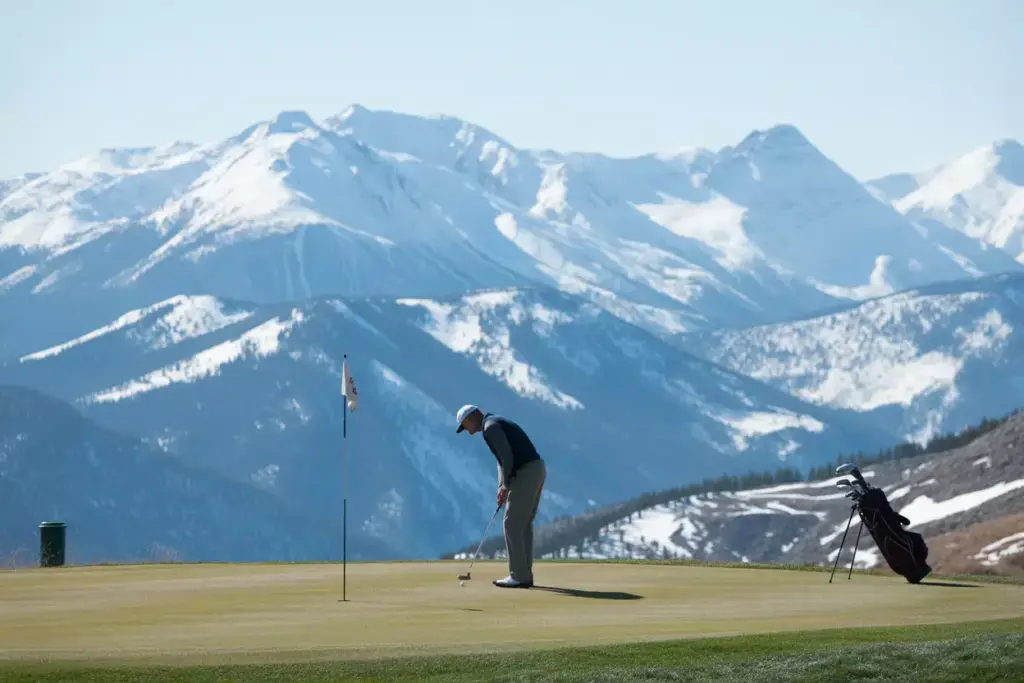
At 7,200 feet above sea level, Montage Deer Valley represents the pinnacle of mountain golf experiences. This course demonstrates how elevation and alpine terrain redefine mountain play with holes that seem to float among the peaks of the Wasatch Range.
Mountain Course Specifications:
- Designer: Rees Jones
- Elevation: 7,200 feet
- Season: May through October
- Slope Rating: 149
- Signature Feature: 360-degree mountain views
The thin air at this elevation means golf balls travel 10-15% farther than at sea level, requiring significant adjustments to club selection and course management strategies.
High-Altitude Golf Challenges
Playing at elevation presents unique challenges that redefine traditional mountain play:
Ball Flight Changes:
- Increased distance due to thin air
- Reduced ball spin affects shot control
- Wind effects more pronounced
- Temperature variations throughout the round
Strategic Adjustments:
- Take 1-2 clubs less for approach shots
- Account for increased roll on firm mountain turf
- Prepare for rapid weather changes
- Stay hydrated despite cooler temperatures
“Montage Deer Valley offers a golf experience that literally takes your breath away—both from the elevation and the stunning beauty of every single hole.” – Links Magazine
4. Promontory Golf Club – Park City, Utah
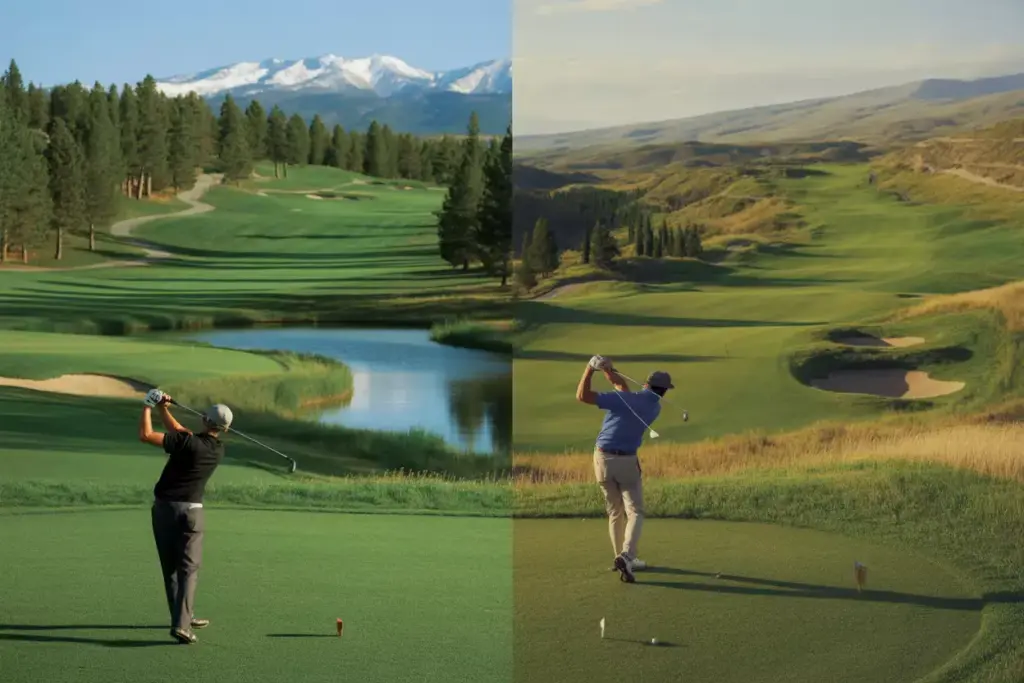
Featuring two distinct 18-hole courses, Promontory showcases how mountain terrain can create diverse playing experiences within a single facility. The Nicklaus Course and the Dye Course each offer different interpretations of how to integrate golf with Utah’s dramatic mountain landscape.
Dual Course Experience:
- Nicklaus Course: Traditional mountain parkland style
- Dye Course: Links-style with mountain backdrop
- Elevation Range: 6,400-7,400 feet
- Combined Length: Over 14,000 yards of golf
The Nicklaus Course Experience
Designed by Jack Nicklaus, this course emphasizes strategic mountain golf with holes that follow natural ridgelines and valleys. The design philosophy focuses on offering multiple routes to each green while showcasing the natural mountain terrain.
Key Features:
- Natural mountain meadow settings
- Strategic bunkering that follows terrain contours
- Water features fed by mountain springs
- Native fescue and wildflower areas
The Dye Course Challenge
Pete Dye’s design creates a links-style experience at mountain elevation, featuring:
- Wide fairways with strategic bunkering
- Firm, fast conditions that reward ground game
- Natural grass bunkers carved into hillsides
- Risk-reward options on every hole
5. Glenwild Golf Club – Park City, Utah

Glenwild represents the perfect marriage of mountain architecture and playable design. This Tom Fazio creation winds through natural mountain terrain while maintaining playability for golfers of all skill levels.
Design Philosophy:
- Natural integration with existing mountain topography
- Multiple tee options accommodate all skill levels
- Strategic variety throughout the routing
- Environmental sensitivity in construction and maintenance
Course Statistics:
- Designer: Tom Fazio
- Par: 72
- Elevation: 6,900 feet
- Playing Season: April through October
- Slope Rating: 144
Fazio’s Mountain Masterpiece
Tom Fazio’s design philosophy shines through in how the course redefines mountain play by working with, rather than against, the natural terrain. Each hole feels like a natural part of the landscape, with tees and greens positioned to take maximum advantage of mountain views.
Signature Design Elements:
- Natural stone retaining walls and features
- Native plant restoration throughout
- Strategic water features that appear natural
- Elevation changes that enhance rather than punish
6. Red Ledges Golf Course – Heber Valley, Utah

Red Ledges offers a unique combination of mountain meadow golf with red rock accents, creating a course that bridges Utah’s desert and mountain landscapes. The Jack Nicklaus Signature design takes full advantage of the Heber Valley’s natural beauty while incorporating dramatic red rock formations.
Unique Positioning:
- Mountain valley setting with red rock features
- Four distinct climate seasons
- Elevation: 5,600 feet
- Designer: Jack Nicklaus Signature Design
- Length: 7,466 yards from championship tees
The Best of Both Worlds
Red Ledges redefines both desert and mountain play by combining elements typically found separately. Golfers experience:
Mountain Elements:
- Alpine meadow fairways
- Mountain stream water features
- Dramatic elevation changes
- Panoramic Wasatch Mountain views
Desert Elements:
- Red rock outcroppings and formations
- Desert-style bunkering
- Target golf requirements
- Natural desert vegetation areas
Seasonal Playing Conditions:
| Season | Temperature Range | Course Conditions | Special Features |
|---|---|---|---|
| Spring | 45-70°F | Soft, lush conditions | Wildflower blooms |
| Summer | 60-85°F | Firm, fast fairways | Perfect weather |
| Fall | 40-75°F | Ideal conditions | Autumn colors |
| Winter | Closed | Snow coverage | Cross-country skiing |
What Makes These Courses Truly Special 🌟
These 6 stunning Utah golf courses that redefine desert and mountain play share several characteristics that set them apart from golf destinations elsewhere:
1. Geological Diversity
Each course takes advantage of Utah’s unique position between major geological regions, creating playing experiences impossible to replicate elsewhere.
2. Elevation Advantages
The varied elevations provide natural air conditioning in summer and extended seasons in lower desert regions.
3. Visual Drama
Every course offers Instagram-worthy views that enhance the golf experience beyond just the game itself.
4. Design Integration
World-class architects have worked with, rather than against, the natural terrain to create courses that feel like natural parts of the landscape.
5. Year-Round Accessibility
The combination of desert and mountain courses means golfers can find playable conditions throughout the year.
Planning Your Utah Golf Adventure 🗓️
Best Times to Visit
Spring (April-May):
- Mountain courses opening
- Desert courses at peak conditions
- Moderate temperatures statewide
- Wildflower blooms in mountain areas
Summer (June-August):
- All courses open and in peak condition
- Mountain courses provide escape from heat
- Longest days for maximum golf time
- Festival and event season
Fall (September-October):
- Ideal conditions statewide
- Fall colors in mountain regions
- Lower summer rates often available
- Perfect weather for walking courses
Winter (November-March):
- Desert courses remain playable
- Mountain courses closed or limited
- Best rates of the year
- Fewer crowds
Logistics and Recommendations
Base Location Strategy:
- Salt Lake City: Central access to northern mountain courses
- Park City: Premium mountain golf hub
- St. George: Desert golf headquarters
- Heber Valley: Mountain valley combination
Transportation Considerations:
- Rental car essential for course access
- Mountain courses may require winter driving skills
- Desert courses easily accessible year-round
- Private transportation recommended for premium experience
The Future of Utah Golf 🚀
Utah’s golf scene continues to evolve with new course developments and improvements to existing facilities. The state’s unique combination of desert and mountain terrain ensures that future courses will continue to offer experiences unavailable elsewhere.
Sustainability Focus
Modern Utah golf courses emphasize:
- Water conservation through efficient irrigation
- Native plant restoration and preservation
- Wildlife habitat protection and enhancement
- Renewable energy adoption in facilities
Technology Integration
Leading courses are incorporating:
- GPS-enabled carts with course information
- Mobile apps for booking and course management
- Advanced irrigation systems for water efficiency
- Weather monitoring for optimal playing conditions
Conclusion
These 6 stunning Utah golf courses that redefine desert and mountain play represent some of the most unique and visually spectacular golf experiences available anywhere in the world. From the red rock drama of Sand Hollow to the alpine majesty of Montage Deer Valley, each course offers something impossible to find elsewhere.
Utah’s geological diversity creates opportunities for golf course architects to design holes and routing that take advantage of dramatic terrain changes, stunning vistas, and unique playing conditions. Whether you prefer the target golf challenges of desert courses or the elevation adjustments required for mountain play, Utah delivers experiences that will challenge your game and inspire your spirit.
Take Action:
- Plan your visit during optimal seasonal conditions for your preferred course types
- Book tee times well in advance, especially for premium mountain courses during summer
- Prepare for elevation changes if planning to play multiple courses
- Pack appropriately for varying weather conditions between desert and mountain venues
- Consider a golf package that includes multiple courses for the complete Utah experience
The combination of world-class golf course design, unparalleled natural beauty, and unique playing challenges makes Utah a must-visit destination for any serious golfer. These courses don’t just offer great golf—they redefine what the game can be when played against some of nature’s most spectacular backdrops.
References
[1] National Weather Service, Utah Climate Data, 2025
[2] Utah Golf Association Course Rankings, 2025
[3] Golf Digest Course Rankings, Western United States, 2025