8 Iron-Clad Golf Tips for Irons to Hit Pure Shots Every Time
Picture this: You’re standing on the fairway with a perfect lie, 150 yards from the pin. Your 7-iron feels comfortable in your hands, but as you swing, the ball comes up short and thin. Sound familiar? If you’ve ever struggled with inconsistent iron play, you’re not alone. The difference between amateur and professional golfers often comes down to one crucial skill: hitting pure iron shots consistently. Today, I’ll share the 8 iron-clad golf tips for irons to hit pure shots every time that will transform your ball-striking forever.
Disclosure: This post contains affiliate links. As an Amazon Associate, we earn from qualifying purchases, and at no extra cost to you.

Key Takeaways
- Forward weight distribution (70% on lead foot) is essential for consistent ball-first contact
- Descending blow technique ensures proper compression and divot placement after the ball
- Hip drive through impact prevents hanging back and promotes solid contact
- Specific ball focus and proper shaft alignment create repeatable, pure strikes
- Progressive practice with higher-lofted clubs builds confidence and muscle memory
The Foundation: Understanding Pure Iron Contact
Before diving into our 8 iron-clad golf tips for irons to hit pure shots every time, let’s understand what “pure” contact actually means. A pure iron shot occurs when the clubface strikes the ball first, then takes a divot in front of the ball’s original position. This creates that satisfying “click” sound and sends the ball on a penetrating trajectory with optimal spin and distance.
The key difference between pure strikes and mishits lies in the angle of attack. Professional golfers consistently strike down on the ball, compressing it against the turf before the club reaches its lowest point. Amateur golfers often do the opposite, trying to “help” the ball into the air by scooping upward.
1. Start With Forward Weight Distribution

The first of our iron-clad golf tips focuses on your setup position. Grant Horvat, a respected golf instructor, recommends beginning with 70% of your body weight on your lead foot [2]. This forward weight distribution makes it significantly easier to return to the proper impact position.
Why this works:
- Creates a steeper angle of attack naturally
- Prevents the common “hanging back” mistake
- Establishes the foundation for ball-first contact
How to practice:
- Set up to the ball with normal posture
- Shift weight until you feel 70% on your front foot
- Make slow practice swings maintaining this distribution
- Gradually increase swing speed while keeping weight forward
Many golfers resist this feeling initially because it seems “too forward.” However, this setup position is crucial for achieving the descending blow that creates pure contact.
2. Master the Descending Blow Technique

The second essential tip involves understanding and executing the descending blow. The club must contact the ball before reaching the ground, with the swing’s low point occurring just in front of the golf ball rather than behind it [1][2].
Key elements of the descending blow:
- Ball-first contact every time
- Divot placement starts after ball position
- Downward strike that compresses the ball
- Proper swing arc that bottoms out past the ball
This technique might feel counterintuitive at first. Many golfers think they need to “lift” the ball into the air, but the club’s loft handles that job. Your responsibility is to strike down and through the ball, trusting the club design to create the proper trajectory.
3. Focus on Precise Ball Contact

The third tip involves visual focus and contact precision. Instead of looking generally at the ball, select a specific focal point on the ball and visualize exactly where the club face needs to make contact [3].
Effective focusing techniques:
- Pick a specific dimple on the ball’s back edge
- Visualize the exact contact point before swinging
- Maintain steady head position throughout the swing
- Keep eyes on the contact spot until after impact
This laser-like focus dramatically improves contact quality. When your brain has a specific target, your body naturally makes the micro-adjustments needed for pure contact. Professional golfers often describe seeing the ball “clearly” at impact, which comes from this type of focused attention.
4. Perfect Ball Compression Through Impact

Understanding ball compression is crucial for pure iron shots. The goal is to strike with a descending motion that “pinches” the ball between the club face and ground, creating a divot in front of the ball [3].
Signs of proper compression:
- Crisp impact sound (not a “thud”)
- Penetrating ball flight with proper trajectory
- Divot pattern that starts at ball position
- Consistent distance with each club
Common compression mistakes:
- Trying to “scoop” the ball upward
- Hitting behind the ball (fat shots)
- Shallow angle of attack
- Early release of the wrists
Practice compression by making half-swings with a 9-iron, focusing solely on striking down through the ball. The satisfying contact feel and sound will help you recognize proper compression.
Advanced Techniques: Perfecting Your Iron Play
5. Drive Your Hips Forward Through Impact

Hip movement plays a crucial role in consistent iron contact. You must drive your hips forward through impact, getting them ahead of the golf ball at the finish to prevent hanging back [2]. This forward hip drive is a major factor in achieving consistent contact.
Proper hip sequence:
- Initiate downswing with hip rotation toward target
- Drive hips laterally toward the target
- Clear hips through impact zone
- Finish with hips facing the target
Practice drill:
- Take your normal setup position
- Make slow swings focusing only on hip movement
- Feel your belt buckle pointing left of target at finish (for right-handed golfers)
- Gradually increase speed while maintaining hip drive
This hip action naturally creates the forward shaft lean and descending blow needed for pure contact. When your hips hang back, your weight stays on your back foot, leading to thin or fat shots.
6. Maintain Proper Shaft Alignment at Impact
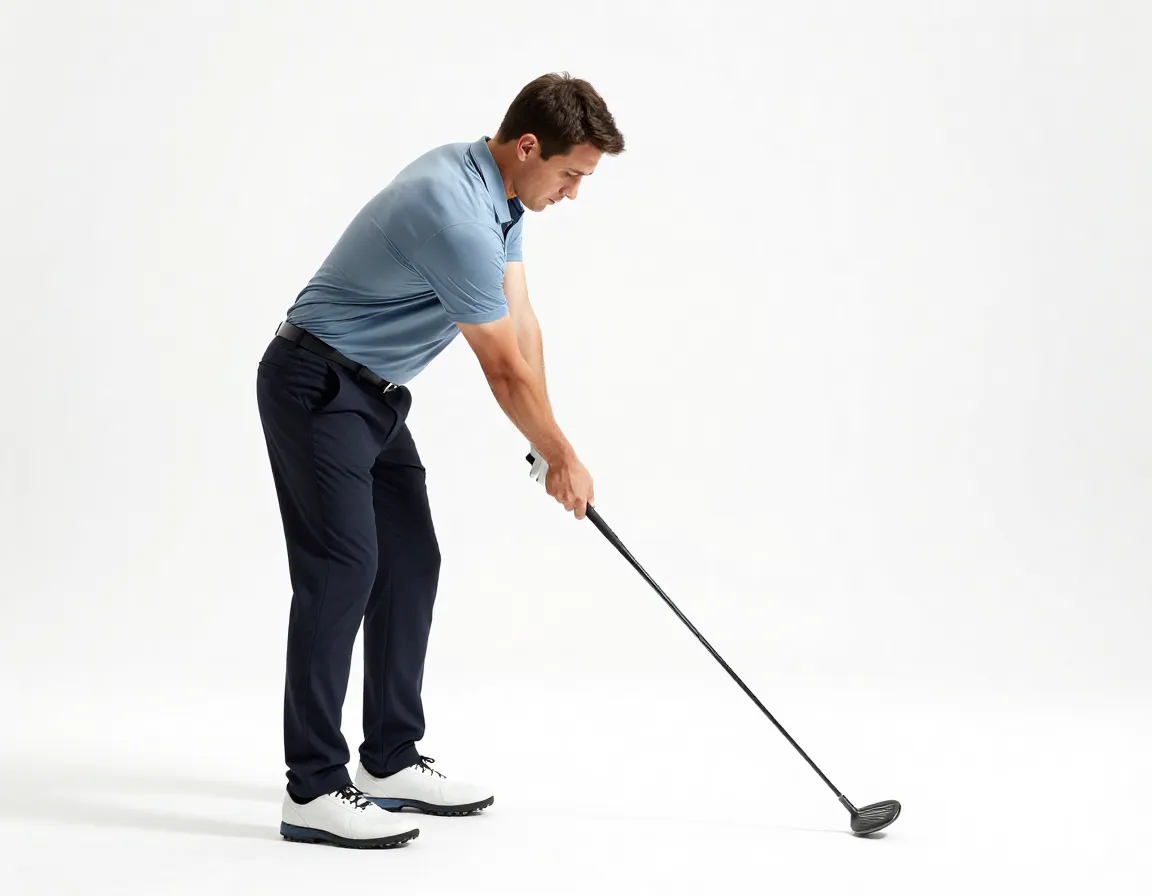
Shaft alignment at impact is critical for pure strikes. Keep the shaft, wrist, and lead arm in a straight line at impact with your weight over the front foot [1]. This creates the forward shaft lean that ensures ball-first contact.
Key alignment checkpoints:
- Lead arm straight and firm
- Wrists in neutral position (not cupped or bowed)
- Shaft leaning slightly toward target
- Weight clearly on front foot
Common alignment errors:
- “Scooping” motion with cupped lead wrist
- Shaft leaning away from target
- Broken lead arm at impact
- Weight hanging on back foot
Practice this position by taking slow-motion swings, pausing at impact to check your alignment. The feeling should be of “covering the ball” with your body and club working together.
7. Use Progressive Practice Methods
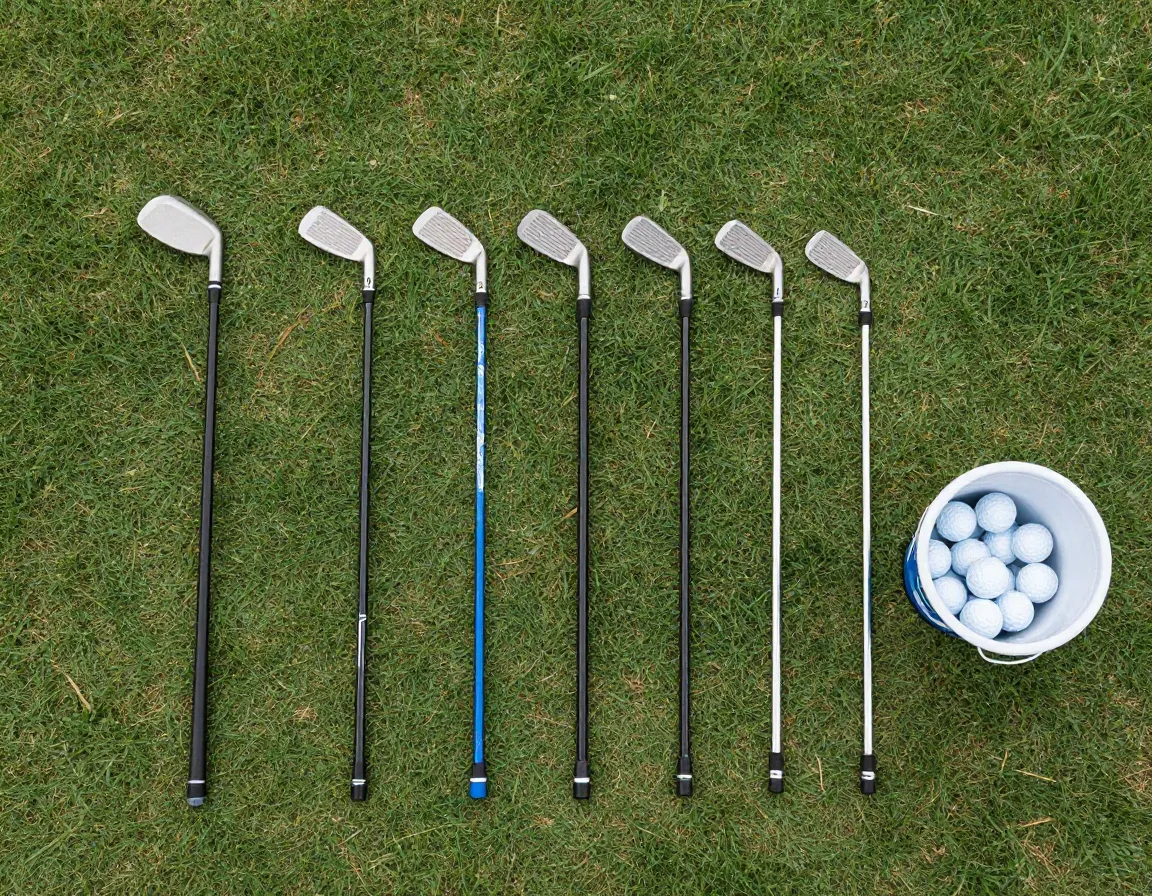
Smart practice accelerates improvement. Begin your iron practice sessions with higher-lofted clubs like wedges before progressing to longer irons [1]. This progression builds confidence and allows you to feel proper contact with more forgiving clubs.
Recommended practice progression:
| Practice Phase | Clubs to Use | Focus Areas |
|---|---|---|
| Phase 1 | Sand wedge, pitching wedge | Basic contact, divot pattern |
| Phase 2 | 9-iron, 8-iron | Consistent strike, ball compression |
| Phase 3 | 7-iron, 6-iron | Distance control, trajectory |
| Phase 4 | 5-iron, 4-iron | Full swing integration |
Practice session structure:
- Warm-up with easy wedge swings (10 balls)
- Focus work on specific technique (20 balls)
- Integration with mid-irons (15 balls)
- Challenge with longer irons (10 balls)
This systematic approach builds solid fundamentals before moving to more challenging clubs.
8. Eliminate the Scoop Motion

The final tip addresses the most common iron-striking error: the scoop. Prevent your back foot from tilting away, avoid early wrist break, and keep your lead arm from breaking down at impact [1].
Signs you’re scooping:
- Ball flight is too high and short
- Thin or fat contact frequently
- Divots behind the ball (if any)
- Inconsistent distance with same club
Anti-scoop techniques:
- Keep back foot planted and stable
- Maintain wrist angles longer in downswing
- Feel like you’re hitting down on the ball
- Trust the club loft to create trajectory
Practice drill for eliminating scoop:
Place a towel 6 inches behind the ball. Make swings without hitting the towel, forcing yourself to contact the ball first. This simple drill quickly eliminates the scooping motion and promotes proper ball-first contact.
Building Consistency: Practice and Mental Approach
Developing consistent iron play requires both physical practice and mental preparation. These 8 iron-clad golf tips for irons to hit pure shots every time work together as a system. Focus on one element at a time during practice, then gradually integrate them into your full swing.
Mental keys for pure iron contact:
- Trust the process rather than forcing results
- Visualize success before each swing
- Stay committed to the descending blow
- Accept the learning curve as skills develop
Remember, even professional golfers constantly work on these fundamentals. The difference is they’ve made these movements automatic through deliberate practice and repetition.
Conclusion
Mastering these 8 iron-clad golf tips for irons to hit pure shots every time will transform your ball-striking and lower your scores significantly. The key is understanding that pure iron contact comes from striking down on the ball, not trying to lift it into the air.
Your next steps:
- Start with setup – practice the 70% forward weight distribution
- Focus on contact – work on ball-first strikes with wedges
- Build progressively – move through longer irons as you improve
- Practice regularly – dedicate time to these fundamentals weekly
The journey to consistent iron play takes patience and practice, but the results are worth the effort. When you start hitting pure iron shots regularly, you’ll experience the joy and confidence that comes with solid ball-striking. Your approach shots will be more accurate, your distances more consistent, and your overall game will reach new levels.
Start implementing these tips during your next practice session. Focus on one element at a time, and soon you’ll be hitting the pure, crisp iron shots you’ve always dreamed of. The 8 iron-clad golf tips for irons to hit pure shots every time are your roadmap to better golf – now it’s time to put them into action! ⛳
References
[1] Watch – https://www.youtube.com/watch?v=PyVa1qkNw1M
[2] How To Hit Your Golf Irons Pure With Grant Horvat – https://www.performancegolf.com/blog/how-to-hit-your-golf-irons-pure-with-grant-horvat
[3] Hitting Consistent Iron Shots – https://golfgreens.com/golf-pro-tips/hitting-consistent-iron-shots/