
8 Non-Negotiable Golf Swing Basics Every Player Must Master
Picture this: You’re standing on the first tee, watching your playing partner effortlessly stripe drive after drive down the fairway while you’re still struggling with inconsistent contact. The difference isn’t talent or expensive equipment—it’s mastering the fundamental building blocks that create a repeatable, powerful golf swing. After analyzing thousands of swings and working with players at every level, I’ve identified the 8 Non-Negotiable Golf Swing Basics Every Player Must Master that separate consistent golfers from weekend warriors.
Disclosure: This post contains affiliate links. As an Amazon Associate, we earn from qualifying purchases, and at no extra cost to you.

These aren’t complicated theories or advanced techniques reserved for tour professionals. They’re the essential fundamentals that form the foundation of every great golf swing, regardless of your skill level or physical limitations.
Key Takeaways
- Master the grip and setup position first—these static fundamentals directly influence every dynamic movement in your swing
- Focus on four critical swing positions: setup, takeaway, transition, and impact for consistent ball-striking
- Build power from the ground up through proper sequencing: feet → hips → core → upper body
- Simplify rather than complicate—concentrate on clear cause-and-effect relationships instead of overloading your brain with conflicting information
- Practice with purpose using structured drills that transfer to on-course performance
The Foundation: Static Fundamentals
1. Perfect Your Grip for Ultimate Control
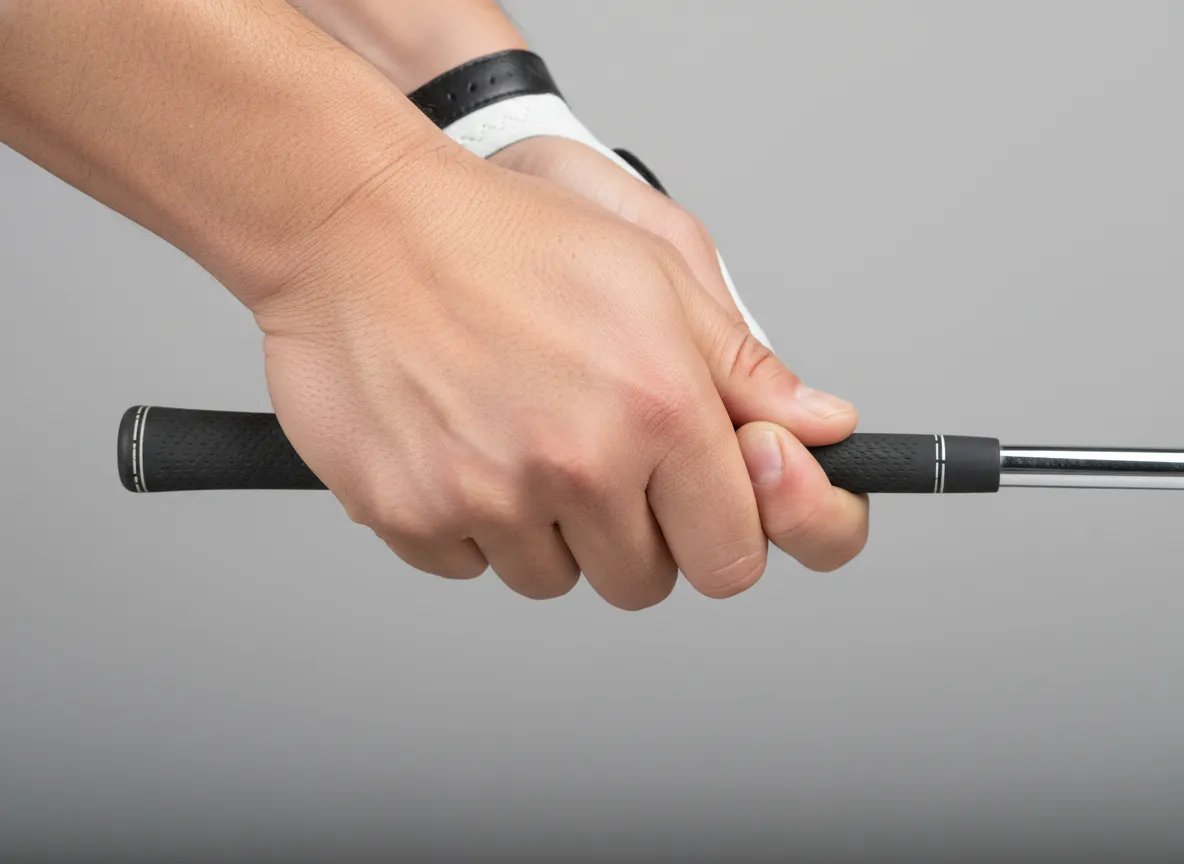
Your grip is your only connection to the golf club, making it the most critical fundamental in your swing. Proper grip pressure management directly affects club head position and contact location on the club face [1].
Here’s how to establish the perfect grip:
Left Hand (for right-handed golfers):
- Position the club in your fingers, not your palm
- You should see 2-3 knuckles when looking down
- The “V” formed by your thumb and index finger points toward your right shoulder
Right Hand:
- Place your right hand so the lifeline sits over your left thumb
- Maintain consistent pressure (5-6 on a scale of 1-10)
- Both “V’s” should point in the same direction
“Grip pressure is like holding a bird—firm enough so it doesn’t fly away, but gentle enough so you don’t hurt it.”
2. Master Your Setup Position and Ball Placement

Your setup position determines the quality of everything that follows. Ball position critically influences path lines and angle of attack [1], making it essential to get this right from the start.
Optimal Setup Checklist:
- Feet: Shoulder-width apart for irons, slightly wider for driver
- Posture: Bend from hips, not waist; maintain natural spine curve
- Weight Distribution: 50/50 between feet, slightly favoring balls of feet
- Ball Position: Forward of center for longer clubs, center for short irons
| Club Type | Ball Position | Stance Width |
|---|---|---|
| Driver | Inside left heel | Widest |
| 7-Iron | Center of stance | Shoulder-width |
| Wedges | Slightly back of center | Narrow |
3. Develop Proper Alignment and Aim

Even the perfect swing won’t help if you’re aimed incorrectly. Think of alignment as the railroad tracks—your feet, hips, and shoulders run parallel to your target line.
Alignment Fundamentals:
- Pick an intermediate target 2-3 feet in front of your ball
- Align clubface to your target first
- Position your body parallel to the target line
- Use alignment sticks during practice to ingrain proper positioning
Dynamic Swing Movements
4. Execute a Smooth, Connected Takeaway

The takeaway sets the tone for your entire swing. Master the four critical swing positions: setup, takeaway, transition, and impact [1] to build consistency.
Perfect Takeaway Elements:
- Move the club back as one piece with your shoulders
- Maintain the triangle formed by your arms and chest
- Keep the clubhead outside your hands
- Stop when your left arm is parallel to the ground
Common Takeaway Mistakes to Avoid:
- ❌ Picking the club up with your hands
- ❌ Rolling the clubface open immediately
- ❌ Breaking your wrists too early
- ❌ Swaying your body instead of turning
5. Create Powerful Hip and Core Rotation

Rotational power originates from the ground up (feet → hips → core → upper body), not from core rotation alone [3]. This kinetic chain is crucial for generating both distance and accuracy.
Proper Rotation Sequence:
- Backswing: Turn your hips 45 degrees, shoulders 90 degrees
- Transition: Start downswing with lower body while upper body completes backswing
- Impact: Hips should be 45 degrees open to target
- Follow-through: Complete rotation facing the target
Hip Mobility Requirements:
- Hip mobility and glute strength are essential for stability, power, and maintaining spine angle [3]
- Practice hip circles and glute bridges to improve mobility
- Maintain your spine angle throughout the swing to prevent breakdown
6. Achieve Consistent Impact Position

Impact is the moment of truth—everything else is just preparation. Club face position at impact is the primary driver of ball start direction, while club path determines shot curvature [4].
Ideal Impact Characteristics:
- Clubface: Square to slightly closed
- Hands: Ahead of the ball for irons, even for driver
- Weight: 70-80% on front foot
- Hip Position: Open to target
- Spine Angle: Maintained from address
Impact Training Drill:
Practice the “impact bag drill” by hitting an impact bag or old pillow to feel the proper impact position without worrying about ball flight.
Advanced Fundamentals
7. Control Your Swing Plane and Club Path

Understanding swing plane helps you deliver the club consistently. Loft control on the backswing enables control of sweet spot location and prevents off-center strikes [1].
Swing Plane Basics:
- The club should travel on an inclined plane around your body
- Steeper plane for shorter clubs, shallower for longer clubs
- Maintain consistent plane throughout the swing
- Use alignment sticks to visualize and practice proper plane
Club Path Influence on Ball Flight:
- In-to-out path: Promotes draws
- Out-to-in path: Creates fades/slices
- Square path: Produces straight shots
8. Develop Consistent Tempo and Rhythm

Great golfers have consistent tempo regardless of the club they’re using. Simplify the swing rather than overload the brain with conflicting information [1] by focusing on smooth, rhythmic motion.
Tempo Training Methods:
- Count Method: Use “1-2” for backswing, “3” for downswing
- Music Method: Swing to your favorite song’s rhythm
- Metronome Training: Practice with consistent beats
- 3:1 Ratio: Backswing should take 3 times longer than downswing
Rhythm Checkpoints:
- ✅ Smooth transition from backswing to downswing
- ✅ Consistent timing regardless of club selection
- ✅ Balanced finish position every time
- ✅ Same tempo for practice swings and real swings
Practice Implementation Strategy
Purposeful practice methodology—structured drills rather than aimless ball-striking—improves transfer of range skills to course play [2]. Here’s how to implement these fundamentals:
Weekly Practice Schedule:
- Monday: Grip and setup work (20 minutes)
- Wednesday: Swing plane and tempo drills (30 minutes)
- Friday: Impact position and ball-striking (45 minutes)
- Weekend: On-course application and feedback
Progressive Learning Approach:
- Week 1-2: Master static fundamentals (grip, setup, alignment)
- Week 3-4: Add dynamic movements (takeaway, rotation)
- Week 5-6: Focus on impact and swing plane
- Week 7-8: Integrate tempo and on-course application
Conclusion
Mastering these 8 Non-Negotiable Golf Swing Basics Every Player Must Master isn’t about perfection—it’s about building a reliable, repeatable foundation that will serve you for years to come. Remember, spinal stability maintenance from address through follow-through prevents swing breakdowns and thin contact [3], so focus on maintaining these fundamentals under pressure.
Start with the static fundamentals (grip, setup, alignment) before progressing to dynamic movements. Practice with purpose, not just volume. Most importantly, be patient with yourself—building muscle memory takes time, but the payoff in consistency and enjoyment is immeasurable.
Your Next Steps:
- Assess your current fundamentals using video or a teaching professional
- Choose 2-3 areas from this list that need the most improvement
- Create a structured practice plan focusing on these specific areas
- Track your progress with on-course scoring and ball-striking statistics
- Be consistent with your practice routine for at least 8 weeks
The difference between good golfers and great golfers isn’t natural talent—it’s their commitment to mastering these fundamental building blocks. Start today, stay consistent, and watch your game transform from the ground up.
References
[1] Watch – https://www.youtube.com/watch?v=Ts4rvrno-a4
[2] The 2026 Golf Blueprint To Lower Scores – https://golftipsmag.com/the-2026-golf-blueprint-to-lower-scores/
[3] The 2026 Golf Fitness Guide 5 Smart Ways To Get In Golf Shape – https://www.pga.com/story/the-2026-golf-fitness-guide-5-smart-ways-to-get-in-golf-shape
[4] Watch – https://www.youtube.com/watch?v=OjtxRORgSnk