
9 Golf Driver Swing Tips to Add 20+ Yards Instantly
Picture this: You’re standing on the first tee, watching your playing partner crush their drive 30 yards past yours—again. The frustration builds as you wonder what secret they know that you don’t. Here’s the truth: adding significant distance to your driver doesn’t require years of practice or a complete swing overhaul. With the right adjustments and techniques, you can implement these 9 golf driver swing tips to add 20+ yards instantly and start outdistancing your competitors today.
Disclosure: This post contains affiliate links. As an Amazon Associate, we earn from qualifying purchases, and at no extra cost to you.

In 2026, golf instruction has evolved beyond generic advice to focus on specific, measurable improvements that deliver immediate results. These proven techniques combine modern swing science with practical adjustments you can make right now on the driving range.
Key Takeaways
- Optimize your setup fundamentals – Proper grip pressure, ball position, and stance create the foundation for explosive distance gains
- Master the shift-turn-push sequence – This proven downswing pattern prevents distance-killing swing flaws while maximizing power transfer
- Target higher launch angles – Modern distance optimization requires launch angles of 13+ degrees, moving away from traditional lower trajectories
- Focus on angle of attack – A slightly upward strike with your driver can add 15-20 yards compared to hitting down on the ball
- Fine-tune your equipment – Small adjustments to shaft length and club specifications can dramatically impact both distance and accuracy
1. Perfect Your Grip Pressure for Maximum Distance 🏌️
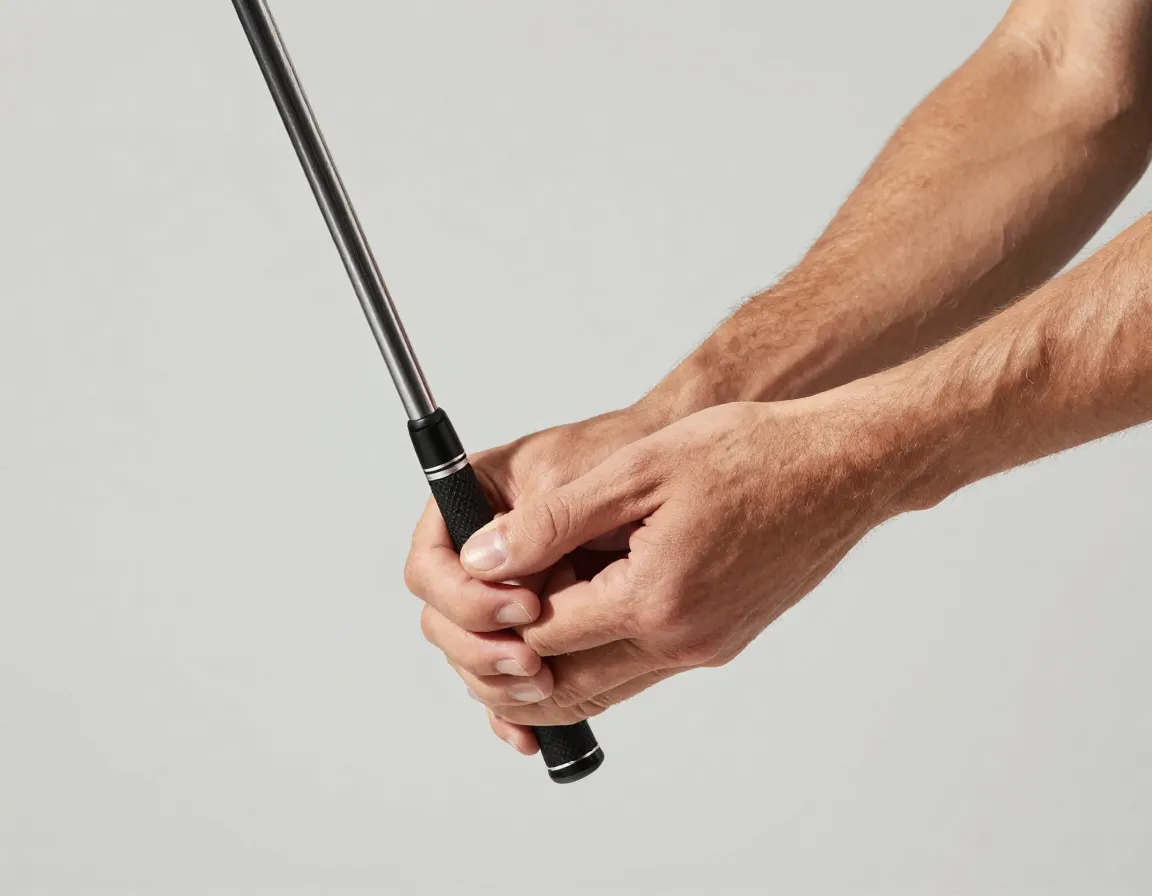
The foundation of any powerful drive starts in your hands. Lowering grip pressure creates better club head speed and improves your angle of attack with the driver [2]. Think of holding a small bird—firm enough that it won’t fly away, but gentle enough not to hurt it.
When you grip the club too tightly, you create tension that travels up your arms and into your shoulders. This tension acts like a brake on your swing speed. Here’s how to optimize your grip:
- Rate your pressure on a scale of 1-10 (10 being death grip)
- Aim for a 4-5 pressure level throughout your swing
- Check your grip at address, top of backswing, and impact
- Practice swinging with different pressures to feel the speed difference
Many golfers unconsciously tighten their grip during the swing, especially when trying to hit it hard. Focus on maintaining that light pressure, and you’ll be amazed at how much more club head speed you can generate.
2. Master the Shift-Turn-Push Downswing Sequence

The shift-turn-push sequence during the downswing is crucial for preventing over-the-top moves that reduce distance [1]. This three-part movement creates a powerful kinetic chain that transfers energy efficiently from your body to the club head.
The Shift: Start your downswing by shifting your weight to your front foot. This isn’t a lateral slide—it’s a subtle pressure shift that creates the foundation for power.
The Turn: Once you feel pressure on your front foot, begin rotating your hips toward the target. Your shoulders should remain closed slightly longer, creating separation between your upper and lower body.
The Push: Finally, push off your back foot while continuing to rotate through impact. This ground force reaction adds significant power to your swing.
“The sequence is everything in golf. Get the order right, and distance follows naturally.” – Top PGA Instructor
Practice this sequence slowly at first, focusing on the timing rather than speed. Once the movement feels natural, gradually increase your swing speed while maintaining the proper sequence.
3. Optimize Your Launch Angle for Modern Distance

Golfers in 2026 are increasingly targeting launch angles of 13+ degrees consistently to maximize driver distance, moving away from traditional 10-11 degree launch zones [6]. This higher launch angle allows the ball to carry farther and land at a more optimal angle for maximum roll.
To achieve higher launch angles:
- Tee the ball higher – Half the ball should be above the club head at address
- Position the ball forward in your stance (off your front heel)
- Tilt your spine slightly away from the target at address
- Focus on hitting up on the ball rather than down
The key is creating an upward angle of attack. When you hit up on the ball with your driver, you reduce spin and increase launch angle—a combination that sends the ball significantly farther.
4. Maintain Proper Grip Track Connection

Maintaining proper grip track (moving the grip inward rather than outward) creates connection between your arms and chest, significantly affecting club head positioning [2]. This connection ensures your arms and body work together rather than fighting each other.
During your backswing, focus on:
- Keeping your trail elbow close to your body
- Moving the club grip toward your body rather than away
- Maintaining the triangle formed by your arms and chest
- Feeling your arms stay connected to your torso rotation
When your arms disconnect from your body, you lose power and accuracy. The grip track concept helps maintain this crucial connection throughout your swing, resulting in more consistent and powerful drives.
5. Execute Optimal Forearm Rotation
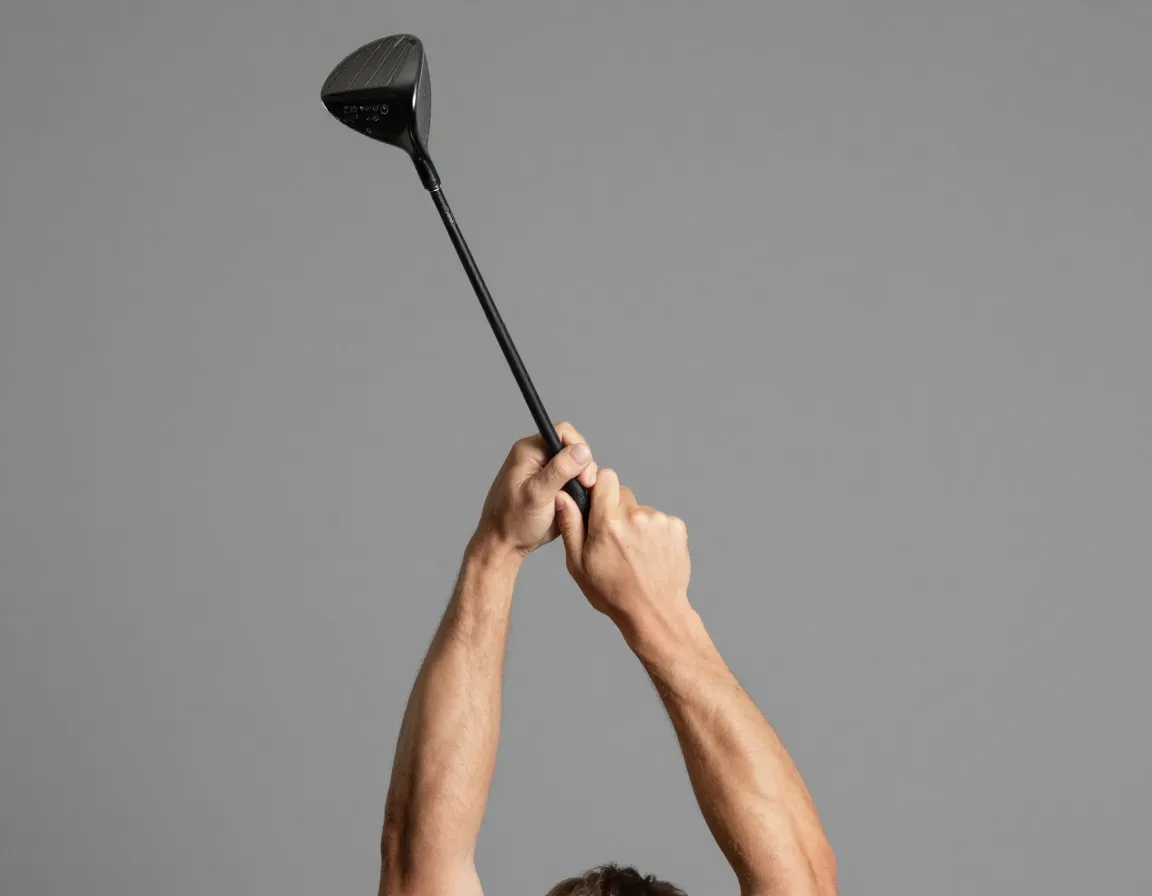
45-60 degrees of forearm rotation in the backswing contributes significantly to speed generation and proper club positioning [2]. This rotation, often called “setting the club,” creates leverage and stores energy that releases through impact.
Here’s how to practice proper forearm rotation:
- Start with arms extended in front of you, holding the club
- Rotate your forearms until the club face points skyward
- Feel the stretch in your wrists and forearms
- Practice this motion slowly in your backswing
The rotation should feel natural and athletic, similar to throwing a ball or skipping a stone. Avoid over-rotating, which can lead to an open club face and loss of control.
6. Consider Your Driver Shaft Length
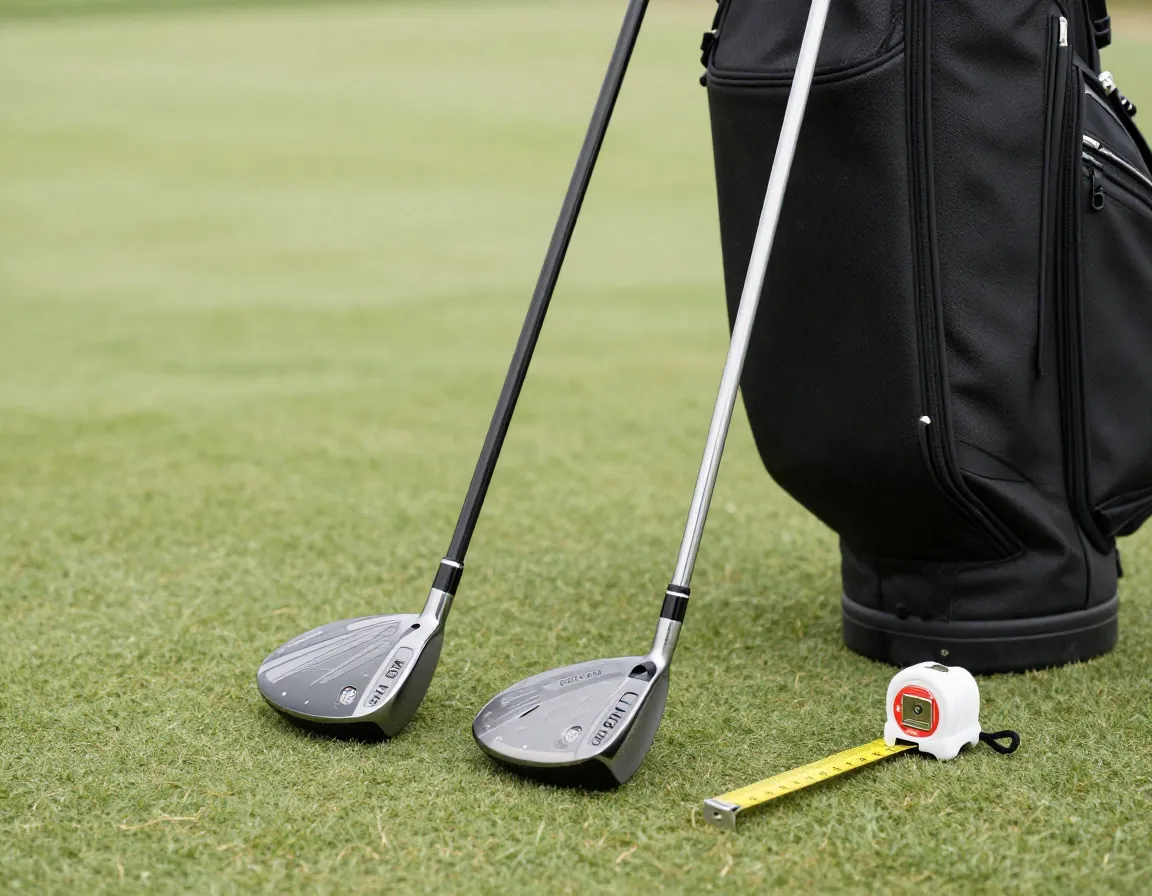
Recent testing showed a 28% increase in accuracy with shorter driver shafts, though accuracy and distance involve trade-offs depending on individual golfer characteristics [4]. While longer shafts can potentially create more club head speed, they often reduce control and consistency.
Standard driver length: 45-46 inches
Optimal length for most golfers: 44-45 inches
Benefits of shorter shafts include:
- Improved accuracy and consistency
- Better contact quality
- Enhanced control over club face
- Reduced dispersion patterns
Consider getting fitted by a professional to determine your optimal shaft length. The small sacrifice in potential distance often results in longer drives due to improved contact and accuracy.
7. Optimize Your Spin Rate Based on Swing Speed
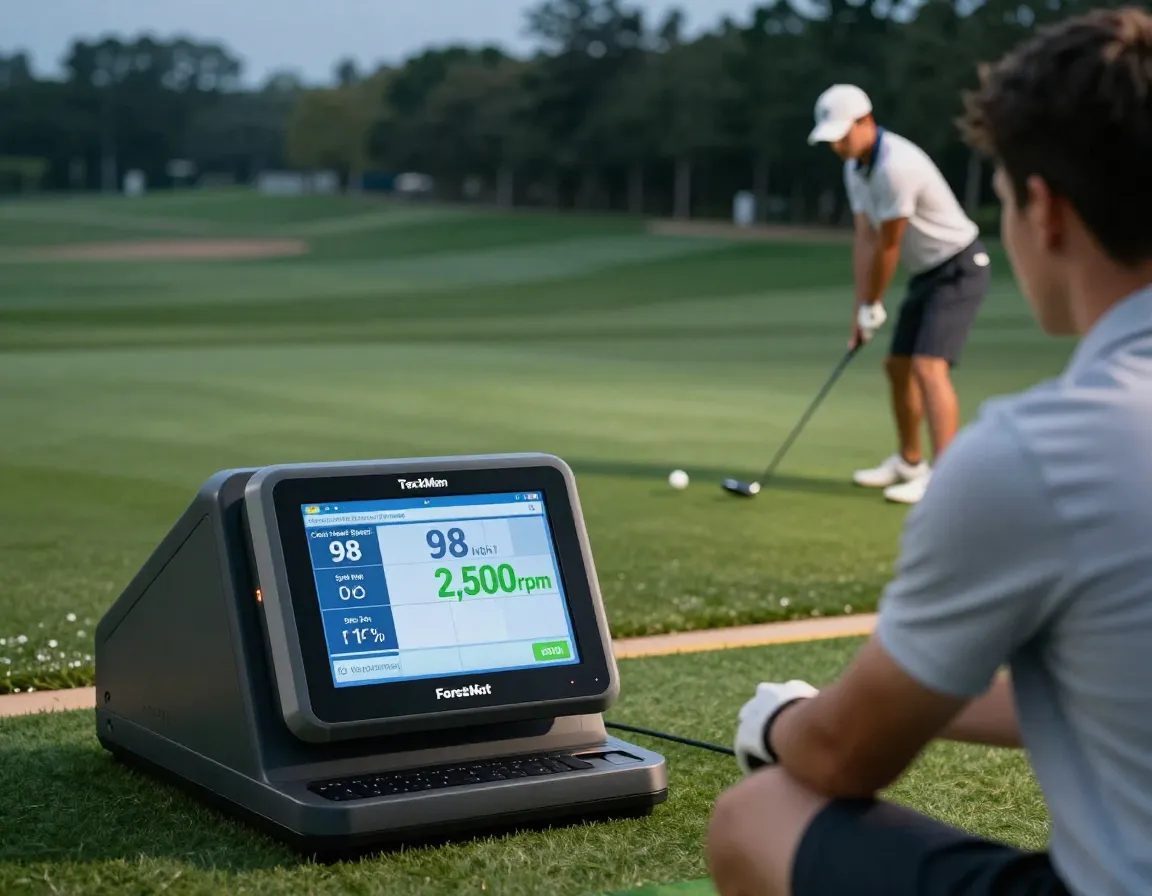
Faster club head speeds require more spin for distance optimization, while slower swings can benefit from lower spin rates [2]. Understanding this relationship helps you optimize your equipment and technique for maximum distance.
| Swing Speed | Optimal Spin Rate | Equipment Focus |
|---|---|---|
| Under 95 mph | 2,000-2,500 rpm | Lower loft, draw bias |
| 95-105 mph | 2,200-2,700 rpm | Balanced setup |
| Over 105 mph | 2,400-2,800 rpm | Higher loft, fade bias |
Work with a launch monitor to determine your current spin rate and make adjustments accordingly. Sometimes a simple loft adjustment or different ball choice can add significant distance.
8. Perfect Your Setup Fundamentals

Your setup position determines everything that follows in your swing. These 9 golf driver swing tips to add 20+ yards instantly all build upon a solid foundation at address.
Key setup elements:
- Ball position: Off your front heel
- Stance width: Slightly wider than shoulder-width
- Weight distribution: 60% on back foot at address
- Spine tilt: Slight tilt away from target
- Shoulder alignment: Square to slightly closed
Take time to check these fundamentals before every drive. Even small deviations from optimal setup can cost you significant distance and accuracy.
9. Develop Consistent Tempo and Timing

The final piece of maximizing your driver distance is developing consistent tempo and timing. All the technical improvements in the world won’t help if your timing is off.
Practice with these tempo drills:
- Count your swing: “One” for backswing, “two” for downswing
- Use a metronome to develop consistent rhythm
- Practice with your eyes closed to feel the swing
- Focus on smooth acceleration rather than violent effort
Remember, club head speed at impact matters more than how hard you try to swing. Smooth, accelerating swings consistently produce more distance than aggressive, out-of-control efforts.
Putting It All Together: Your Distance Action Plan
Implementing these 9 golf driver swing tips to add 20+ yards instantly requires a systematic approach. Don’t try to change everything at once. Instead:
Week 1: Focus on grip pressure and setup fundamentals
Week 2: Work on the shift-turn-push sequence
Week 3: Practice launch angle optimization and forearm rotation
Week 4: Fine-tune spin rates and tempo
Track your progress with a launch monitor if possible, or simply measure your carry distances on the range. Most golfers see immediate improvements in distance when they focus on just one or two of these elements.
Conclusion
These 9 golf driver swing tips to add 20+ yards instantly provide a comprehensive roadmap for dramatically improving your driving distance. From optimizing your grip pressure and perfecting the shift-turn-push sequence to targeting higher launch angles and maintaining proper connection throughout your swing, each element builds upon the others to create explosive distance gains.
The key to success lies in patient practice and systematic implementation. Start with the fundamentals—grip, setup, and tempo—before moving to the more advanced concepts. Remember that consistency trumps raw power, and proper technique will always outperform brute force.
Your next steps:
- Choose 2-3 tips that resonate most with your current swing issues
- Practice them systematically over the next month
- Track your progress with measured distances
- Consider a professional fitting to optimize your equipment
- Be patient with the process—lasting improvement takes time
Start implementing these techniques today, and you’ll be amazed at how quickly you can add significant yardage to your drives. Your playing partners won’t know what hit them! 🚀
References
[1] 5 Research Based Feels That Will Upgrade Your Golf Swing According To A Top Coach – https://alamocitygolftrail.com/5-research-based-feels-that-will-upgrade-your-golf-swing-according-to-a-top-coach/
[2] Watch – https://www.youtube.com/watch?v=TDIZ9fd3YfQ
[3] The 2026 Golf Blueprint To Lower Scores – https://golftipsmag.com/the-2026-golf-blueprint-to-lower-scores/
[4] The Quest For A More Accurate Driver – https://practical-golf.com/the-quest-for-a-more-accurate-driver
[5] A Simple Reminder For Anyone Trying To Get Better At Golf – https://mygolfspy.com/news-opinion/a-simple-reminder-for-anyone-trying-to-get-better-at-golf/
[6] Index – https://www.thehackersparadise.com/forum/index.php?threads%2F2026-driver-swing-goals.8979079%2F