8 Critical Factors to Consider Before Buying an Indoor Golf Mat
Choosing the perfect indoor golf mat can make or break your home practice sessions. With 2026 bringing an explosion of new golf simulator setups and home practice spaces, I’ve seen too many golfers rush into purchases only to regret their decision weeks later. Whether you’re building a complete simulator setup or simply want to practice your swing indoors, understanding the 8 Critical Factors to Consider Before Buying an Indoor Golf Mat will save you money and frustration while dramatically improving your practice experience.
Disclosure: This post contains affiliate links. As an Amazon Associate, we earn from qualifying purchases, and at no extra cost to you.
Key Takeaways
- Size matters significantly – Standard 5×4 foot mats work for most golfers, but 6×4 or 5×5 options provide superior swing comfort and prevent stepping off edges mid-swing
- Material quality directly impacts feedback – High-density nylon or polypropylene turf with proper foam backing delivers realistic ball interaction and joint protection
- Cushioning thickness affects both comfort and performance – EVA foam bases ranging from 15mm to 36mm provide varying levels of shock absorption for extended practice sessions
- Price ranges vary dramatically – Budget options start at $25-$80, while premium heavy-duty mats reach $250-$400, with material quality determining long-term value
- Durability ratings span from 5/10 to 10/10 – Heavy-duty construction with high-density materials ensures longevity for repeated impact use
Understanding the 8 Critical Factors to Consider Before Buying an Indoor Golf Mat
When I help golfers select indoor practice equipment, I always emphasize that your mat choice affects every aspect of your practice routine. From swing mechanics to joint health, the right mat enhances your game while the wrong one can actually hurt your progress. Let’s dive into each critical factor that will guide your decision.
1. Size and Space Requirements: Finding Your Perfect Fit
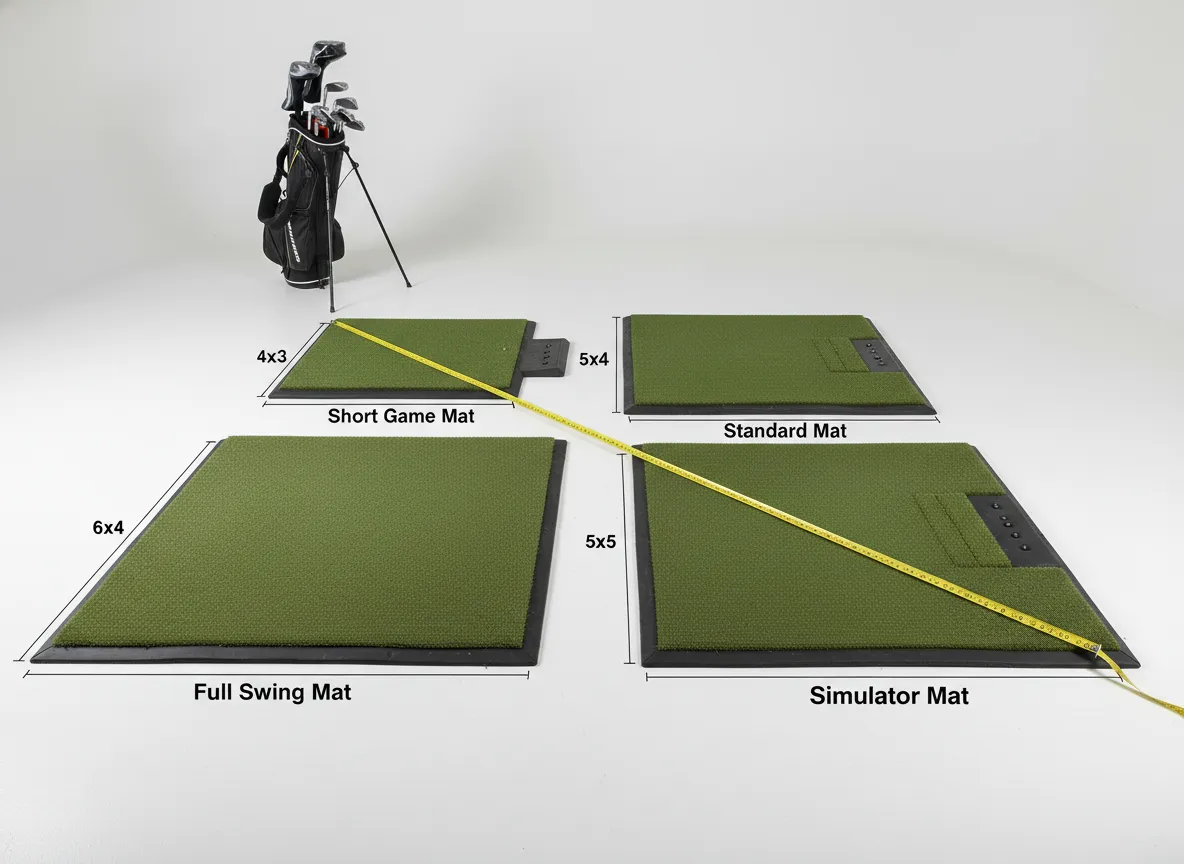
The first factor in the 8 Critical Factors to Consider Before Buying an Indoor Golf Mat involves understanding how mat dimensions affect your practice quality. A standard 5×4 foot mat works for most golfers, but I’ve found that upgrading to a 6×4 or 5×5 mat provides a game-changing experience [1].
Why size matters for your swing:
- Natural setup positioning without cramped stance adjustments
- Full swing completion without stepping off edges mid-swing
- Multiple ball positions for varied practice scenarios
- Comfortable approach angles for different club selections
Recommended Mat Sizes by Practice Type
| Practice Focus | Minimum Size | Optimal Size | Benefits |
|---|---|---|---|
| Short game only | 4×3 feet | 5×4 feet | Adequate for chipping/putting |
| Full swing practice | 5×4 feet | 6×4 feet | Natural stance and follow-through |
| Simulator integration | 5×4 feet | 5×5 feet | 360-degree positioning flexibility |
| Multi-golfer use | 6×4 feet | 6×5 feet | Accommodates different heights/stances |
Before measuring your space, remember to account for ceiling height (minimum 9 feet for drivers) and side clearance (3 feet minimum on each side for safe swing completion).
2. Turf Type and Course Realism: Authentic Playing Conditions
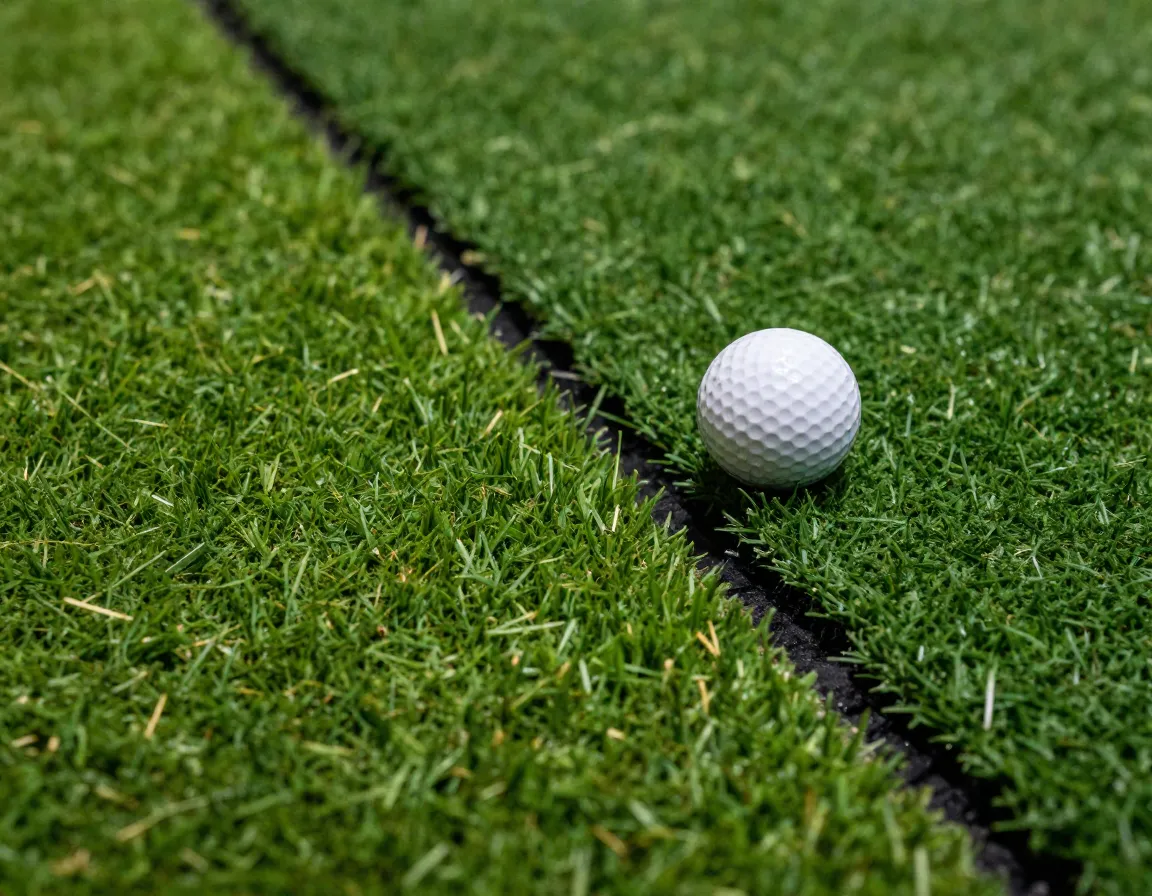
The second critical factor focuses on turf design and how it simulates real course conditions. Look for dual-turf designs that blend fairway and rough sections to simulate authentic playing experiences [1][2].
High-density turf provides the resistance you need to identify mishits instead of hiding them. I always recommend mats that offer realistic feedback because practicing on forgiving surfaces can actually hurt your game improvement.
Key turf characteristics to evaluate:
- Pile height variation – Thicker piles mimic fairway grass, while shorter piles simulate tight lies around greens [3]
- Fiber density – Higher density provides better ball interaction and durability
- Color variation – Multiple green tones create visual depth and course-like appearance
- Texture consistency – Uniform fiber distribution ensures predictable ball behavior
“The best practice mats don’t just look like real grass – they respond like real grass. Your ball should react differently to fat shots versus clean contact, just like on the course.”
Material Quality and Construction: The Foundation of Performance
Material selection represents the third factor among the 8 Critical Factors to Consider Before Buying an Indoor Golf Mat. Prioritize mats made from durable materials like nylon or polypropylene that provide realistic feedback without excessive wear [3].
Material Comparison Guide
Nylon Turf:
- ✅ Excellent durability and resilience
- ✅ Realistic ball interaction
- ✅ Maintains appearance over time
- ❌ Higher initial cost
Polypropylene Turf:
- ✅ Good value for money
- ✅ Adequate durability for moderate use
- ✅ Easy maintenance
- ❌ Less realistic feel than nylon
Synthetic Blend:
- ✅ Balanced performance and cost
- ✅ Good for beginners
- ❌ May show wear faster with heavy use
High-end models feature foam backing to reduce joint shock during extended practice sessions, which becomes crucial if you’re planning daily practice routines [3].
4. Cushioning Thickness and Shock Absorption: Protecting Your Body
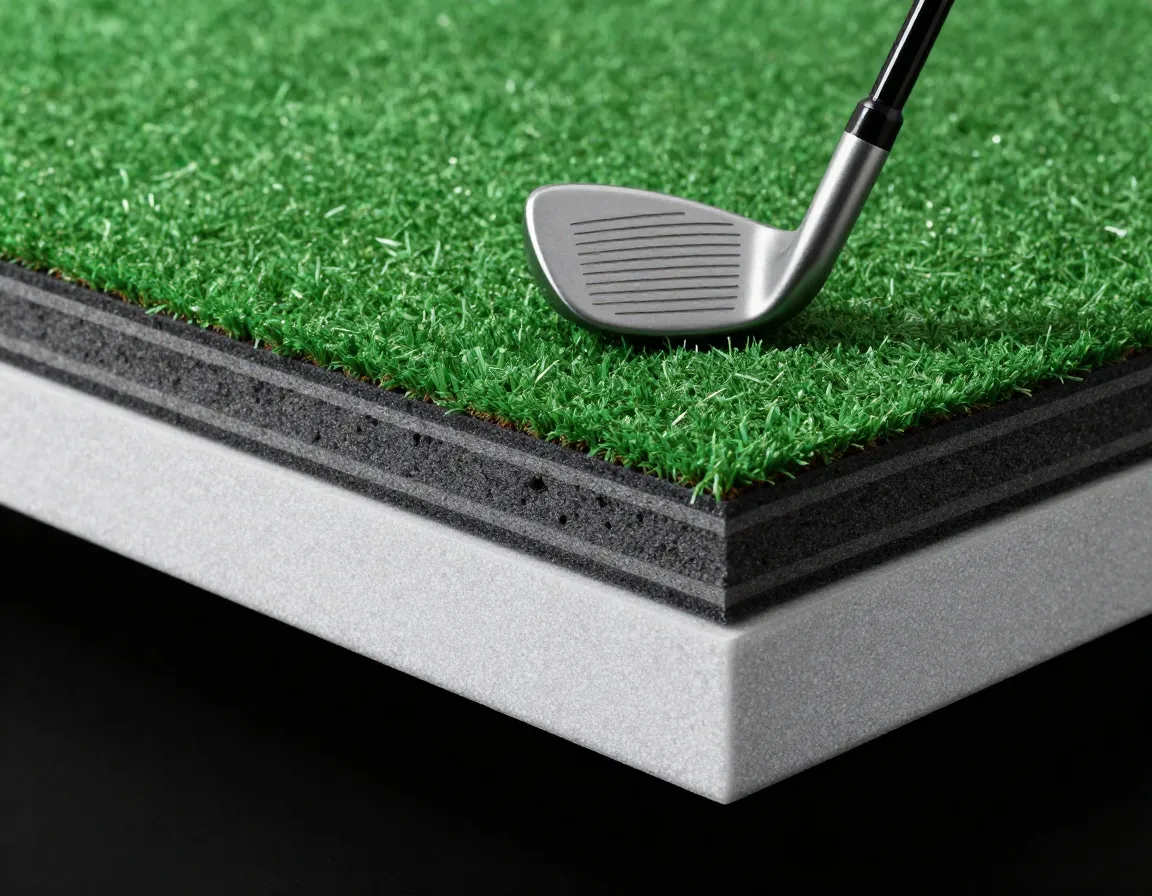
The fourth factor addresses your long-term physical health during practice. Mat thickness ranges significantly affect both performance and comfort. EVA foam bases ranging from 15mm to 36mm absorb shock effectively, with thicker profiles providing premium joint protection [1][4].
Cushioning thickness guide:
- 15mm foam – Basic shock absorption, suitable for occasional use
- 20-25mm foam – Good protection for regular practice (3-4 times weekly)
- 30mm foam – Excellent protection for frequent practice (daily use)
- 36mm foam – Premium joint protection for intensive training
I’ve noticed that golfers who practice on thin mats often develop elbow and wrist discomfort within weeks. Investing in proper cushioning pays dividends in comfort and injury prevention.
5. Price Range and Value: Understanding 2026 Market Options
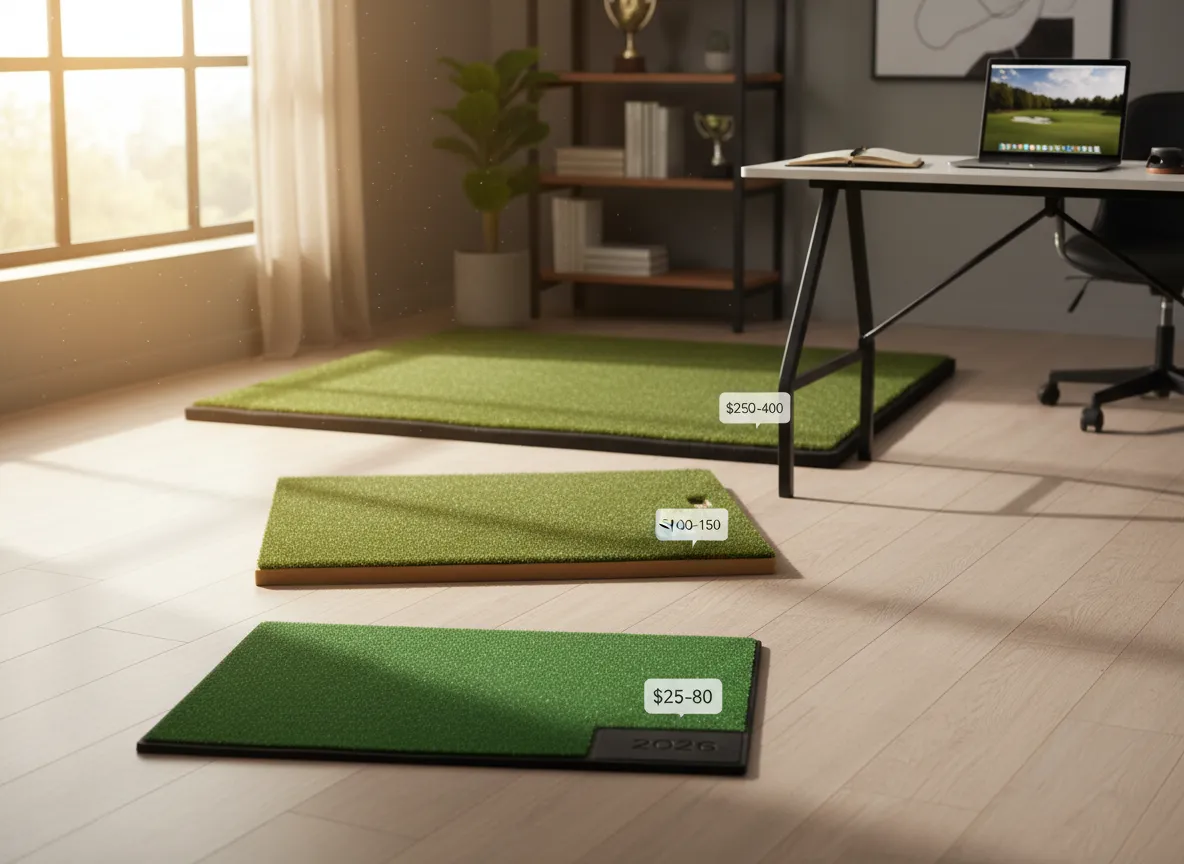
The fifth critical factor involves understanding current pricing and value propositions. 2026 pricing varies significantly by construction type and features [4]:
2026 Price Ranges by Category
Budget Options ($25-$80):
- Basic plastic or thin foam construction
- Durability rating: 5/10
- Suitable for: Occasional practice, beginners
Standard Turf Mats ($100-$150):
- Decent synthetic turf with basic foam backing
- Durability rating: 7/10
- Suitable for: Regular recreational practice
Deluxe Golf Mats ($200-$300):
- High-quality turf with enhanced cushioning
- Durability rating: 8/10
- Suitable for: Serious practice, simulator integration
Heavy Duty Mats ($250-$400):
- Premium materials with maximum durability
- Durability rating: 10/10
- Suitable for: Daily use, commercial applications
Quality materials significantly impact long-term value. A $300 mat that lasts five years costs less per practice session than a $50 mat requiring annual replacement.
6. Durability Rating and Longevity Expectations
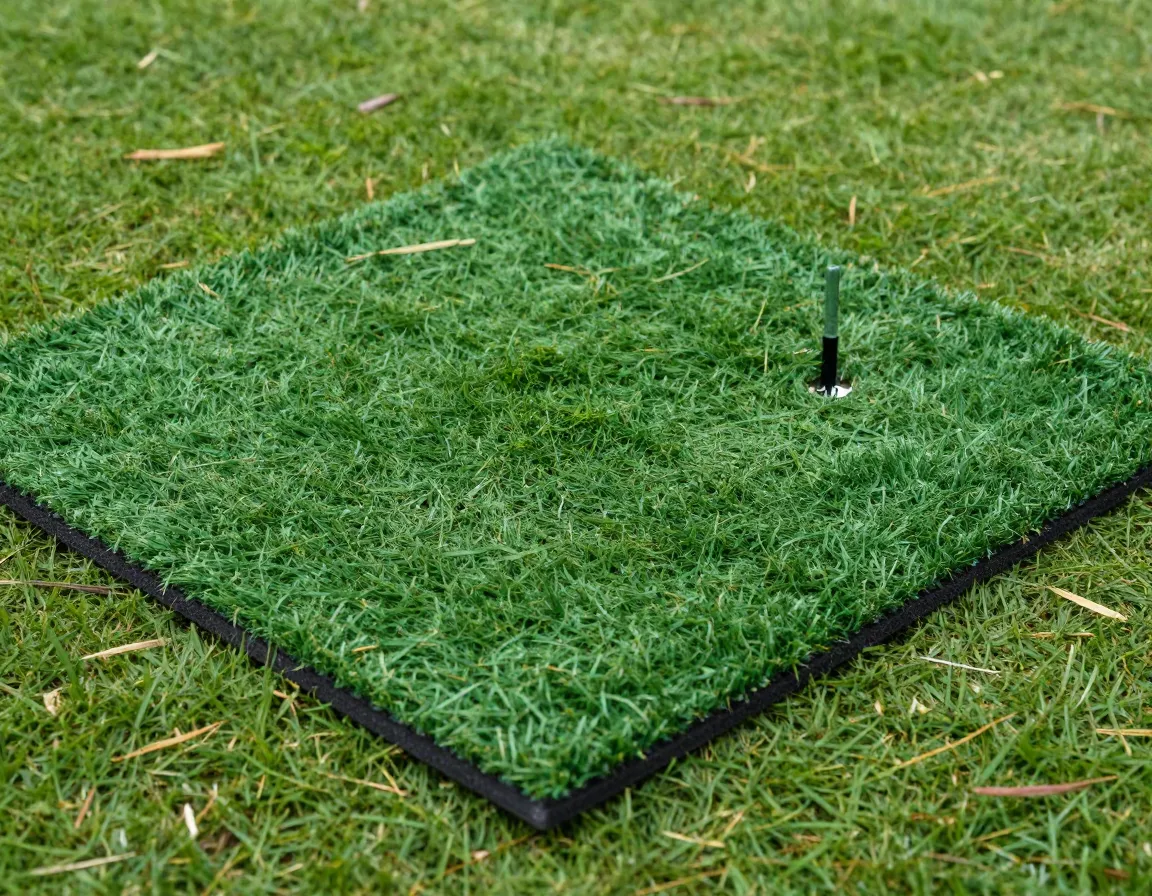
Durability represents the sixth factor in the 8 Critical Factors to Consider Before Buying an Indoor Golf Mat. Heavy-duty mats with high-density foam achieve 10/10 durability ratings, while budget plastic mats rate only 5/10 [4].
Factors affecting mat longevity:
- Impact frequency – Daily use versus weekend practice
- Club selection – Driver impacts create more wear than irons
- Swing characteristics – Steep angle of attack increases wear
- Maintenance routine – Regular cleaning extends lifespan
Expected Lifespan by Construction Type
| Mat Type | Durability Rating | Expected Lifespan | Best For |
|---|---|---|---|
| Budget plastic | 5/10 | 6-12 months | Occasional use |
| Standard synthetic | 7/10 | 1-2 years | Weekend practice |
| Premium nylon | 9/10 | 3-5 years | Daily practice |
| Heavy-duty commercial | 10/10 | 5+ years | Intensive training |
7. Turf Pile Height and Playing Condition Simulation
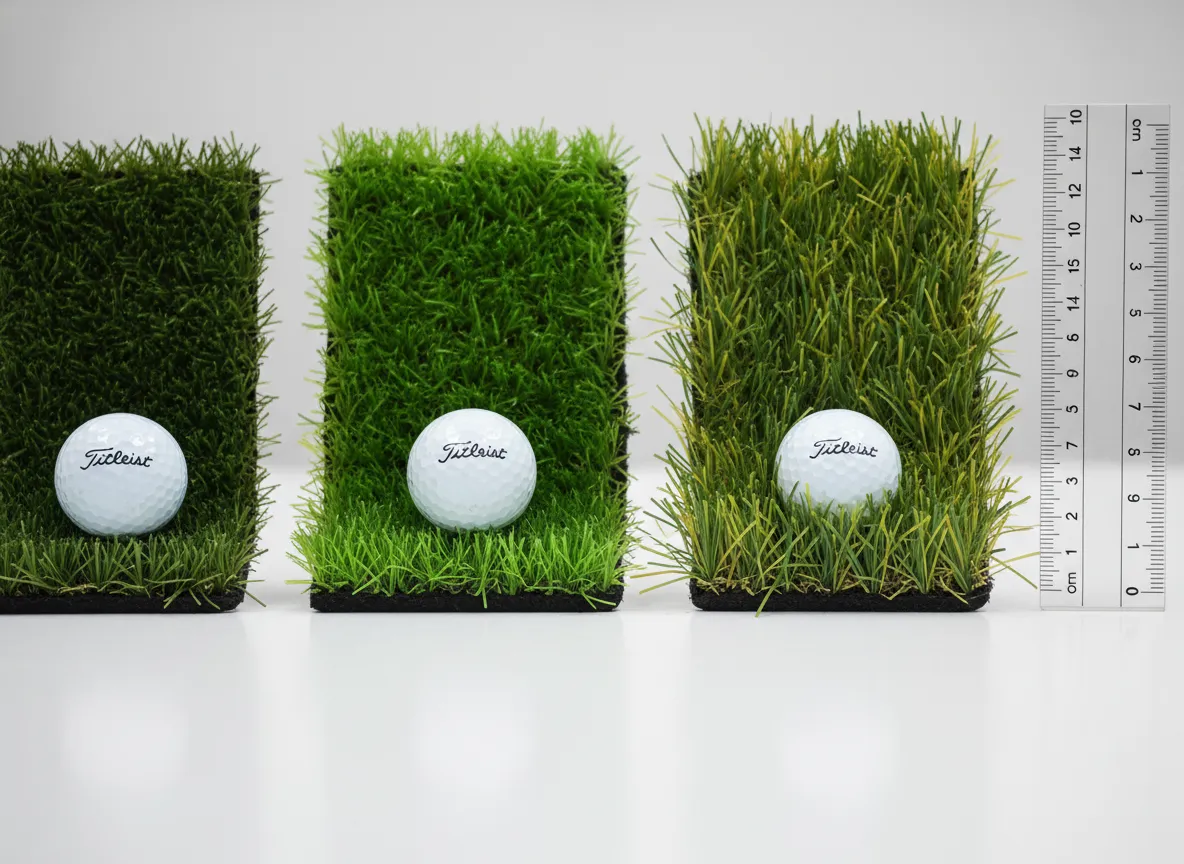
The seventh factor focuses on how pile height affects your practice experience. Thicker pile heights mimic fairway grass conditions, while shorter piles simulate tight lies around greens [3].
Select based on your typical playing conditions or specific game improvement goals:
Long pile (12-15mm):
- Simulates lush fairway conditions
- Easier ball pickup and clean contact
- Ideal for building confidence
Medium pile (8-12mm):
- Versatile for various course conditions
- Balanced feedback for mishits
- Best all-around option
Short pile (5-8mm):
- Simulates tight lies and firm conditions
- Demands precise contact
- Excellent for advanced players
I recommend medium pile height for most golfers because it provides honest feedback while remaining forgiving enough for productive practice sessions.
8. Simulator Compatibility and Portability Features
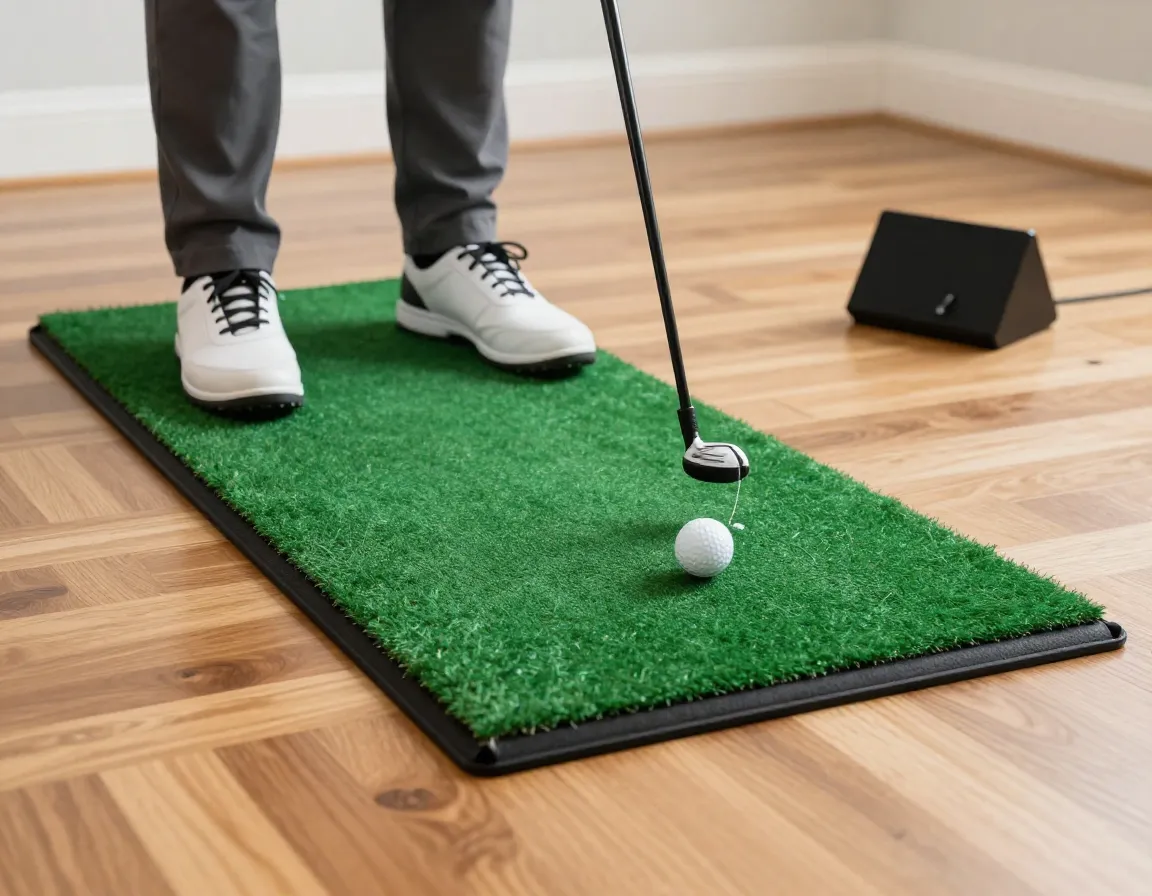
The final factor among the 8 Critical Factors to Consider Before Buying an Indoor Golf Mat addresses integration with technology and space flexibility. Premium options work across all club types from wedges to drivers and maintain compatibility with indoor simulators or backyard setups [1][2].
Compatibility considerations:
- Launch monitor placement – Some mats include designated sensor areas
- Tee height adjustment – Multiple tee positions for different clubs
- Ball return systems – Integration with automatic ball feeders
- Alignment aids – Built-in guides for consistent setup
Portability Features to Evaluate
Fixed Installation Benefits:
- Maximum stability during aggressive swings
- Integrated alignment systems
- Professional appearance
Portable Mat Advantages:
- Non-slip backing for various floor surfaces
- Lightweight construction for easy storage
- Weather resistance for outdoor use
- Quick setup/breakdown for shared spaces
Consider whether you need permanent installation or flexibility to move your practice area based on weather, space usage, or equipment upgrades.
Conclusion
Selecting the right indoor golf mat requires careful evaluation of all 8 Critical Factors to Consider Before Buying an Indoor Golf Mat. From size and material quality to cushioning and simulator compatibility, each factor directly impacts your practice quality and long-term satisfaction.
Your next steps:
- Measure your available space and determine optimal mat dimensions
- Set your budget based on expected usage frequency and durability needs
- Test different turf types if possible to understand feel preferences
- Consider future upgrades like simulator integration or space expansion
- Read verified reviews from golfers with similar practice goals
Remember that your indoor golf mat serves as the foundation for countless practice sessions. Investing in quality materials and proper sizing pays dividends in improved practice quality, reduced injury risk, and enhanced enjoyment of your home golf setup.
The perfect mat exists for your specific needs and budget. Take time to evaluate each critical factor, and you’ll make a confident purchase that supports your golf improvement goals for years to come.
References
[1] Best Golf Mats For Simulators – https://www.funwithgolf.com/best-golf-mats-for-simulators/
[2] Best Golf Mats 2026 Home Practice – https://simplygolfsimulators.com/blogs/news/best-golf-mats-2026-home-practice
[3] Fa79b302907d34ee56e6f48ac5e406d0 – http://oreateai.com/blog/finding-the-perfect-indoor-golf-hitting-mat-a-comprehensive-guide/fa79b302907d34ee56e6f48ac5e406d0
[4] 2026 Rough Golf Mat Buying Guide And Tips – https://www.youseegsm.com/blog/2026-rough-golf-mat-buying-guide-and-tips/