The 6 Best Pieces of Winter Golf Wear for Women to Conquer the Cold
When temperatures drop and frost covers the fairways, many female golfers hang up their clubs until spring returns. However, with the right winter golf apparel, women can continue enjoying their favorite sport throughout the coldest months of the year. The 6 Best Pieces of Winter Golf Wear for Women to Conquer the Cold can transform a potentially miserable round into an enjoyable and comfortable experience on the course.
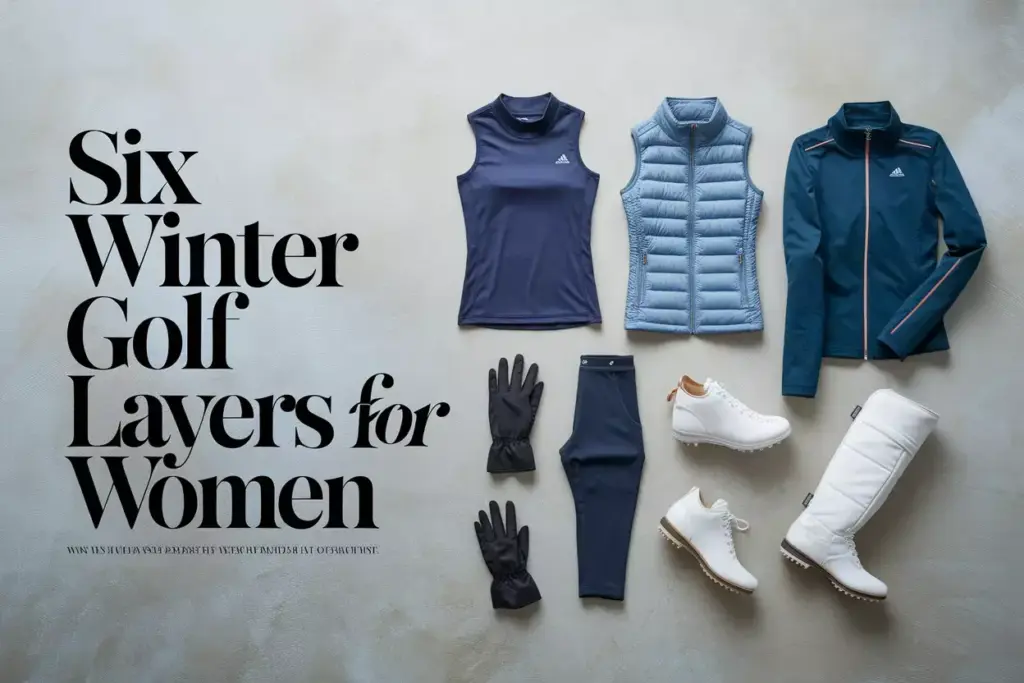
Winter golf presents unique challenges that require specialized gear designed specifically for cold-weather performance. Unlike regular winter clothing, golf-specific apparel must balance warmth with mobility, ensuring that every swing remains fluid and unrestricted. The key lies in understanding layering systems, moisture management, and the specific demands that golf places on winter clothing.
Key Takeaways
- Layering is essential – The most effective winter golf strategy involves three distinct layers: moisture-wicking base layer, insulating mid-layer, and weather-resistant outer shell
- Mobility matters most – Winter golf wear must prioritize unrestricted movement while maintaining warmth, especially around the shoulders and arms
- Extremities need extra attention – Hands, feet, and head lose heat rapidly, making quality gloves, thermal socks, and headwear crucial for comfort
- Waterproofing prevents misery – Even light moisture from dew or frost can make cold weather unbearable, making water-resistant materials non-negotiable
- Investment pays off – Quality winter golf apparel lasts multiple seasons and dramatically improves cold-weather performance and enjoyment
Understanding Winter Golf Challenges for Women
Female golfers face distinct challenges when playing in cold conditions. Women’s bodies typically have different heat distribution patterns compared to men, often experiencing colder extremities and requiring more targeted warming strategies [1]. Additionally, many traditional winter golf garments are designed with male golfers in mind, leading to poor fit and restricted movement for women.
The golf swing demands unrestricted shoulder rotation, hip turn, and arm extension. Cold weather naturally tightens muscles and reduces flexibility, making proper warm-up and appropriate clothing selection even more critical. Women’s winter golf wear must address these physiological differences while maintaining the technical performance required for quality golf.
Weather conditions during winter golf can change rapidly. Morning frost may give way to bright sunshine, or light drizzle might develop into steady rain. The best winter golf apparel systems allow for quick adjustments without requiring a complete wardrobe change mid-round.
The Science of Layering for Winter Golf
Effective winter golf clothing relies on the three-layer system: base layer, mid-layer, and outer shell. Each layer serves a specific purpose and works together to create a microclimate that keeps the body warm and dry.
The base layer sits directly against the skin and focuses on moisture management. Synthetic materials like polyester or merino wool work best, as they wick sweat away from the body while retaining warmth even when damp. Cotton should be avoided as it retains moisture and loses insulating properties when wet.
The mid-layer provides insulation and can be adjusted based on temperature changes throughout the round. Fleece, down, or synthetic insulation materials trap warm air while allowing moisture to pass through to the outer layer.
The outer shell protects against wind, rain, and snow while allowing moisture vapor to escape. Modern golf shells use advanced membrane technologies that are simultaneously waterproof and breathable.
1. Thermal Base Layer Systems

The foundation of any effective winter golf outfit starts with a high-quality thermal base layer. Women’s golf base layers must fit snugly without being restrictive, creating a second-skin feel that moves with every swing motion.
Merino wool base layers offer exceptional temperature regulation, naturally resisting odors and providing warmth even when damp. Brands like Smartwool and Icebreaker create golf-specific base layers with strategically placed seams that won’t interfere with swing mechanics.
Synthetic base layers using polyester or polyester blends dry faster than wool and often cost less. Look for base layers with flat-lock seams to prevent chafing during the repetitive motions of golf. The best options include thumb holes to prevent sleeves from riding up during the swing.
Key features to prioritize in base layers include:
- Four-way stretch fabric for unrestricted movement
- Moisture-wicking properties to keep skin dry
- Tagless construction to prevent irritation
- UPF sun protection for bright winter days
- Antimicrobial treatment to resist odors
Temperature ratings help determine the appropriate base layer weight. Lightweight base layers work well for temperatures above 40°F, while midweight options suit conditions between 20-40°F. Heavyweight base layers become necessary when temperatures drop below 20°F.
2. Insulated Mid-Layer Jackets
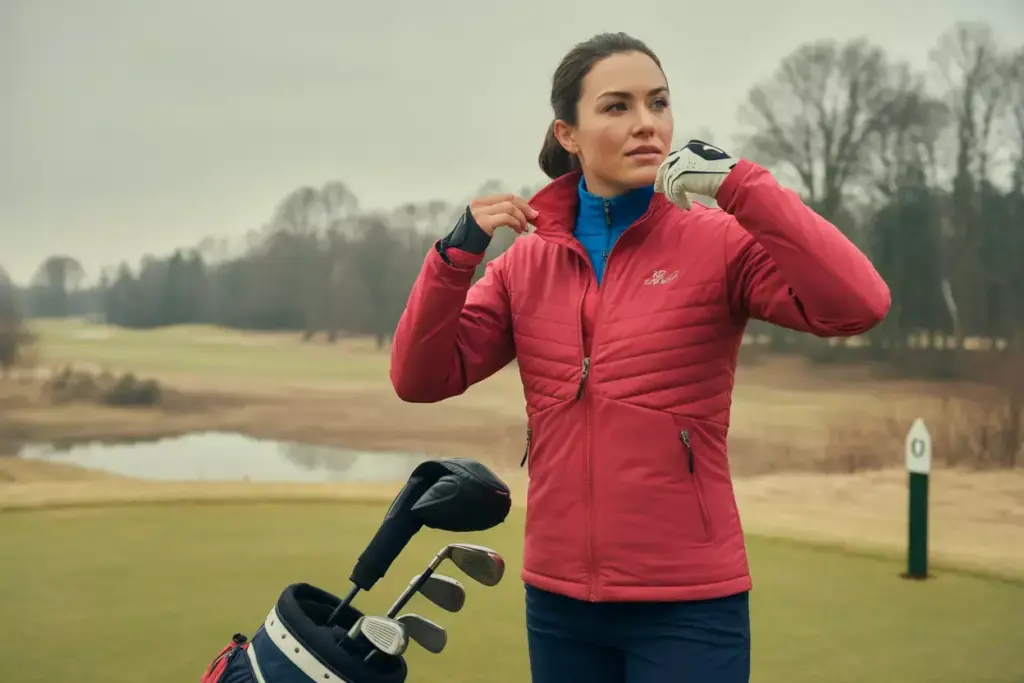
The mid-layer provides the primary insulation in a winter golf system and offers the most flexibility for temperature adjustment. Women’s golf mid-layers come in several styles, each suited to different conditions and personal preferences.
Fleece mid-layers offer excellent warmth-to-weight ratios and dry quickly if they become damp. Modern fleece designs incorporate stretch panels in key areas like the back and underarms to maintain golf-specific mobility. Patagonia and The North Face create golf-appropriate fleece jackets with features like zippered pockets and hem adjustments.
Down insulation provides superior warmth in dry conditions but loses insulating properties when wet. Synthetic insulation performs better in damp conditions and dries faster than down. Many golf-specific mid-layers use synthetic insulation in areas prone to moisture while incorporating down in the core body areas.
Vest-style mid-layers keep the core warm while leaving arms completely unrestricted. This option works particularly well for golfers who prioritize swing freedom over maximum warmth. Vests can be layered under outer shells or worn alone during milder winter conditions.
Essential mid-layer features include:
- Full-zip construction for easy temperature adjustment
- Stretch side panels to accommodate golf posture
- Secure pockets for scorecards and tees
- Packable design for easy storage when removed
- Wind-resistant front panel for added protection
3. Weather-Resistant Outer Shells
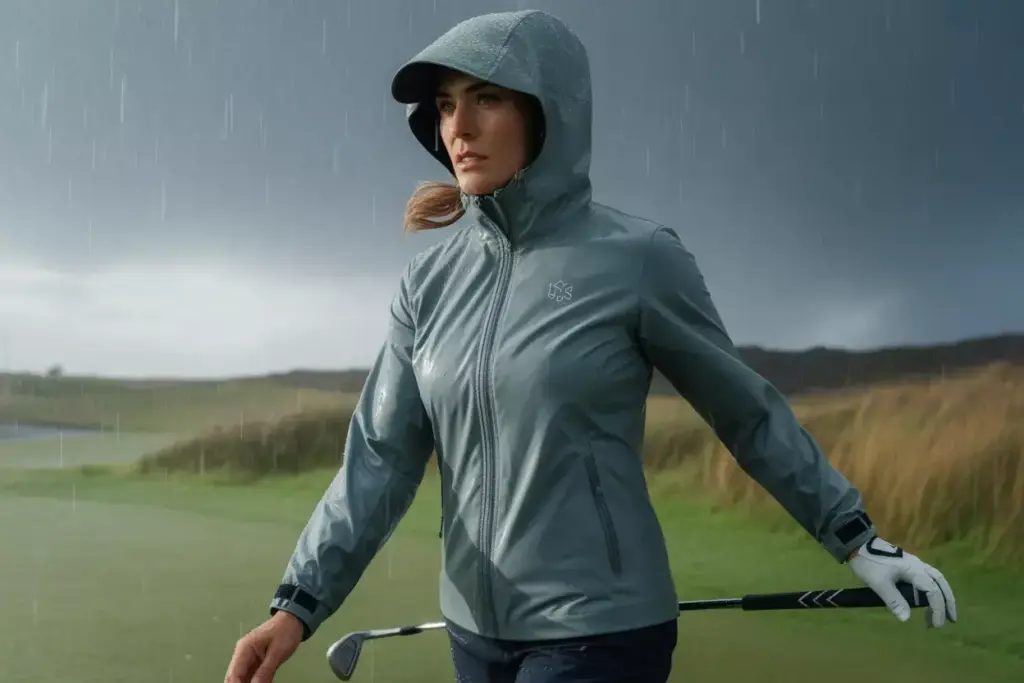
The outer shell serves as the primary defense against wind, rain, and snow. Women’s golf rain jackets must balance complete weather protection with the breathability needed for athletic activity.
Gore-Tex and similar membrane technologies provide the gold standard for waterproof-breathable performance. These materials use microscopic pores that allow water vapor to escape while preventing liquid water from entering. However, they require proper care and maintenance to retain their performance characteristics.
DWR (Durable Water Repellent) coatings on the outer fabric help water bead and roll off rather than soaking in. These coatings wear off over time and need periodic reapplication to maintain effectiveness.
Articulated sleeves and gusseted underarms ensure that outer shells don’t restrict the golf swing. The best golf rain jackets incorporate these design elements without creating excess bulk that might interfere with club selection or swing plane.
Modern golf shells often include:
- Adjustable cuffs with velcro or snap closures
- Two-way zippers for ventilation control
- Storm flaps over zippers to prevent water intrusion
- Adjustable hems to customize fit and coverage
- Reflective elements for early morning or late evening rounds
Packability becomes important for shells that may be removed and stored during the round. Many high-end options pack into their own pocket or stuff sack for convenient carrying.
Essential Winter Golf Accessories
Beyond the core layering system, specific accessories make the difference between comfortable and miserable winter golf experiences. Women’s winter golf accessories must balance functionality with the specific demands of the sport.
Winter golf gloves represent perhaps the most critical accessory choice. Cold hands directly impact grip pressure and club control, making proper hand protection essential. All-weather golf gloves use synthetic materials that maintain grip even when damp, while winter-specific gloves prioritize warmth over maximum feel.
Cart mitts provide an excellent solution for golfers using riding carts. These oversized mittens slip over regular golf gloves between shots, keeping hands warm during cart rides while allowing quick removal for shots.
Thermal golf socks prevent cold feet from ruining a round. Merino wool or synthetic blend socks provide cushioning and moisture management while maintaining warmth. Avoid cotton socks entirely, as they retain moisture and lose insulating properties when wet.
Winter golf headwear options range from lightweight beanies to full-coverage balaclavas. Golf-specific beanies often include ponytail openings and are designed to fit comfortably under golf caps. Neck gaiters provide adjustable coverage that can be modified throughout the round.
4. Thermal Golf Leggings and Base Layer Bottoms
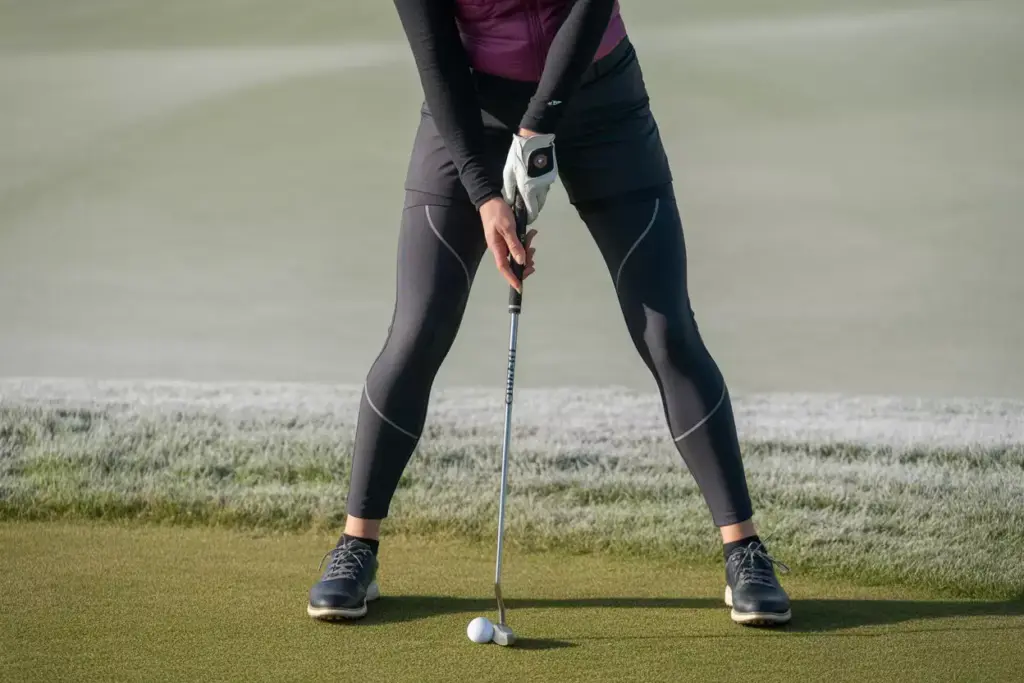
Lower body warmth and mobility are equally important for winter golf success. Women’s thermal golf leggings must provide warmth while allowing the hip rotation and weight transfer essential to proper golf mechanics.
Compression-style thermal leggings offer muscle support while providing base layer warmth. These work well under golf pants or as standalone bottoms in milder winter conditions. Look for options with flat-lock seams along the inner legs to prevent chafing during walking.
Fleece-lined golf pants provide an all-in-one solution that eliminates the need for separate base layers. Many feature wind-resistant front panels and stretch back panels to optimize both protection and mobility.
Thermal tights designed specifically for golf incorporate strategic ventilation zones and moisture-wicking properties to prevent overheating during more active portions of the round.
Key features for thermal bottoms include:
- Four-way stretch fabric for unrestricted movement
- Wide waistbands that won’t dig in during the golf swing
- Reinforced knees for durability during crouching to read putts
- Zippered pockets for secure storage of small items
- UPF protection for sunny winter days
5. Insulated Winter Golf Footwear
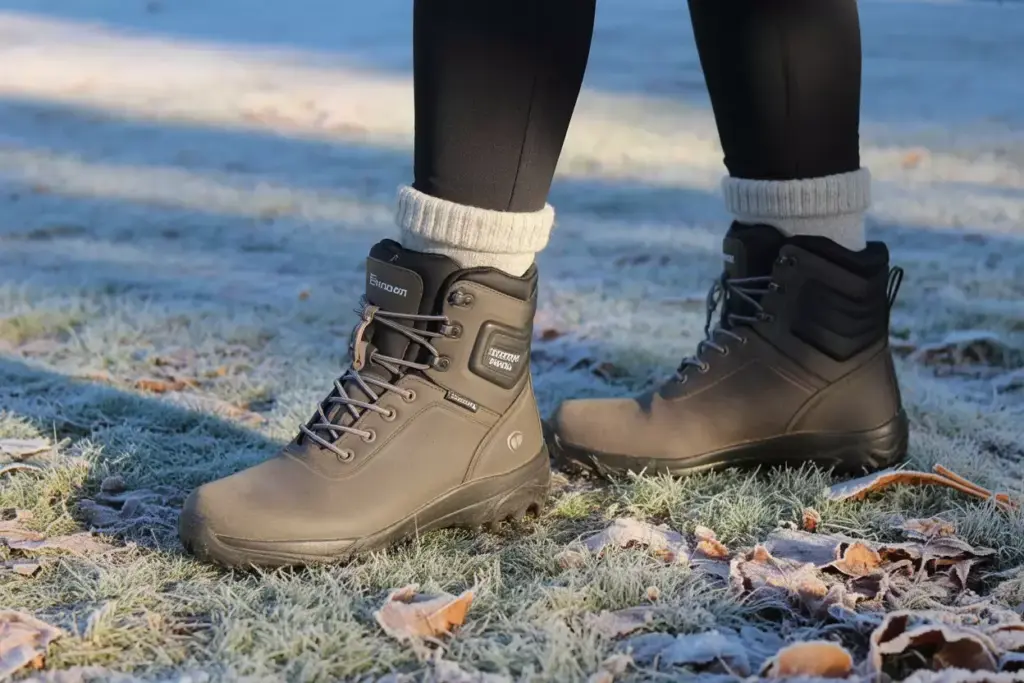
Proper footwear becomes even more critical during winter golf, as cold, wet feet can end a round prematurely. Women’s winter golf shoes must provide traction, waterproofing, and insulation while maintaining the stability needed for proper swing mechanics.
Waterproof golf boots offer the most comprehensive protection for winter conditions. These typically feature higher ankle coverage and enhanced insulation compared to traditional golf shoes. Brands like FootJoy and Adidas create winter-specific golf boots with aggressive tread patterns for improved traction on wet or frosty surfaces.
Insulated golf shoes provide a middle ground between traditional golf shoes and full boots. These incorporate Thinsulate or similar insulation while maintaining the lower profile preferred by many golfers.
Spikeless winter golf shoes work well for courses that remain relatively dry but cold. The rubber outsole designs often provide better traction than traditional spikes on frost-covered surfaces.
Essential winter golf footwear features include:
- Waterproof construction with sealed seams
- Breathable membranes to prevent moisture buildup
- Insulation ratings appropriate for local conditions
- Aggressive tread patterns for improved traction
- Quick-lacing systems that work with cold, stiff fingers
Proper sizing becomes more important with winter golf shoes, as thicker socks and potential foot swelling require slightly more room than summer footwear.
6. Weather-Resistant Headwear and Hand Protection

The extremities lose heat rapidly in cold conditions, making proper protection of hands and head essential for comfortable winter golf. Women’s winter golf gloves and headwear must balance warmth with the dexterity and visibility needed for quality golf.
All-weather golf gloves represent the most versatile option for winter play. These synthetic leather gloves maintain grip in wet conditions while providing more warmth than traditional golf gloves. Cabretta leather gloves offer superior feel but require dry conditions to perform optimally.
Winter golf mittens provide maximum warmth for extremely cold conditions but sacrifice some dexterity. Convertible mittens with removable fingertip covers offer a compromise between warmth and feel.
Hand warmers can be inserted into gloves or pockets for additional warmth during particularly cold rounds. Rechargeable hand warmers provide consistent heat output and can be reused throughout the season.
Golf-specific beanies often feature moisture-wicking linings and wind-resistant outer shells. Many include ponytail ports and are designed to fit comfortably under golf caps when additional sun protection is needed.
Neck gaiters and buffs provide adjustable coverage that can be modified throughout the round as conditions change. These lightweight accessories pack easily and offer versatile protection options.
Choosing the Right Fabrics and Technologies
Understanding fabric technologies helps golfers make informed decisions about winter gear investments. Moisture-wicking fabrics form the foundation of effective winter golf apparel, moving perspiration away from the skin to outer layers where it can evaporate.
Merino wool offers natural temperature regulation, odor resistance, and comfort across a wide range of conditions. Synthetic fabrics like polyester and nylon dry faster and often cost less than wool options.
Membrane technologies like Gore-Tex, eVent, and proprietary systems from major brands provide waterproof-breathable performance. These technologies work best when the entire garment system is designed to work together.
DWR (Durable Water Repellent) treatments on outer fabrics help water bead and roll off rather than soaking in. These treatments require periodic renewal to maintain effectiveness.
Stretch fabrics incorporating elastane or spandex maintain their shape while allowing unrestricted movement. Four-way stretch fabrics move in all directions, providing optimal mobility for golf swings.
Sizing and Fit Considerations for Winter Golf Wear
Proper fit becomes more complex with winter golf apparel due to the layering system. Base layers should fit snugly without being restrictive, creating a second-skin feel that moves with the body.
Mid-layers need room to accommodate base layers while maintaining their insulating properties. Loose-fitting mid-layers create dead air space that enhances warmth, but excessive looseness can interfere with swing mechanics.
Outer shells must accommodate both base and mid-layers while providing freedom of movement. Articulated construction in sleeves and shoulders ensures that multiple layers don’t restrict the golf swing.
Length considerations become important for women’s golf apparel. Longer hemlines on base layers prevent gaps when bending or reaching, while adjustable hem systems on outer layers allow customization for different body types.
Sleeve length should be tested in golf posture, as many garments that fit well when standing may pull short when addressing the ball or completing the follow-through.
Maintenance and Care for Winter Golf Apparel
Proper care extends the life and performance of winter golf gear. Waterproof-breathable garments require specific care procedures to maintain their performance characteristics.
Washing instructions vary by fabric type and construction. Down insulation requires gentle cycles and thorough drying to maintain loft, while synthetic insulation typically tolerates standard washing procedures.
DWR treatments on outer shells need periodic renewal. Wash-in treatments and spray-on products can restore water repellency to outer fabrics that have lost their beading properties.
Storage considerations include ensuring all garments are completely dry before long-term storage and avoiding compression of insulated items that might lose their loft.
Regular inspection of seams, zippers, and wear points helps identify maintenance needs before they become performance-limiting problems.
Budget Considerations and Investment Strategies
Winter golf apparel represents a significant investment, but quality pieces last multiple seasons and dramatically improve cold-weather enjoyment. Investment priorities should focus on items that provide the most impact on comfort and performance.
Base layers and outer shells typically provide the best return on investment, as these pieces see the most use and have the greatest impact on comfort. Mid-layers can often be supplemented with existing fleece or insulated jackets that provide adequate performance.
Seasonal sales often provide opportunities to acquire high-quality winter golf gear at reduced prices. End-of-season clearances and early-season promotions can significantly reduce the cost of building a complete winter golf wardrobe.
Gradual acquisition allows golfers to spread costs over multiple seasons while learning which features and fits work best for their specific needs and local conditions.
Adapting to Different Winter Conditions
Winter golf conditions vary dramatically by region and weather patterns. The 6 Best Pieces of Winter Golf Wear for Women to Conquer the Cold must be selected and combined based on local climate conditions and personal cold tolerance.
Mild winter regions with temperatures rarely below 40°F may require only lightweight base layers and wind-resistant outer shells. Moderate winter areas with temperatures between 20-40°F typically need full three-layer systems with medium insulation.
Severe winter conditions below 20°F require heavyweight base layers, substantial insulation, and comprehensive wind protection. Wet winter climates prioritize waterproofing and quick-drying materials over maximum insulation.
Variable conditions during single rounds require layering systems that allow quick adjustments. Zip-off sleeves, removable hoods, and ventilation zippers provide adaptation options without requiring complete clothing changes.
Course Conditions and Gear Selection
Different course conditions during winter months require specific gear considerations. Frost-covered courses may have temporary greens and modified rules that affect equipment needs.
Cart vs. walking decisions impact clothing requirements significantly. Cart golfers need more insulation during stationary periods, while walking golfers require better moisture management and ventilation options.
Early morning tee times often encounter the coldest conditions of the day, requiring maximum protection that can be adjusted as temperatures rise. Afternoon rounds may start warm but encounter dropping temperatures and changing wind conditions.
Course maintenance practices during winter may create muddy or wet conditions that require additional waterproofing and easier-to-clean materials.
Conclusion
The 6 Best Pieces of Winter Golf Wear for Women to Conquer the Cold provide the foundation for enjoyable golf throughout the winter months. Success lies in understanding the layering system, selecting appropriate fabrics and technologies, and ensuring proper fit for golf-specific movements.
The investment in quality winter golf apparel pays dividends in extended playing seasons and improved comfort during cold-weather rounds. Thermal base layers, insulated mid-layers, weather-resistant outer shells, thermal bottoms, winter footwear, and protective accessories work together to create a comprehensive system that keeps female golfers warm and mobile.
Take action today by assessing current winter golf gear and identifying gaps in protection or performance. Start with base layers and outer shells, as these provide the most immediate impact on comfort. Consider local climate conditions and personal cold tolerance when selecting insulation levels and features.
Test new gear during practice rounds or shorter outings before committing to full 18-hole rounds in challenging conditions. This approach allows for adjustments and additions without risking miserable experiences on the course.
Remember that proper layering, quality materials, and appropriate fit matter more than brand names or price points. Focus on functionality and performance characteristics that match specific needs and playing conditions.
With the right winter golf apparel system, female golfers can continue enjoying their favorite sport year-round while staying warm, dry, and comfortable in even the most challenging cold-weather conditions.
References
[1] American Journal of Physiology – “Gender differences in thermoregulation during exercise in cold environments” (2024)