
The 8 Basics of Golf Every New Player Must Master First
Starting your golf journey in 2026 can feel overwhelming with countless tips, techniques, and equipment options flooding your social media feeds. But here’s the truth I’ve learned after years of teaching beginners: mastering just eight fundamental skills will transform you from a frustrated novice into a confident player who actually enjoys being on the course. The 8 basics of golf every new player must master first aren’t complex theories—they’re practical foundations that will save you strokes, money, and embarrassment from day one.

Key Takeaways
- Master the fundamentals first: Focus on grip, stance, and posture before worrying about distance or advanced techniques
- Short game beats long game: Prioritize putting and chipping over driving for faster score improvement
- Etiquette matters as much as skill: Understanding course rules and proper behavior builds confidence and respect
- Start smart with course selection: Begin with par-3 or executive courses to learn without pressure
- Equipment knowledge accelerates progress: Knowing which club to use and why eliminates guesswork
The Foundation: Physical Fundamentals
1. Perfect Your Grip

Your grip is literally your only connection to the golf club, making it the most critical element among the 8 basics of golf every new player must master first. I’ve seen countless beginners struggle for months simply because they learned an incorrect grip on day one[1].
The proper grip involves:
- Left hand placement (for right-handed golfers): Position the club handle across your palm, running from the base of your pinky to the middle of your index finger
- Right hand positioning: Place your right hand below the left, with the palm facing the target
- Pressure points: Maintain firm but relaxed pressure—imagine holding a tube of toothpaste without squeezing any out
“A proper grip feels awkward at first, but it’s the foundation of every good shot you’ll ever hit.”
Common grip mistakes to avoid:
- Gripping too tightly (causes tension throughout your swing)
- Placing hands too far apart
- Having palms face each other instead of the target
2. Establish Athletic Stance and Posture
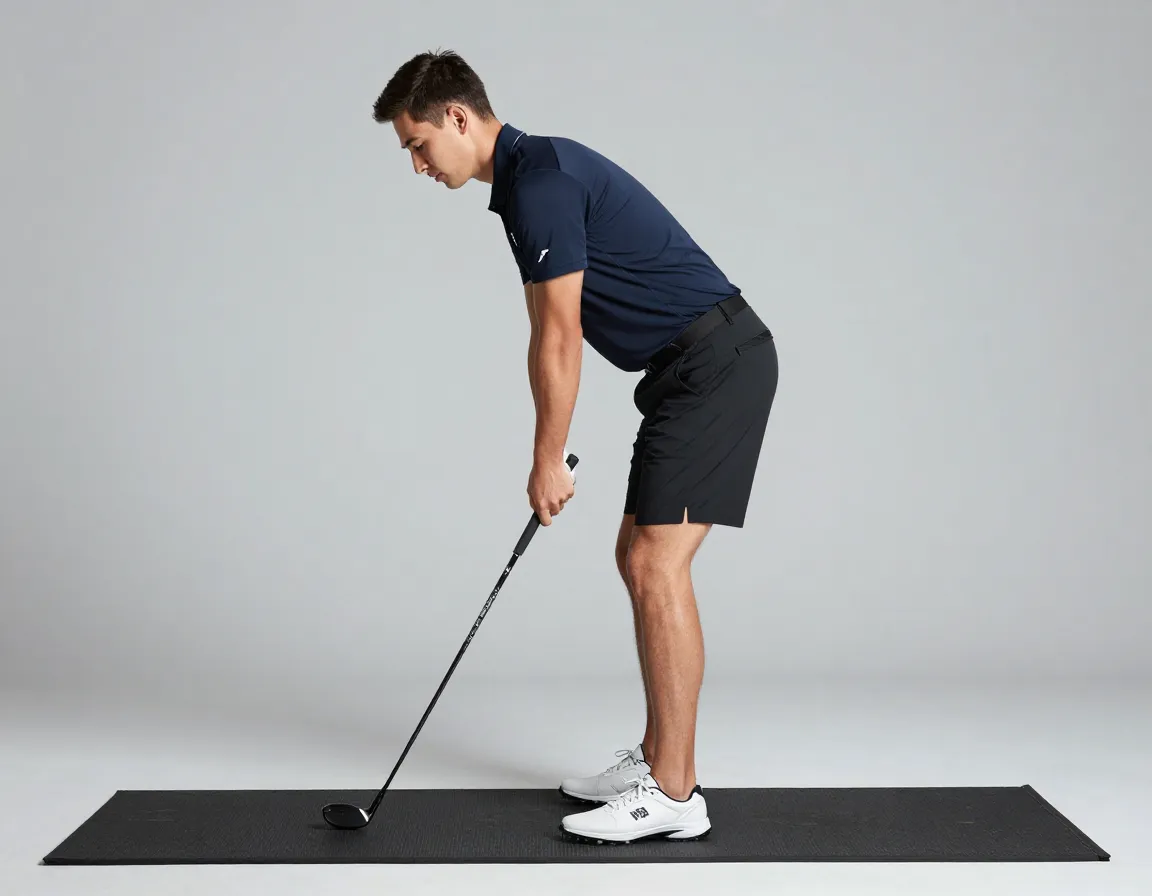
Your stance and posture work together to create a stable platform for your swing. This fundamental is emphasized in every beginner course because it directly affects your balance, power, and consistency[1][2].
Key stance elements:
- Feet positioning: Shoulder-width apart with slight outward angle
- Weight distribution: Balanced on the balls of your feet, not your heels
- Knee flex: Slight bend, maintaining athletic readiness
Proper posture checklist:
- Spine tilted slightly away from target
- Arms hanging naturally from shoulders
- Chin up, allowing room for shoulder turn
- Bend from hips, not waist
3. Develop Full Swing Mechanics

The full swing might seem intimidating, but breaking it into components makes it manageable. Developing repeatable swing mechanics is essential for consistency under pressure[1].
The swing sequence:
- Takeaway: Club moves back low and slow
- Backswing: Turn shoulders while maintaining posture
- Transition: Slight pause at the top
- Downswing: Hips lead, hands follow
- Impact: Return to address position
- Follow-through: Complete rotation toward target
Practice tips for beginners:
- Start with half-swings to build muscle memory
- Focus on tempo over power
- Practice without a ball to feel the motion
The Scoring Zone: Short Game Mastery
4. Master Chipping Techniques

Chipping is where you’ll save the most strokes as a beginner. This critical short-game skill directly impacts your scores more than any 300-yard drive[2]. Most recreational golfers spend too much time on the driving range when they should be practicing around the greens.
Basic chipping setup:
- Club selection: Start with a 7 or 8-iron for versatility
- Ball position: Back of stance for lower trajectory
- Weight distribution: 70% on front foot
- Swing motion: Pendulum-like, controlled tempo
Chipping strategy table:
| Distance to Pin | Club Choice | Ball Position | Swing Length |
|---|---|---|---|
| 5-10 yards | Pitching wedge | Back of stance | Quarter swing |
| 10-20 yards | 8-iron | Center | Half swing |
| 20-30 yards | 7-iron | Slightly forward | Three-quarter |
5. Build Putting Fundamentals

Putting accounts for roughly 40% of your total strokes, making it equally important as driving in your development[2]. The best part? You can practice putting anywhere, making it the most accessible skill to improve.
Putting essentials:
- Aim: Use alignment aids to train your eye
- Speed control: Focus on distance before direction
- Rhythm: Develop consistent tempo regardless of putt length
- Green reading: Start with obvious slopes before subtle breaks
Practice routine for home:
- Straight putts: 3-foot putts to build confidence
- Distance control: Vary lengths without focusing on the hole
- Breaking putts: Practice reading slopes and adjusting aim
The Mental Game: Knowledge and Strategy
6. Understand Club Selection and Equipment
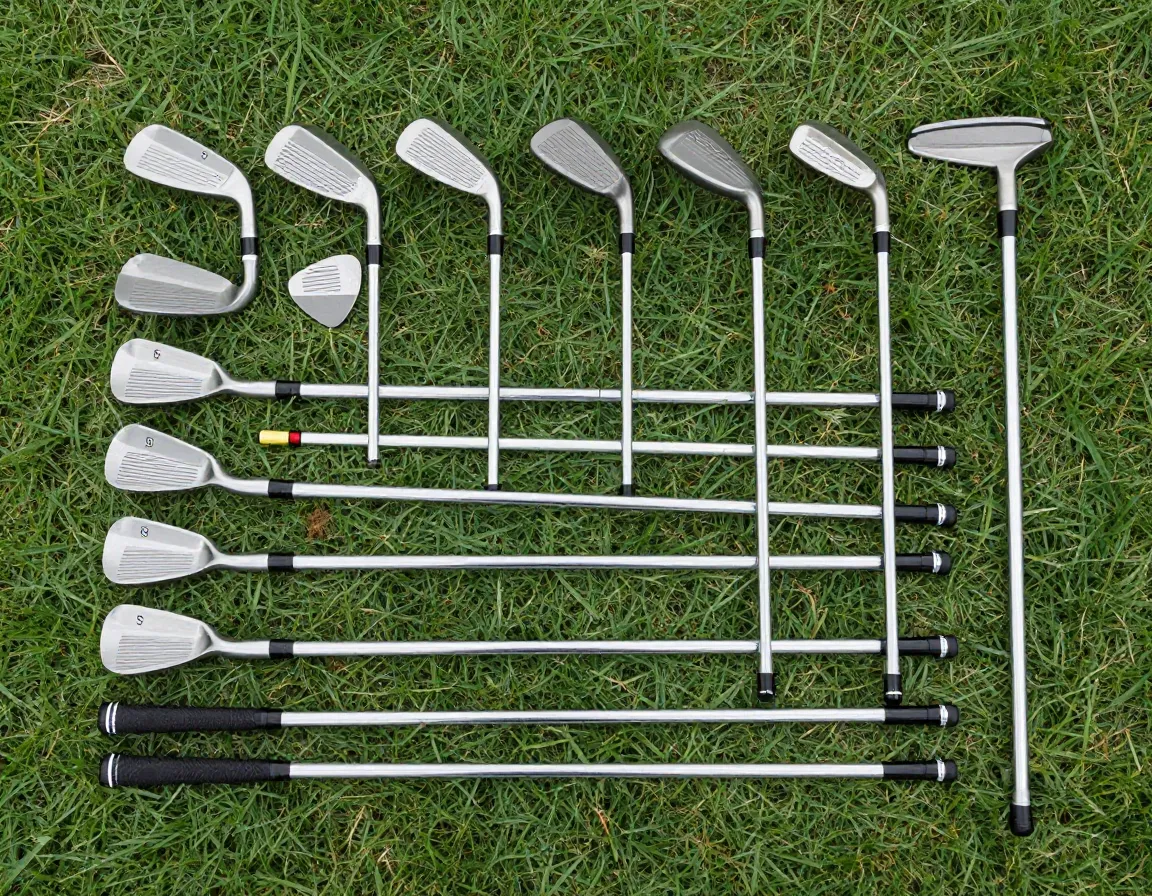
Knowing which club to use eliminates guesswork and builds confidence in your decisions. Understanding your equipment is crucial among the 8 basics of golf every new player must master first[2].
Beginner club selection guide:
- Driver: Tee shots on longer holes
- 3-wood: Safer tee shot option or long fairway shots
- Irons (5-9): Approach shots from various distances
- Pitching wedge: Short approaches and chips
- Sand wedge: Bunkers and high, soft shots
- Putter: All putting situations
Equipment recommendations for starters:
- Complete starter set: More cost-effective than individual clubs
- Cavity-back irons: More forgiving than blade-style clubs
- Higher-lofted driver: 10.5-12 degrees for better launch
- Alignment aids: Help develop proper setup habits
7. Learn Golf Etiquette and Course Rules

Understanding etiquette and rules builds confidence and ensures you’re welcome on any course. These social aspects are just as important as technical skills[1][2].
Essential etiquette rules:
- Maintain pace of play: Keep up with the group ahead
- Stay quiet during swings: No talking or movement during others’ shots
- Repair your marks: Fix ball marks on greens and divots on fairways
- Rake bunkers: Smooth sand after playing from bunkers
- Honor system: Furthest from hole plays first
Basic rules every beginner needs:
- Lost ball procedure: Take a penalty stroke and drop
- Out of bounds: Re-tee with penalty
- Water hazards: Drop behind hazard with one-stroke penalty
- Unplayable lies: Three options, all with penalty strokes
8. Avoid Common Beginner Mistakes

Learning what NOT to do accelerates your progress significantly. These mistake-prevention strategies are often overlooked but crucial[2].
Technical mistakes to avoid:
- Overswinging: Control beats power every time
- Skipping warm-up: Always stretch and start with short clubs
- Neglecting short game: Spend 60% of practice time within 100 yards
- Wrong tee selection: Play from tees that match your skill level
Strategic mistakes beginners make:
- Playing difficult courses too early: Start with par-3 or executive courses[2]
- Focusing only on distance: Accuracy and consistency matter more
- Not taking lessons: Professional instruction prevents bad habits
- Comparing to others: Focus on your own improvement
Course management for beginners:
- Play conservative shots that keep you in play
- Aim for center of greens, not pins
- Take your medicine when in trouble—don’t attempt miracle shots
- Count every stroke honestly to track real progress
Putting It All Together: Your Practice Plan
Now that you understand the 8 basics of golf every new player must master first, here’s how to structure your learning:
Week 1-2: Fundamentals
- 70% grip, stance, and posture work
- 30% short swings without balls
Week 3-4: Short Game Foundation
- 50% putting practice
- 30% chipping
- 20% full swing development
Week 5-8: Integration
- 40% short game
- 40% full swing
- 20% on-course experience (par-3 courses)
Monthly goals:
- Month 1: Comfortable with fundamentals
- Month 2: Consistent contact with ball
- Month 3: Playing full rounds confidently
Conclusion
Mastering the 8 basics of golf every new player must master first creates a solid foundation for lifelong enjoyment of this incredible game. Remember, golf is a journey, not a destination—even tour professionals continuously work on these fundamentals.
Your next steps:
- Start with grip and stance – spend a week getting comfortable with proper fundamentals
- Find a local par-3 course – book your first round within two weeks
- Invest in lessons – a few sessions with a PGA professional will accelerate your progress
- Practice with purpose – focus on short game for faster score improvement
- Be patient with yourself – every golfer was a beginner once
The beauty of golf lies not in perfection, but in the constant pursuit of improvement. By focusing on these eight fundamentals, you’re setting yourself up for years of enjoyment on the course. Now grab your clubs and start your journey—the fairways are waiting! ⛳
References
[1] The 2026 Performance Roadmap Beginner To Elite – https://www.adrianwhiteheadgolf.com/post/the-2026-performance-roadmap-beginner-to-elite
[2] Tee Off Tips Ways To Start Golfing For Beginners – https://www.banditgolfclub.com/contact/news/tee-off-tips-ways-to-start-golfing-for-beginners