6 Beginner Golf Tips for Women: Your Guide to Getting Started
Golf has long been considered a gentleman’s game, but times are changing rapidly. More women than ever are discovering the joy, challenge, and social benefits of golf. Whether you’re looking to network professionally, spend quality time with family, or simply enjoy a new outdoor activity, these 6 Beginner Golf Tips for Women: Your Guide to Getting Started will help you build confidence and develop fundamental skills from day one.
Key Takeaways
- Start with proper equipment fitting – Women-specific clubs and comfortable attire make a significant difference in performance and enjoyment
- Master the basics first – Focus on grip, stance, and alignment before attempting complex swing techniques
- Practice consistently – Regular range sessions and putting practice build muscle memory faster than occasional long sessions
- Learn course etiquette early – Understanding golf rules and courtesy creates confidence and respect on the course
- Find supportive learning environments – Women’s clinics, beginner groups, and patient instructors accelerate progress
Essential Equipment and Fundamentals for Women Golfers
1. Choose the Right Equipment for Your Body Type

The foundation of any successful golf journey begins with properly fitted equipment. Women’s golf clubs are specifically designed with lighter weights, more flexible shafts, and adjusted lie angles to accommodate typical female physiques and swing speeds.
Key Equipment Considerations:
- Club Length: Standard women’s clubs are typically 1-2 inches shorter than men’s clubs
- Shaft Flexibility: Ladies’ flex shafts help generate more distance with slower swing speeds
- Grip Size: Smaller grips accommodate smaller hands for better control
- Club Weight: Lighter overall club weight reduces fatigue during longer rounds
Essential Starter Set Components:
- Driver (for tee shots on longer holes)
- 3-wood or hybrid (versatile for various situations)
- 6-iron and 8-iron (fundamental mid-range clubs)
- Pitching wedge (for short approach shots)
- Sand wedge (for bunker shots and short chips)
- Putter (most important club in your bag)
“The right equipment doesn’t make you a better golfer overnight, but it removes barriers that could hinder your natural progression.” – LPGA Teaching Professional Sarah Martinez
Clothing and Accessories:
- Golf shoes with soft spikes for stability
- Moisture-wicking polo shirts for comfort
- Golf shorts or skorts that allow full range of motion
- Sun hat and sunglasses for protection
- Golf glove for better grip (worn on non-dominant hand)
2. Master the Fundamental Grip and Stance
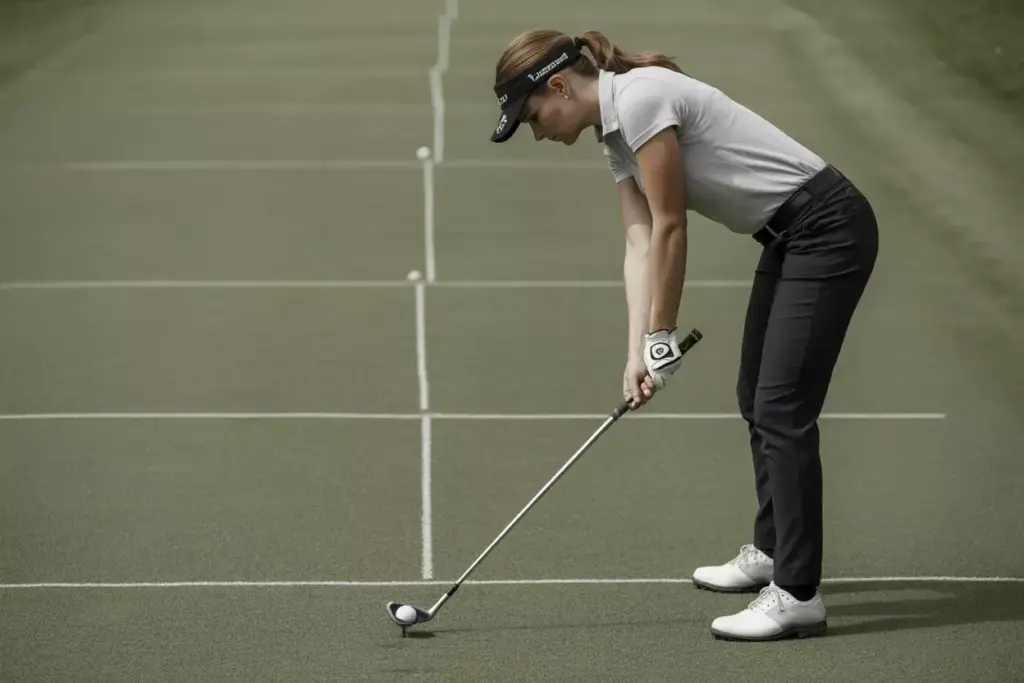
Proper fundamentals form the cornerstone of consistent golf performance. These basics might feel awkward initially, but they’re essential for long-term success.
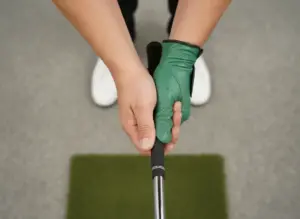
The Proper Golf Grip:
Overlapping Grip (Most Popular):
- Place left hand on club with thumb pointing down shaft
- Position right hand below left hand
- Overlap right pinky finger over left index finger
- Both thumbs should form a “V” pointing toward right shoulder
Stance and Posture Essentials:
- Feet: Shoulder-width apart for balance
- Knees: Slightly flexed, not locked
- Spine: Tilted forward from hips, not rounded
- Arms: Hanging naturally from shoulders
- Weight: Evenly distributed on balls of feet
Alignment Fundamentals:
- Clubface: Square to target line
- Feet, hips, shoulders: Parallel to target line
- Ball position: Varies by club (forward for driver, center for irons)
Building Confidence Through Practice and Course Strategy
3. Develop a Consistent Practice Routine

Effective practice accelerates improvement more than random hitting sessions. Structure your practice time to address specific skills systematically.
Weekly Practice Schedule (3-4 Hours Total):
| Day | Focus Area | Duration | Activities |
|---|---|---|---|
| Monday | Putting | 30 minutes | Distance control, straight putts |
| Wednesday | Short Game | 45 minutes | Chipping, pitching, bunker shots |
| Friday | Full Swing | 60 minutes | Range work with various clubs |
| Weekend | Course Play | 2-3 hours | 9 holes or executive course |
Range Practice Structure:
- Warm-up (10 minutes): Easy swings with short irons
- Fundamentals (15 minutes): Grip, stance, alignment checks
- Skill Building (20 minutes): Specific club practice
- Target Practice (10 minutes): Aim at specific targets
- Cool Down (5 minutes): Easy swings and stretching
Short Game Priority Areas:
- Putting: 40% of all shots occur on the green
- Chipping: Essential for up-and-down saves
- Pitching: Approach shots from 50-100 yards
- Bunker Play: Confidence in sand saves strokes
4. Learn Essential Course Management and Etiquette

Understanding golf etiquette and basic course management helps new players feel comfortable and confident during their first rounds.
Fundamental Golf Etiquette:
On the Tee:
- Wait for your turn based on honor system
- Tee up between the markers
- Call “fore” if your ball might hit someone
- Replace divots and repair ball marks
On the Fairway:
- Play “ready golf” to maintain pace
- Replace divots or use sand/seed mixture
- Stay out of others’ sight lines during shots
- Keep carts on designated paths
On the Green:
- Mark your ball when others are putting
- Repair ball marks and one additional mark
- Don’t step on others’ putting lines
- Tend the flagstick when requested
Basic Course Management for Beginners:
Smart Shot Selection:
- Choose clubs you’re comfortable with rather than trying to hit maximum distance
- Aim for center of greens instead of pin hunting
- Play away from trouble (water, bunkers, trees)
- Take your medicine when in trouble – chip out safely
Pace of Play Tips:
- Be ready when it’s your turn
- Limit practice swings to 1-2 maximum
- Walk quickly between shots
- Pick up if you reach double par (beginner’s rule)
5. Focus on Short Game Development

The short game represents the fastest path to lower scores for beginning golfers. Shots within 100 yards of the pin account for roughly 60% of all strokes during a typical round.
Putting Fundamentals:
Setup Position:
- Eyes directly over the ball
- Shoulders square to target line
- Pendulum motion from shoulders
- Consistent tempo back and through
Distance Control Drills:
- Ladder Drill: Putt to targets 10, 20, 30 feet away
- Gate Drill: Roll balls through alignment sticks
- Clock Drill: Practice 3, 6, 9, 12 foot putts around hole
Chipping Technique:
- Club Selection: 7-iron for longer rolls, wedge for higher shots
- Setup: Weight favoring front foot, ball back in stance
- Motion: Minimal wrist action, shoulders control movement
- Landing Spot: Pick specific target on green
Pitching Basics:
- Distance Control: Vary backswing length, not speed
- Ball Position: Center to slightly forward in stance
- Follow Through: Accelerate through impact
- Practice Distances: 25, 50, 75 yards with different clubs
6. Find Supportive Learning Environments and Instruction

The golf learning environment significantly impacts enjoyment and progress rates. Seek out welcoming, encouraging settings that cater to beginning players.
Types of Instruction Options:
Group Clinics:
- Women’s beginner programs offer peer support
- Cost-effective compared to private lessons
- Social aspect makes learning more enjoyable
- Structured curriculum covers all fundamentals
Private Instruction:
- Personalized attention for specific issues
- Flexible scheduling around your availability
- Faster progress for dedicated students
- Video analysis available with many instructors
Alternative Learning Methods:
- Playing lessons on actual course
- Online instruction for supplemental learning
- Golf schools for intensive weekend programs
- Mentor programs pairing beginners with experienced players
Choosing the Right Instructor:
- Certification: Look for PGA or LPGA credentials
- Teaching Philosophy: Patient, encouraging approach
- Communication Style: Clear, understandable explanations
- Experience: Specific background teaching beginners
- Facility Quality: Well-maintained practice areas
Creating Your Support Network:
Golf Buddies:
- Find other beginners to practice and play with
- Join women’s golf groups at local courses
- Participate in beginner-friendly tournaments
- Connect through social media golf communities
Course Selection for Beginners:
- Executive courses: Shorter holes, less intimidating
- Municipal courses: Often more welcoming to beginners
- Resort courses: Designed for recreational players
- Par-3 courses: Focus on short game and confidence
Building Long-Term Success in Golf
Setting Realistic Goals and Expectations
Golf improvement occurs gradually, and setting appropriate expectations prevents frustration while maintaining motivation. Beginner golfers should focus on process goals rather than score-based objectives initially.
First Month Goals:
- Complete a round without losing more than 6 balls
- Make solid contact on 50% of shots
- Successfully get out of bunkers in 2 shots or less
- Demonstrate proper etiquette throughout the round
3-Month Milestones:
- Break 120 for 18 holes consistently
- Hit 3 greens in regulation per round
- Make 2-3 putts from inside 10 feet
- Play ready golf and maintain pace
6-Month Objectives:
- Achieve handicap index below 30
- Complete rounds in under 4.5 hours
- Successfully navigate basic course management decisions
- Enjoy the social and recreational aspects of golf
Tracking Progress and Celebrating Improvements
Keeping a Golf Journal:
Document your rounds, practice sessions, and lessons to identify patterns and track improvement over time.
Key Metrics to Track:
- Fairways hit per round
- Greens in regulation achieved
- Total putts per round
- Practice time invested weekly
- Lessons learned from each round
Celebrating Small Victories:
- First successful bunker shot
- Breaking personal scoring records
- Completing a round without penalty strokes
- Making your first birdie or par
Conclusion
These 6 Beginner Golf Tips for Women: Your Guide to Getting Started provide a comprehensive foundation for entering the wonderful world of golf. Remember that every accomplished golfer was once a beginner, and the journey of improvement never truly ends – that’s part of golf’s enduring appeal.
Your Next Steps:
- Visit a local pro shop to get properly fitted for clubs
- Schedule an introductory lesson with a certified instructor
- Find a practice facility with driving range and putting green
- Connect with other beginner golfers for support and encouragement
- Set realistic goals and celebrate small improvements along the way
Golf offers unique benefits that extend far beyond the scorecard – physical exercise, mental challenge, social connections, and time in beautiful outdoor settings. With patience, practice, and the right guidance, you’ll discover why millions of women worldwide have fallen in love with this timeless game.
The most important tip of all: have fun and be patient with yourself. Golf is a journey, not a destination, and every round offers new opportunities to learn and improve. Welcome to the wonderful world of golf! 🏌️♀️