
6 Game-Changing Workouts for Female Golfers to Add Power
Picture this: You’re standing on the first tee, watching your playing partner effortlessly drive the ball 250 yards down the fairway while your best shot barely reaches 200. The difference isn’t just technique—it’s power. For female golfers looking to transform their game in 2025, the secret lies not just in perfecting swing mechanics, but in building the specific strength, flexibility, and explosive power that translates directly to distance and control on the course.

The modern game of golf demands more than just precision; it requires athletes who can generate serious clubhead speed while maintaining accuracy. These 6 game-changing workouts for female golfers to add power have been specifically designed to target the muscle groups, movement patterns, and energy systems that matter most for golf performance. Whether you’re a weekend warrior or competitive player, these exercises will help unlock the power potential that’s been waiting to emerge.
Key Takeaways
- Rotational power is the foundation of golf distance – focus on exercises that build core strength and hip mobility
- Functional strength training beats traditional gym workouts for golf-specific power development
- Flexibility and stability work together to create a more efficient, powerful swing
- Progressive overload in your workout routine directly translates to increased clubhead speed
- Consistency in training yields measurable improvements in driving distance within 6-8 weeks
Understanding Power in the Female Golf Swing
Before diving into the specific workouts, it’s essential to understand what creates power in the golf swing. Power in golf isn’t just about raw strength—it’s the combination of strength, speed, flexibility, and timing working in perfect harmony. For female golfers, the key lies in maximizing efficiency rather than simply building bulk.
The golf swing is fundamentally a rotational movement that starts from the ground up. Power begins with proper weight transfer through the feet, travels up through the legs and hips, engages the core for stability and rotation, and finally transfers through the arms and hands to the clubhead. Each link in this kinetic chain must be strong, mobile, and coordinated.
Research shows that female golfers can increase their driving distance by an average of 15-25 yards through targeted strength and conditioning programs. The difference lies in addressing the specific physical limitations that often hold women back: insufficient hip mobility, weak glutes, limited thoracic spine rotation, and underdeveloped core stability.
The Science Behind Golf Power
Modern golf biomechanics research has identified several key factors that contribute to clubhead speed:
- Hip-to-shoulder separation during the downswing
- Ground reaction forces generated through proper weight transfer
- X-factor stretch created by rotating the hips ahead of the shoulders
- Kinetic sequencing that efficiently transfers energy from the ground to the clubhead
These 6 game-changing workouts for female golfers to add power specifically target each of these biomechanical elements, ensuring that every rep you perform has a direct correlation to improved performance on the course.
The 6 Game-Changing Workouts for Female Golfers to Add Power
1. Rotational Medicine Ball Slams 💥

Target Areas: Core, shoulders, hips, explosive power
This explosive movement mimics the golf swing’s rotational pattern while building the kind of fast-twitch muscle fiber activation that translates directly to clubhead speed.
How to Perform:
- Stand with feet shoulder-width apart, holding a 6-10 lb medicine ball
- Rotate the ball to your right side (for right-handed golfers) at shoulder height
- Engage your core and explosively rotate left, slamming the ball to the ground outside your left foot
- Pick up the ball and repeat, focusing on speed and power rather than just strength
- Complete 3 sets of 8-10 reps each direction
Golf-Specific Benefits:
- Improves rotational power through the kinetic chain
- Develops explosive hip rotation
- Enhances core stability under dynamic conditions
- Builds the timing and sequencing crucial for powerful swings
Pro Tip: Focus on initiating the movement from your hips, not your arms. The arms should follow the rotation created by your lower body, just like in the golf swing.
2. Single-Leg Romanian Deadlifts with Rotation 🏋️♀️
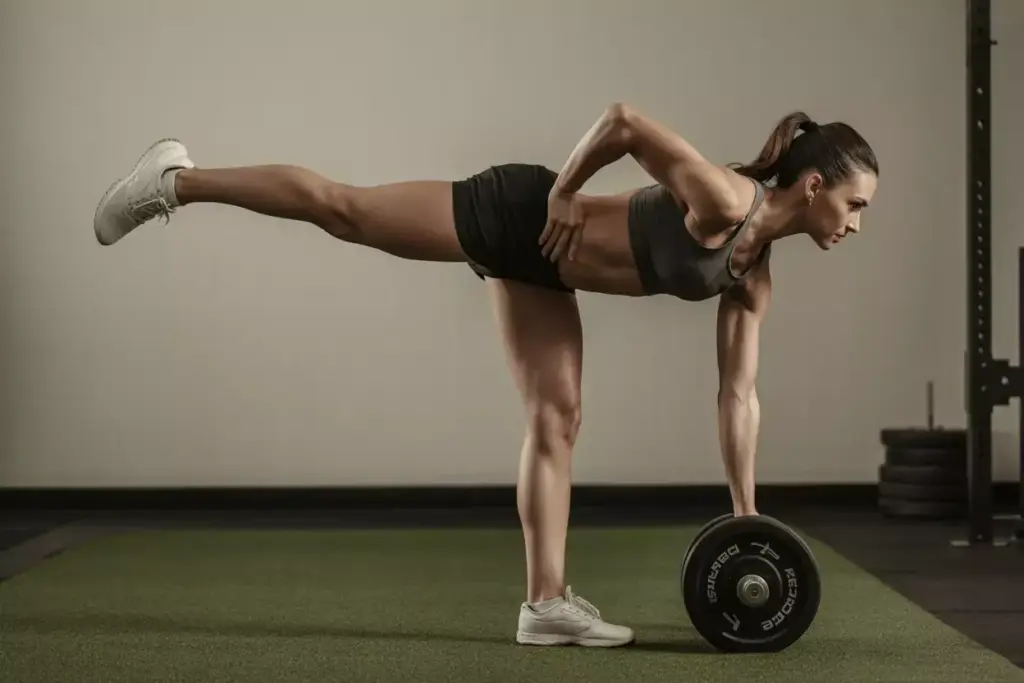
Target Areas: Glutes, hamstrings, core stability, balance
This exercise builds the posterior chain strength essential for maintaining posture throughout the swing while developing the stability needed for consistent ball-striking.
How to Perform:
- Stand on your left leg, holding a dumbbell in your right hand
- Hinge at the hip, extending your right leg behind you while lowering the weight
- At the bottom position, rotate your torso to the left while maintaining balance
- Return to standing position with control
- Complete 3 sets of 8-12 reps per leg
Golf-Specific Benefits:
- Strengthens the glutes for better hip stability
- Improves balance and proprioception
- Develops rotational strength in a golf-like posture
- Enhances single-leg stability for weight transfer
Progression: Start with body weight only, then add light dumbbells (5-15 lbs) as you master the movement pattern.
3. Cable Wood Chops (High to Low) ⚡

Target Areas: Core, obliques, shoulders, functional rotation
The wood chop exercise is perhaps the most golf-specific movement you can perform in the gym, directly mimicking the downswing motion while building rotational strength.
How to Perform:
- Set cable machine at high position with rope or handle attachment
- Stand sideways to the machine, feet shoulder-width apart
- Grab handle with both hands, arms extended
- Rotate and pull the cable down and across your body to the opposite hip
- Control the return to starting position
- Complete 3 sets of 12-15 reps each direction
Golf-Specific Benefits:
- Builds downswing-specific strength patterns
- Improves core rotation and stability
- Develops proper sequencing from upper body to lower body
- Enhances clubhead speed through improved kinetic chain efficiency
Variation: Perform the exercise in a golf stance to make it even more sport-specific.
4. Plyometric Step-Ups with Knee Drive 🦵
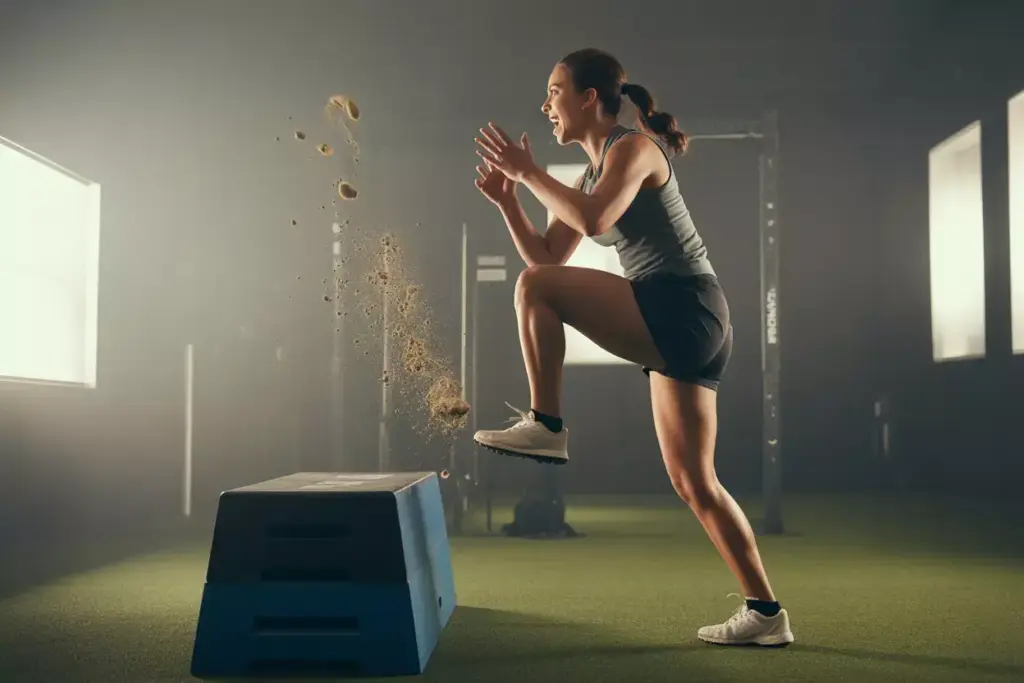
Target Areas: Legs, glutes, explosive power, coordination
This exercise develops the explosive leg drive that creates ground reaction forces, a crucial component of power generation in the golf swing.
How to Perform:
- Stand facing a 12-18 inch box or step
- Step up explosively with your right foot
- Drive your left knee up toward your chest at the top
- Step down with control
- Alternate legs or complete all reps on one side before switching
- Complete 3 sets of 10-12 reps per leg
Golf-Specific Benefits:
- Builds explosive leg power for better weight transfer
- Improves coordination between upper and lower body
- Develops the kind of fast-twitch muscle activation needed for clubhead speed
- Enhances balance and stability through dynamic movement
Safety Note: Focus on landing softly and with control. Quality of movement is more important than speed when starting out.
5. Thoracic Spine Mobility with Resistance 🔄
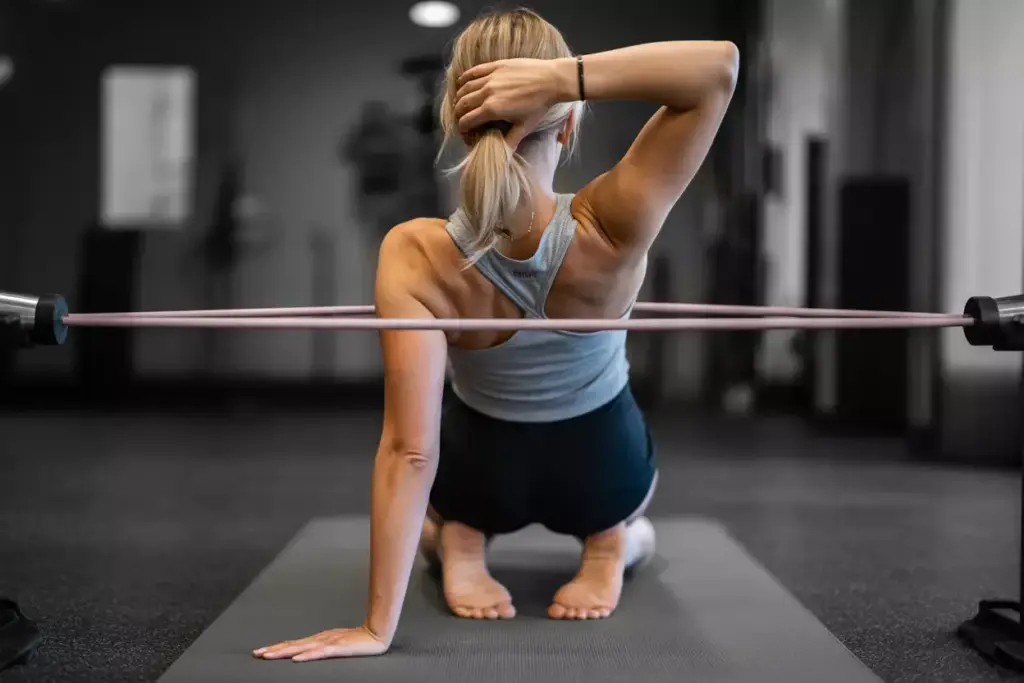
Target Areas: Upper back mobility, shoulder stability, rotational flexibility
Limited thoracic spine rotation is one of the biggest power leaks in the female golf swing. This exercise addresses mobility while building strength through the full range of motion.
How to Perform:
- Kneel on all fours with a light resistance band around your wrists
- Place your right hand behind your head
- Rotate your right elbow toward the ceiling, opening up your thoracic spine
- Feel the stretch through your upper back and maintain tension in the band
- Return to starting position with control
- Complete 3 sets of 10-12 reps per side
Golf-Specific Benefits:
- Increases shoulder turn for a longer backswing
- Improves separation between hips and shoulders
- Reduces compensatory movements that limit power
- Enhances overall swing efficiency
Daily Practice: This exercise can be performed as part of your warm-up routine before every round or practice session.
6. Anti-Rotation Core Hold with Dynamic Arms 💪
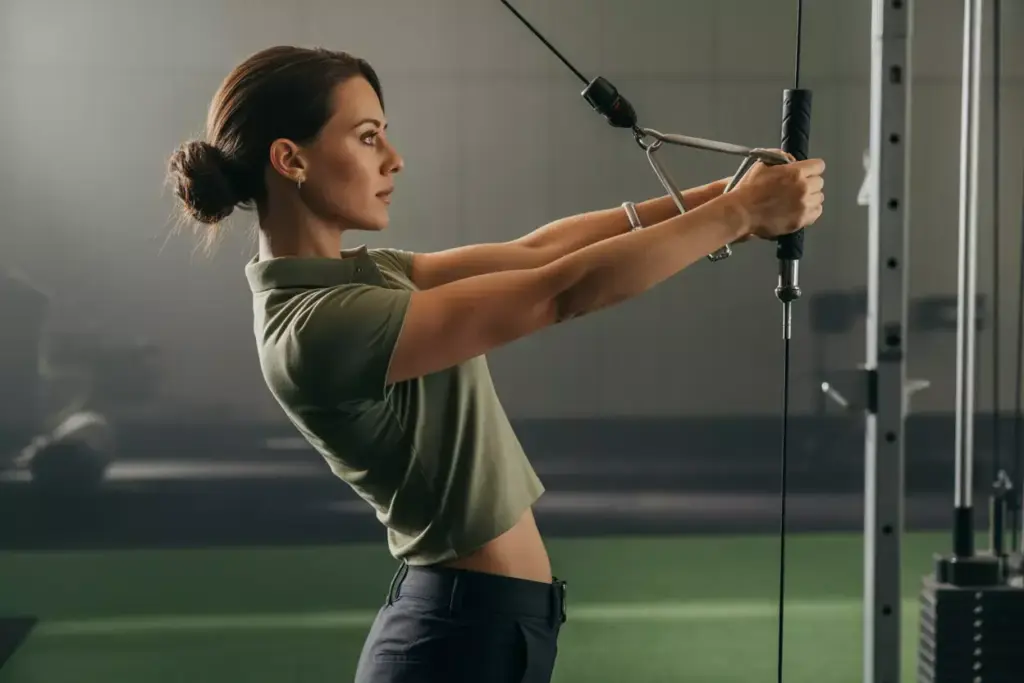
Target Areas: Deep core muscles, anti-rotation strength, shoulder stability
The ability to resist unwanted rotation while allowing controlled rotation is crucial for consistent, powerful golf swings. This exercise builds that discriminating core strength.
How to Perform:
- Hold a cable handle or resistance band at chest height
- Stand sideways to the anchor point in golf posture
- Hold the handle with both hands, arms extended
- Resist the pull of the cable while moving your arms in golf swing patterns
- Maintain stable core and spine position throughout
- Complete 3 sets of 30-45 seconds per side
Golf-Specific Benefits:
- Builds anti-rotation core strength for better swing consistency
- Improves ability to maintain spine angle throughout the swing
- Develops the stability needed for powerful rotation
- Enhances mind-muscle connection for better swing control
Implementing These Game-Changing Workouts for Maximum Power Gains
Weekly Training Schedule
To maximize the benefits of these 6 game-changing workouts for female golfers to add power, consistency and progressive overload are key. Here’s a sample weekly schedule:
| Day | Focus | Exercises | Duration |
|---|---|---|---|
| Monday | Power & Rotation | Medicine Ball Slams, Wood Chops | 30-40 minutes |
| Tuesday | Golf Practice | On-course or range work | 60-90 minutes |
| Wednesday | Strength & Stability | Romanian Deadlifts, Anti-Rotation Holds | 35-45 minutes |
| Thursday | Active Recovery | Light stretching, walking | 20-30 minutes |
| Friday | Explosive Power | Plyometric Step-ups, Thoracic Mobility | 30-40 minutes |
| Saturday | Golf Round | Apply your new power on the course! | 4-5 hours |
| Sunday | Rest or Light Activity | Optional yoga or gentle movement | 30 minutes |
Progressive Overload Guidelines
Week 1-2: Focus on form and movement quality
- Use lighter weights and slower tempos
- Master the movement patterns before adding intensity
- Aim for 2-3 sets of each exercise
Week 3-4: Increase volume and resistance
- Add weight or resistance where appropriate
- Increase to 3-4 sets per exercise
- Begin to focus on explosive movement quality
Week 5-6: Maximize power and speed
- Use challenging but manageable resistance
- Focus on maximum speed and power output
- Track improvements in swing speed and distance
Week 7-8: Peak performance phase
- Maintain intensity while allowing for recovery
- Fine-tune any movement compensations
- Test your new power on the course
Measuring Your Progress
Track your improvements using these measurable metrics:
- Clubhead Speed: Use a launch monitor or swing speed radar
- Driving Distance: Measure carry distance on the range
- Consistency: Track fairways hit and dispersion patterns
- Strength Gains: Record weights and reps for each exercise
- Mobility: Assess shoulder turn and hip rotation improvements
“The golfers who see the biggest improvements are those who treat their fitness training with the same dedication they give to their swing technique.” – Top Golf Performance Coach
Common Mistakes to Avoid
1. Neglecting Mobility Work
Many female golfers focus solely on strength training while ignoring the flexibility component that’s crucial for power generation. Without adequate mobility, strength gains won’t translate to improved golf performance.
2. Training Like a Bodybuilder
Traditional gym exercises like bicep curls and leg extensions don’t carry over to golf performance. Stick to functional, multi-joint movements that mimic golf-specific patterns.
3. Inconsistent Training
Sporadic workouts won’t yield the neuromuscular adaptations needed for power gains. Consistency over intensity is the key to long-term improvement.
4. Ignoring Recovery
Recovery is where adaptation happens. Ensure adequate sleep, nutrition, and rest days to allow your body to build the strength and power you’re training for.
5. Expecting Overnight Results
Building golf-specific power takes 6-8 weeks of consistent training to see measurable improvements. Trust the process and stay committed to your routine.
Nutrition and Recovery for Optimal Power Development
Pre-Workout Fuel
- Complex carbohydrates 1-2 hours before training (oatmeal, banana)
- Adequate hydration starting the night before
- Avoid heavy meals within 30 minutes of training
Post-Workout Recovery
- Protein within 30 minutes of completing your workout (20-25g)
- Carbohydrates to replenish glycogen stores
- Continue hydrating throughout the day
Sleep for Power Gains
Quality sleep is when your body builds the muscle adaptations that translate to increased power. Aim for 7-9 hours of quality sleep, especially on training days.
Taking Your Power to the Course
Warm-Up Routine
Before implementing your new power on the course, always perform a dynamic warm-up that includes:
- Arm circles and shoulder rolls (30 seconds each)
- Hip circles and leg swings (10 each direction)
- Torso rotations (10 each direction)
- Practice swings with increasing intensity (10-15 swings)
Course Management with New Power
As your distance increases, you’ll need to adjust your course management strategy:
- Club selection may change as you gain 15-25 yards
- Target areas on fairways might shift with increased distance
- Approach shots will be from different yardages
- Confidence in your power will improve decision-making
Maintaining Your Gains
To keep the power improvements you’ve worked so hard to achieve:
- Continue strength training 2-3 times per week during golf season
- Maintain mobility work as part of your daily routine
- Progressive overload should continue gradually
- Monitor your swing speed regularly to track changes
Conclusion
These 6 game-changing workouts for female golfers to add power represent a comprehensive approach to building the strength, mobility, and explosive capability that translates directly to improved performance on the golf course. By focusing on rotational power, functional strength, and golf-specific movement patterns, female golfers can expect to see measurable improvements in driving distance, swing speed, and overall consistency.
The key to success lies in consistent implementation of these exercises while maintaining proper form and progressive overload. Remember that building golf-specific power is a process that requires patience, dedication, and trust in the training methodology.
Your next steps:
- Assess your current fitness level and any physical limitations
- Start with Week 1-2 protocols focusing on movement quality
- Track your progress using measurable metrics like swing speed and distance
- Stay consistent with your training schedule for at least 8 weeks
- Adjust your course strategy as your new power develops
The golfers who commit to these game-changing workouts consistently report not just increased distance, but improved confidence, better course management, and lower scores. Your journey to more powerful golf starts with your very next workout. Make the commitment today, and prepare to unleash the power that’s been waiting inside your swing all along.