7 Beginner Golf Tips Every Woman Needs to Hear Before Playing
Golf has long been viewed as a male-dominated sport, but that perception is rapidly changing. More women than ever are discovering the joy, challenge, and social benefits of golf. Whether you’re considering picking up your first set of clubs or you’ve been intimidated by the thought of stepping onto a golf course, these 7 beginner golf tips every woman needs to hear before playing will set you up for success and confidence on the greens.

The beauty of golf lies not just in the physical challenge, but in the mental strategy, the peaceful outdoor environment, and the incredible networking opportunities it provides. Many successful businesswomen have found that golf opens doors to relationships and conversations that might never happen in a traditional office setting. However, starting any new sport can feel overwhelming, especially one with as many rules, techniques, and traditions as golf.
Key Takeaways
- Proper fundamentals are everything – Focus on grip, stance, and posture before worrying about distance or power
- Equipment matters, but fit matters more – Invest in properly fitted clubs designed for your height, swing speed, and skill level
- Course etiquette and pace of play are just as important as your swing technique for enjoying the game
- Lessons from a PGA professional will accelerate your learning curve and prevent bad habits from forming
- Confidence comes from preparation – Understanding basic rules and etiquette will help you feel comfortable on any course
Understanding the Fundamentals: Essential Techniques for New Female Golfers
1. Master Your Grip – The Foundation of Every Great Shot
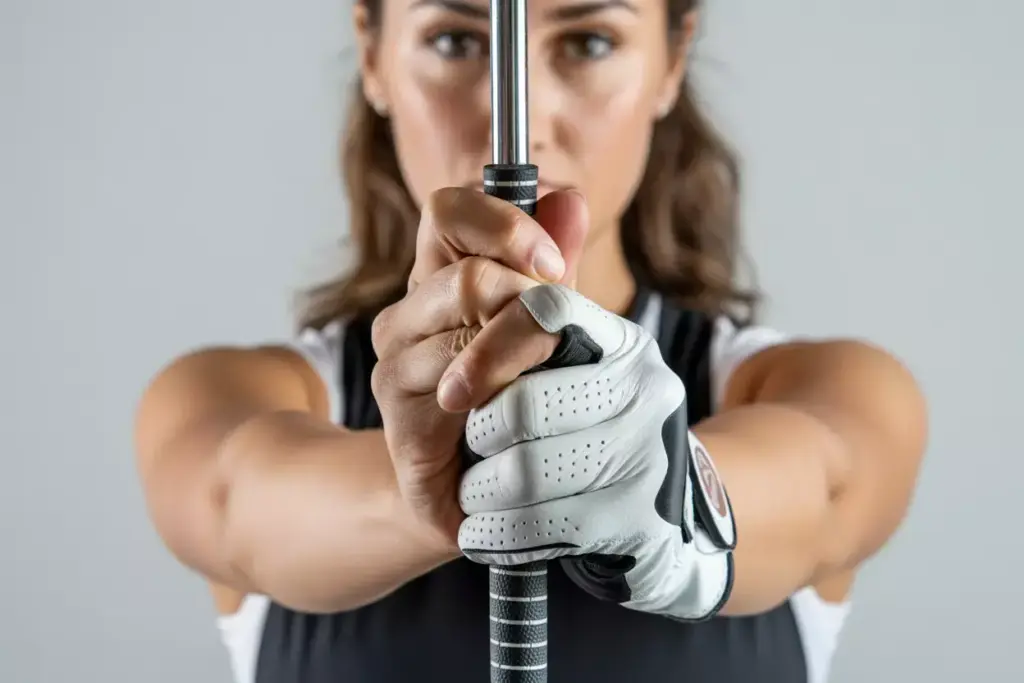
The golf grip is arguably the most important aspect of your swing, yet it’s often overlooked by beginners eager to start hitting balls. Your grip is your only connection to the golf club, and a proper grip will dramatically improve your consistency and control.
For most women, the interlocking grip works exceptionally well. This involves placing your left hand (for right-handed golfers) on the club first, with the thumb pointing down the shaft. Your right hand then overlaps, with the pinky finger of your right hand interlocking with the index finger of your left hand. This grip provides excellent control while accommodating smaller hand sizes that many women have.
“A proper grip feels slightly uncomfortable at first, but it’s the foundation that everything else builds upon. Don’t be afraid to spend time getting this right.” – LPGA Teaching Professional
Key grip checkpoints:
- Both thumbs should point down the shaft
- You should see 2-3 knuckles on your left hand when looking down
- Grip pressure should be firm but not tight (think holding a bird)
- The club should rest in your fingers, not your palms
2. Develop a Consistent Stance and Posture

Your setup position determines the quality of your swing before you even begin moving the club. Many women struggle with confidence because they’ve never been taught proper posture and alignment fundamentals.
Proper stance elements:
- Feet should be shoulder-width apart for iron shots
- Weight evenly distributed between both feet
- Slight bend in your knees (never locked straight)
- Bend forward from your hips, not your waist
- Arms should hang naturally from your shoulders
Your posture should feel athletic and balanced. Think about how you’d stand if someone were about to toss you a basketball – that’s the kind of ready, balanced position you want. Many women tend to stand too upright or bend too much at the waist, both of which create inconsistent contact with the ball.
3. Learn the Proper Swing Sequence

The golf swing happens quickly, but understanding the proper sequence will help you develop consistency. Many beginners try to hit the ball too hard, thinking power comes from arm strength. In reality, power comes from proper sequencing and timing.
The basic swing sequence:
- Takeaway: Club moves back low and slow, staying connected to your body
- Backswing: Turn your shoulders while maintaining your spine angle
- Transition: Small shift of weight to your front foot begins the downswing
- Impact: Hands lead the clubhead through the ball
- Follow-through: Complete your turn toward the target
For women especially, focusing on tempo and rhythm rather than power will yield much better results. A smooth, controlled swing will generate more consistent contact and, surprisingly, more distance than trying to swing as hard as possible.
Equipment and Preparation: Setting Yourself Up for Success
4. Invest in Properly Fitted Equipment

One of the biggest mistakes new female golfers make is using hand-me-down clubs that weren’t designed for their body type or swing characteristics. Properly fitted equipment can make the difference between loving golf and giving up in frustration.
Essential considerations for women’s golf equipment:
| Equipment Type | Key Considerations | Why It Matters |
|---|---|---|
| Golf Clubs | Shorter length, lighter weight, more flexible shaft | Easier to control and generate clubhead speed |
| Golf Balls | Lower compression balls designed for slower swing speeds | Better feel and distance for most female golfers |
| Golf Shoes | Proper arch support and comfortable fit | Stability during swing and comfort during 4-5 hour rounds |
| Golf Glove | Snug fit in your non-dominant hand | Better grip and prevents blisters |
Many golf shops offer women-specific fitting sessions where professionals analyze your swing speed, ball flight, and physical characteristics to recommend the best equipment. This investment upfront will pay dividends in your enjoyment and improvement rate.
Starter set recommendations:
- Driver with at least 12-13 degrees of loft
- 3-hybrid instead of long irons (easier to hit)
- Irons from 6-iron through pitching wedge
- Sand wedge for bunker shots
- Putter that feels comfortable and balanced
5. Understand Basic Course Etiquette and Rules
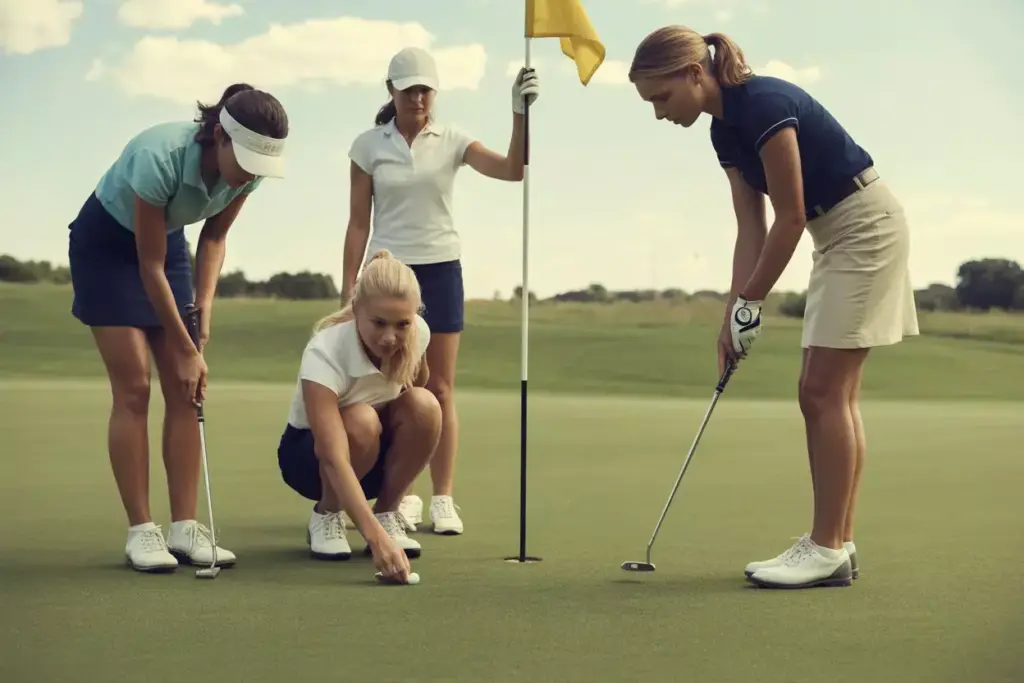
Golf has a rich tradition of etiquette and sportsmanship that enhances everyone’s enjoyment of the game. Understanding these basics will help you feel confident and welcome on any golf course.
Essential etiquette for new female golfers:
On the Tee:
- Wait for your turn based on honor system (lowest score on previous hole goes first)
- Stay quiet and still when others are hitting
- Tee your ball between the tee markers, not in front of them
On the Fairway:
- Play “ready golf” – hit when you’re ready and it’s safe
- Repair divots (chunks of grass you remove when hitting)
- Stay out of others’ sight lines when they’re hitting
On the Green:
- Mark your ball with a coin or ball marker
- Don’t step on other players’ putting lines
- Tend the flagstick for longer putts when requested
- Repair ball marks (indentations from your ball landing on the green)
Pace of play is crucial for everyone’s enjoyment. A good rule of thumb is to keep up with the group in front of you, not stay ahead of the group behind you. If you’re struggling with a particular hole, pick up your ball after hitting your maximum score (usually double par for beginners) and move on.
6. Take Lessons from a Qualified PGA Professional

While YouTube videos and well-meaning friends can provide some guidance, nothing replaces proper instruction from a PGA or LPGA certified teaching professional. This is especially important for women, as many instructional materials are designed with male golfers in mind.
Benefits of professional instruction:
- Proper fundamentals from the start – It’s much easier to learn correctly than to fix bad habits later
- Customized instruction – A good instructor will adapt their teaching to your learning style and physical capabilities
- Faster improvement – Professional guidance accelerates your learning curve significantly
- Confidence building – Knowing you’re doing things correctly builds confidence on the course
Look for instructors who have experience teaching women and who create a comfortable, encouraging learning environment. Many golf courses offer women-only group lessons or ladies’ clinics that can be less intimidating than mixed-gender instruction.
Types of lessons to consider:
- Individual lessons for personalized attention
- Group lessons for social learning and cost savings
- Playing lessons on the actual golf course
- Short game clinics focusing on putting and chipping
7. Build Confidence Through Practice and Preparation

Confidence on the golf course comes from preparation and practice. Many women feel intimidated by golf because they worry about holding up other players or making mistakes. The truth is, every golfer was a beginner once, and most golfers are understanding and helpful.
Confidence-building strategies:
Start at the practice facility:
- Spend time at the driving range working on your swing
- Practice putting on the practice green
- Hit balls from different lies and situations
- Work on your short game (shots within 100 yards of the hole)
Play beginner-friendly courses:
- Executive courses with shorter holes
- Par-3 courses for less pressure
- Municipal courses that tend to be more relaxed
- Women’s tees (forward tees) to make holes more manageable
Prepare mentally:
- Learn basic rules so you’re not constantly asking questions
- Understand course layout and yardages
- Bring extra balls (you’ll lose some at first)
- Focus on having fun rather than shooting low scores
Practice routine suggestions:
- 70% short game practice (putting, chipping, pitching)
- 30% full swing practice
- Always warm up before playing
- Set realistic goals for improvement
“Golf is a game of misses. The player who misses best wins. Don’t expect perfection – expect improvement.” – Golf Digest Teaching Professional
Building course confidence:
- Play with supportive, patient golfers
- Consider hiring a golf professional to play with you for your first few rounds
- Join a women’s golf group or league
- Remember that everyone is focused on their own game, not judging yours
Conclusion
These 7 beginner golf tips every woman needs to hear before playing provide the foundation for a lifetime of enjoyment on the golf course. Remember that golf is a journey, not a destination. Even professional golfers continue to work on their fundamentals and learn new aspects of the game throughout their careers.
The most important tip of all? Have fun and be patient with yourself. Golf is challenging for everyone, regardless of gender or athletic ability. What matters most is that you’re out there trying, learning, and enjoying the unique combination of physical challenge, mental strategy, and outdoor beauty that golf provides.
Your next steps:
- Schedule a lesson with a PGA or LPGA professional at your local golf course or driving range
- Get properly fitted for clubs that match your swing and physical characteristics
- Practice the fundamentals – grip, stance, and posture – until they feel natural
- Start playing on beginner-friendly courses with patient, supportive golfers
- Join a women’s golf group to meet other female golfers and continue learning
Golf opens doors to incredible friendships, business relationships, and personal satisfaction. With proper preparation, quality instruction, and the right mindset, you’ll discover why millions of women around the world have fallen in love with this challenging and rewarding game. The golf course is waiting for you – take that first step and discover what you’ve been missing.