8 Beginner Golf Tips for Women to Play Without Fear or Embarrassment
Picture this: you’re standing on the first tee, palms sweating, heart racing, convinced that every eye on the course is watching your every move. If this scenario sounds familiar, you’re not alone. Many women avoid golf entirely because they fear embarrassment or feel intimidated by what they perceive as a male-dominated sport. But here’s the truth—golf is for everyone, and with the right approach, you can build confidence from your very first swing.

Learning these 8 beginner golf tips for women to play without fear or embarrassment will transform your relationship with the game. Whether you’ve never held a club or you’ve been avoiding the course due to anxiety, these proven strategies will help you develop both skill and confidence. Golf should be enjoyable, not stressful, and with proper preparation and mindset, you’ll soon discover why millions of women worldwide have fallen in love with this incredible sport.
Key Takeaways
- Master the fundamentals first: Proper grip, stance, and posture form the foundation of confident golf and prevent embarrassing mishits
- Focus on control over power: Smooth, controlled swings produce better results than trying to hit the ball as hard as possible
- Build skills progressively: Start with shorter clubs and half-swings before advancing to full shots with drivers
- Join supportive communities: Women’s golf groups and beginner clinics provide encouragement and reduce intimidation
- Take professional lessons: Qualified instruction helps you develop proper habits from the start and builds confidence faster
Building Your Foundation: Essential Techniques
1. Master the Grip First
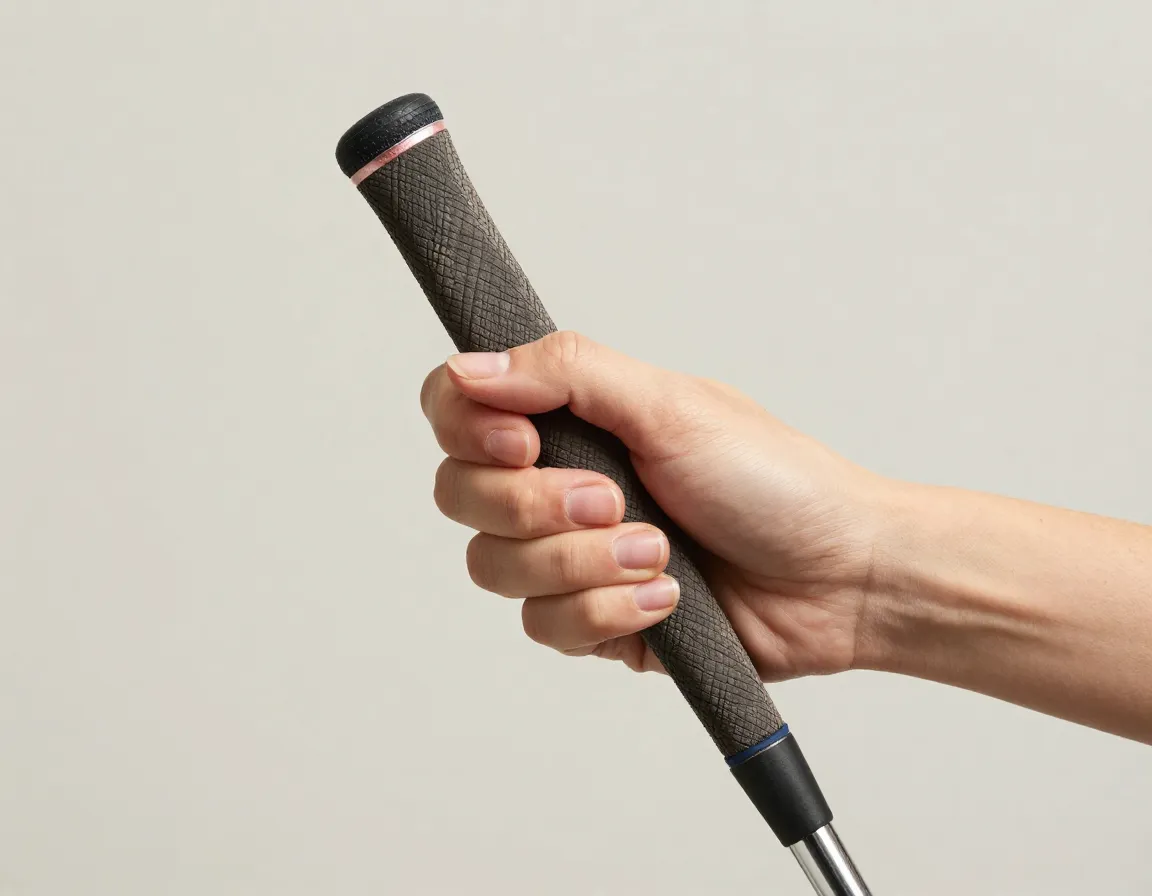
The golf grip is your only connection to the club, making it the most crucial element to master early. A proper grip is the foundation of every swing and is especially important for women golfers due to size and strength differences [4]. Many beginners make the mistake of gripping the club like a baseball bat or holding it too tightly, which leads to inconsistent shots and frustration.
Start with the overlapping grip (also called the Vardon grip), where your left hand sits higher on the club and your right pinky finger overlaps your left index finger. Your left thumb should point down the shaft, and you should be able to see 2-3 knuckles on your left hand when you look down. The grip pressure should feel like you’re holding a small bird—firm enough that it won’t fly away, but gentle enough not to hurt it.
Common grip mistakes to avoid:
- Gripping too tightly (causes tension and reduces clubhead speed)
- Placing hands too far apart on the club
- Having palms facing each other instead of working together
- Gripping too much in the palms rather than the fingers
Practice your grip at home with any club. The more natural it feels, the more confident you’ll be on the course.
2. Practice Proper Stance and Posture
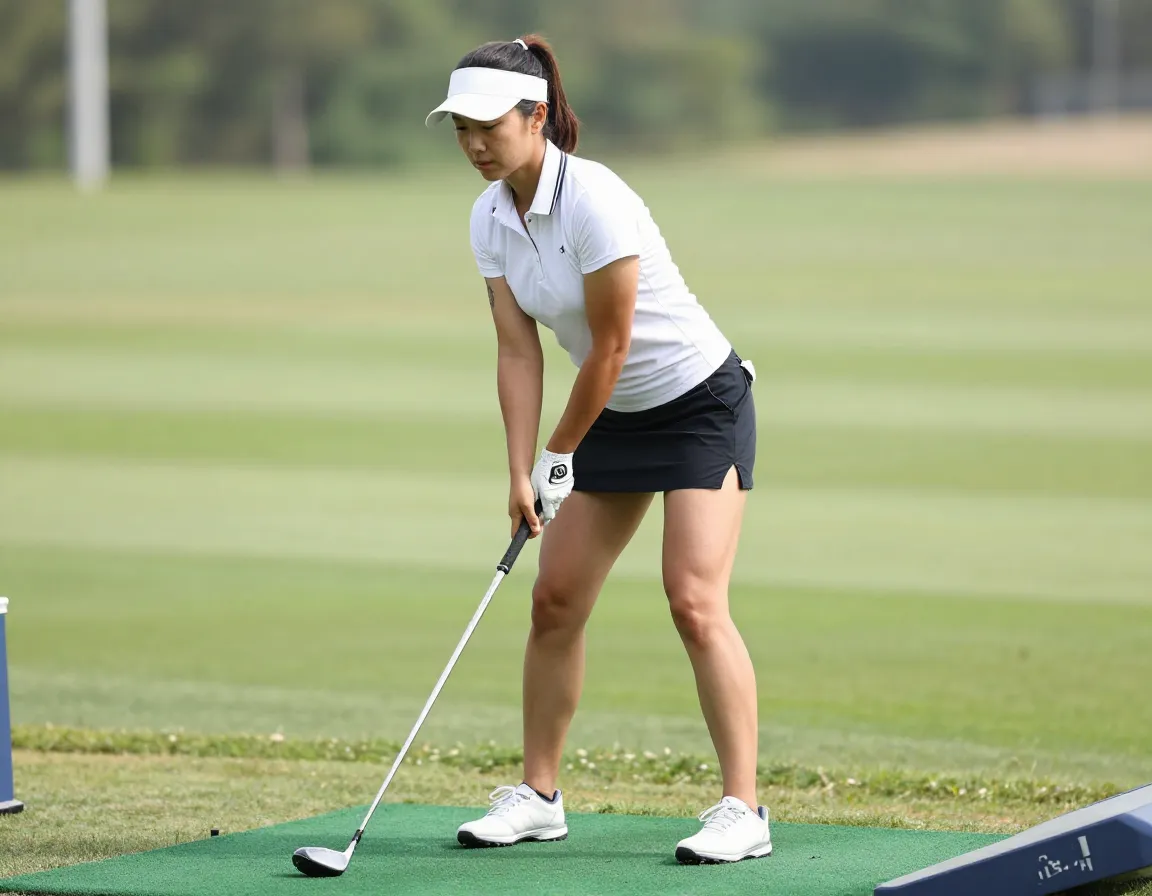
Your setup position determines the quality of your swing before you even move the club. Stand with feet shoulder-width apart or slightly wider, distribute weight evenly, bend knees slightly, and maintain a straight spine angle while engaging your core for stability [2].
Think of your posture as sitting back into an imaginary chair. Your weight should be balanced on the balls of your feet, not your heels or toes. Keep your arms relaxed and hanging naturally from your shoulders. This athletic position gives you the stability and flexibility needed for a powerful, controlled swing.
Key posture checkpoints:
- Feet parallel to target line
- Slight knee flex (never locked straight)
- Spine tilted forward from hips, not rounded
- Arms hanging freely without tension
- Weight distributed 50/50 between feet
Good posture not only improves your swing mechanics but also projects confidence to other players on the course.
3. Focus on Controlled Swing Mechanics

One of the biggest mistakes new women golfers make is trying to swing as hard as possible to achieve distance. Keep the backswing simple and controlled with a smooth takeaway. Avoid rushing the backswing; practice with a relaxed, rhythmic motion to maintain consistent pace and control [2].
Think “low and slow” for your takeaway—the club should move back smoothly along the ground for the first 12 inches. Your backswing doesn’t need to be long to be effective. A three-quarter backswing with good tempo will produce better results than a full swing that’s rushed or out of control.
Tempo tips for beginners:
- Count “one-thousand-one” on the backswing
- Count “one-thousand-two” on the downswing
- Practice with your eyes closed to feel the rhythm
- Start with slow swings and gradually increase speed
Remember: accuracy beats distance every time. A straight 120-yard shot is infinitely better than a 150-yard shot that ends up in the woods.
4. Let the Club Feel Heavy During the Downswing

Here’s a counterintuitive tip that can dramatically improve your ball-striking: Let the club feel heavy during the downswing. Women’s clubs are lighter than men’s, but imagining the club as heavy while swinging improves ground contact, increases clubhead speed, and enhances launch angle for better distance [2].
This mental image helps you use gravity and natural acceleration rather than forcing the swing with your arms. Think of the clubhead as a heavy weight that wants to fall toward the ball. This approach promotes a more natural release and helps you make solid contact consistently.
The key is trusting the club to do the work. Many women try to help the ball into the air by scooping or lifting, which actually produces the opposite effect. Let the club’s loft do its job while you focus on making clean contact with the ball first, then the ground.
Developing Confidence Through Smart Practice
5. Build Foundational Skills Before Pursuing Distance

The driving range can be intimidating for beginners, especially when you see other golfers crushing drives 250+ yards. Resist the temptation to grab your driver immediately. At the driving range, warm up with half-swings using wedges or short irons before progressing to longer clubs. This prevents poor mechanics from developing when you swing for maximum distance [4].
Start every practice session with these progressions:
- 10 swings with pitching wedge (half-swing, focus on contact)
- 10 swings with 7-iron (three-quarter swing, focus on tempo)
- 10 swings with 5-iron (full swing, focus on balance)
- Finally, move to driver (focus on smooth tempo, not power)
This systematic approach builds confidence because you’re succeeding with easier clubs before attempting more challenging shots. You’ll also develop muscle memory for proper swing mechanics that will serve you well throughout your golf journey.
6. Club Up on Distance Shots
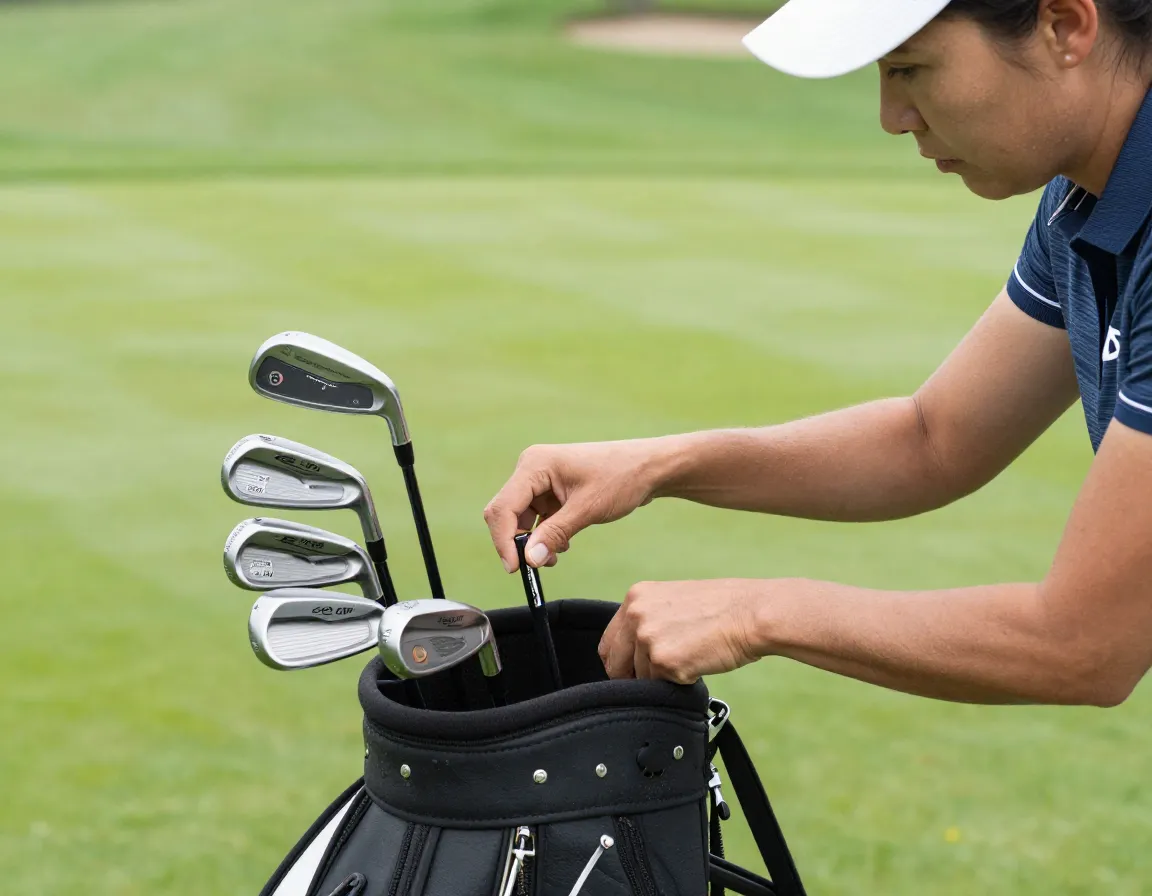
Here’s a secret that will immediately improve your golf experience: Beginners should use clubs with more loft or longer distance potential than experienced golfers would on the same shot. For example, use a 6-iron instead of a 7-iron if you can’t quite reach typical distances [2].
Most women’s golf sets are designed with this principle in mind, featuring more loft and lighter shafts to help achieve optimal ball flight. Don’t let ego dictate your club selection—choose the club that gives you the best chance of success.
Smart club selection strategies:
- Always take enough club to reach your target with a smooth swing
- When in doubt between two clubs, choose the longer one
- Focus on making solid contact rather than swinging harder
- Consider wind, elevation, and pin position in your decision
This approach reduces the pressure to swing hard and helps you maintain the smooth tempo that produces consistent results.
Creating a Supportive Golf Environment
7. Take Lessons with Women-Specific Instruction
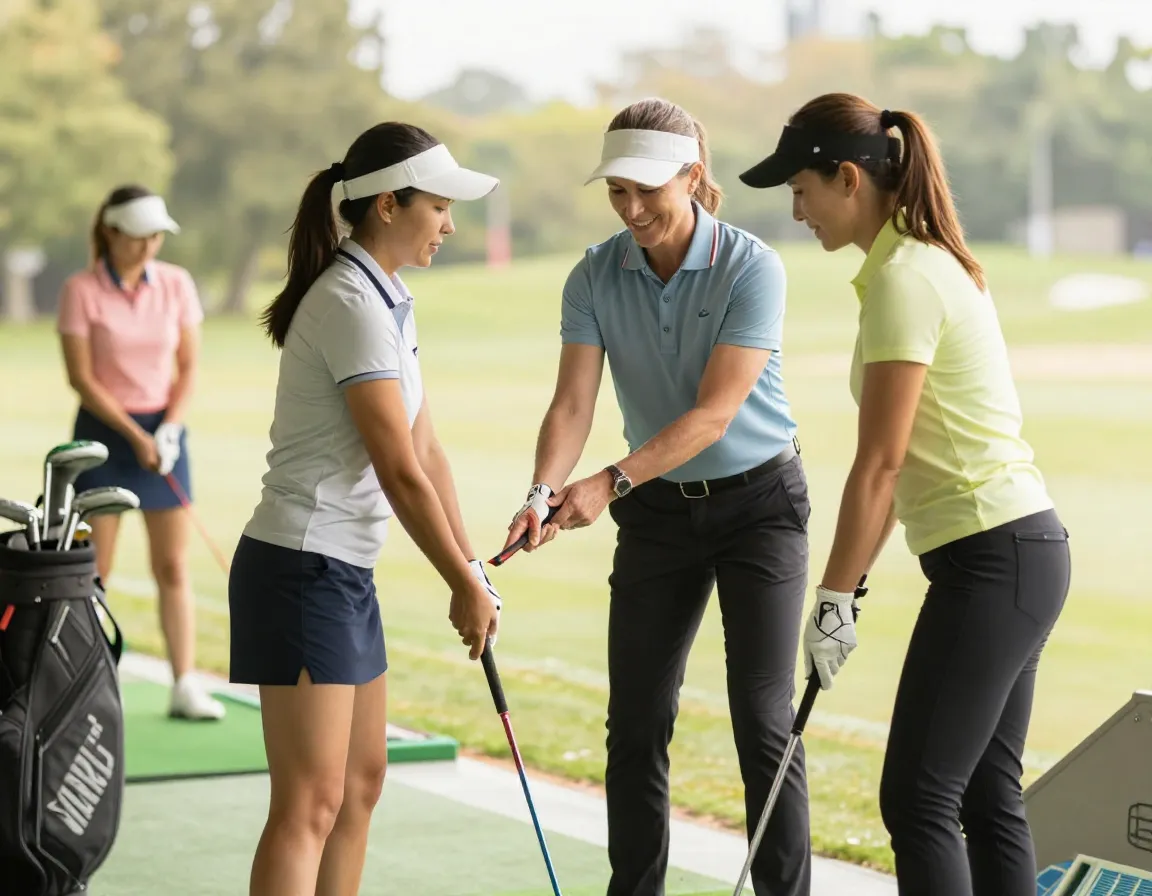
While golf fundamentals are universal, women often benefit from instruction that addresses their specific physical attributes and learning styles. Golf lessons and women-specific clinics help develop proper habits early and provide hands-on experience in a supportive, pressure-free environment [2][1].
Look for instructors who specialize in teaching women or facilities that offer women-only clinics. These environments tend to be more encouraging and less intimidating than mixed-gender lessons. A good instructor will help you develop a swing that works with your natural athletic ability rather than forcing you into a one-size-fits-all approach.
What to look for in golf instruction:
- PGA or LPGA certified professionals
- Experience teaching women golfers
- Emphasis on fundamentals over quick fixes
- Video analysis to help you see your progress
- Practice drills you can do at home
Benefits of professional instruction include:
- Faster skill development
- Prevention of bad habits
- Customized tips for your swing
- Rules and etiquette guidance
- Equipment recommendations
8. Join Women’s Golf Groups and Communities

Golf doesn’t have to be a solitary pursuit. Many golf courses offer women-only groups, leagues, and beginner clinics that provide a welcoming environment and reduce embarrassment for new players [1]. These communities are invaluable for building confidence and making lasting friendships.
Women’s golf groups typically focus on fun and improvement rather than intense competition. You’ll find players of all skill levels who remember what it was like to be a beginner. Most groups offer mentorship programs, organized lessons, and social events that make golf more enjoyable.
Types of women’s golf communities:
- Ladies’ leagues (weekly organized play)
- Beginner clinics (structured learning programs)
- Social golf groups (casual, fun-focused play)
- Online communities (tips, encouragement, course recommendations)
- Corporate golf groups (networking and business development)
Many courses also offer “9 and Wine” events or similar social golf activities that combine learning with socializing, making the experience less intimidating for newcomers.
💡 Pro Tip: Don’t wait until you’re “good enough” to join a group. These communities are specifically designed to help beginners improve while having fun.
Essential Equipment and Etiquette Knowledge
Understanding basic golf etiquette will boost your confidence and ensure you’re welcomed on any course. Here are the fundamental rules every beginner should know:
Course Etiquette Essentials:
- Pace of play: Keep up with the group ahead, not away from the group behind
- Repair divots and ball marks: Fix any damage you cause to the course
- Rake bunkers: Smooth the sand after hitting from sand traps
- Quiet during swings: Remain still and silent when others are hitting
- Safety first: Always be aware of where others are before swinging
Equipment basics for beginners should focus on quality over quantity. A starter set with 6-8 clubs is perfect for learning. Most women benefit from clubs specifically designed for their swing speed and physical characteristics [5].
Overcoming Mental Barriers and Building Lasting Confidence
The mental game is often the biggest challenge for new women golfers. Here’s how to overcome common psychological barriers:
Combat perfectionism: Golf is a game of misses—even professionals hit poor shots regularly. Accept that bad shots are part of learning and focus on gradual improvement rather than immediate perfection.
Ignore judgment: Most golfers are focused on their own games and are more supportive than critical. The golf community generally welcomes new players, especially those who show respect for the game and course.
Set realistic expectations: Celebrate small victories like making solid contact, hitting the ball straight for 100 yards, or successfully getting out of a sand trap. These accomplishments build confidence for bigger achievements.
Practice positive self-talk: Replace “I’m terrible at this” with “I’m learning and improving.” Your internal dialogue significantly impacts your performance and enjoyment.
Conclusion
These 8 beginner golf tips for women to play without fear or embarrassment provide the foundation for a lifelong love of golf. Remember that every expert was once a beginner, and the most important step is simply getting started. Focus on mastering the fundamentals—grip, stance, and controlled swing mechanics—before worrying about distance or advanced techniques.
Building confidence in golf happens through preparation, practice, and surrounding yourself with supportive people. Take advantage of women’s golf communities and professional instruction to accelerate your learning while making the journey more enjoyable.
Your next steps:
- Book a lesson with a qualified instructor who specializes in teaching women
- Practice your grip at home until it feels natural
- Find a local women’s golf group or beginner clinic
- Start at the driving range with short irons and progress gradually
- Focus on fun rather than perfection
Golf offers incredible rewards—fresh air, exercise, mental challenge, and lasting friendships. With these tips as your guide, you’ll soon discover why millions of women have embraced golf as their favorite pastime. The course is waiting for you! 🏌️♀️
References
[1] Getting Started Womens Golf – https://www.ewmotiontherapy.com/blog/getting-started-womens-golf
[2] Beginner Golf Swing Tips For Women – https://stix.golf/blogs/rough-thoughts/beginner-golf-swing-tips-for-women
[3] Watch – https://www.youtube.com/watch?v=gHrSwD2aMl0
[4] Ladies Golf At Victoria Club Tips For Beginners – https://www.victoriaclub.com/golf/ladies-golf-at-victoria-club-tips-for-beginners/
[5] Tips For Women Golfers – https://www.callawaygolf.com/golf-guides/tips-for-women-golfers
[6] Your Ultimate Guide To Womens Golf – https://www.golfmonthly.com/features/your-ultimate-guide-to-womens-golf
[7] Top Ten Golf Tips For Women – https://collegeofgolf.keiseruniversity.edu/top-ten-golf-tips-for-women/