8 Ways to Identify and Value Antique Golf Clubs: A Complete Collector’s Guide
Imagine discovering a dusty old golf club in your grandfather’s garage, only to learn it’s worth thousands of dollars! 🏌️♂️ The world of antique golf club collecting holds fascinating treasures, with some rare pieces selling for over $180,000 at auction. Whether you’ve inherited vintage clubs or stumbled upon them at an estate sale, knowing how to properly identify and value these historical gems can be incredibly rewarding. In this comprehensive guide, I’ll share the 8 ways to identify and value antique golf clubs that every collector and enthusiast should master.
Key Takeaways
- Pre-1850 clubs hold the most value – Almost any golf club made before 1850 will have worthwhile market value, especially those crafted in Scotland
- Physical features reveal age – Examine the club face depth, shaft material, hosel construction, and whipping length to determine manufacturing era
- Condition determines price – Well-preserved antique clubs command significantly higher values than damaged pieces
- Research sold prices, not listings – Compare your clubs to recently completed sales rather than current asking prices for accurate valuation
- Premium examples reach thousands – While most vintage clubs sell for $15-$100, clubs with famous signatures or exceptional provenance can bring $1,000+
Understanding the Foundation: What Makes Golf Clubs Antique
Before diving into the 8 ways to identify and value antique golf clubs, it’s essential to understand what qualifies as truly antique in the golf world. The magic threshold appears to be 1850 – almost any golf club manufactured before this date will have worthwhile market value[2]. This is particularly true for clubs made in Scotland, which was the birthplace of modern golf.
The most valuable antique golf clubs come from legendary Scottish clubmakers like Hugh Philp, whose pre-1850 creations are considered the holy grail of golf collecting[2]. Understanding this historical context helps frame your approach to identification and valuation.
1. Examine the Club Face Construction and Depth
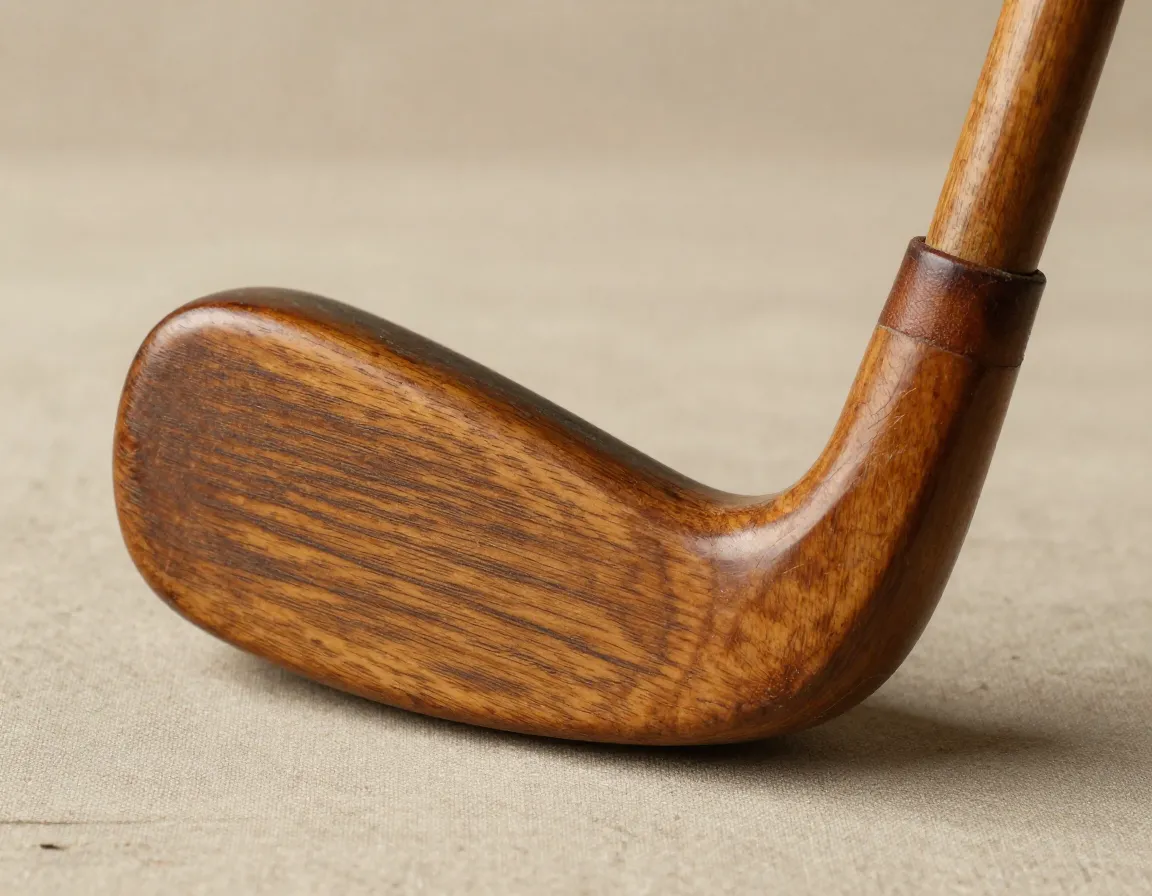
The club face provides one of the most reliable indicators of a golf club’s age and potential value. When examining antique wooden clubs, look for a shallow face, which indicates early manufacture[2]. This shallow profile was characteristic of clubs made in the 1800s and earlier.
Key face features to examine:
- Smooth surfaces suggest 1800s production
- Grooved faces appeared much later in golf club evolution[2]
- Deep faces indicate more modern construction
- Hand-carved details often appear on the most valuable pieces
The absence of grooves is particularly significant. Modern golfers are accustomed to clubs with intricate groove patterns, but antique clubs featured smooth faces that required different playing techniques.
2. Analyze the Shaft Material and Construction
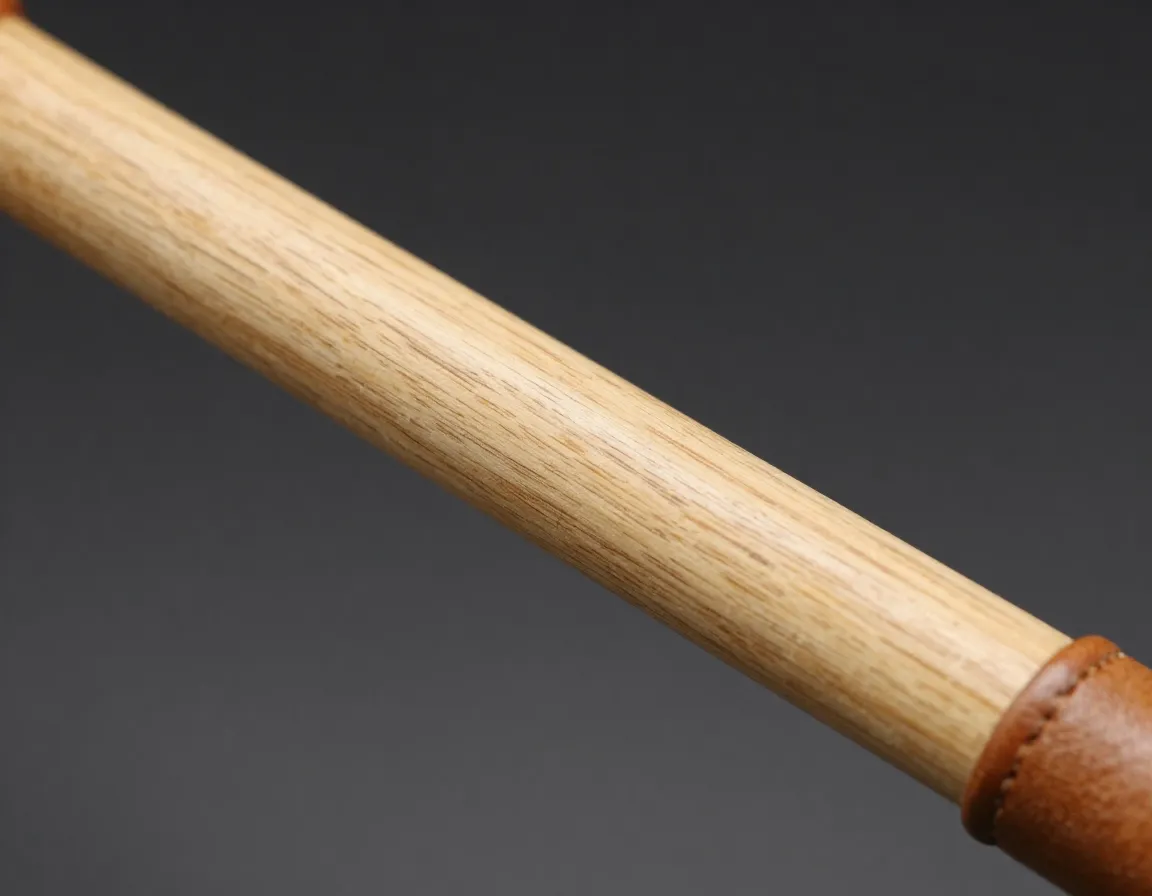
The shaft material serves as another crucial identifier in the 8 ways to identify and value antique golf clubs. Ash shafts indicate early manufacture and are often found on the most valuable pieces[2]. This is important because hickory shafts, which many people associate with antique clubs, didn’t actually appear until around 1840[2].
Shaft material timeline:
- Pre-1840: Ash wood shafts (most valuable)
- 1840-1920s: Hickory wood shafts
- 1920s+: Steel shafts (not considered antique)
When examining the shaft, also check for signs of hand-crafting versus machine production. Hand-shaped shafts with subtle irregularities often indicate earlier, more valuable manufacture.
3. Inspect the Hosel Joint for Manufacturing Clues
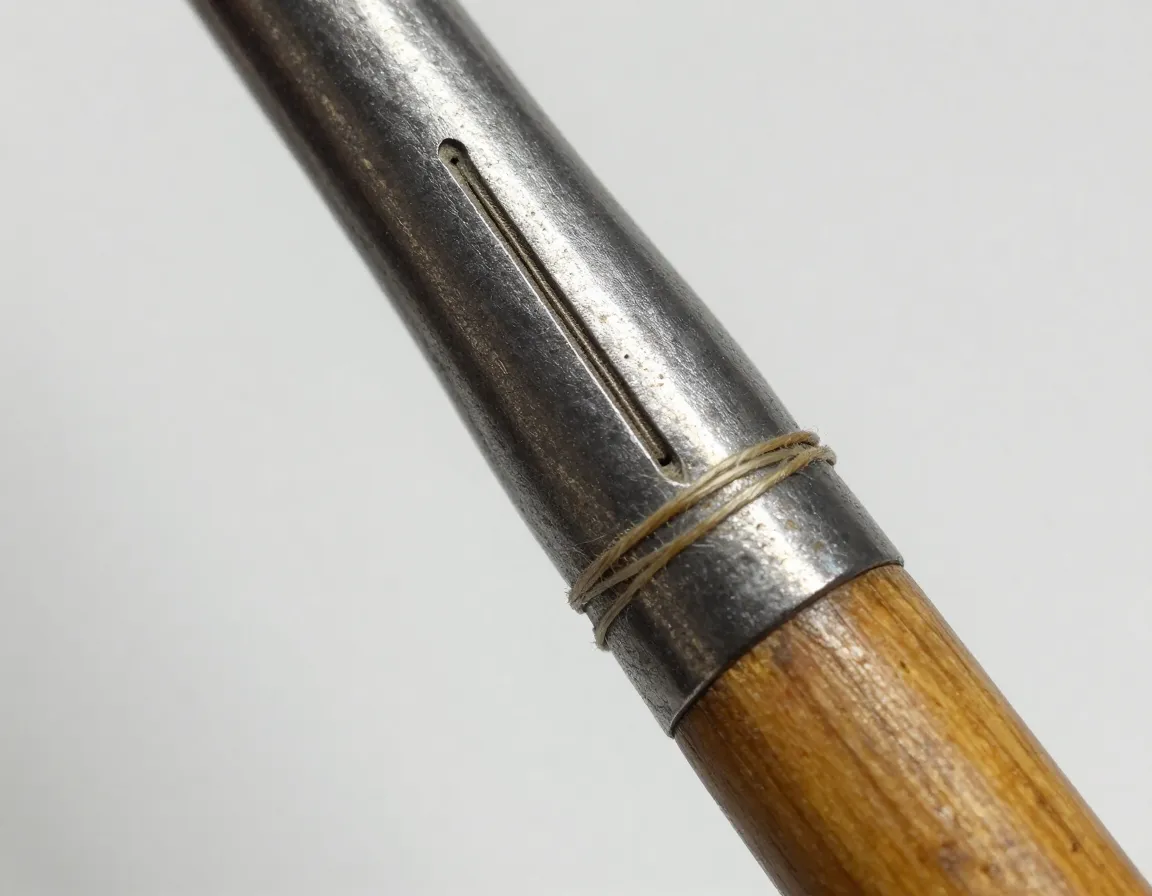
The hosel – the metal section connecting the club head to the shaft – provides fascinating insights into manufacturing era. This detail is often overlooked but represents one of the most reliable dating methods in the 8 ways to identify and value antique golf clubs.
Critical hosel indicators:
- Visible seam: Hand-rolled hosels before 1850 show clear seam lines[2]
- Solid construction: After 1850, hosels were made from solid iron without seams[2]
- Joint quality: Earlier pieces often show more irregular, hand-crafted joints
- Metal composition: Check for iron versus steel construction
The presence of a visible seam is particularly valuable, as it definitively places the club in the pre-1850 category where values are highest.
4. Evaluate the Whipping Length and Quality
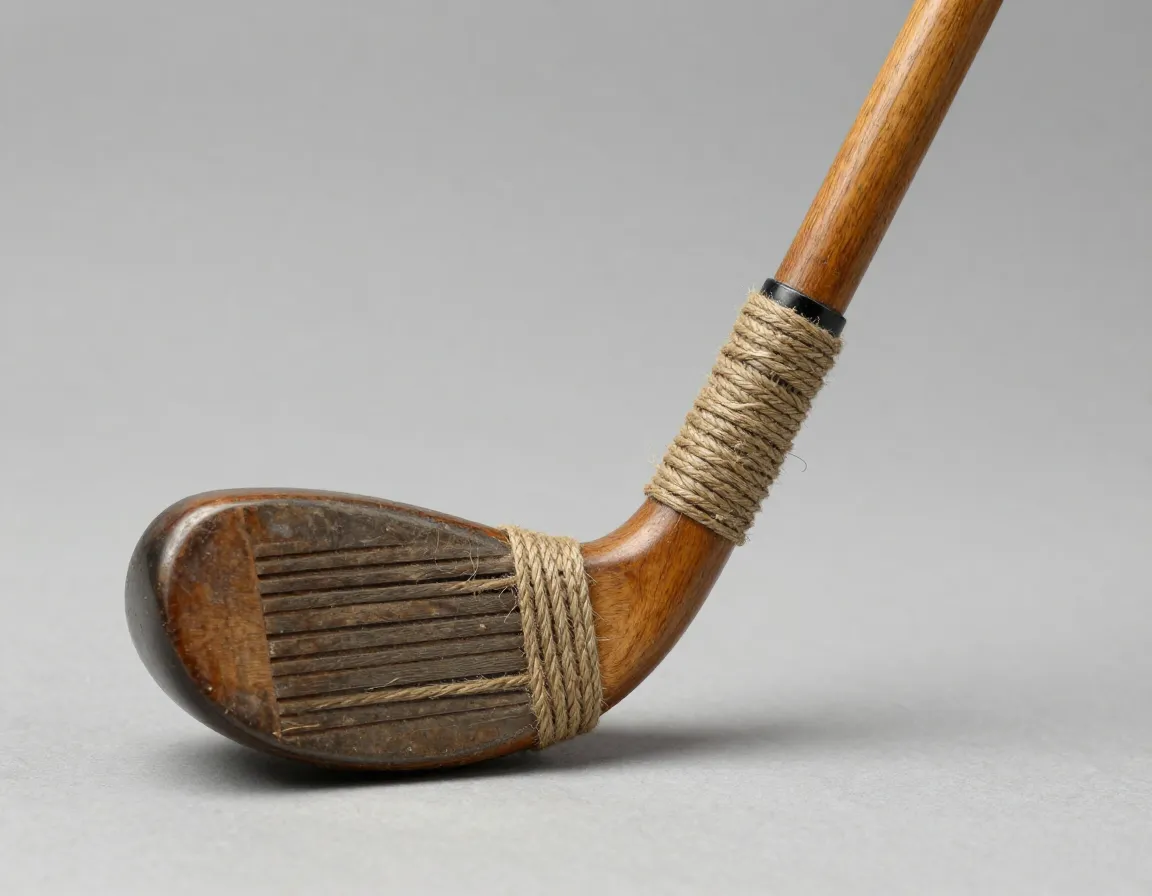
The whipping refers to the thread or cord wrapped around the joint where the shaft meets the club head. This seemingly minor detail provides major clues about age and authenticity. Joint whipping of 5-6 inches indicates 1800s manufacture[2], while clubs made after 1905 used significantly less whipping[2].
Whipping characteristics by era:
- 1800s: 5-6 inches of extensive whipping
- 1905+: Minimal whipping used
- Hand-wrapped: Irregular patterns indicate authenticity
- Original materials: Look for period-appropriate threads and cords
Original whipping in good condition adds considerable value, while replaced or missing whipping can significantly decrease worth.
5. Research Maker’s Marks and Signatures
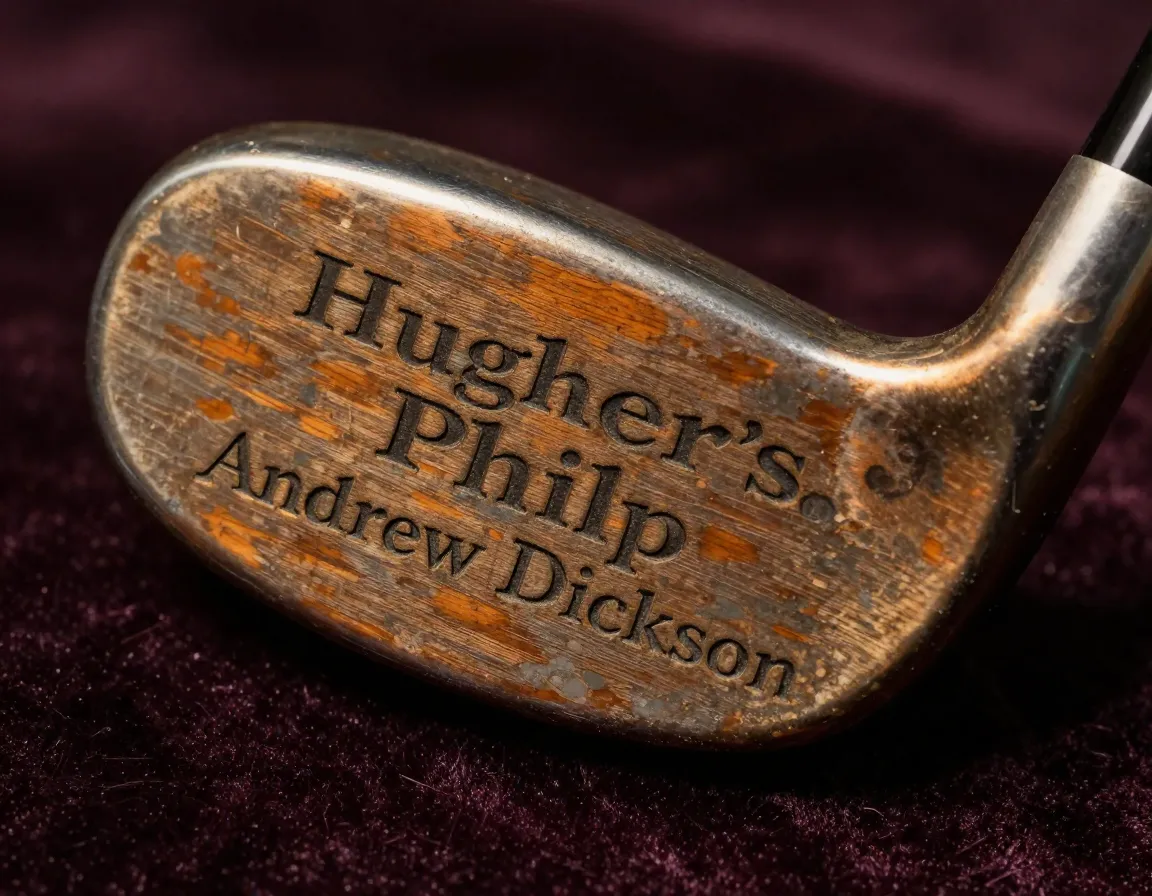
Identifying the clubmaker can dramatically impact valuation in the 8 ways to identify and value antique golf clubs. Famous makers like Hugh Philp, Andrew Dickson, and Simon Cossar command premium prices. A long-nose putter by Andrew Dickson (circa 1750s) sold for $181,000, while a Simon Cossar putter (circa 1780s) brought $165,000[1].
Research strategies:
- Examine stamps and markings carefully with magnification
- Document all visible text and symbols
- Research clubmaker histories and their typical marks
- Verify authenticity through expert consultation when needed
Even clubs signed by famous players rather than famous makers can be valuable. Clubs signed by notable players command around $1,000, with a Sam Snead-signed club selling for $1,300[1].
6. Assess Overall Condition and Preservation
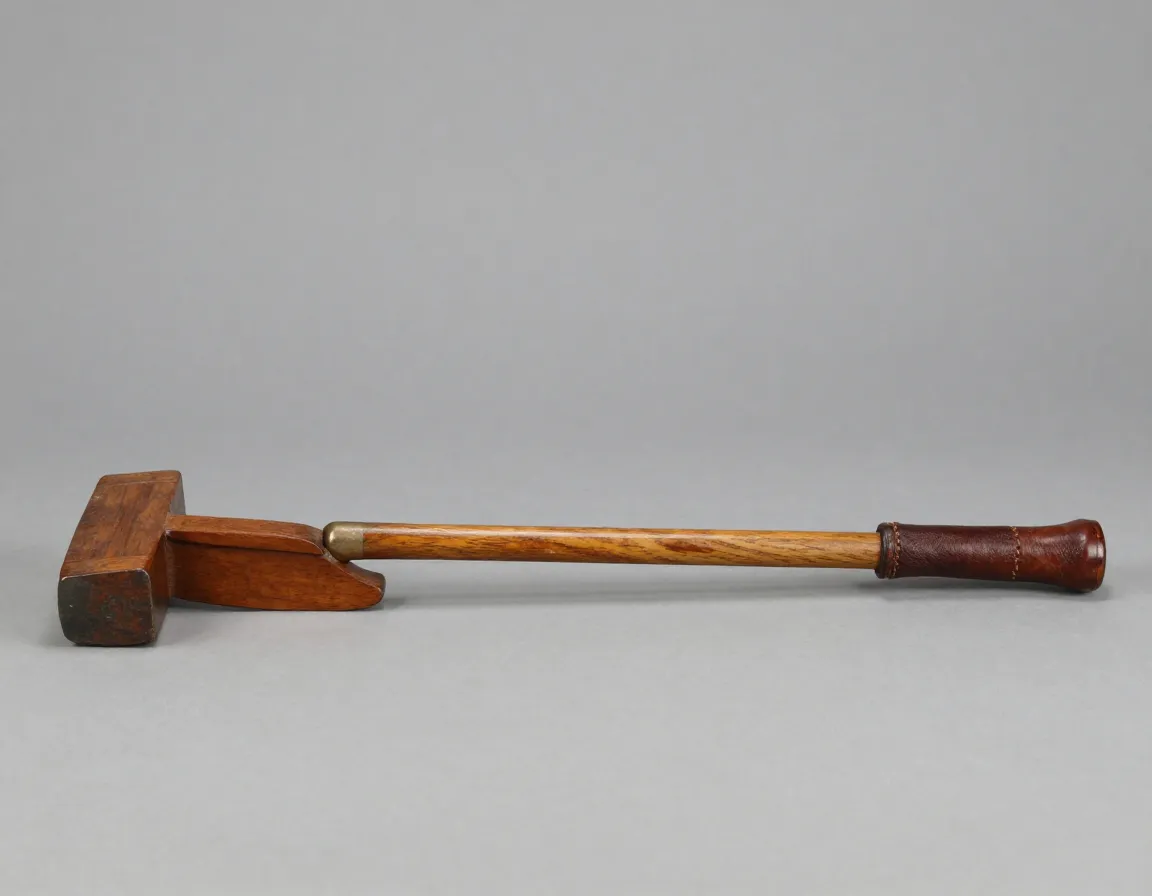
Condition is paramount in determining value[4]. A perfectly preserved antique club will always outvalue a damaged piece from the same era and maker. When evaluating condition, examine every component systematically.
Condition assessment checklist:
- Wood integrity: Check for cracks, splits, or repairs
- Metal condition: Look for rust, dents, or corrosion
- Original finish: Assess remaining varnish or protective coatings
- Grip condition: Evaluate leather wrapping or original grip materials
- Structural soundness: Ensure joints remain tight and secure
Remember that some aging and patina actually enhance value by proving authenticity, but structural damage significantly reduces worth.
Understanding Current Market Values
The antique golf club market has evolved significantly in recent years. Vintage golf clubs currently sell for $10-$20 each[1], which represents a decline from $40-$50 ten years ago[1]. However, this refers to common vintage pieces rather than true antiques.
Current market ranges:
- Common vintage clubs: $10-$20 each[1]
- Individual auction pieces: $15-$100 typically[1]
- Premium examples: Around $1,000 for signed or luxury pieces[1]
- Museum-quality antiques: $100,000+ for the rarest pieces[1]
The highest-priced sales include exceptional pieces like a square-toe light iron (circa 1600s) at $151,000[1], demonstrating the potential value of truly rare finds.
7. Compare to Recently Sold Items, Not Listings
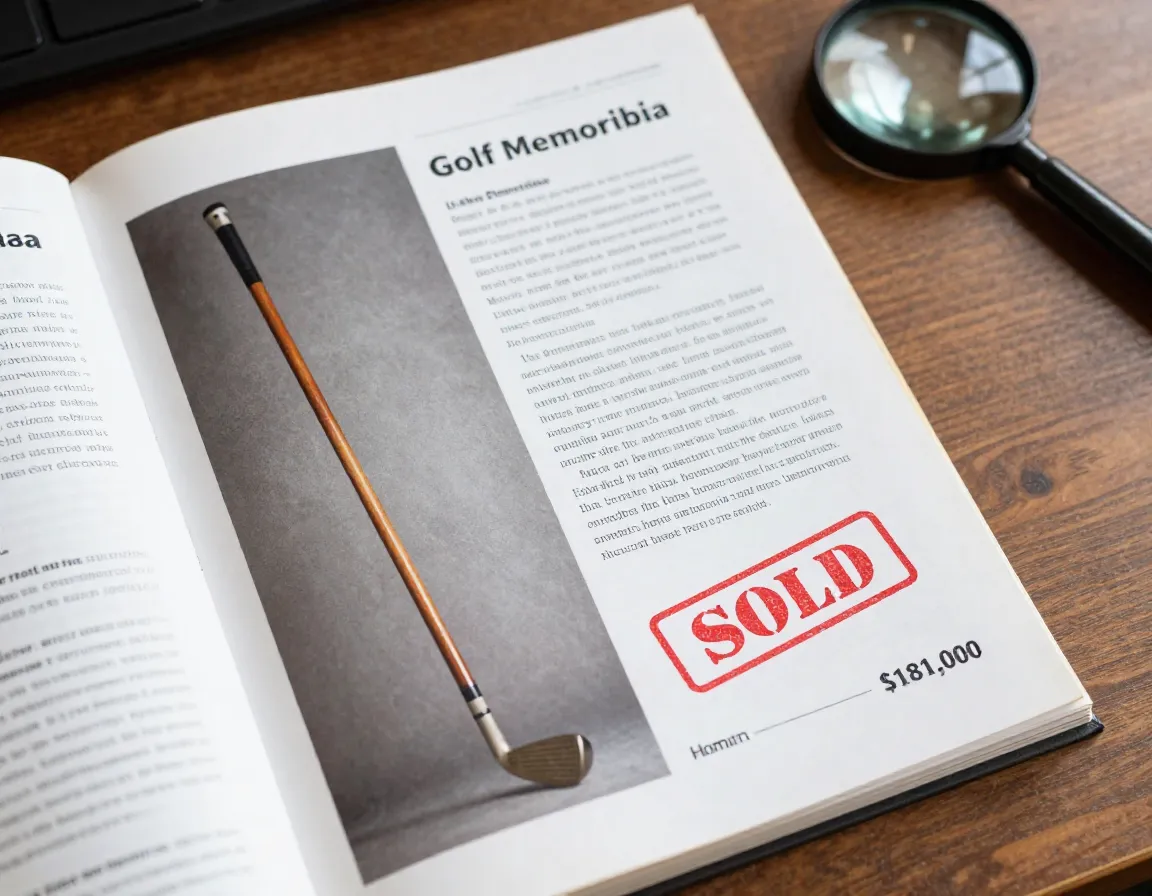
One of the most crucial aspects of the 8 ways to identify and value antique golf clubs involves proper research methodology. Compare your club to recently sold clubs (not just listed for sale) rather than relying on asking prices[1]. Asking prices often reflect wishful thinking rather than market reality.
Effective research approaches:
- Auction results: Check completed sales on major auction sites
- Estate sale records: Document actual selling prices
- Dealer transactions: Research completed sales from reputable dealers
- Professional appraisals: Consult certified appraisers for valuable pieces
This research takes time but provides accurate market valuations rather than inflated hopes.
8. Consider Professional Authentication and Appraisal
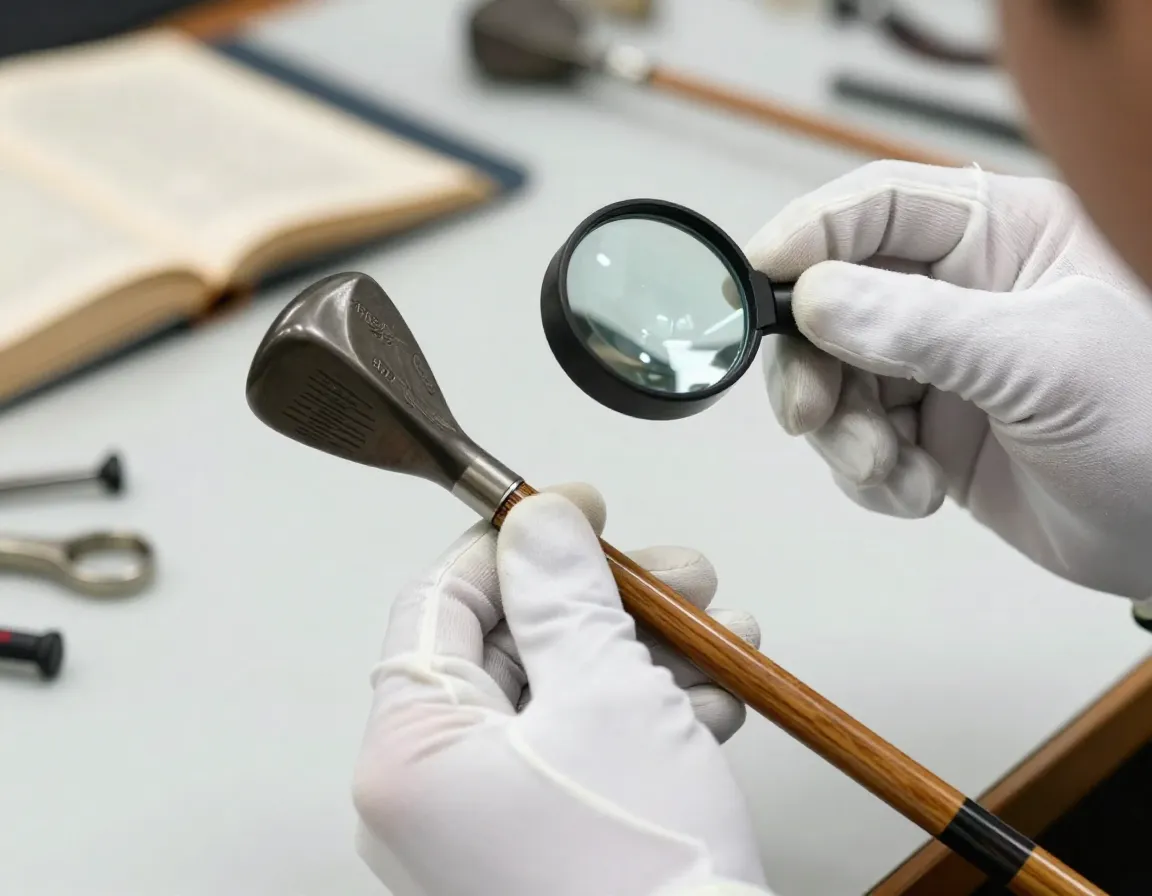
For potentially valuable pieces, professional authentication becomes essential in the 8 ways to identify and value antique golf clubs. Experts can verify authenticity, provide detailed historical context, and offer certified appraisals for insurance or sale purposes.
When to seek professional help:
- Pre-1850 clubs of any type
- Pieces with maker’s marks from famous clubmakers
- Unusual or rare designs you cannot identify
- High-value insurance or estate planning needs
- Authentication questions about signatures or provenance
Professional appraisals typically cost $100-$500 but can be worthwhile for genuinely valuable pieces.
Conclusion
Mastering the 8 ways to identify and value antique golf clubs opens doors to a fascinating world where history, craftsmanship, and sport intersect. From examining club face construction to researching maker’s marks, each method provides crucial insights into age, authenticity, and value. Remember that pre-1850 clubs hold the greatest potential, while condition remains paramount regardless of age.
Your next steps:
- Start with physical examination – Look for shallow faces, ash shafts, and hand-rolled hosels
- Research thoroughly – Compare to actual sales rather than listings
- Document everything – Photograph all markings and unique features
- Seek expert consultation for potentially valuable pieces
- Enjoy the journey – The history behind these clubs is as valuable as their monetary worth
Whether you’re evaluating inherited clubs or building a collection, these identification and valuation methods will serve you well. The antique golf club market rewards knowledge, patience, and careful research – qualities that make the discovery process as rewarding as the potential financial returns! 🏆
References
[1] Value Antique Golf Clubs – https://www.lovetoknow.com/home/antiques-collectibles/value-antique-golf-clubs
[2] Antique Appraisal Golf Club Collecting – https://www.valuepros.com/antique-appraisal-golf-club-collecting/
[3] Vintage Golf Gear Collectibles – https://www.countryliving.com/shopping/antiques/a64424698/vintage-golf-gear-collectibles/
[4] Collecting Classic Golf Clubs – https://www.golfheritage.org/blog/collecting-classic-golf-clubs/