8 Crucial Steps to Starting a Profitable Indoor Golf Simulator Business
The indoor golf simulator industry has exploded in recent years, with market growth exceeding 12% annually as golf enthusiasts seek year-round playing opportunities. What started as a niche luxury service has transformed into a mainstream entertainment and training solution that savvy entrepreneurs are capitalizing on across the globe. The 8 crucial steps to starting a profitable indoor golf simulator business provide a roadmap for turning this growing demand into a sustainable, lucrative venture.
Disclosure: This post contains affiliate links. As an Amazon Associate, we earn from qualifying purchases, and at no extra cost to you.
Modern golf simulators offer an experience so realistic that professional golfers use them for training, while casual players enjoy the convenience of playing world-famous courses regardless of weather conditions. This technological advancement, combined with changing consumer preferences toward experiential entertainment, creates an unprecedented opportunity for business owners willing to invest in this dynamic industry.
Key Takeaways
- Market research and location selection are fundamental to success, with high-traffic areas near golf communities offering the best profit potential
- Equipment investment ranges from $15,000 to $100,000+ per bay, making careful selection crucial for ROI
- Multiple revenue streams including hourly rentals, lessons, leagues, and corporate events maximize profitability
- Professional installation and ongoing maintenance ensure consistent customer experience and equipment longevity
- Strategic marketing and customer retention programs drive sustainable growth in this competitive market
Understanding the Indoor Golf Simulator Market Landscape
The indoor golf simulator business operates in a unique intersection of entertainment, sports, and technology. Revenue potential varies significantly based on location, target market, and business model, with successful facilities generating $200,000 to $1,000,000+ annually.
Current market trends show strong demand from several key demographics:
- Serious golfers seeking year-round practice opportunities
- Corporate groups looking for unique team-building experiences
- Social golfers wanting entertainment combined with friendly competition
- Beginners preferring a less intimidating learning environment
- Event planners seeking distinctive venue options
The technology driving this industry continues advancing rapidly. Modern simulators provide accurate ball flight data, realistic course graphics, and comprehensive performance analytics that rival outdoor experiences. This technological sophistication justifies premium pricing while attracting tech-savvy customers.
Competition analysis reveals three primary business models succeeding in today’s market:
- Standalone simulator facilities focusing exclusively on golf simulation
- Multi-entertainment venues combining simulators with dining, bars, or other activities
- Golf instruction centers emphasizing lessons and training programs
1. Conduct Comprehensive Market Research and Feasibility Analysis

Successful implementation of the 8 crucial steps to starting a profitable indoor golf simulator business begins with thorough market research. Understanding local demand, competition, and demographic factors determines whether a specific location can support a profitable operation.
Demographic Analysis
Research your target market’s key characteristics:
- Household income levels (typically $50,000+ for regular customers)
- Golf participation rates in your area
- Age distribution (primary customers aged 25-65)
- Corporate presence for business event opportunities
- Seasonal weather patterns affecting outdoor golf availability
Competitive Landscape Assessment
Identify existing competitors within a 15-mile radius:
| Competitor Type | Distance | Pricing | Unique Features |
|---|---|---|---|
| Golf courses with simulators | 5-15 miles | $30-60/hour | Established golf community |
| Entertainment venues | 3-10 miles | $25-45/hour | Food and beverage focus |
| Standalone simulators | 10+ miles | $35-70/hour | Premium equipment and service |
Market Demand Validation
Validate demand through multiple research methods:
- Survey local golfers about simulator interest and pricing sensitivity
- Interview golf course managers about seasonal demand patterns
- Analyze corporate event planners’ needs for unique venues
- Study successful simulator businesses in similar markets
- Calculate potential customer base using golf participation statistics
Financial feasibility analysis should project realistic revenue scenarios based on:
- Conservative, moderate, and optimistic customer volume projections
- Seasonal demand fluctuations
- Pricing strategies aligned with local market conditions
- Break-even analysis considering all startup and operating costs
2. Develop a Comprehensive Business Plan and Secure Financing

A detailed business plan serves as your roadmap for implementing the 8 crucial steps to starting a profitable indoor golf simulator business while providing essential documentation for securing financing.
Executive Summary and Business Model
Define your unique value proposition clearly:
Business Concept: Premium indoor golf simulator facility offering year-round golf entertainment, instruction, and corporate event services in [Your City].
Target Market: Golf enthusiasts aged 25-65 with household incomes above $50,000, corporate groups seeking unique venues, and beginners wanting comfortable learning environments.
Revenue Model: Multiple income streams including hourly bay rentals, golf instruction, league play, corporate events, food and beverage sales, and equipment retail.
Financial Projections and Startup Costs
Startup Investment Breakdown:
- Facility lease and improvements: $50,000 – $150,000
- Simulator equipment: $60,000 – $300,000 (4-6 bays)
- Additional equipment and furnishing: $20,000 – $50,000
- Working capital: $30,000 – $75,000
- Marketing and pre-opening: $10,000 – $25,000
- Professional services: $5,000 – $15,000
Total Investment Range: $175,000 – $615,000
Revenue Projections
Year 1 Conservative Projections (4 simulator bays):
- Average hourly rate: $45
- Average utilization: 25% (10 hours/day)
- Annual bay revenue: $657,000
- Additional services revenue: $98,000
- Total projected revenue: $755,000
Financing Options
Traditional financing sources:
- SBA loans offering favorable terms for small businesses
- Bank commercial loans with equipment financing components
- Equipment financing specifically for simulator technology
- Investor partnerships sharing startup costs and profits
Alternative financing:
- Crowdfunding campaigns targeting local golf communities
- Revenue-based financing tied to business performance
- Lease-to-own equipment arrangements reducing upfront costs
3. Choose the Optimal Location and Secure Appropriate Space
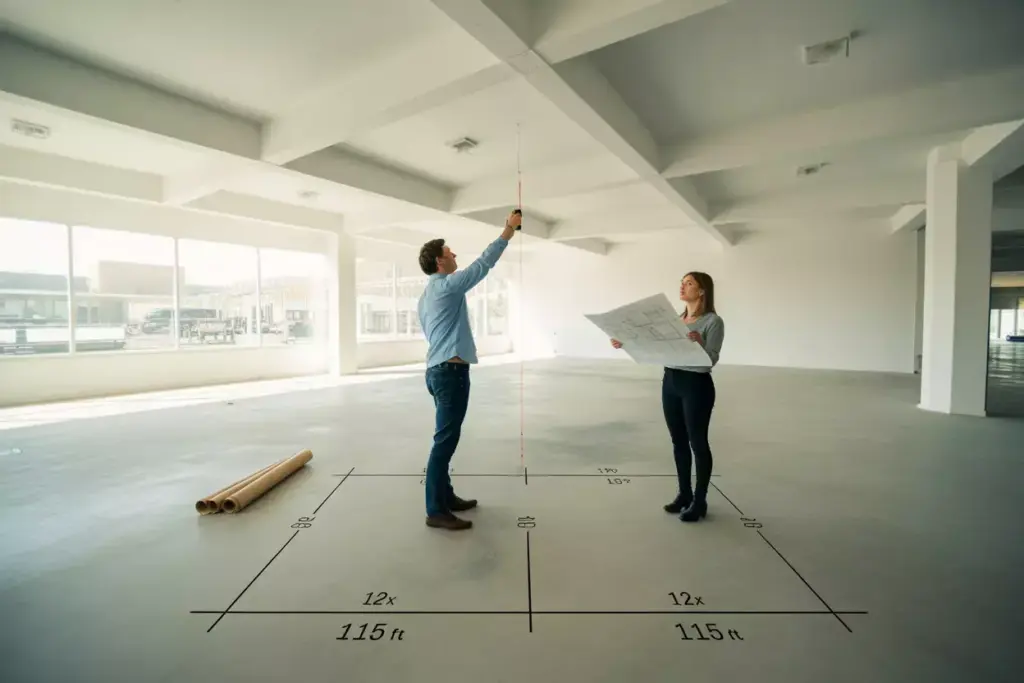
Location selection significantly impacts the success of your indoor golf simulator business. The right location can make the difference between struggling to attract customers and maintaining consistent bookings throughout the year.
Location Criteria Evaluation
Primary location factors:
🎯 Proximity to target customers: Within 10-15 minutes of golf courses, country clubs, or golf communities
🚗 Accessibility and parking: Easy access from major roads with adequate parking for 20-30 vehicles
👀 Visibility and signage: Street visibility or high-traffic shopping areas with signage opportunities
🏢 Commercial zoning: Proper zoning for entertainment/recreational business operations
💰 Lease terms: Reasonable rent (target 8-12% of projected gross revenue)
Space Requirements and Layout
Minimum space specifications:
- Bay dimensions: 12′ wide × 15′ deep × 10′ high per simulator
- Common areas: Reception, seating, and retail space (500-800 sq ft)
- Storage and office: Equipment storage and administrative space (200-400 sq ft)
- Restrooms and utilities: Code-compliant facilities
- Total facility size: 2,500-4,000 sq ft for 4-6 simulator bays
Lease Negotiation Strategy
Key lease terms to negotiate:
- Tenant improvement allowance for simulator installation requirements
- Percentage rent caps protecting against revenue-based rent increases
- Renewal options securing long-term location stability
- Assignment rights allowing business sale flexibility
- Exclusive use clauses preventing competing businesses in the same center
Infrastructure requirements often requiring landlord cooperation:
- High-capacity electrical service (220V for projectors and computers)
- Climate control maintaining consistent temperature and humidity
- Sound insulation minimizing noise transfer to adjacent spaces
- Internet connectivity supporting multiple high-bandwidth simulators
4. Select and Purchase High-Quality Simulator Equipment
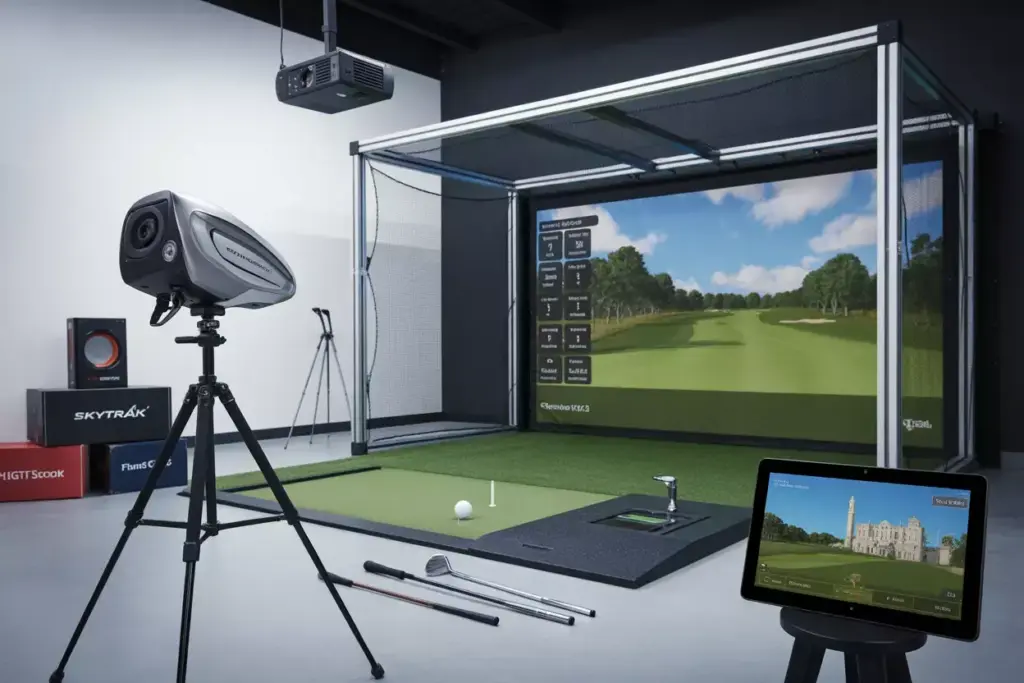
Equipment selection represents the largest single investment in your simulator business and directly impacts customer satisfaction, operational efficiency, and long-term profitability. Choosing the right equipment requires balancing performance, reliability, and cost considerations.
Simulator Technology Components
Launch Monitor Systems (the heart of accuracy):
| Technology Type | Price Range | Accuracy Level | Best Use Case |
|---|---|---|---|
| Camera-based | $15,000-$25,000 | Very Good | Budget-conscious operations |
| Radar-based | $20,000-$40,000 | Excellent | High-volume facilities |
| Photometric | $25,000-$50,000 | Superior | Premium experiences |
Projection and Display Systems:
- Short-throw projectors: $3,000-$8,000 per unit, ideal for space-constrained installations
- Impact screens: $1,500-$4,000, affecting image quality and durability
- Enclosure systems: $2,000-$6,000, creating immersive playing environments
Software and Course Libraries
Simulation software options:
🏌️ TGC (The Golf Club): Extensive course library with user-generated content
⛳ E6 CONNECT: Professional-grade software with premium course licenses
🎮 GSPro: Emerging platform with excellent graphics and physics
📊 TrackMan: Premium option integrated with professional training tools
Course licensing considerations:
- Popular courses command premium licensing fees ($500-$2,000 annually per course)
- Diverse course selection attracts broader customer base
- Regular content updates maintain customer interest and repeat visits
Equipment Vendor Evaluation
Reputable simulator manufacturers:
- TrackMan: Premium pricing with exceptional accuracy and professional credibility
- Foresight Sports: High-quality systems popular in commercial installations
- SkyTrak: Mid-range option balancing performance and affordability
- FlightScope: Professional-grade technology with comprehensive analytics
Vendor selection criteria:
- Installation support: Professional setup and calibration services
- Training programs: Staff education on equipment operation and maintenance
- Warranty coverage: Comprehensive protection for expensive components
- Technical support: Responsive customer service for operational issues
- Upgrade paths: Future-proofing investments with technology advancement options
Financing and Procurement Strategy
Equipment financing options:
- Manufacturer financing: Often available with competitive rates and terms
- Equipment leasing: Lower upfront costs with upgrade flexibility
- Bank equipment loans: Traditional financing with ownership benefits
- Lease-to-own programs: Combining lower payments with eventual ownership
Procurement timeline:
- Research and vendor meetings: 4-6 weeks
- Proposal evaluation: 2-3 weeks
- Contract negotiation: 1-2 weeks
- Manufacturing and delivery: 6-12 weeks
- Installation and calibration: 1-2 weeks
- Staff training: 1 week
5. Design an Engaging Facility Layout and Obtain Necessary Permits
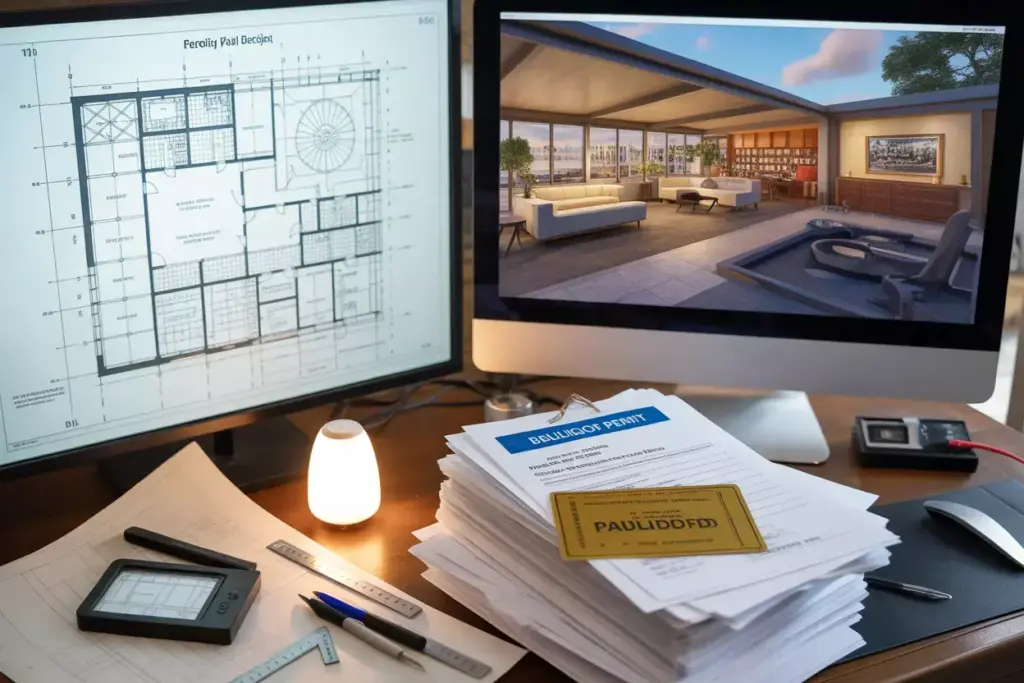
Creating an exceptional customer experience requires thoughtful facility design that maximizes both operational efficiency and customer comfort. The layout should encourage longer visits, repeat business, and positive word-of-mouth marketing.
Customer Experience Design
Reception and check-in area:
- Welcoming entrance with clear sightlines to simulator bays
- Efficient check-in process with digital scheduling displays
- Retail display area featuring golf equipment and accessories
- Comfortable seating for waiting customers and spectators
Simulator bay configuration:
- Privacy considerations: Partial walls or curtains between bays
- Spectator seating: 2-4 chairs per bay for friends and family
- Climate control: Individual bay temperature and airflow management
- Lighting design: Ambient lighting that doesn’t interfere with projections
- Sound management: Acoustic treatments minimizing cross-bay noise
Common areas and amenities:
- Lounge space: Comfortable seating with golf-themed décor
- Refreshment area: Beverage station or small café setup
- Pro shop: Golf equipment, apparel, and gift merchandise
- Instruction area: Dedicated space for lessons and club fitting
Permit and Licensing Requirements
Building and safety permits:
- Building permit: Required for any structural modifications
- Electrical permit: High-voltage installations for simulators
- Fire safety compliance: Emergency exits and fire suppression systems
- ADA compliance: Accessibility requirements for public facilities
Business licensing:
- Business license: General operating permit from local municipality
- Sales tax permit: Required for retail sales and services
- Entertainment license: May be required depending on local regulations
- Liquor license: If planning to serve alcoholic beverages
- Workers’ compensation: Required when hiring employees
Professional Design and Construction
Working with professionals:
👷 Architect or designer: Specialized in commercial recreational facilities
🔌 Electrical contractor: Experience with high-tech entertainment equipment
🎵 Acoustic consultant: Ensuring proper sound isolation and quality
🏗️ General contractor: Coordinating all construction and installation activities
Construction timeline and budget:
- Design phase: 4-6 weeks, $5,000-$15,000
- Permit acquisition: 2-4 weeks, $2,000-$5,000
- Construction: 6-10 weeks, $30,000-$100,000
- Equipment installation: 2-3 weeks (included in equipment costs)
- Final inspections: 1-2 weeks
6. Implement Effective Marketing Strategies and Build Customer Base
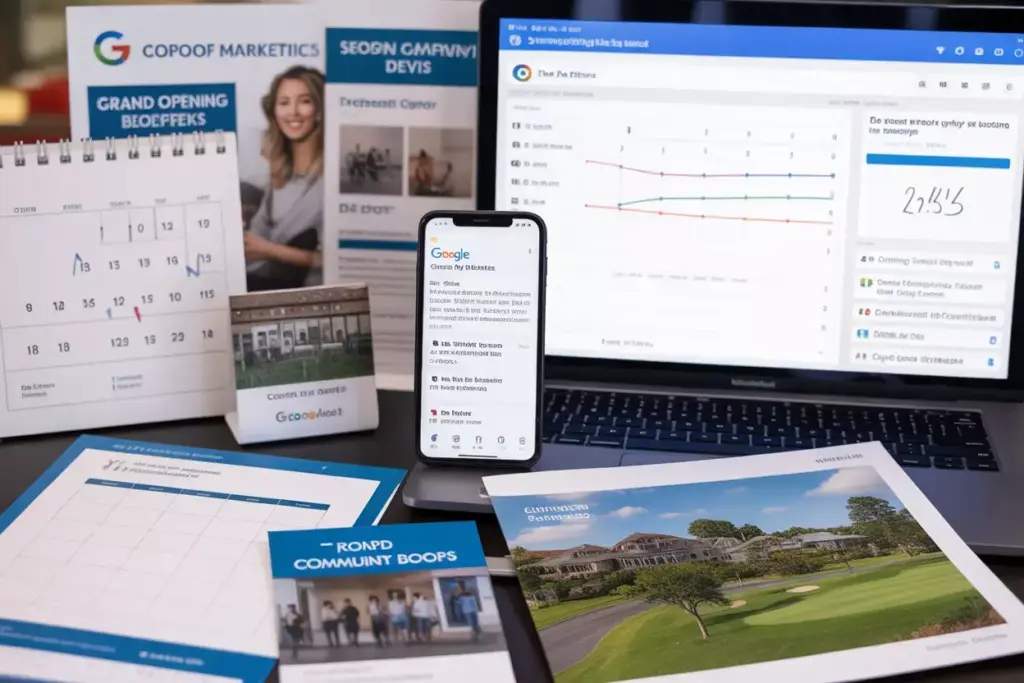
Successful marketing for indoor golf simulator businesses requires a multi-channel approach targeting diverse customer segments while building strong community relationships within the local golf ecosystem.
Digital Marketing Foundation
Website and online presence:
- Professional website: Showcasing facility features, pricing, and online booking
- Search engine optimization: Targeting local golf-related keywords
- Google My Business: Optimized listing with photos, reviews, and booking integration
- Social media presence: Instagram, Facebook, and YouTube content featuring customer experiences
Online booking and customer management:
- Reservation system: User-friendly online booking with real-time availability
- Customer database: Tracking preferences, visit history, and communication
- Email marketing: Regular newsletters with promotions and golf tips
- Review management: Encouraging positive reviews and responding to feedback
Community Engagement and Partnerships
Golf industry partnerships:
⛳ Local golf courses: Cross-referral agreements during off-season or bad weather
🏌️ Golf instructors: Partnerships offering indoor lesson options
🏆 Golf tournaments: Sponsoring local events and hosting qualifying rounds
🛍️ Pro shops: Retail partnerships and equipment demonstration events
Corporate outreach programs:
- Business networking events: Hosting after-hours networking with golf themes
- Corporate packages: Team-building events and client entertainment options
- Membership programs: Corporate memberships for employee benefits
- Tournament hosting: Company golf tournaments and competitions
Grand Opening and Promotional Campaigns
Pre-opening marketing timeline:
8-12 weeks before opening:
- Launch website and social media accounts
- Begin Google Ads and Facebook advertising campaigns
- Establish partnerships with local golf courses and instructors
- Start building email subscriber list
4-6 weeks before opening:
- Announce grand opening date and special offers
- Host preview events for local golf community leaders
- Launch referral programs and founding member specials
- Begin corporate sales outreach
Opening week promotions:
- Free trial sessions for first-time visitors
- Discounted packages for multiple visit purchases
- Group discounts encouraging friend and family visits
- Social media contests with prizes and giveaways
Customer Retention Strategies
Membership and loyalty programs:
| Program Type | Monthly Fee | Benefits | Target Customer |
|---|---|---|---|
| Individual | $99/month | 4 hours included, 20% off additional | Regular players |
| Family | $149/month | 6 hours included, multiple users | Golf families |
| Corporate | $299/month | 10 hours included, event discounts | Business groups |
Ongoing engagement tactics:
- League play: Weekly competitions with seasonal championships
- Skills challenges: Monthly contests with prizes and recognition
- Lesson packages: Bundled instruction with practice time
- Seasonal promotions: Weather-based marketing during peak demand periods
7. Hire and Train Staff for Exceptional Customer Service
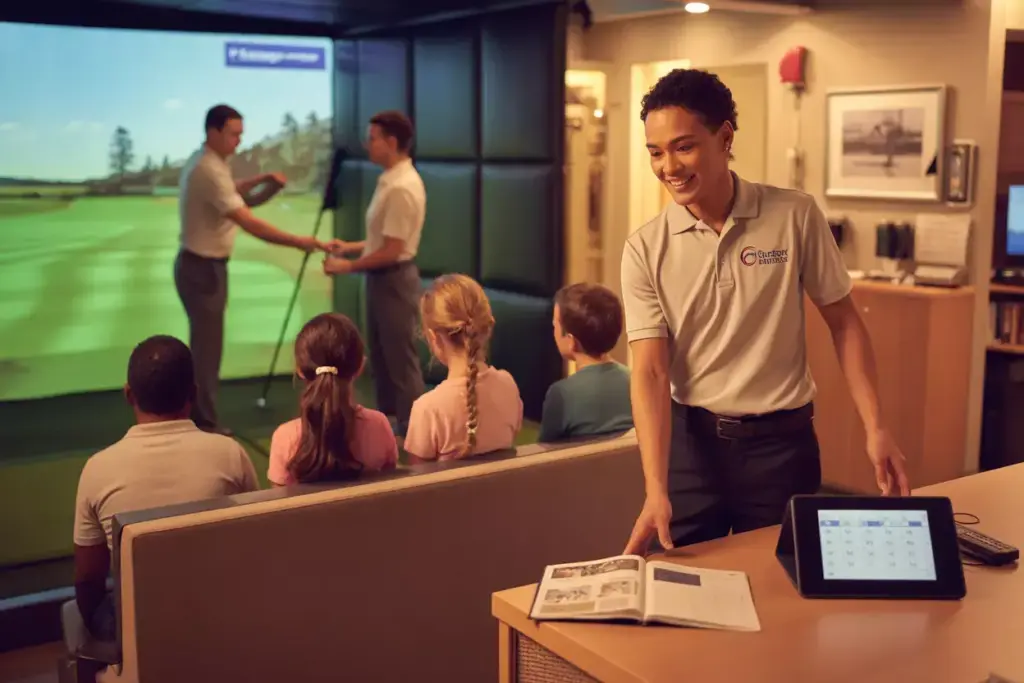
Quality staff members serve as the foundation of successful indoor golf simulator businesses, directly impacting customer satisfaction, retention, and word-of-mouth marketing. The right team creates an environment where customers feel welcomed, supported, and eager to return.
Staffing Structure and Roles
Essential positions for optimal operations:
General Manager (Full-time):
- Overall facility operations and customer experience oversight
- Staff scheduling, training, and performance management
- Financial management and reporting
- Marketing and community relationship building
- Salary range: $40,000-$60,000 annually
Golf Instructors (Part-time/Contract):
- Professional golf instruction and club fitting services
- Equipment demonstrations and customer education
- Tournament and league coordination
- Compensation: $50-$100 per lesson plus hourly rate
Customer Service Associates (Part-time):
- Front desk operations and customer check-in
- Equipment assistance and basic troubleshooting
- Facility maintenance and cleanliness
- Retail sales and inventory management
- Hourly rate: $12-$18 per hour
Recruitment and Hiring Strategy
Ideal candidate characteristics:
- Golf knowledge: Understanding of golf fundamentals and terminology
- Customer service experience: Previous hospitality or retail background
- Technical comfort: Ability to learn simulator operation and basic troubleshooting
- Communication skills: Clear, friendly interaction with diverse customers
- Reliability: Consistent attendance and professional appearance
Recruitment channels:
🏌️ Golf industry networks: Local golf courses, country clubs, and golf associations
💼 Hospitality job boards: Indeed, LinkedIn, and industry-specific sites
🎓 Local colleges: Students studying hospitality, sports management, or business
📱 Social media: Facebook groups and professional networks
🤝 Employee referrals: Incentivized referral programs for quality candidates
Comprehensive Training Programs
Technical training components:
Week 1 – Simulator Operation:
- Equipment startup and shutdown procedures
- Basic troubleshooting and maintenance tasks
- Software navigation and customer assistance
- Safety protocols and emergency procedures
Week 2 – Customer Service Excellence:
- Greeting and check-in procedures
- Handling customer questions and concerns
- Upselling techniques for lessons and packages
- Conflict resolution and problem-solving
Week 3 – Sales and Business Operations:
- Point-of-sale system operation
- Retail sales techniques and product knowledge
- Membership program details and benefits
- Scheduling and booking management
Ongoing education requirements:
- Monthly staff meetings: Updates on procedures, promotions, and customer feedback
- Quarterly training sessions: Advanced techniques and new equipment features
- Annual certification: Golf instruction basics for non-instructor staff
- Customer service workshops: Continuous improvement in service quality
Performance Management and Incentives
Key performance indicators:
- Customer satisfaction scores: Regular survey feedback and online reviews
- Utilization rates: Booking efficiency and bay optimization
- Retail sales performance: Add-on sales and merchandise revenue
- Customer retention: Repeat visit rates and membership conversions
Incentive programs:
- Performance bonuses: Monthly rewards for exceeding targets
- Commission structures: Percentage of lesson bookings and retail sales
- Recognition programs: Employee of the month and customer compliments
- Professional development: Training opportunities and career advancement paths
8. Establish Multiple Revenue Streams and Monitor Financial Performance
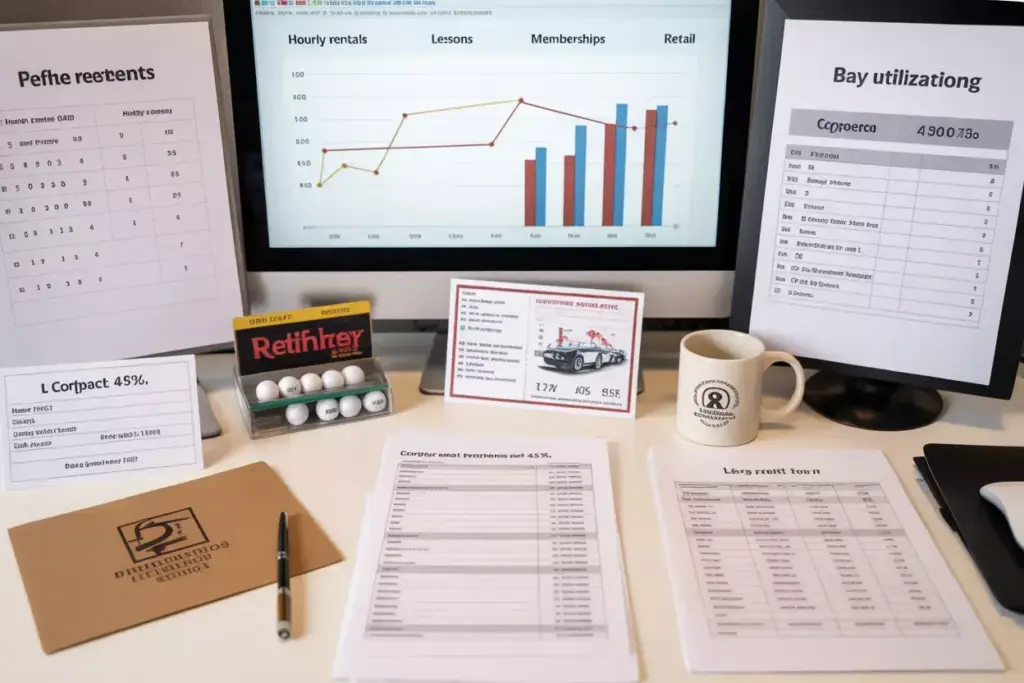
Maximizing profitability in the indoor golf simulator business requires diversifying revenue sources beyond basic hourly rentals while maintaining careful financial oversight to optimize performance and identify growth opportunities.
Primary Revenue Streams
Hourly Bay Rentals (40-50% of total revenue):
- Peak hours (evenings and weekends): $50-$75 per hour
- Off-peak hours (weekday mornings): $30-$45 per hour
- Group rates: Discounted pricing for 3+ players
- Extended session packages: 2-hour and 4-hour discounted blocks
Golf Instruction Services (20-25% of total revenue):
- Individual lessons: $75-$125 per hour with PGA professionals
- Group clinics: $40-$60 per person for 2-4 person groups
- Junior programs: Youth instruction and summer camps
- Club fitting services: Premium service with equipment sales
Membership and Package Sales (15-20% of total revenue):
- Monthly memberships: $99-$199 with included hours and discounts
- Annual packages: Prepaid hour blocks with significant savings
- Corporate memberships: Business packages for employee benefits
- Gift certificates: Popular during holidays and special occasions
Secondary Revenue Opportunities
Event Hosting and Tournaments:
- Corporate events: Team building and client entertainment ($500-$2,000 per event)
- Birthday parties: Package deals including simulator time and refreshments
- League play: Weekly competitions with entry fees and prizes
- Tournament hosting: Local golf association events and fundraisers
Retail and Merchandise Sales:
- Golf equipment: Clubs, balls, gloves, and accessories (30-50% markup)
- Apparel: Branded clothing and golf fashion items
- Gift items: Logo merchandise and golf-themed gifts
- Equipment demos: Manufacturer partnerships for new product showcases
Food and Beverage Services:
- Snack and beverage sales: Simple refreshments with high margins
- Catering partnerships: Local restaurants for event catering
- Vending machines: Automated sales for convenience items
- BYOB policies: Corkage fees where legally permitted
Financial Monitoring and Analysis
Key Performance Metrics:
| Metric | Target Range | Monitoring Frequency |
|---|---|---|
| Bay utilization rate | 35-60% | Daily |
| Average revenue per customer | $45-$75 | Weekly |
| Customer acquisition cost | $15-$30 | Monthly |
| Customer lifetime value | $500-$1,200 | Quarterly |
| Gross profit margin | 65-75% | Monthly |
Monthly Financial Review Process:
Revenue Analysis:
- Compare actual vs. projected revenue by stream
- Identify seasonal trends and peak performance periods
- Analyze customer segment performance and preferences
- Track pricing effectiveness and market response
Expense Management:
- Fixed costs: Rent, insurance, equipment leases (target 35-45% of revenue)
- Variable costs: Utilities, maintenance, supplies (target 15-25% of revenue)
- Labor costs: Wages, benefits, training (target 20-30% of revenue)
- Marketing expenses: Advertising, promotions, partnerships (target 5-8% of revenue)
Profitability Optimization:
- Peak hour maximization: Premium pricing during high-demand periods
- Off-peak promotions: Special offers to increase utilization during slow periods
- Upselling strategies: Training staff to promote additional services and retail
- Cost reduction initiatives: Energy efficiency and operational improvements
Growth Planning and Expansion Strategies
Year 1 Focus: Establish operations and build customer base
- Target 25-35% bay utilization rate
- Develop core customer segments and loyalty programs
- Refine operations and service delivery
- Build positive reputation and online reviews
Year 2-3 Expansion Options:
- Additional simulator bays: Expanding capacity to meet growing demand
- Enhanced services: Adding club repair, custom fitting, or golf retail
- Franchise opportunities: Licensing successful model to other markets
- Multiple locations: Geographic expansion in proven markets
Long-term Strategic Considerations:
- Technology upgrades: Staying current with simulator advancement
- Market expansion: Targeting new customer segments and demographics
- Partnership development: Strategic alliances with golf courses and resorts
- Exit strategies: Building business value for potential sale or investment
Conclusion
The 8 crucial steps to starting a profitable indoor golf simulator business provide a comprehensive roadmap for entrepreneurs ready to capitalize on the growing demand for year-round golf entertainment. Success in this industry requires careful planning, significant investment, and unwavering commitment to customer experience excellence.
The indoor golf simulator market continues expanding as technology improves and consumer preferences shift toward experiential entertainment options. Businesses that follow these eight crucial steps while maintaining focus on quality service and community engagement position themselves for long-term success in this dynamic industry.
Key success factors include thorough market research, strategic location selection, quality equipment investment, professional facility design, effective marketing, exceptional staff training, diversified revenue streams, and diligent financial management. Each step builds upon the previous ones, creating a solid foundation for sustainable profitability.
Immediate next steps for aspiring simulator business owners:
- Conduct market research in your target location within the next 30 days
- Develop a detailed business plan and begin exploring financing options
- Visit existing simulator facilities to understand customer expectations and operational requirements
- Connect with equipment vendors to understand technology options and pricing
- Consult with business advisors including attorneys, accountants, and industry experts
The indoor golf simulator business offers tremendous potential for entrepreneurs willing to invest the time, money, and effort required for success. With proper planning and execution, this business model can provide substantial returns while serving the growing community of golf enthusiasts seeking convenient, high-quality playing experiences regardless of weather or season.
Remember that success in this industry comes from consistently delivering exceptional customer experiences while maintaining operational efficiency and financial discipline. The businesses that thrive are those that view themselves not just as golf simulator operators, but as comprehensive golf entertainment destinations serving their communities’ recreational and social needs.