8 Must-Have Elements for the Ultimate Indoor Golf Simulator Man Cave
Picture this: it’s a rainy Saturday morning, and while other golfers are stuck inside watching tournaments on TV, you’re perfecting your swing on Pebble Beach’s 18th hole—right from your own home. The 8 Must-Have Elements for the Ultimate Indoor Golf Simulator Man Cave transform any basement or spare room into a golfer’s paradise that rivals the most exclusive country clubs.
Disclosure: This post contains affiliate links. As an Amazon Associate, we earn from qualifying purchases, and at no extra cost to you.
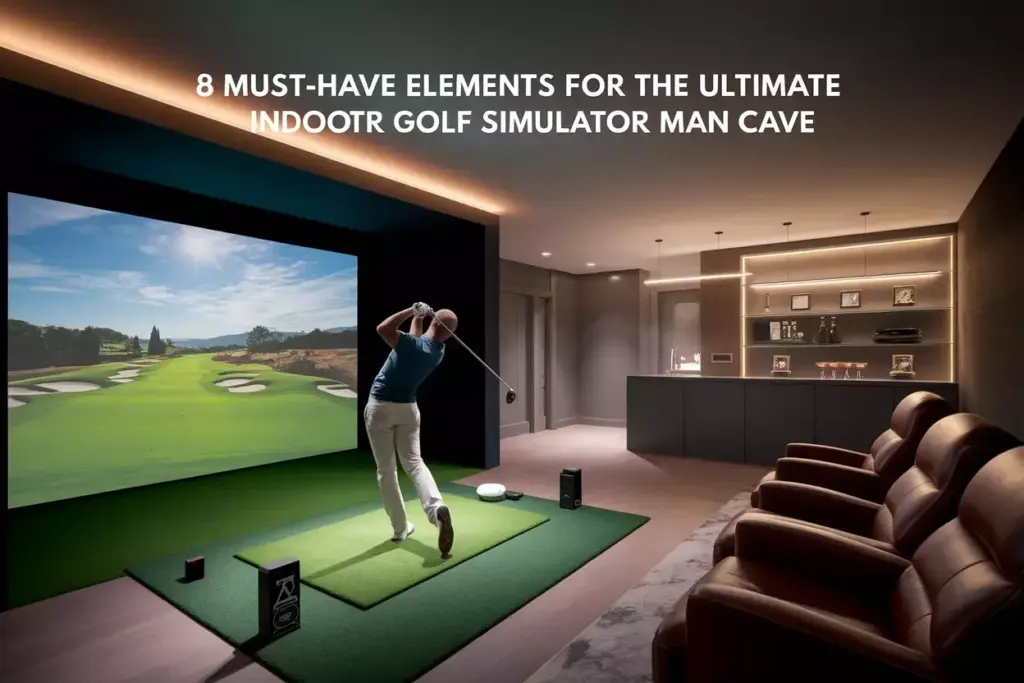
Creating the perfect indoor golf sanctuary isn’t just about throwing a projector at a wall and calling it done. It requires careful planning, quality components, and attention to detail that separates amateur setups from professional-grade experiences. Whether you’re a weekend warrior looking to improve your handicap or a serious golfer who refuses to let weather dictate your practice schedule, building the ultimate man cave golf simulator is an investment in both your game and your lifestyle.
Key Takeaways
- Technology forms the foundation – High-quality projectors, launch monitors, and impact screens are non-negotiable for realistic gameplay
- Space optimization matters – Proper ceiling height, room dimensions, and flooring create safe and effective practice environments
- Comfort enhances the experience – Premium seating, climate control, and entertainment features transform practice into pleasure
- Professional installation pays off – Expert setup ensures optimal performance and prevents costly mistakes
- Budget planning prevents overspending – Understanding cost ranges for each element helps prioritize investments wisely
Understanding the Foundation: Core Technology Components
1. High-Definition Golf Simulator Projector System
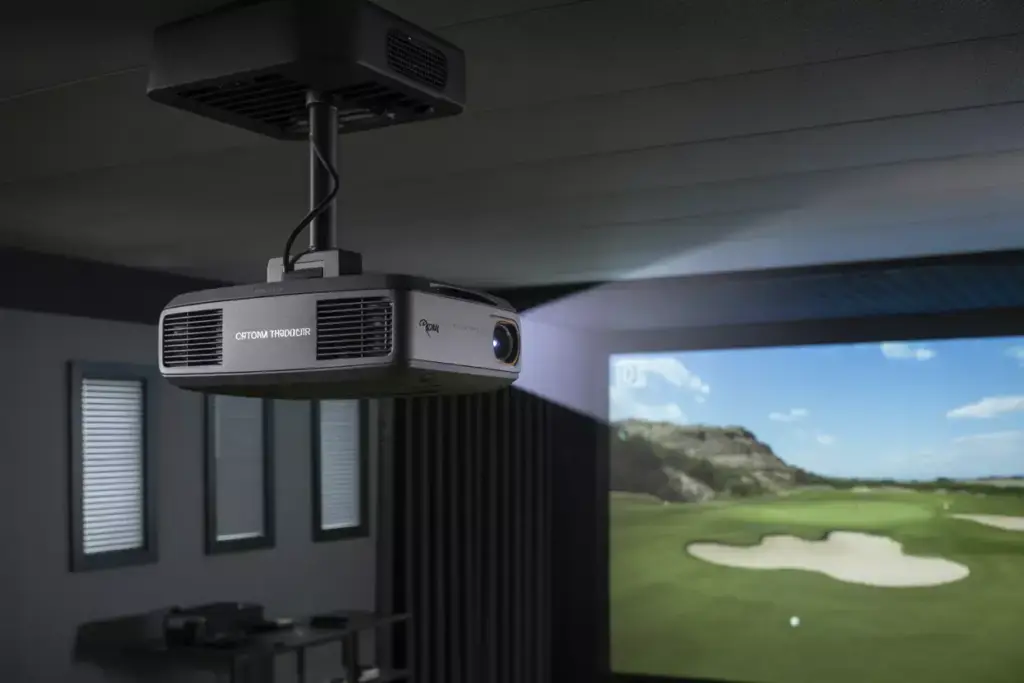
The heart of any indoor golf simulator man cave beats through its projection system. A premium golf simulator demands a projector capable of delivering crisp, bright images that maintain clarity even in ambient lighting conditions.
Essential projector specifications include:
- Minimum 3,500 lumens for adequate brightness
- 1080p resolution (4K preferred for premium setups)
- Short-throw capability to minimize shadows
- Low input lag (under 16ms) for real-time ball tracking
Top-tier projectors like the Optoma GT1080HDR or BenQ TH671ST specifically cater to golf simulator applications. These units project massive images from short distances, reducing the chance of casting shadows during your swing.
“The difference between a $500 projector and a $2,000 golf-specific projector is the difference between playing video games and experiencing real golf.” – Mike Chen, Golf Simulator Specialist
Installation considerations:
- Mount projectors 10-12 feet from the impact screen
- Ensure adequate ventilation to prevent overheating
- Use ceiling mounts to eliminate interference with swing planes
- Install blackout curtains to control ambient light
2. Professional-Grade Impact Screen and Enclosure
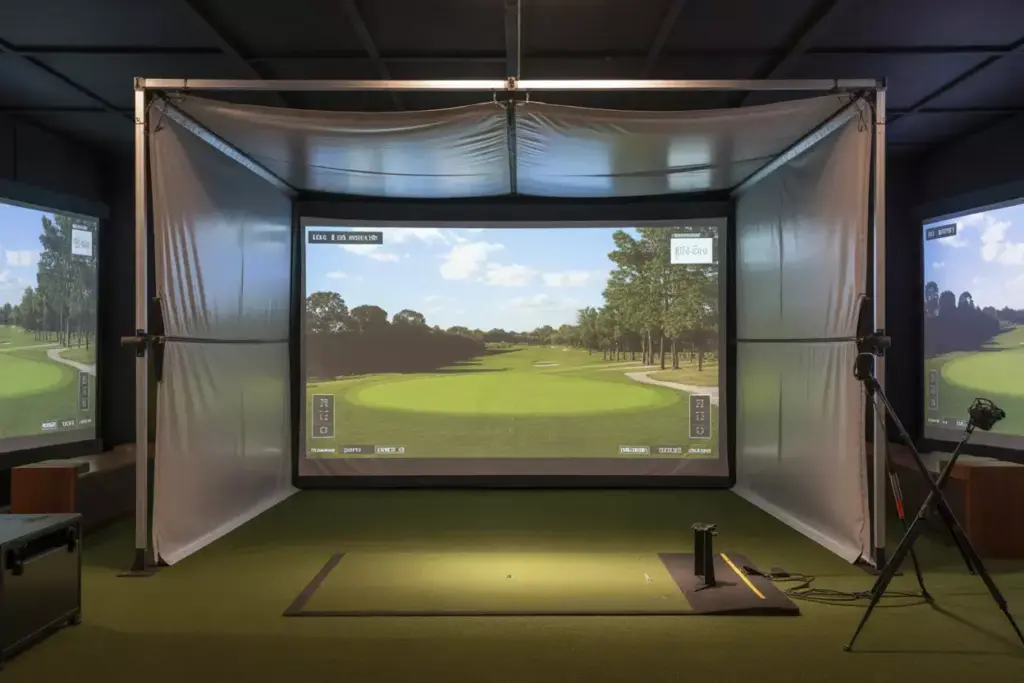
The impact screen serves as your window to the world’s greatest golf courses. This critical component must withstand thousands of ball impacts while delivering crystal-clear image quality.
Premium impact screen features:
- Heavy-duty materials (typically 1000+ denier fabric)
- Seamless construction to eliminate visual distractions
- Proper tensioning systems for wrinkle-free surfaces
- Sound dampening properties to reduce noise
Leading manufacturers like Carl’s Place and Rain or Shine Golf offer screens specifically engineered for golf applications. These screens balance durability with optical clarity, ensuring your virtual rounds look as stunning as they feel realistic.
Screen sizing guidelines:
- Minimum 9×12 feet for comfortable viewing
- 12×16 feet for premium experiences
- Consider room dimensions when selecting sizes
- Account for safety margins around impact zones
Advanced Tracking and Measurement Technology
3. Launch Monitor and Ball Tracking Systems
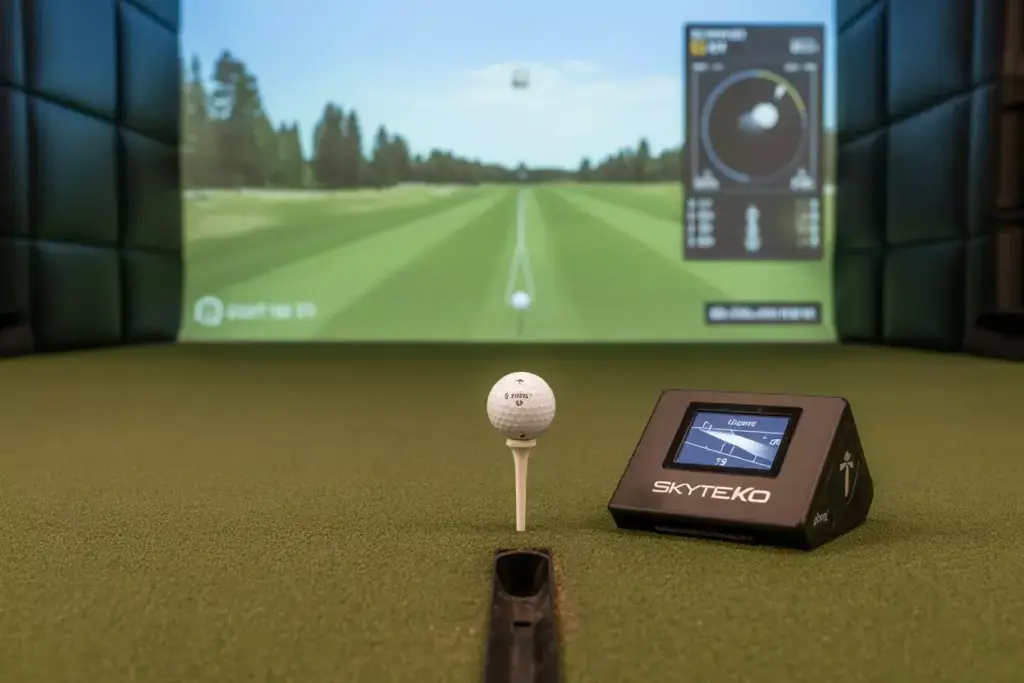
Accurate ball flight data transforms casual swinging into serious practice sessions. Modern launch monitors capture dozens of data points per shot, providing insights that help golfers understand and improve their games.
Essential launch monitor capabilities:
- Ball speed and spin rate measurements
- Launch angle and carry distance calculations
- Club path and face angle analysis
- Real-time feedback and shot replay features
Popular launch monitor options:
| Model | Price Range | Key Features | Best For |
|---|---|---|---|
| SkyTrak | $2,000-$2,500 | Photometric tracking, game improvement | Serious amateurs |
| Uneekor EYE XO | $8,000-$10,000 | Dual camera system, club data | Advanced players |
| TrackMan iO | $15,000+ | Doppler radar, tour-level accuracy | Professionals |
Installation tips:
- Position monitors 6-8 feet behind hitting area
- Ensure adequate lighting for camera-based systems
- Calibrate regularly for consistent accuracy
- Consider ceiling-mounted options for permanent installations
4. Premium Hitting Mats and Stance Areas
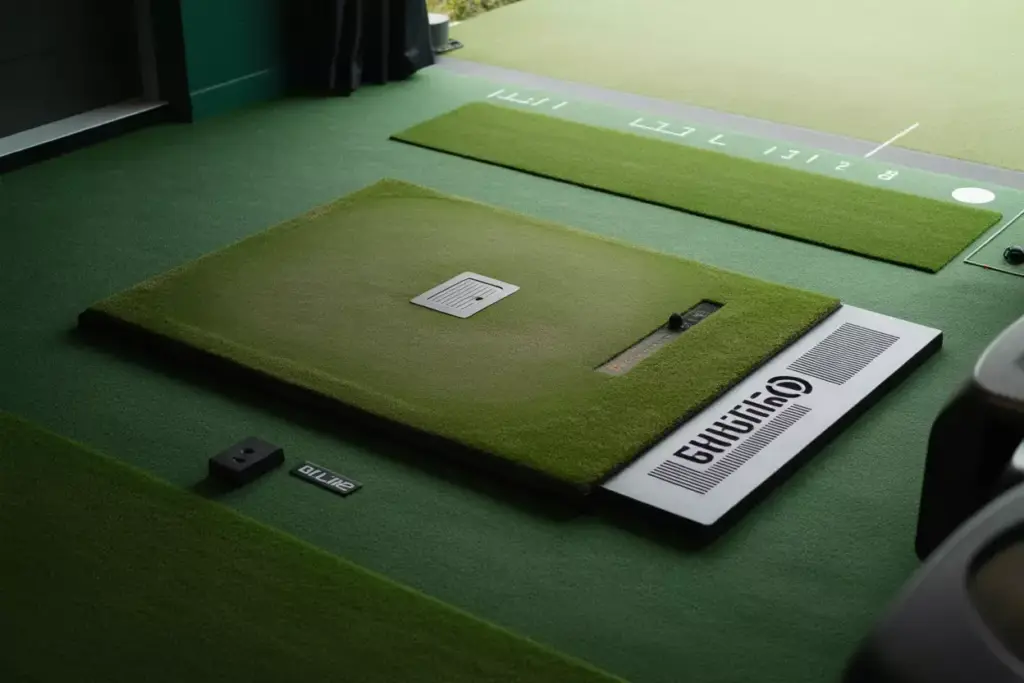
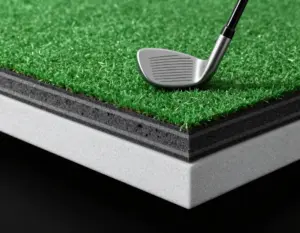
The foundation beneath your feet dramatically impacts both shot quality and long-term joint health. Professional-grade hitting mats simulate real turf conditions while protecting floors and providing consistent lies.
Quality hitting mat characteristics:
- Multi-layer construction for realistic feel
- Replaceable tee areas for extended lifespan
- Shock absorption to reduce joint stress
- Non-slip backing for safety and stability
Premium options like the TrueStrike Golf Mat or Fiberbuilt Golf Mats incorporate advanced materials that replicate fairway conditions. These mats allow for proper divot simulation without the harsh impact associated with cheaper alternatives.
Stance area considerations:
- Install commercial-grade carpet or turf for approach shots
- Ensure level surfaces throughout hitting zones
- Add alignment aids built into flooring
- Consider modular systems for versatility
Comfort and Entertainment Features
5. Climate-Controlled Environment and Ventilation
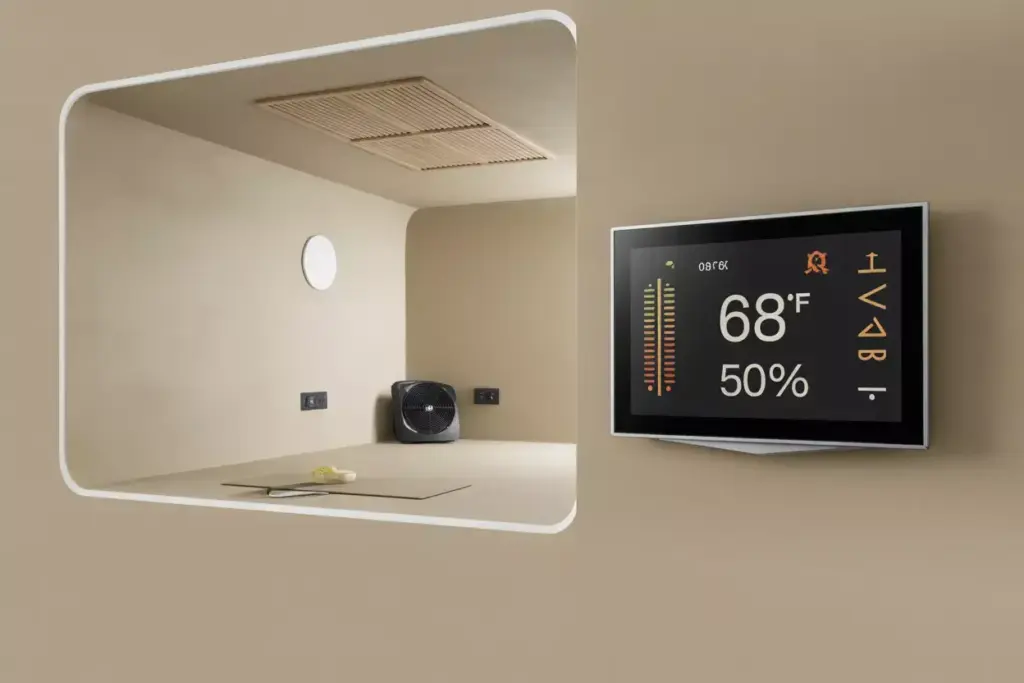
Maintaining optimal playing conditions year-round requires sophisticated climate control systems. Temperature, humidity, and air circulation directly impact both equipment performance and player comfort.
Climate control essentials:
- Temperature range: 65-72°F for optimal conditions
- Humidity control: 40-60% to prevent equipment issues
- Air circulation: Prevent stuffiness and equipment overheating
- Noise management: Quiet HVAC systems maintain ambiance
Ventilation strategies:
- Install dedicated HVAC zones for simulator rooms
- Use sound-dampened fans to maintain quiet operation
- Consider heat recovery ventilators for energy efficiency
- Plan equipment cooling for projectors and computers
6. Premium Seating and Entertainment Areas
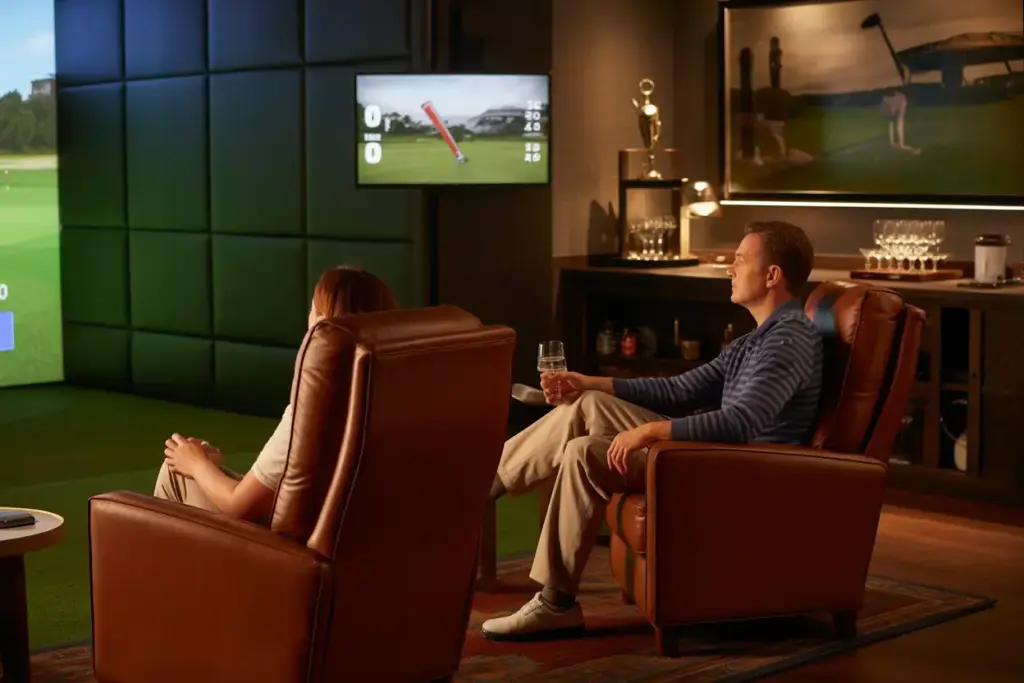
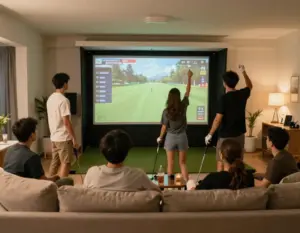
The 8 Must-Have Elements for the Ultimate Indoor Golf Simulator Man Cave extend beyond golf technology to encompass complete entertainment experiences. Comfortable seating and entertainment features transform practice sessions into social events.
Seating arrangements:
- Leather recliners positioned for optimal viewing angles
- Bar-height seating for casual observation
- Modular furniture that adapts to different group sizes
- Storage ottomans for equipment and accessories
Entertainment integration:
- Surround sound systems for immersive course audio
- Secondary displays for statistics and replays
- Beverage stations with golf-themed elements
- Trophy displays and memorabilia showcases
“The best golf simulators feel like private clubs. Every detail, from the leather chairs to the ambient lighting, contributes to the overall experience.” – Sarah Williams, Interior Design Specialist
Essential Infrastructure and Safety
7. Proper Room Dimensions and Safety Features
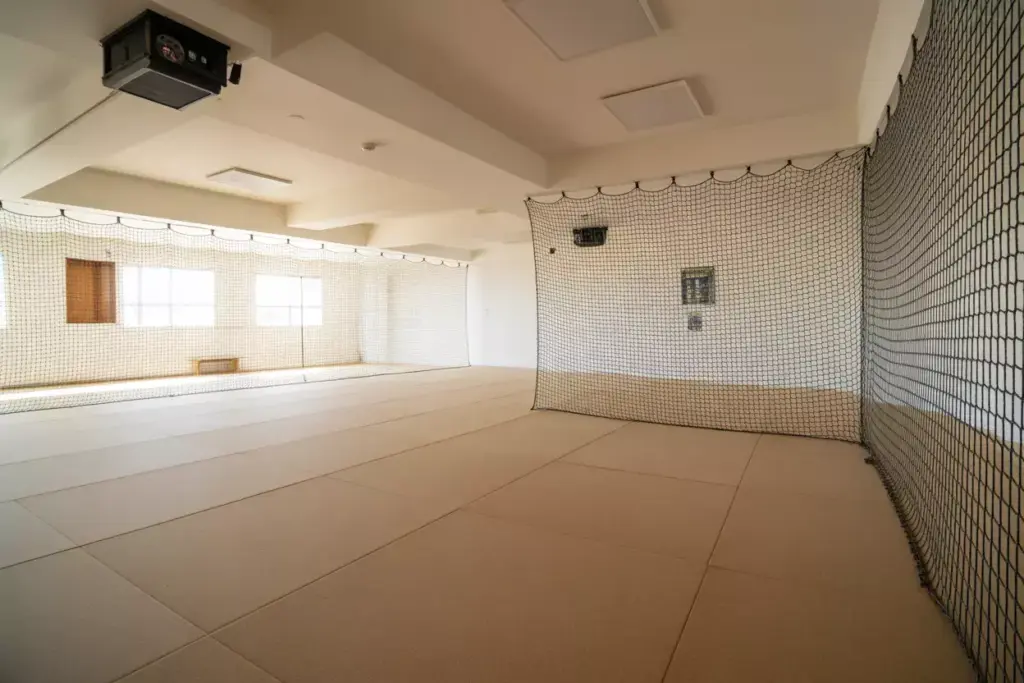
Space planning determines the success or failure of indoor golf simulator installations. Inadequate dimensions create safety hazards and compromise the playing experience.
Minimum room requirements:
- Ceiling height: 9 feet minimum, 10+ feet preferred
- Length: 16-18 feet for full swing clearance
- Width: 12-14 feet for comfortable movement
- Behind hitting area: 6-8 feet for follow-through safety
Safety considerations:
- Install protective netting around impact zones
- Use impact-resistant lighting fixtures
- Ensure clear swing paths free from obstacles
- Add emergency stops for projection systems
Flooring requirements:
- Shock-absorbing materials to reduce joint stress
- Non-slip surfaces for safety during swings
- Easy maintenance materials for long-term durability
- Sound dampening to minimize noise transmission
8. Professional Installation and Calibration Services
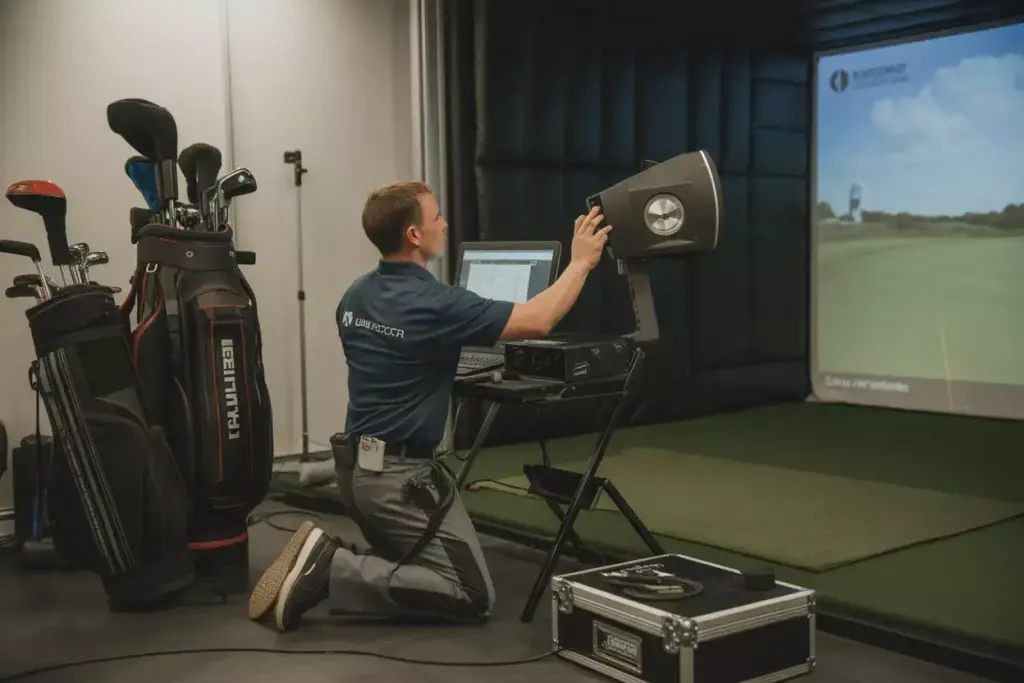
The final element separating amateur setups from professional installations is expert installation and ongoing calibration. Professional installers understand the nuances of golf simulator technology and ensure optimal performance.
Professional installation benefits:
- Precise alignment of all system components
- Optimal calibration for accurate ball tracking
- Safety compliance with electrical and structural codes
- Warranty protection through authorized installations
Ongoing maintenance requirements:
- Regular calibration of launch monitors and cameras
- Software updates for course libraries and features
- Equipment cleaning and protective maintenance
- Performance optimization as technology evolves
Choosing installation professionals:
- Verify manufacturer certifications and training
- Review portfolio examples of similar installations
- Confirm warranty coverage and support services
- Understand maintenance packages and ongoing costs
Budget Planning and Investment Considerations
Creating the ultimate indoor golf simulator man cave requires significant financial investment, but strategic planning helps maximize value while controlling costs.
Budget breakdown by component:
| Component | Budget Range | Mid-Range | Premium |
|---|---|---|---|
| Projector System | $800-$1,500 | $1,500-$3,000 | $3,000+ |
| Impact Screen | $300-$800 | $800-$1,500 | $1,500+ |
| Launch Monitor | $500-$2,000 | $2,000-$8,000 | $8,000+ |
| Hitting Mats | $200-$500 | $500-$1,200 | $1,200+ |
| Installation | $1,000-$2,500 | $2,500-$5,000 | $5,000+ |
Total investment ranges:
- Entry-level setup: $5,000-$10,000
- Mid-range installation: $15,000-$30,000
- Premium man cave: $40,000-$100,000+
Financing and ROI considerations:
- Compare costs to country club memberships and lesson fees
- Calculate home value increases from premium installations
- Consider family usage and entertainment value
- Evaluate year-round accessibility benefits
Technology Integration and Smart Features
Modern golf simulators integrate with smart home systems and mobile devices, creating seamless experiences that extend beyond traditional golf practice.
Smart integration features:
- Mobile app control for system management
- Voice activation for hands-free operation
- Automated lighting that adjusts to playing conditions
- Social sharing capabilities for memorable shots
Advanced software capabilities:
- Swing analysis tools with video replay
- Course libraries featuring world-renowned layouts
- Multiplayer tournaments with friends and online competitors
- Practice modes targeting specific skill development
Future-proofing considerations:
- Choose upgradeable systems that accept new technology
- Plan network infrastructure for high-speed data transfer
- Consider modular designs that allow component improvements
- Invest in quality foundations that support future enhancements
Maximizing Your Investment: Tips for Success
Successfully implementing the 8 Must-Have Elements for the Ultimate Indoor Golf Simulator Man Cave requires attention to detail and long-term planning.
Pre-installation planning:
- Measure twice, install once – Verify all dimensions before ordering
- Plan electrical requirements – Ensure adequate power for all components
- Consider noise transmission – Plan soundproofing for family harmony
- Design for flexibility – Allow for future upgrades and modifications
Optimization strategies:
- Regular practice schedules maximize skill development
- Maintenance routines extend equipment lifespan
- Software exploration unlocks advanced features
- Community engagement enhances social aspects
Common mistakes to avoid:
- Skimping on projection quality – Poor images ruin the experience
- Inadequate room preparation – Rushed installations create problems
- Ignoring safety requirements – Proper clearances prevent injuries
- Overlooking ongoing costs – Budget for maintenance and upgrades
Conclusion
Building the ultimate indoor golf simulator man cave represents more than just installing equipment—it’s about creating a sanctuary where passion for golf meets cutting-edge technology and luxurious comfort. The 8 Must-Have Elements for the Ultimate Indoor Golf Simulator Man Cave work together to deliver experiences that rival the world’s most prestigious golf facilities.
From high-definition projection systems that transport you to St. Andrews to launch monitors that provide tour-level data analysis, each element contributes to a cohesive experience that transforms how you practice, play, and enjoy golf. The investment in quality components, professional installation, and thoughtful design pays dividends through improved performance, year-round accessibility, and countless hours of entertainment.
Your next steps:
- Assess your available space and create detailed measurements
- Establish a realistic budget that balances features with financial comfort
- Research local installers and request consultations from certified professionals
- Prioritize components based on your specific goals and usage patterns
- Plan for the future by choosing scalable systems that grow with your needs
The perfect golf simulator man cave awaits—one that combines your love for the game with the convenience of home practice and the luxury of a private club experience. Start planning today, and soon you’ll be perfecting your swing on the world’s greatest courses, regardless of weather, season, or time of day. ⛳