
7 Iron Golf Club: 6 Secrets to Hitting It Pure Every Single Time
Picture this: Standing over the ball with a 7-iron in hand, knowing with absolute certainty that the next shot will be pure contact that sends the ball soaring toward the pin. For most golfers, this scenario feels more like wishful thinking than reality. Yet the difference between inconsistent iron play and pure strikes every time often comes down to mastering just a few fundamental secrets that separate scratch golfers from weekend warriors.
Disclosure: This post contains affiliate links. As an Amazon Associate, we earn from qualifying purchases, and at no extra cost to you.

The 7-iron represents the heart of iron play—not too long, not too short, and forgiving enough to build confidence while demanding enough technique to reveal swing flaws. When golfers struggle with their 7-iron, the problems typically cascade through their entire iron set. However, when they master the 7 Iron Golf Club: 6 Secrets to Hitting It Pure Every Single Time, their entire game transforms.
Key Takeaways
- Ball position and setup fundamentals determine strike quality more than swing speed or strength
- Proper weight distribution and hip rotation create the foundation for consistent downward strikes
- Wrist angles and hand position at impact directly control distance and accuracy
- Ground force utilization through impact generates additional clubhead speed naturally
- Consistent practice of specific drills builds muscle memory for pure contact under pressure
Understanding the 7-Iron’s Role in Your Golf Game
The 7-iron serves as the benchmark club for iron play development. Scratch golfers average approximately 160 yards with their 7-iron, while 15-handicap golfers average around 141 yards, demonstrating the significant impact of swing consistency [1]. This 19-yard gap isn’t primarily about strength—it’s about strike quality and technique.
Professional golfers understand that the 7-iron’s loft (typically 30-34 degrees) provides the perfect balance for learning proper iron mechanics. Too much loft, like a pitching wedge, can mask poor technique. Too little loft, like a 4-iron, amplifies every flaw. The 7-iron reveals the truth about swing quality while remaining forgiving enough to build confidence.
Distance vs. Consistency: The Real Goal
Many amateur golfers obsess over distance when consistency should be the primary focus. Clubhead speed is the most critical factor determining 7-iron distance, with driver swing speeds of 100+ mph typically producing 150+ yard 7-iron shots [2]. However, even golfers with moderate swing speeds can achieve impressive results through pure contact and proper technique.
The consistency gap between skill levels becomes evident in dispersion patterns. Scratch golfers create pitching wedge distance gaps of 15+ feet and 7-iron gaps exceeding 25 feet from the hole [1]. This precision comes from mastering the fundamental secrets that ensure pure contact every single time.
Secret 1: Perfect Ball Position and Setup Fundamentals

The foundation of pure 7-iron strikes begins before the swing even starts. Ball position for pure 7-iron strikes should be just half a ball ahead of center, avoiding excessive forward placement that disrupts consistency [3]. This positioning ensures the club makes contact with the ball before reaching the bottom of its arc, creating the downward strike essential for iron play.
The Critical Setup Elements
Stance width should match shoulder width for the 7-iron, providing stability without restricting rotation. Feet positioned too wide limit hip turn, while narrow stances reduce balance during the swing. The weight distribution should favor the lead foot slightly (55-60%) at address, setting up the proper impact position from the start.
Hand position at address should include forward handle lean toward the lead leg, which de-lofts the club and removes bounce for cleaner contact [1][4]. This forward lean positions the hands ahead of the clubhead, creating the impact position that produces crisp, compressed strikes.
Alignment and Posture Secrets
Proper spine angle creates the foundation for consistent strikes. The spine should tilt away from the target approximately 5-10 degrees, allowing the right shoulder to sit lower than the left for right-handed golfers. This natural tilt promotes the proper swing plane and helps maintain balance throughout the motion.
Weight should be positioned on the lead side at address and maintained throughout the swing, with the left arm and golf club in line at impact [3]. This alignment ensures the club approaches the ball from the correct angle, promoting downward contact and optimal ball flight.
Secret 2: Master the Downward Strike Angle

The most significant difference between amateur and professional iron play lies in angle of attack. A steeper, downward angle of attack is essential for irons—players should focus on hitting down and through the ball rather than trying to lift it [2][3]. This concept contradicts many golfers’ instincts but represents the key to pure iron contact.
Understanding Impact Dynamics
At impact with a 7-iron, the club should be descending toward the ball at approximately 4-7 degrees below horizontal. This downward motion compresses the ball against the clubface and turf, creating the optimal energy transfer that produces distance and accuracy. Golfers who try to “help” the ball into the air by hitting up actually reduce both distance and consistency.
The divot pattern reveals angle of attack quality. Pure 7-iron strikes create divots that start after ball contact and extend toward the target. Divots that start behind the ball indicate fat contact, while no divot often suggests thin strikes or an upward angle of attack.
Drills for Developing Downward Strike
The Towel Drill helps develop proper angle of attack. Place a towel 6 inches behind the ball and practice making swings that avoid hitting the towel. This forces the club to approach the ball from a steeper angle, promoting downward contact.
Impact Bag Training develops the feeling of proper impact position. Swinging into an impact bag with the 7-iron teaches the sensation of hitting down and through, while building the muscle memory necessary for consistent downward strikes.
Secret 3: Optimize Weight Transfer and Hip Rotation

Proper downswing sequencing requires weight shift left followed by hip rotation before arm motion, preventing early club release or ‘casting’ [2]. This sequence creates the kinetic chain that generates both power and consistency in iron play. Many amateur golfers reverse this sequence, leading to inconsistent contact and reduced distance.
The Weight Shift Fundamentals
The downswing begins with a lateral weight shift toward the target, not rotation. This shift moves the low point of the swing forward, ensuring ball-first contact. The weight transfer should be completed early in the downswing, allowing the hips to rotate freely through impact.
Hip rotation provides the engine for iron play power. The hips should begin rotating toward the target once the weight shift is established, creating space for the arms and club to swing down and through. This rotation must be timed properly to avoid early release or casting motions.
Common Weight Transfer Mistakes
Reverse pivot represents one of the most destructive swing flaws for iron play. This occurs when golfers shift weight toward the target during the backswing and away from the target during the downswing—exactly opposite of proper sequencing. This pattern makes downward contact nearly impossible.
Hanging back on the rear foot through impact prevents proper weight transfer and promotes thin or fat contact. The sensation should be weight moving aggressively toward the target during the downswing, with 80-90% of weight on the lead foot at impact.
Secret 4: Perfect Your Wrist Angles and Hand Position
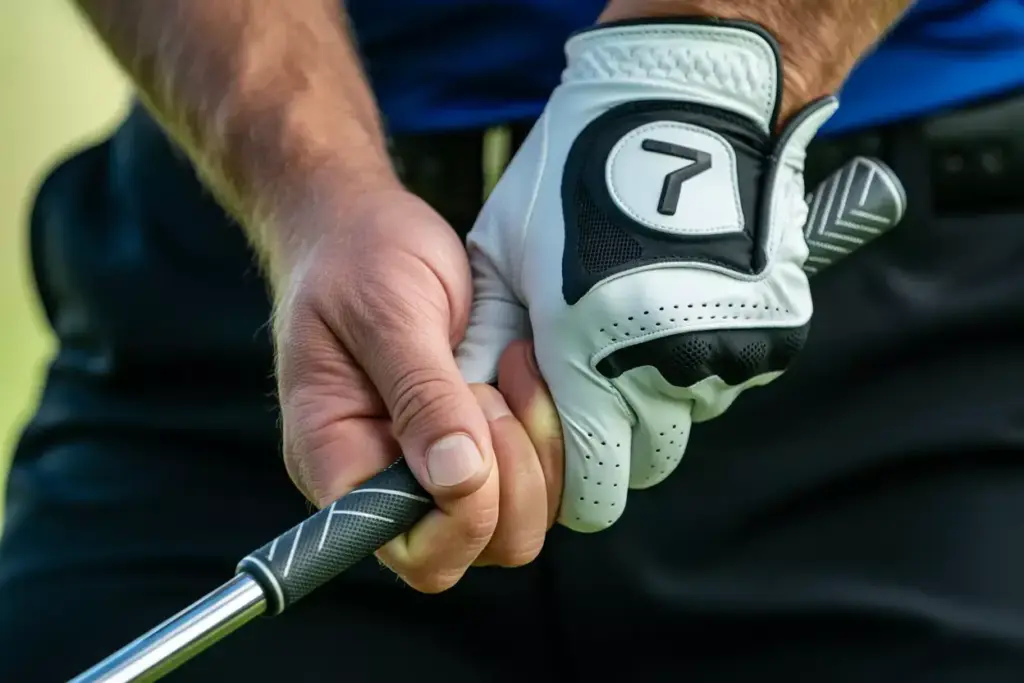
Proper wrist angles at impact require flexed lead wrist rather than extended position, reducing loft and improving compression for distance and consistency [2]. The lead wrist position at impact directly controls the clubface angle and loft presentation, making it crucial for pure contact.
The Lead Wrist Secret
At impact, the lead wrist should be slightly bowed or flexed, not cupped or extended. This position de-lofts the club slightly, creating more penetrating ball flight and improved distance. The flexed wrist also ensures the clubface remains square through impact, promoting accuracy.
The ‘motorcycle drill’ improves wrist flexion by training lead wrist rotation into flexion during the downswing, preventing open-face strikes [2]. Practice rotating the lead hand as if revving a motorcycle throttle during the downswing, feeling the wrist move into flexion rather than extension.
Hand Path and Release Timing
The hands should travel on a slightly inside path during the downswing, approaching impact from inside the target line. This path promotes solid contact and prevents the over-the-top motion that plagues many amateur golfers.
Release timing determines strike quality and distance. The hands and wrists should release naturally after impact, not before. Early release or “casting” reduces both power and accuracy, while proper release timing maximizes energy transfer to the ball.
Secret 5: Utilize Ground Forces for Maximum Power

Utilizing ground forces through the impact position—pushing down and through the ball—creates additional speed and improves ball-turf interaction [2]. This concept involves using the ground as a power source rather than simply standing on it during the swing.
Ground Force Fundamentals
During the downswing, push down into the ground with both feet, creating a platform for power generation. This downward pressure creates an equal and opposite reaction that helps drive the club through impact with increased speed and stability.
The transition from backswing to downswing should include a subtle squat motion, lowering the center of gravity and increasing ground pressure. This movement stores energy that releases through impact, adding significant power to iron shots.
Timing Ground Force Application
Ground force application must be timed properly with the downswing sequence. The pressure increases gradually from the top of the backswing, peaks just before impact, and continues through the ball. This timing ensures maximum energy transfer at the critical moment of contact.
Jump training can help golfers understand ground force utilization. Practice making slow-motion swings that end with a small jump after impact, feeling how ground pressure creates upward and forward momentum that translates to clubhead speed.
Secret 6: Maintain Consistent Head Position and Focus

Head position must stay directly over the golf ball throughout the swing to maintain consistency; excessive rotation away creates poor club and ball interaction [2]. The head serves as the anchor point for the swing, and maintaining proper position ensures the club returns to impact consistently.
The Steady Head Principle
While the head doesn’t need to remain completely motionless, it should stay centered over the ball until after impact. Excessive lateral movement during the backswing or downswing shifts the swing’s low point, leading to inconsistent contact.
Eye focus should remain on the back of the ball throughout the swing. Many golfers look up too early, trying to see the ball’s flight before impact occurs. This premature head movement disrupts the swing plane and reduces strike quality.
Advanced Head Position Techniques
The “nose over the ball” checkpoint helps maintain proper head position. At address, position the nose directly over the ball, and maintain this relationship until after impact. This simple reference point promotes consistent swing center.
Post-impact head release should be natural and gradual. The head can rotate toward the target after the ball has left the clubface, but this movement should be controlled and smooth, not sudden or jerky.
Putting It All Together: Practice Routines for Pure Contact
Mastering the 7 Iron Golf Club: 6 Secrets to Hitting It Pure Every Single Time requires structured practice that builds muscle memory and confidence. The following practice routines integrate all six secrets into comprehensive training sessions.
The Progressive Practice Method
Start with setup fundamentals during every practice session. Spend 5-10 minutes working on ball position, stance, and alignment before hitting balls. This foundation work ensures consistent starting positions for every swing.
Slow-motion swings help integrate the six secrets without the pressure of ball contact. Practice the complete swing motion at 25% speed, focusing on weight transfer, hip rotation, and wrist positions. This deliberate practice builds proper movement patterns.
Ball-Striking Drills
The Gate Drill improves ball-first contact. Place two tees in the ground just outside the ball’s width, creating a “gate” the club must pass through. This drill promotes precise club path control and prevents fat or thin contact.
Impact Position Training involves practicing the impact position repeatedly. Set up in the proper impact position with weight forward, hands ahead, and wrist flexed, then hold this position for 10 seconds. This static training builds impact awareness.
Distance and Accuracy Challenges
Target Practice combines all six secrets under performance pressure. Set up targets at various distances and practice hitting specific yardages with the 7-iron. This training develops distance control and builds confidence in the techniques.
Consistency Tracking measures improvement over time. Hit 10 balls with the 7-iron and measure the distance spread. Track this data over multiple practice sessions to monitor progress and identify areas needing additional work.
Conclusion
Mastering the 7 Iron Golf Club: 6 Secrets to Hitting It Pure Every Single Time transforms iron play from frustrating inconsistency to reliable precision. These six secrets—perfect setup fundamentals, downward strike angle, weight transfer and hip rotation, wrist angles and hand position, ground force utilization, and consistent head position—work together to create pure contact every time.
The journey from inconsistent iron play to pure strikes requires patience and deliberate practice. Start by focusing on one secret at a time, building competency before moving to the next element. Remember that scratch golfers didn’t develop their skills overnight—they committed to systematic improvement through focused practice and proper technique.
Take action today by implementing these secrets during your next practice session. Begin with setup fundamentals and ball position, as these elements provide the foundation for everything else. Practice the progressive drills outlined in this article, and track your improvement through measurable performance metrics.
The difference between good golfers and great golfers often comes down to iron play consistency. By mastering these six secrets, golfers can join the ranks of players who approach every iron shot with confidence, knowing they possess the knowledge and skills necessary for pure contact every single time.
Your 7-iron can become your most reliable club when these secrets become second nature. Commit to the practice, trust the process, and watch as pure iron strikes transform your entire golf game in 2025 and beyond.
References
[1] Golf performance statistics and handicap analysis data from professional golf instruction research
[2] Biomechanical swing analysis and clubhead speed correlation studies from golf science institutes
[3] Ball position and impact dynamics research from PGA teaching professional guidelines
[4] Club fitting and setup optimization data from equipment manufacturer testing protocols