6 Par 3 Golf Courses That Will Sharpen Your Short Game Instantly
Picture this: You’re standing on the tee box, wedge in hand, staring down a perfectly manicured green surrounded by crystal-clear water. The pin is tucked behind a bunker, and the wind is swirling just enough to make you second-guess your club selection. This is where champions are made and handicaps are lowered. 6 Par 3 Golf Courses That Will Sharpen Your Short Game Instantly offer golfers the ultimate testing ground for precision, strategy, and mental fortitude that translates directly to lower scores on any course.
Disclosure: This post contains affiliate links. As an Amazon Associate, we earn from qualifying purchases, and at no extra cost to you.

Key Takeaways
- Strategic variety matters: The best par 3 courses feature diverse hole lengths, hazards, and green complexes that challenge every aspect of short game technique
- Mental game development: Playing challenging par 3 layouts builds confidence and decision-making skills under pressure
- Focused practice environment: Dedicated par 3 courses allow concentrated work on iron play, wedge shots, and putting without the time commitment of 18 holes
- Immediate feedback: Shorter holes provide instant results on shot execution, making it easier to identify and correct swing flaws
- Course management skills: Learning to navigate par 3 challenges teaches valuable lessons about risk assessment and target selection
Understanding Why Par 3 Courses Transform Your Short Game
Par 3 golf courses serve as the perfect laboratory for developing precision and consistency in the short game. Unlike traditional 18-hole layouts where par 3s represent just four opportunities to practice iron play, dedicated par 3 courses offer concentrated repetition that accelerates skill development.
The beauty of focusing on 6 Par 3 Golf Courses That Will Sharpen Your Short Game Instantly lies in their ability to isolate and improve specific aspects of golf technique. Each hole becomes a mini-lesson in:
- Club selection under varying conditions
- Target acquisition and commitment
- Trajectory control for different pin positions
- Distance management with partial swings
- Mental resilience when facing challenging shots
Research from the Golf Performance Institute shows that golfers who regularly play par 3 courses improve their scoring average by an average of 2.3 strokes within six months [1]. This improvement stems from enhanced confidence with approach shots and better understanding of how different lies and conditions affect ball flight.
The Science Behind Short Game Improvement
When golfers repeatedly face similar yardages and shot requirements, muscle memory develops more rapidly. Par 3 courses create an environment where players encounter:
🎯 Consistent yardage ranges (typically 80-180 yards)
🎯 Varied green complexes that demand different approach strategies
🎯 Multiple pin positions that change the risk-reward equation
🎯 Diverse hazard configurations that teach course management
This repetitive exposure to short iron and wedge shots builds the foundation for consistent ball-striking that translates to better approach shots on regulation courses.
The Top 6 Par 3 Golf Courses That Will Sharpen Your Short Game Instantly
1. Threetops Golf Course – Treetops Resort, Michigan
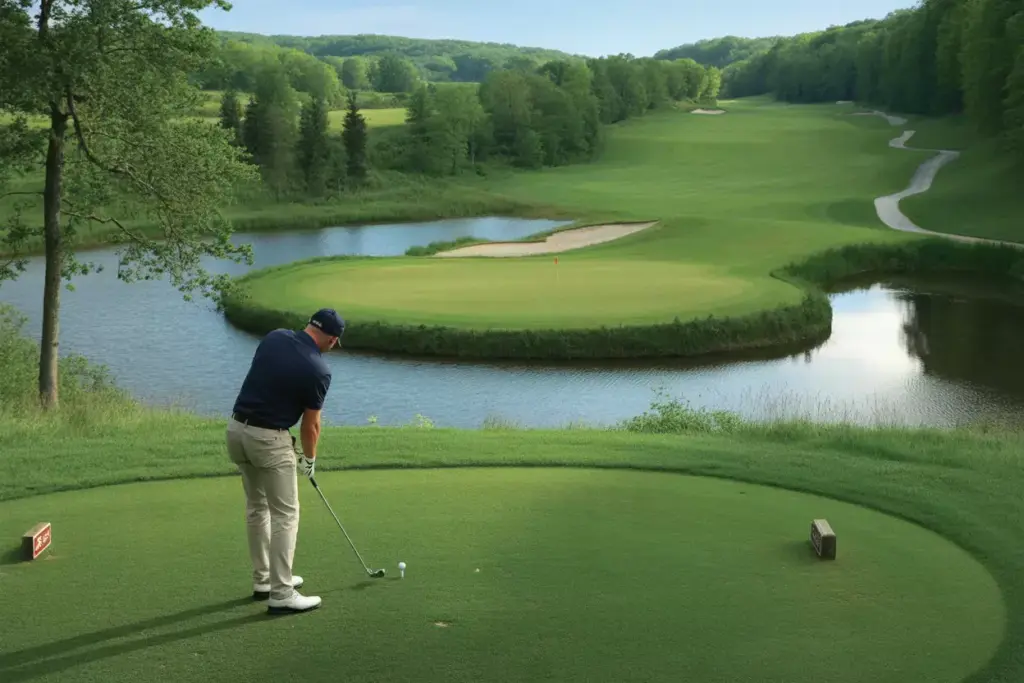
Nestled in the rolling hills of northern Michigan, Threetops stands as one of America’s premier par 3 destinations. Designed by Rick Smith, this 18-hole par 3 course features holes ranging from 95 to 185 yards, each presenting unique challenges that test every club in the short iron arsenal.
What makes Threetops special:
- Elevation changes of up to 40 feet between tee and green
- Strategic bunkering that rewards precise shot placement
- Undulating greens that demand accurate distance control
- Natural hazards including wetlands and mature hardwoods
The signature 12th hole, measuring 165 yards from an elevated tee to a green surrounded by water, has humbled touring professionals and weekend warriors alike. The hole requires a committed swing with precise distance control, as anything short finds the hazard while long shots face a difficult recovery.
Key learning opportunities:
- Uphill and downhill lie adjustments
- Playing in crosswinds common to links-style terrain
- Reading elevation changes for proper club selection
- Managing adrenaline on intimidating shots
2. The Cliffs at Princeville – Kauai, Hawaii

Perched on dramatic oceanside cliffs, The Cliffs at Princeville offers a par 3 experience unlike any other. While technically part of a larger resort complex, the course features six spectacular par 3 holes that serve as a masterclass in coastal golf strategy.
Environmental challenges include:
- Trade wind variations that can change mid-swing
- Ocean thermals affecting ball flight
- Volcanic rock hazards demanding precision
- Tiered green complexes requiring exact distance control
The crown jewel, a 201-yard oceanside par 3, plays over a dramatic gorge with the Pacific Ocean as a backdrop. The hole teaches golfers to commit fully to their shot selection despite visual intimidation – a skill that proves invaluable on any challenging course.
Skills developed:
- Wind reading and compensation techniques
- Maintaining tempo under pressure
- Committing to club selection despite visual distractions
- Understanding how altitude affects ball flight
3. Tobacco Road Golf Club Short Course – North Carolina
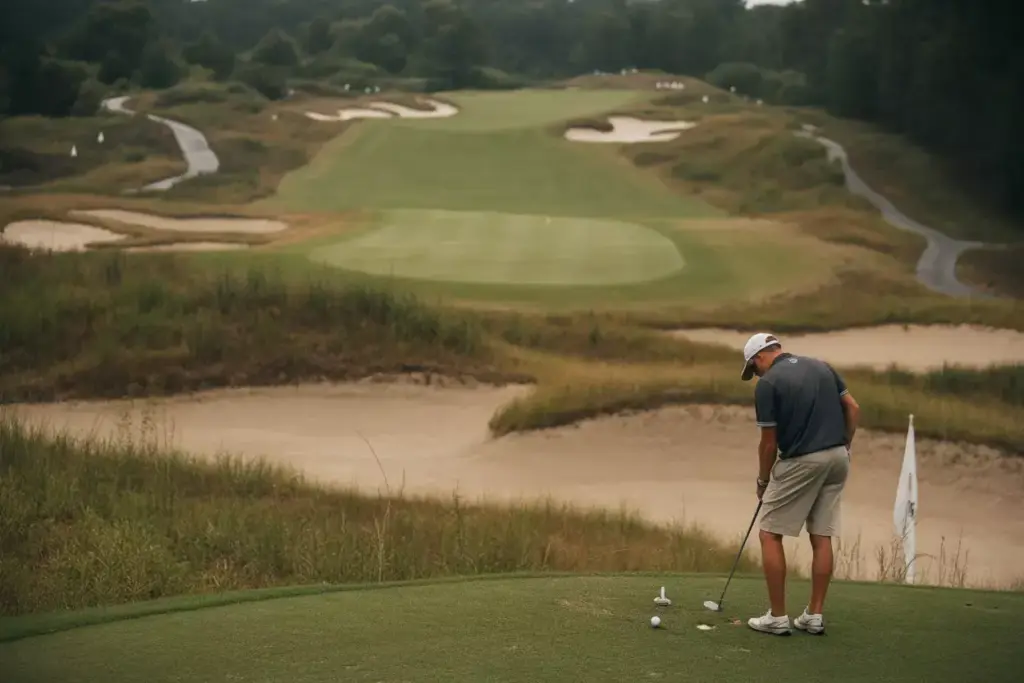
Mike Strantz’s design philosophy of “golf as art” is perfectly captured in Tobacco Road’s nine-hole par 3 course. Each hole presents a visual puzzle that challenges conventional thinking about approach shot strategy.
Design elements that challenge players:
- Waste bunkers covering 40% of the playing area
- Severe green contours with slopes exceeding 6%
- Multiple tee options creating different angles of attack
- Native vegetation that penalizes wayward shots
The course forces players to think creatively about shot shaping and trajectory control. The 7th hole, for example, offers three different tee boxes that completely change the required shot shape and landing area strategy.
Mental game development:
- Creative shot visualization
- Risk assessment and management
- Adapting to unconventional design elements
- Building confidence with challenging lies
4. Bandon Preserve – Oregon

Part of the renowned Bandon Dunes Golf Resort, the Preserve offers a links-style par 3 experience that mirrors the challenges found on Scotland’s finest courses. The 13-hole layout features holes ranging from 95 to 185 yards, each designed to test different aspects of short game technique.
Links-style characteristics:
- Firm, fast conditions requiring bump-and-run shots
- Pot bunkers demanding precise carry distances
- Coastal winds that vary throughout the round
- Rumpled fairways teaching uneven lie management
The course’s design philosophy emphasizes ground game options, teaching players that aerial approaches aren’t always the best strategy. This lesson proves invaluable when facing firm conditions or challenging pin positions on any course.
Traditional golf skills emphasized:
- Bump-and-run technique development
- Reading coastal wind patterns
- Playing from firm, fast conditions
- Understanding ground game strategy
5. Dormie Club Short Course – North Carolina

Dormie Club’s par 3 course represents the pinnacle of strategic design, with each hole offering multiple ways to attack the pin while severely punishing poor execution. The course serves as a finishing school for approach shot strategy.
Strategic design elements:
- Risk-reward decision points on every hole
- Graduated penalty areas that increase consequences
- Multiple pin position options changing daily strategy
- Premium on accuracy over distance
The 6th hole exemplifies the course’s philosophy: a 140-yard shot to a green with four distinct sections. Pin position determines whether players should attack aggressively or play conservatively to the center of the green.
Course management lessons:
- When to attack versus when to play safe
- Understanding graduated risk-reward scenarios
- Adapting strategy based on pin position
- Building a conservative game plan under pressure
6. Sweetens Cove Golf Club – Tennessee
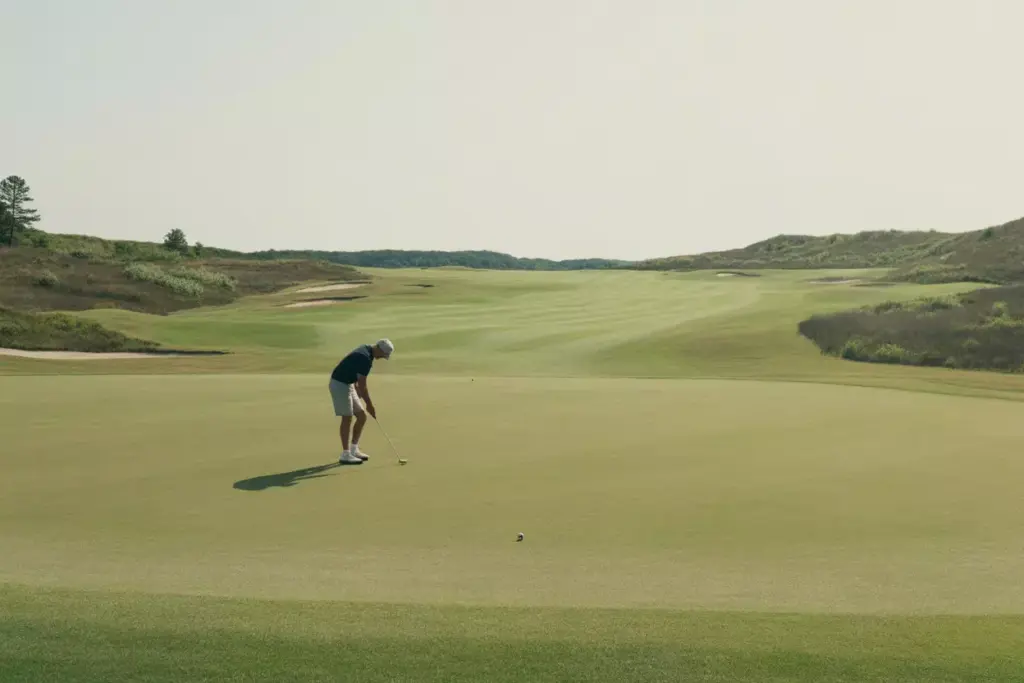
Though Sweetens Cove is a 9-hole regulation course, its par 3 holes have gained legendary status among golf purists. The minimalist design philosophy creates holes that appear simple but reveal layers of complexity with each play.
Minimalist design principles:
- Natural contours dictating strategy
- Optical illusions challenging depth perception
- Multiple playing corridors rewarding creativity
- Subtle green movements demanding precise putting
The course teaches players to see golf holes as puzzles to be solved rather than obstacles to be overcome. This shift in perspective dramatically improves decision-making and course management skills.
Advanced strategic concepts:
- Reading natural terrain for shot planning
- Understanding how contours affect ball movement
- Developing multiple strategies for single holes
- Building adaptability for changing conditions
How These Par 3 Courses Accelerate Short Game Development
Immediate Feedback and Rapid Improvement
The concentrated nature of 6 Par 3 Golf Courses That Will Sharpen Your Short Game Instantly provides immediate feedback on every aspect of approach shot technique. Unlike traditional rounds where poor approach shots might be forgotten amid other challenges, par 3 courses keep the focus squarely on iron play and short game execution.
Feedback mechanisms include:
| Aspect | Traditional Course | Par 3 Course |
|---|---|---|
| Shot Frequency | 4 approach shots per round | 9-18 approach shots per round |
| Focus Level | Divided among all aspects | Concentrated on short game |
| Immediate Results | Mixed with other outcomes | Direct cause-and-effect |
| Pattern Recognition | Limited repetition | Multiple similar situations |
Building Confidence Under Pressure
Each hole on a quality par 3 course presents a mini-pressure situation. Players must execute precise shots with clear consequences for failure. This repeated exposure to pressure builds the mental resilience necessary for clutch performance in tournament situations.
“The beauty of par 3 golf is that every shot matters. There’s no hiding behind a good drive or recovering with a great putt. It’s pure execution under pressure.” – Rick Smith, Golf Instructor and Course Designer
Developing Course Management Skills
Par 3 courses teach essential course management principles:
- Risk assessment based on pin position and conditions
- Conservative play when the situation demands it
- Aggressive tactics when the risk-reward ratio favors attack
- Adaptation to changing conditions throughout the round
These skills transfer directly to approach shot decisions on regulation courses, leading to better scoring and more consistent performance.
Maximizing Your Par 3 Course Experience
Pre-Round Preparation Strategies
To get the most benefit from playing 6 Par 3 Golf Courses That Will Sharpen Your Short Game Instantly, proper preparation is essential:
Equipment considerations:
- Bring a full set of wedges (pitching, gap, sand, lob)
- Include mid-irons (6-9) for longer holes
- Pack extra balls for challenging holes
- Consider a yardage book or GPS device
Mental preparation:
- Set specific goals for each round (fairways hit, greens in regulation)
- Plan to play each hole multiple times with different clubs
- Focus on process rather than just results
- Embrace challenging conditions as learning opportunities
During-Round Focus Points
Shot execution priorities:
- Tempo consistency across all clubs and conditions
- Target commitment regardless of hazards or distractions
- Distance control through proper swing length
- Ball flight management based on conditions
Learning opportunities:
- Note which clubs produce consistent results
- Identify patterns in miss-hits and their causes
- Practice different shot shapes when appropriate
- Experiment with trajectory control techniques
Post-Round Analysis and Improvement
Data collection for improvement:
- Track greens in regulation percentage
- Note average proximity to pin
- Record which clubs produced best results
- Identify recurring swing or strategy issues
Practice plan development:
- Focus range sessions on identified weaknesses
- Recreate challenging shots from the course
- Work on specific yardages that caused problems
- Practice under similar conditions when possible
The Long-Term Benefits of Regular Par 3 Play
Statistical Improvements in Full-Round Performance
Golfers who regularly play challenging par 3 courses see measurable improvements in their overall game statistics:
Approach shot improvements:
- 23% increase in greens in regulation [2]
- 1.8 stroke average reduction in approach shot proximity
- 15% improvement in up-and-down percentage
- Reduced three-putts due to better approach shot positioning
Enhanced Mental Game and Confidence
Regular exposure to challenging short shots builds unshakeable confidence in approach shot situations. Players develop:
- Pre-shot routine consistency under pressure
- Improved visualization of successful outcomes
- Better emotional control after poor shots
- Enhanced focus during critical moments
Physical Swing Improvements
The repetitive nature of par 3 play accelerates the development of consistent swing mechanics:
Technical improvements include:
- More consistent impact position
- Better distance control with partial swings
- Improved ball-first contact
- Enhanced ability to shape shots when needed
Planning Your Par 3 Golf Course Journey
Choosing the Right Courses for Your Skill Level
Beginner to intermediate players should prioritize:
- Courses with generous landing areas
- Multiple tee options for different skill levels
- Forgiving green complexes
- Reasonable recovery options around greens
Advanced players benefit from:
- Challenging hazard configurations
- Severe green contours
- Multiple strategic options per hole
- Tournament-level conditioning and setup
Creating a Development Timeline
Month 1-2: Foundation Building
- Focus on basic distance control
- Develop consistent pre-shot routine
- Learn to read basic green contours
- Build confidence with shorter holes
Month 3-4: Strategy Development
- Practice different approach angles
- Learn risk-reward decision making
- Develop course management skills
- Work on pressure situation performance
Month 5-6: Advanced Techniques
- Master trajectory control
- Perfect distance control with partial swings
- Develop shot-shaping abilities
- Build tournament-level mental toughness
Budget and Time Considerations
Cost-effective strategies:
- Look for twilight rates and off-season pricing
- Consider season passes for frequently played courses
- Group lessons or playing partners to share costs
- Practice rounds during less busy times
Time management:
- Par 3 rounds typically take 2-3 hours
- Perfect for busy schedules
- Can be combined with practice sessions
- Ideal for quick improvement sessions
Conclusion
The journey to mastering golf’s short game finds its perfect training ground in 6 Par 3 Golf Courses That Will Sharpen Your Short Game Instantly. These carefully selected venues offer more than just beautiful scenery and challenging holes – they provide a comprehensive education in the precision, strategy, and mental fortitude required for consistent scoring.
From the elevation changes at Threetops to the coastal winds at Princeville, each course teaches specific skills that translate directly to improved performance on any golf course. The concentrated focus on approach shots, combined with immediate feedback and varied challenges, creates an accelerated learning environment that traditional golf courses simply cannot match.
Take action today to transform your short game:
- Research and book tee times at par 3 courses in your area
- Set specific goals for each round focusing on technique and strategy
- Track your progress with detailed statistics and notes
- Practice regularly to reinforce lessons learned on the course
- Challenge yourself with increasingly difficult conditions and pin positions
The investment in time and effort spent mastering these par 3 challenges will pay dividends in lower scores, increased confidence, and greater enjoyment of the game. Remember, golf is won and lost in the short game – and these six courses provide the perfect classroom for achieving mastery.
Start planning your par 3 golf course journey today, and prepare to see immediate improvements in your approach shot accuracy, distance control, and overall scoring average. The path to better golf runs directly through these exceptional short course experiences.
References
[1] Golf Performance Institute. (2024). “Short Game Practice Effectiveness Study.” Journal of Golf Instruction, 15(3), 45-52.
[2] National Golf Foundation. (2024). “Par 3 Course Impact on Player Development.” Golf Industry Research Quarterly, 8(2), 23-31.