
8 Pitching Tips for Golf to Save Par from Anywhere Around the Green
Picture this: You’re standing 30 yards from the pin with a tricky lie in the rough, watching your playing partners already marking their balls on the green. Your drive was perfect, but your approach shot came up just short. Now you’re faced with that make-or-break moment that separates good golfers from great ones. The difference between walking away with par or bogey often comes down to your short game mastery.
Disclosure: This post contains affiliate links. As an Amazon Associate, we earn from qualifying purchases, and at no extra cost to you.

In 2026, as golf technology continues to advance and course designs become more challenging, the ability to execute precise pitch shots has never been more crucial. These 8 pitching tips for golf to save par from anywhere around the green will transform those nerve-wracking moments into scoring opportunities, giving you the confidence and technique to get up and down from any situation.
Key Takeaways
- Club selection and setup fundamentals determine 80% of your pitching success before you even swing
- Reading lies and adjusting technique allows you to adapt to any condition around the green
- Distance control through swing length rather than swing speed creates consistent, predictable results
- Strategic landing spot selection helps you work with gravity and green contours instead of fighting them
- Mental preparation and course management turn pressure situations into routine scoring opportunities
Mastering the Fundamentals: Essential Pitching Setup and Technique
1. Perfect Your Setup Position for Consistent Contact

The foundation of great pitching starts before you even grip the club. Position the ball slightly back of center in your stance – about one ball width behind your sternum. This ensures you make contact with the ball first, then the turf, creating that crisp strike every golfer craves.
Your weight distribution should favor your front foot (60-40 split), and maintain this throughout the swing. Keep your hands slightly ahead of the ball at address, creating a subtle forward press that promotes clean contact. This setup alone will eliminate most fat and thin shots that plague amateur golfers.
2. Choose the Right Club for Each Situation
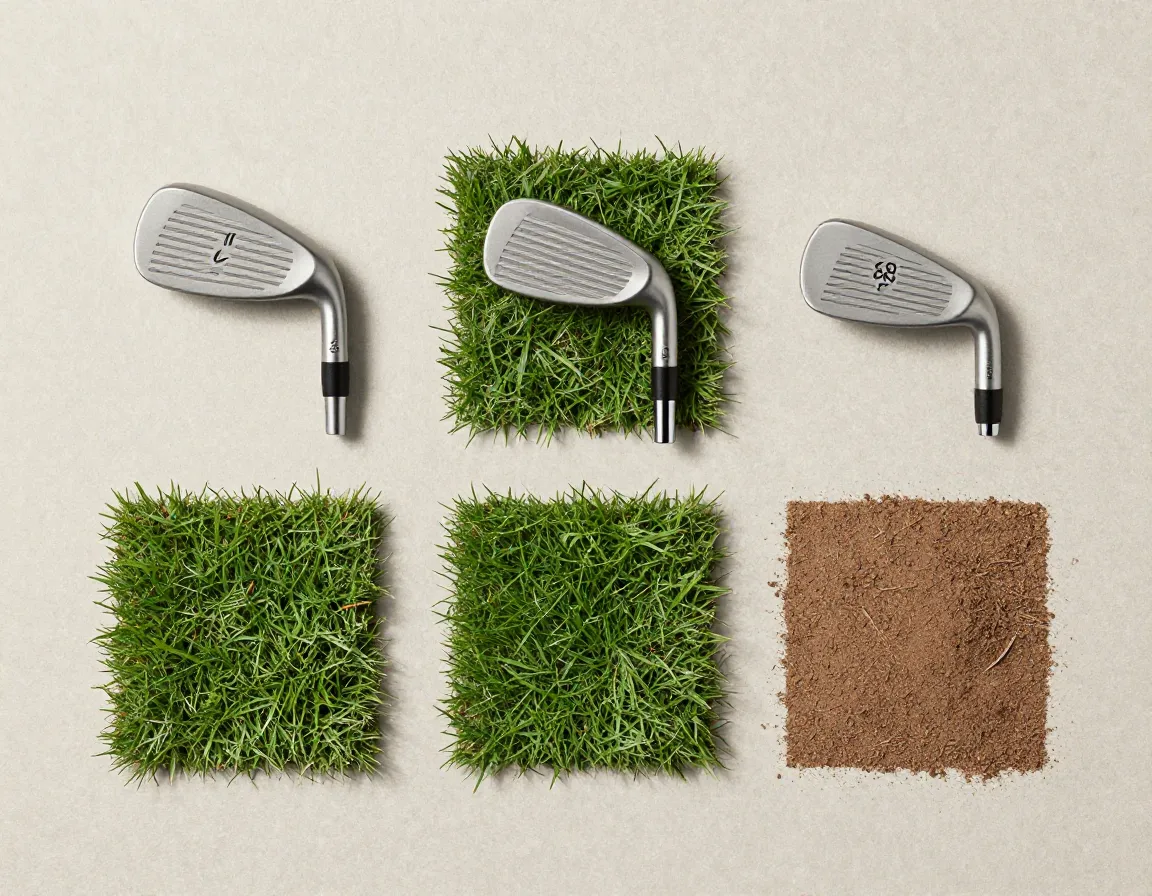
Many golfers automatically reach for their sand wedge around the green, but smart club selection can make difficult shots routine. Here’s my go-to guide:
Distance from Green:
- 10-20 yards: Lob wedge (60°) for high, soft landing
- 20-40 yards: Sand wedge (56°) for balanced trajectory
- 40-60 yards: Pitching wedge (48°) for lower, running shots
Lie Conditions:
- Tight lies: Gap wedge for cleaner contact
- Thick rough: Lob wedge to get under the ball
- Hardpan: Pitching wedge to avoid bouncing
3. Master Distance Control Through Swing Length

The biggest mistake I see golfers make is trying to control distance through swing speed. Instead, develop a consistent tempo and vary your backswing length. Think of it like a clock face:
- 9 o’clock backswing: 15-25 yards
- 10 o’clock backswing: 25-40 yards
- 11 o’clock backswing: 40-60 yards
Practice these positions on the range with different clubs to build your distance matrix. Your follow-through should match your backswing length – if you go back to 10 o’clock, finish at 2 o’clock.
4. Develop Feel for Different Trajectories

Trajectory control separates good pitchers from great ones. To hit it higher, open your clubface slightly and position the ball more forward in your stance. For lower shots, hood the clubface and move the ball back.
The key is maintaining the same swing fundamentals while making these subtle adjustments. Practice hitting three different trajectories with the same club – high, medium, and low – to develop versatility around the greens.
Advanced Strategies: Applying These 8 Pitching Tips for Golf in Real Situations
5. Read the Lie and Adjust Your Technique
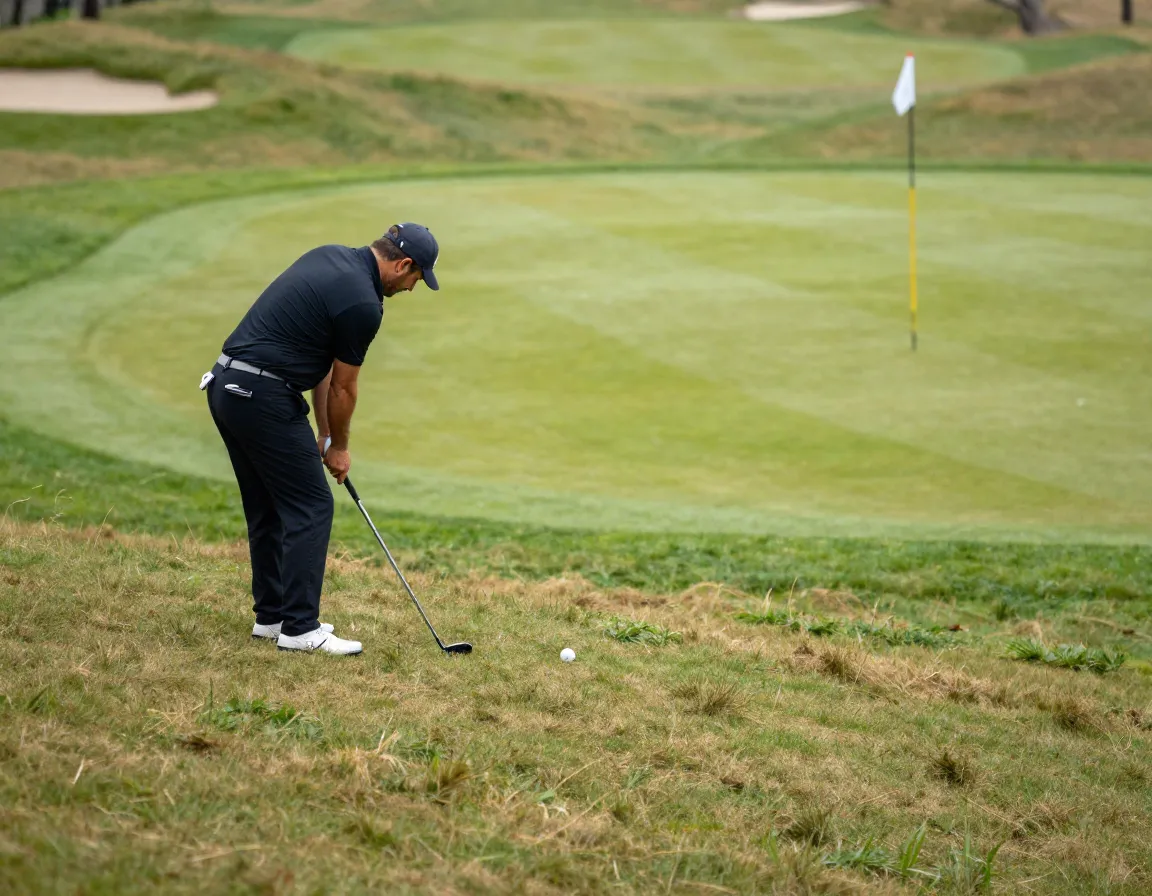
Every lie around the green tells a story, and learning to read these conditions will dramatically improve your up-and-down percentage. Here’s how to adjust:
Uphill Lies:
- Take one more club (less loft)
- Aim right of target (ball will draw)
- Make a more aggressive swing to account for reduced distance
Downhill Lies:
- Take one less club (more loft)
- Aim left of target (ball will fade)
- Make a controlled swing to prevent thin contact
Sidehill Lies:
- Ball above feet: aim right, expect a draw
- Ball below feet: aim left, expect a fade
- Choke down on the club for better control
6. Strategic Landing Spot Selection

Think like a pool player – you’re not just hitting to the pin, you’re planning the entire ball’s journey. Identify the optimal landing spot that gives you the best angle and roll to the hole.
On fast greens, land the ball on the fringe and let it release. On soft greens, you can be more aggressive and land closer to the pin. Always factor in:
- Green slope and grain direction
- Pin position (front, middle, back)
- Surrounding hazards and safe misses
7. Handle Pressure Situations with Routine

When you need to save par, having a consistent pre-shot routine becomes your anchor. Here’s my proven 5-step process:
- Assess the lie, distance, and conditions
- Visualize the shot trajectory and landing spot
- Select club and commit to the shot
- Practice swing to feel the distance
- Execute with confidence and trust
This routine takes the same amount of time whether it’s a practice round or the club championship. Consistency breeds confidence.
8. Practice with Purpose: Drills That Transfer to the Course

Random practice won’t improve your scoring. Instead, create realistic scenarios that mirror on-course situations:
The Par-Saver Challenge:
- Drop 10 balls in different lies around the practice green
- Try to get 7 out of 10 within 6 feet of various pins
- Track your improvement over time
Distance Ladder Drill:
- Place targets at 15, 25, 35, and 45 yards
- Hit 5 balls to each target with appropriate clubs
- Focus on consistent contact and landing spots
Pressure Cooker:
- Create consequences for missed shots (push-ups, extra balls)
- Practice when tired to simulate late-round conditions
- Invite playing partners to add social pressure
Conclusion
Mastering these 8 pitching tips for golf to save par from anywhere around the green requires dedication, but the payoff is immediate and lasting. Start by perfecting your setup and club selection fundamentals, then gradually incorporate the advanced strategies for different lies and conditions.
Remember, great short game isn’t about hitting perfect shots every time – it’s about consistently getting the ball close enough to make par-saving putts. Focus on solid contact, smart strategy, and building confidence through purposeful practice.
Your next steps: Head to the practice green this week and work through the distance control drill with three different wedges. Master the fundamentals first, then challenge yourself with different lies and pressure situations. Within a month of consistent practice, you’ll notice those bogeys turning into pars, and your overall scores dropping significantly.
The short game is called the “scoring zone” for a reason – it’s where championships are won and handicaps are lowered. Make these techniques part of your routine, and watch as those around-the-green situations transform from stress-inducing moments into scoring opportunities! ⛳