Learn to Play Golf: 8-Step Plan for Your First Confident Round
Picture this: You’re standing on the first tee of a beautiful golf course, feeling completely prepared and confident instead of nervous and overwhelmed. The difference between a stressful debut and an enjoyable first round lies in having a solid plan. Learn to Play Golf: 8-Step Plan for Your First Confident Round transforms the intimidating prospect of golf into an achievable goal that anyone can master with the right approach.
Disclosure: This post contains affiliate links. As an Amazon Associate, we earn from qualifying purchases, and at no extra cost to you.
Golf can seem like an exclusive, complicated sport reserved for country club members and weekend warriors who’ve been playing for decades. However, with proper preparation and a structured learning path, you can develop the skills and confidence needed to enjoy your first round on the course. This comprehensive guide breaks down everything you need to know into manageable steps that will have you playing with confidence sooner than you think.
Key Takeaways
- Start with fundamentals: Master basic grip, stance, and swing mechanics before attempting your first round
- Practice systematically: Use driving ranges and putting greens to build muscle memory and confidence
- Learn course etiquette: Understanding golf rules and courtesy ensures you’ll be welcomed by other players
- Choose beginner-friendly courses: Executive courses and par-3 layouts provide the perfect environment for new golfers
- Set realistic expectations: Focus on enjoying the experience rather than achieving perfect scores
1. Master the Basic Golf Grip and Stance

The foundation of any successful golf game starts with proper fundamentals. Your grip determines how the clubface contacts the ball, while your stance provides the stability needed for consistent shots. Learning to play golf through this 8-step plan begins with these crucial basics that will influence every shot you take.
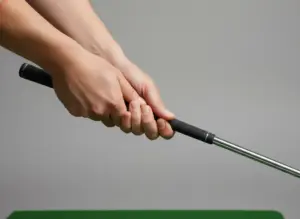
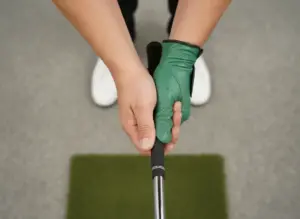
The Proper Golf Grip:
- Place your left hand (for right-handed golfers) on the club with the thumb pointing down the shaft
- Position your right hand below the left, with the thumb and forefinger forming a “V” pointing toward your right shoulder
- Maintain light pressure—imagine holding a small bird that you don’t want to hurt or let escape
Essential Stance Elements:
- Stand with feet shoulder-width apart
- Position the ball in line with your left heel for drivers, center for irons
- Keep your weight evenly distributed on both feet
- Maintain a slight bend in your knees and tilt forward from your hips
Practice these fundamentals at home using a mirror to check your form. The muscle memory you develop now will serve you throughout your golfing journey [1].
2. Learn Essential Golf Swing Mechanics

Once you’ve mastered grip and stance, focus on developing a smooth, repeatable swing motion. The golf swing involves your entire body working in coordination, but breaking it down into components makes it much more manageable.
Backswing Basics:
- Turn your shoulders while keeping your head steady
- Lift the club using your arms and shoulder rotation
- Stop when your left arm is parallel to the ground (for beginners)
Downswing and Follow-Through:
- Start the downswing with your hips, not your arms
- Keep your head behind the ball until after impact
- Finish with your weight on your left foot and chest facing the target
Practice Drills:
- Slow Motion Swings: Practice your swing at 25% speed to build proper mechanics
- Mirror Work: Use a mirror to check your positions throughout the swing
- Alignment Sticks: Place clubs on the ground to ensure proper alignment
Remember, consistency beats power every time. A smooth, controlled swing will produce better results than trying to crush every shot [3].
3. Understand Golf Equipment Basics

Learn to Play Golf: 8-Step Plan for Your First Confident Round requires understanding the tools of the trade. You don’t need the most expensive equipment to start, but having the right basics will make learning much easier.
Essential Clubs for Beginners:
- Driver: For long tee shots (start with a higher loft, 10.5-12 degrees)
- 7-iron: Versatile club for learning swing mechanics
- Pitching wedge: For short approach shots and getting out of trouble
- Putter: For rolling the ball on the green
Additional Equipment:
- Golf balls (choose inexpensive ones—you’ll lose some initially)
- Tees (various heights for different clubs)
- Golf glove (improves grip and prevents blisters)
- Comfortable golf shoes with soft spikes
Money-Saving Tips:
- Start with a beginner set or buy used clubs
- Many golf shops offer starter packages specifically designed for new players
- Consider borrowing or renting equipment for your first few rounds
The key is having clubs that fit your height and swing speed. Most golf shops offer basic fitting services that can help you get started with appropriate equipment.
4. Practice at the Driving Range and Putting Green

Before attempting a full round, spend quality time at practice facilities. This step in learning to play golf through your 8-step plan builds confidence and develops the skills you’ll need on the course.
Driving Range Practice Routine:
- Warm-up (10 minutes): Start with easy swings using a 7-iron
- Fundamentals Focus (20 minutes): Work on grip, stance, and swing mechanics
- Target Practice (15 minutes): Aim at specific targets at various distances
- Club Variety (15 minutes): Practice with different clubs to understand their characteristics
Putting Green Essentials:
- Practice short putts (3-6 feet) to build confidence
- Work on lag putting for longer distances
- Learn to read green slopes and grain
- Develop a consistent putting routine
Short Game Practice:
- Chipping around the green
- Bunker shots (if practice bunkers are available)
- Various lies and situations you might encounter
Track your practice sessions and focus on improvement rather than perfection. Even professional golfers spend more time practicing than playing [5].
5. Learn Golf Rules and Course Etiquette

Understanding basic rules and etiquette ensures you’ll be a welcomed playing partner and helps you navigate common course situations confidently.
Essential Golf Rules:
- Play the ball as it lies (don’t move it unless rules allow)
- Count every stroke, including penalty strokes
- Out of bounds: Stroke and distance penalty
- Water hazards: Various options including dropping with penalty
- Lost ball: Return to where you last played and add a penalty stroke
Course Etiquette Fundamentals:
- Pace of play: Keep up with the group ahead, not ahead of the group behind
- Repair divots and ball marks: Leave the course better than you found it
- Rake bunkers after hitting from sand
- Quiet during others’ shots: Avoid talking or moving when others are swinging
Safety First:
- Never hit when players ahead are in range
- Yell “Fore!” if your ball might hit someone
- Be aware of your surroundings at all times
Golf Cart Guidelines:
- Follow cart path rules (90-degree rule, cart path only, etc.)
- Keep carts away from greens and tee boxes
- Turn off your phone or keep it on silent
Proper etiquette shows respect for the game, the course, and your fellow players. Most golfers are understanding with beginners who show good course etiquette [6].
6. Choose Your First Golf Course Wisely

Selecting the right course for your debut round significantly impacts your experience and confidence. Your 8-step plan for learning to play golf confidently includes choosing a beginner-friendly environment that sets you up for success.
Ideal Course Characteristics for Beginners:
- Executive courses: Shorter holes with more par-3s and par-4s
- Municipal courses: Often less intimidating and more affordable
- Wide fairways: More forgiving for wayward shots
- Minimal water hazards: Reduces ball loss and frustration
- Shorter total yardage: Typically under 6,000 yards
Course Types to Consider:
- Par-3 Courses: Perfect for beginners, focusing on iron play and short game
- Executive Courses: Mix of par-3s and shorter par-4s
- Beginner-Friendly 18-hole Courses: Look for courses with forgiving layouts
Questions to Ask When Booking:
- Are there beginner tee boxes (forward tees)?
- What’s the typical pace of play?
- Do they offer beginner-friendly rates or packages?
- Is the course walker-friendly if you don’t want a cart?
Timing Your First Round:
- Avoid peak weekend times initially
- Early morning or late afternoon often have lighter crowds
- Consider playing 9 holes instead of 18 for your first experience
Research courses in your area and read reviews from other beginners. Many courses actively welcome new golfers and offer programs specifically designed for beginners [4].
7. Develop a Pre-Round Routine and Strategy
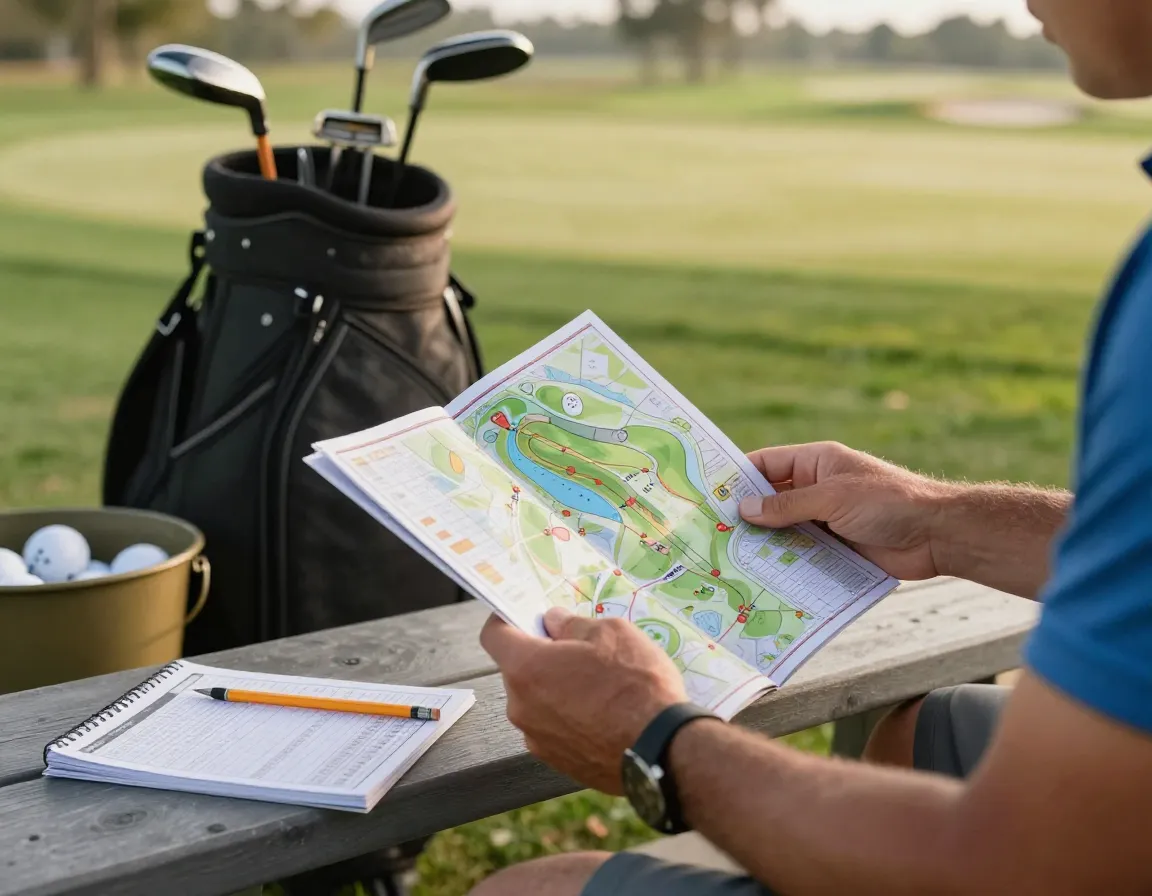
Learning to play golf through this confident 8-step plan includes developing routines that prepare you mentally and physically for success on the course.
Pre-Round Preparation:
- Arrive 30-45 minutes early for check-in and warm-up
- Practice putting for 10-15 minutes to get a feel for green speed
- Hit balls at the range starting with short irons and working up to driver
- Review the course layout using the scorecard or course map
Strategic Approach for Beginners:
- Play from appropriate tees: Choose tees that match your skill level
- Focus on course management: Aim for the center of fairways and greens
- Avoid hero shots: Take the safe route around trouble
- Set realistic goals: Focus on making good contact and enjoying the experience
Mental Preparation:
- Accept that you’ll make mistakes—every golfer does
- Focus on one shot at a time
- Celebrate small successes
- Remember that improvement comes with time and practice
On-Course Strategy:
- Tee shots: Aim for the widest part of the fairway
- Approach shots: Aim for the center of greens
- Short game: Focus on getting the ball close rather than making everything
- Putting: Take your time and trust your read
Having a plan reduces anxiety and helps you make better decisions under pressure. Start developing these routines early, and they’ll become second nature [1].
8. Play Your First Round with Confidence

The culmination of your 8-step plan to learn golf confidently arrives when you step onto the first tee for your inaugural round. This moment represents the payoff for all your preparation and practice.
First Tee Success Tips:
- Take a deep breath and stick to your routine
- Choose a club you’re comfortable with (doesn’t have to be driver)
- Aim for the fairway center, not the pin
- Accept whatever happens and move forward
During Your Round:
- Keep score honestly but don’t obsess over numbers
- Play ready golf to maintain pace
- Ask questions if you’re unsure about rules or etiquette
- Enjoy the scenery and appreciate being outdoors
Managing Expectations:
- Most beginners score between 100-130 for 18 holes
- Focus on making solid contact rather than distance
- Celebrate good shots and learn from poor ones
- Remember that even tour professionals started as beginners
Post-Round Reflection:
- Note what worked well during your round
- Identify areas for future practice focus
- Plan your next practice session or round
- Celebrate completing your first round!
Building on Success:
- Schedule regular practice sessions
- Consider taking lessons from a PGA professional
- Join beginner-friendly groups or leagues
- Set achievable goals for improvement
Your first round is just the beginning of your golf journey. Every golfer remembers their first round, and with proper preparation, yours will be a positive memory that motivates continued improvement [4].
Conclusion
Learning to play golf through this 8-step plan for your first confident round transforms what could be an overwhelming experience into an achievable and enjoyable goal. By mastering fundamentals, practicing systematically, understanding course etiquette, and choosing the right environment for your debut, you’re setting yourself up for success rather than frustration.
Remember that golf is a lifelong journey of improvement and enjoyment. Your first round won’t be perfect, but with proper preparation, it will be confident and fun. The skills you develop through this structured approach will serve as the foundation for years of golf enjoyment.
Your next steps:
- Start practicing the fundamentals at home and at local practice facilities
- Book a lesson with a PGA professional to ensure you’re building good habits
- Research beginner-friendly courses in your area
- Schedule your first round when you feel comfortable with the basics
- Connect with other beginners or join a beginner-friendly golf group
Golf offers a unique combination of physical challenge, mental strategy, and outdoor enjoyment that few other activities can match. By following this comprehensive plan, you’re not just learning to play golf—you’re developing a skill and passion that can provide decades of enjoyment, friendship, and personal satisfaction.
Take that first step today, and soon you’ll be standing confidently on the first tee, ready to enjoy everything this wonderful game has to offer.
References
[1] How To Set Golf Goals For 2026 A Simple 5 Step Plan – https://www.pga.com/story/how-to-set-golf-goals-for-2026-a-simple-5-step-plan
[3] Golf Speed Training Program – https://hackmotion.com/golf-speed-training-program/
[4] Golf Goals 2026 Season Planning – https://www.hole19golf.com/the-19th-hole/golf-goals-2026-season-planning
[5] The 2026 Golf Fitness Guide 5 Smart Ways To Get In Golf Shape – https://www.pga.com/story/the-2026-golf-fitness-guide-5-smart-ways-to-get-in-golf-shape
[6] Simple Guide Setting Golf Goals – https://golf.com/instruction/simple-guide-setting-golf-goals/