
How to Play Golf for Beginners: 8 Steps from Tee to Green
Picture this: You’re standing on the first tee, surrounded by experienced golfers who seem to effortlessly send their balls soaring down the fairway. Meanwhile, you’re gripping your club like a baseball bat, wondering if you’ll even make contact with the ball. If this scenario sounds familiar, you’re not alone. Golf can feel intimidating for newcomers, but learning how to play golf for beginners: 8 steps from tee to green doesn’t have to be overwhelming.

Golf is one of the few sports where you can play well into your golden years, making it an excellent long-term investment in your health and social life. In 2026, more beginners are taking up golf than ever before, drawn by its unique combination of physical activity, mental challenge, and outdoor enjoyment. The key is breaking down the game into manageable steps that build confidence and competence.
Key Takeaways
- Master the fundamentals first: Proper grip, stance, and alignment form the foundation of every good golf shot
- Focus on course management: Smart decision-making often matters more than raw distance for beginners
- Practice with purpose: Quality practice time beats quantity every time
- Start with shorter clubs: Build confidence with wedges and short irons before progressing to drivers
- Set realistic expectations: Golf is a lifelong journey, not a destination
Understanding Golf Basics: Essential Knowledge for New Players
Before diving into the technical aspects of how to play golf for beginners: 8 steps from tee to green, let’s establish some fundamental knowledge that every new golfer needs.
Golf is played on courses typically featuring 18 holes, each with a designated par (the number of strokes an expert golfer should need to complete the hole). Most holes are par 3, 4, or 5, with the total course par usually ranging from 70 to 72 strokes.
Golf Equipment Essentials 🏌️♂️
Clubs: You’re allowed to carry up to 14 clubs in your bag. As a beginner, start with:
- Driver (for long tee shots)
- 3-wood or hybrid (versatile fairway club)
- Irons (7, 8, 9-iron for approach shots)
- Pitching wedge (short approach shots)
- Sand wedge (bunker shots and short chips)
- Putter (on the green)
Golf Balls: Choose beginner-friendly balls that prioritize distance and forgiveness over spin control.
Tees: Wooden or plastic pegs used to elevate the ball on tee shots.
Basic Golf Terminology
- Fairway: The mowed area between tee and green
- Rough: Longer grass areas beside the fairway
- Green: The smooth, closely-mowed putting surface
- Bunker: Sand-filled hazards (also called sand traps)
- Handicap: A numerical measure of your playing ability
The Complete Guide: How to Play Golf for Beginners: 8 Steps from Tee to Green
Now let’s break down the essential steps that will take you from complete novice to confident beginner. These eight steps represent the core skills you’ll use on every hole.
1. Master Your Grip

Your grip is your only connection to the golf club, making it the most crucial fundamental to master. A proper grip promotes consistent ball-striking and helps prevent common swing faults.
The Overlapping Grip (Vardon Grip):
- Place your left hand on the club with the thumb pointing down the shaft
- Position your right hand below the left, with the pinky finger overlapping the index finger of your left hand
- Both thumbs should point down the shaft
- Maintain light pressure—imagine holding a small bird
“The grip is the foundation of every golf swing. Get this right, and everything else becomes easier.” – Golf Professional
Common Grip Mistakes to Avoid:
- Gripping too tightly: This restricts wrist action and reduces clubhead speed
- Palms facing each other: Both hands should be slightly rotated to the right (for right-handed golfers)
- Inconsistent pressure: Maintain the same grip pressure throughout your swing
2. Establish Proper Stance and Posture

Your setup position determines the quality of your swing before you even move the club. Professional instructors emphasize that good posture is essential for consistent ball-striking [1].
The Athletic Setup:
- Feet: Shoulder-width apart for most shots
- Knees: Slightly flexed, not locked
- Spine: Straight but tilted forward from the hips
- Arms: Hanging naturally, not tense
- Weight: Balanced between both feet
Ball Position Guidelines:
- Driver: Opposite your left heel
- Mid-irons: Center of your stance
- Short irons: Slightly back of center
3. Learn Proper Alignment

Alignment is often overlooked by beginners, but it’s critical for hitting your target consistently. Poor alignment is one of the most common causes of wayward shots.
The Railroad Track Method:
- Imagine railroad tracks running toward your target
- Your feet, knees, hips, and shoulders align parallel to the left track
- The ball and clubface align with the right track (pointing at your target)
- Use alignment sticks during practice to reinforce this concept
Practice Tip: Lay two clubs on the ground during practice—one pointing at your target, another parallel to it for your body alignment.
4. Develop a Consistent Pre-Shot Routine

A pre-shot routine helps calm nerves and ensures consistency. Professional golfers follow the same routine before every shot, and beginners should develop this habit early.
Sample Pre-Shot Routine:
- Visualize your shot from behind the ball
- Select your target and club
- Approach the ball and take your stance
- Take 1-2 practice swings
- Address the ball and execute your swing
This routine should take 20-30 seconds and become automatic with practice.
5. Master the Basic Golf Swing

The golf swing is a complex motion, but breaking it into components makes it manageable. Focus on these key positions:
Takeaway:
- Keep the clubhead low to the ground for the first 18 inches
- Turn your shoulders while maintaining your spine angle
- Your left arm should remain relatively straight
Backswing:
- Rotate your shoulders fully (aim for 90 degrees)
- Your weight should shift to your right side
- The club should reach parallel to the ground at the top
Downswing:
- Start with your lower body, shifting weight to your left side
- Keep your head steady until after impact
- Release the club naturally through the ball
Follow-through:
- Complete your rotation facing the target
- Your weight should finish on your left side
- Hold your finish position for balance
6. Learn Course Management and Strategy
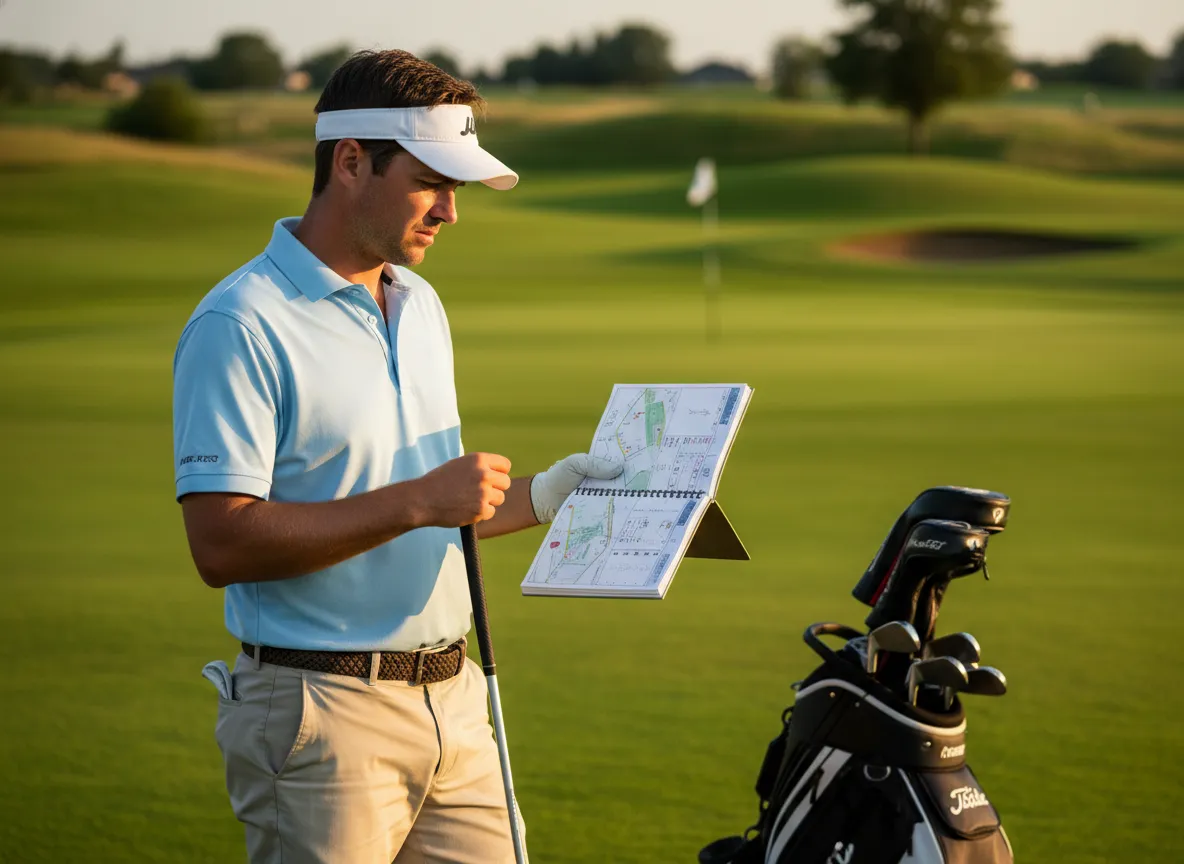
Smart course management can save you more strokes than perfect technique. This involves making intelligent decisions about club selection, target selection, and risk assessment.
Key Strategic Principles:
Play Within Your Abilities: Don’t attempt shots beyond your current skill level. A safe shot that advances the ball is better than a risky shot that finds trouble.
Aim for the Center: Instead of attacking pins, aim for the center of greens and fairways. This provides the largest margin for error.
Know Your Distances: Understand how far you hit each club. This knowledge is crucial for proper club selection [3].
Course Management Tips:
- Always tee off with a club you can control
- Lay up short of hazards rather than trying to carry them
- Take one more club than you think you need for approach shots
- Study the hole layout before selecting your strategy
7. Develop Your Short Game

The short game (shots within 100 yards of the green) is where beginners can make the biggest improvements quickly. This includes chipping, pitching, and putting.
Chipping Basics:
- Use a 7, 8, or 9-iron for most chips
- Keep your weight on your front foot
- Make a pendulum motion with your arms
- Land the ball on the green and let it roll to the hole
Putting Fundamentals:
- Grip: Use a putting-specific grip or your regular grip with lighter pressure
- Stance: Feet parallel to the target line, eyes over the ball
- Stroke: Pendulum motion from your shoulders, minimal wrist action
- Distance Control: Practice lag putting to avoid three-putts
Practice Allocation: Spend 60% of your practice time on short game skills. These shots have the biggest impact on your scores.
8. Understand Golf Etiquette and Rules
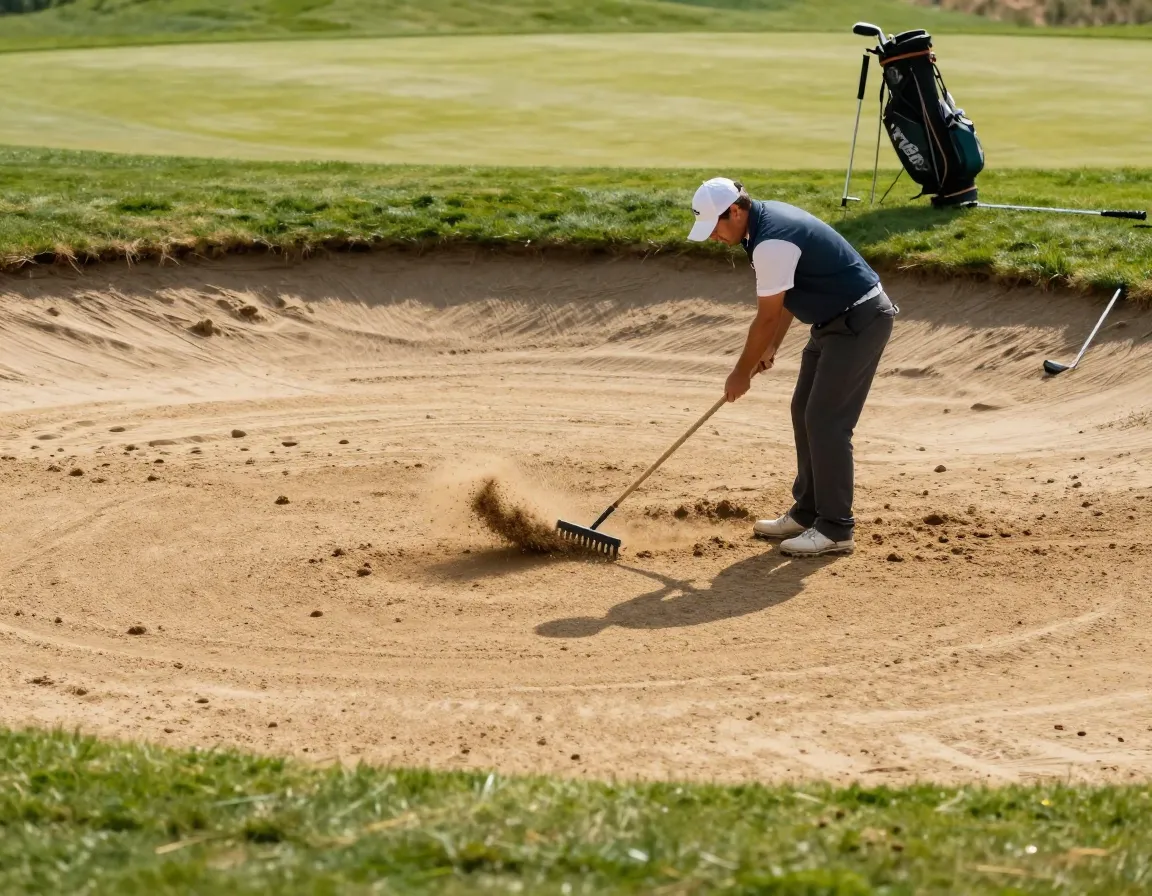
Golf has a rich tradition of etiquette and sportsmanship. Understanding basic rules and etiquette ensures you’ll be welcomed on any course.
Essential Etiquette:
Pace of Play:
- Be ready to hit when it’s your turn
- Play provisional balls when your shot might be lost
- Let faster groups play through
Course Care:
- Replace divots and repair ball marks
- Rake bunkers after use
- Don’t damage the course with clubs or carts
Safety:
- Never hit when players ahead are in range
- Yell “Fore!” if your ball heads toward other players
- Wait for the all-clear before hitting
Basic Rules Every Beginner Should Know:
- Out of Bounds: Add a stroke and replay from the original position
- Water Hazards: Take a one-stroke penalty and drop according to the rules
- Unplayable Lies: Take a one-stroke penalty and follow relief procedures
- Lost Ball: Take a stroke-and-distance penalty
Setting Goals and Tracking Progress in 2026
As you embark on your golf journey, setting realistic goals helps maintain motivation and measure improvement. Research shows that golfers who set specific, measurable goals improve faster than those who practice without direction [2].
Short-Term Goals (First 3 Months):
- Complete 18 holes without losing a ball
- Break 120 for 18 holes
- Make solid contact on 70% of your shots
- Successfully get out of bunkers in one shot
Medium-Term Goals (6-12 Months):
- Develop a consistent pre-shot routine
- Break 110, then 100
- Improve putting to average fewer than 2.5 putts per hole
- Play different courses to expand experience
Long-Term Goals (1-2 Years):
- Establish an official handicap
- Join a local golf league or club
- Break 90 consistently
- Develop course management skills
Tracking Your Progress 📊
Keep a simple scorecard record noting:
- Total Score: Track your 18-hole scores
- Fairways Hit: Count fairways hit off the tee
- Greens in Regulation: Greens reached in par minus two strokes
- Total Putts: Count all putts per round
- Up and Downs: Successful chips/pitches followed by one putt
Common Beginner Mistakes and How to Avoid Them
Learning from common mistakes accelerates your improvement and prevents bad habits from forming.
Swing-Related Mistakes:
Trying to Hit Too Hard: Many beginners think distance comes from swinging harder. Instead, focus on solid contact and proper technique. Clubhead speed develops naturally with practice.
Looking Up Too Early: Keep your head steady until after impact. Early head movement leads to topped shots and inconsistent contact.
Poor Tempo: Maintain smooth rhythm throughout your swing. Count “one-two” for backswing and downswing to develop consistent tempo.
Equipment and Setup Mistakes:
Wrong Club Selection: Take more club than you think you need. It’s better to swing easy with a longer club than swing hard with a shorter one.
Poor Course Management: Don’t try heroic shots beyond your ability. Play conservatively and let your scores improve gradually.
Inadequate Practice: Random practice doesn’t lead to improvement. Focus on specific skills and track your progress.
Building Confidence on the Course
Confidence is crucial for golf success, and beginners can build it systematically through proper preparation and realistic expectations.
Pre-Round Preparation:
- Arrive 30 minutes early to warm up
- Start with short putts to build confidence
- Hit balls on the driving range, starting with short irons
- Review the course layout and plan your strategy
During-Round Confidence Builders:
- Focus on one shot at a time
- Celebrate good shots, forget bad ones quickly
- Play from appropriate tees for your skill level
- Remember that even professionals hit bad shots
Mental Game Tips:
- Develop positive self-talk patterns
- Visualize successful shots before executing them
- Accept that golf is a game of mistakes—even for experts
- Enjoy the process of learning and improving
Conclusion
Learning how to play golf for beginners: 8 steps from tee to green is an exciting journey that combines physical skill, mental strategy, and personal growth. By mastering these fundamental steps—proper grip and stance, consistent swing mechanics, smart course management, and essential etiquette—you’ll build a solid foundation for lifelong enjoyment of this challenging sport.
Remember that golf improvement happens gradually. Focus on one skill at a time, practice with purpose, and maintain realistic expectations. Every professional golfer started exactly where you are now, and with dedication and proper instruction, you’ll be surprised how quickly you progress.
Your Next Steps:
- Take a lesson with a PGA professional to establish proper fundamentals
- Practice regularly at a driving range, focusing on the basics
- Start with shorter courses or executive courses to build confidence
- Find playing partners at your skill level for enjoyable rounds
- Set specific goals and track your progress consistently
Golf offers a lifetime of challenges and rewards. Embrace the learning process, enjoy the beautiful courses, and celebrate your improvements along the way. Welcome to the wonderful world of golf! 🏌️♂️⛳
References
[1] 10 Best Instruction Tips Golfers Choice 2026 – https://www.golfpass.com/travel-advisor/best-of/10-best-instruction-tips-golfers-choice-2026
[2] How To Set Golf Goals For 2026 A Simple 5 Step Plan – https://www.pga.com/story/how-to-set-golf-goals-for-2026-a-simple-5-step-plan
[3] 5 Smart Simple Tips Better 2026 – https://golf.com/instruction/5-smart-simple-tips-better-2026/