8 Pieces of Essential Equipment for Golf You Can’t Play Without
Picture this: you’ve finally booked that dream tee time at your local course, the weather is perfect, and you’re ready to enjoy 18 holes of golf. But as you approach the first tee, you realize you’re missing crucial equipment that could make or break your entire round. Whether you’re a complete beginner picking up your first set of clubs or an experienced player looking to ensure you have everything covered, understanding the 8 pieces of essential equipment for golf you can’t play without is fundamental to enjoying this timeless sport.
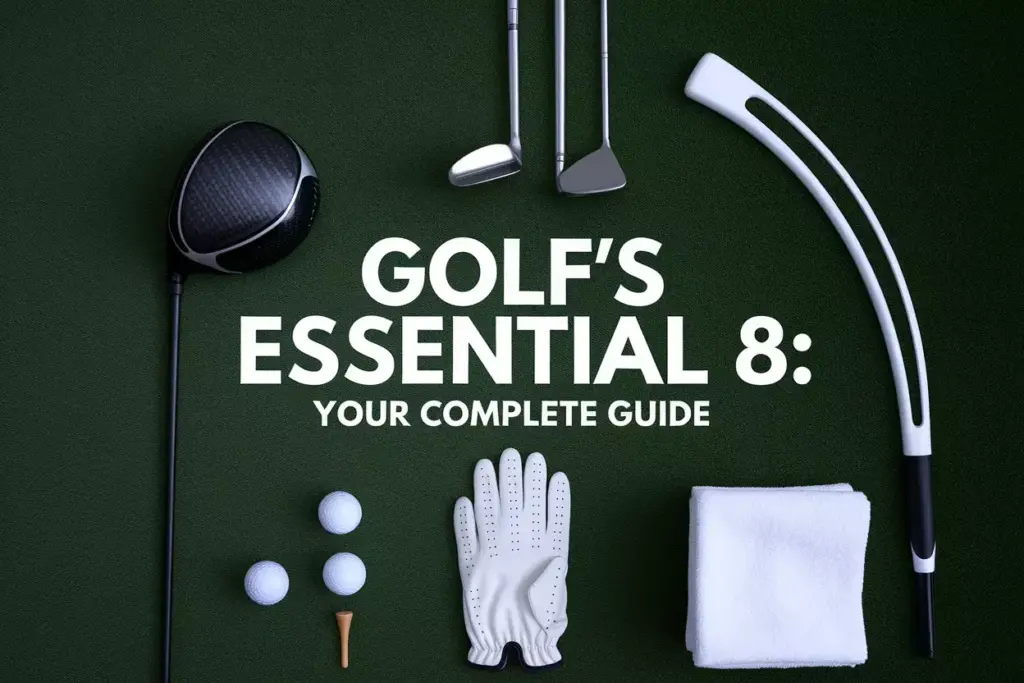
Golf may seem like a simple game of hitting a small ball into a hole, but having the right equipment makes all the difference between a frustrating day on the course and an enjoyable round that keeps you coming back for more. From the clubs that shape every shot to the small accessories that demonstrate proper etiquette, each piece of equipment serves a specific purpose in helping golfers navigate the challenges of the course.
Key Takeaways
- Golf clubs are the foundation – A basic set including driver, irons, wedges, and putter covers all essential shot types from tee to green
- Small accessories matter greatly – Golf balls, tees, gloves, and towels are inexpensive but critical for proper play and equipment maintenance
- Start simple and build up – Beginners can begin with 5-7 essential clubs before investing in a full 14-club set as skills develop
- Quality over quantity – Investing in reliable, well-made equipment pays dividends in performance and durability over time
- Proper preparation enhances enjoyment – Having all essential equipment ready ensures focus stays on improving your game rather than equipment issues
The Foundation: Golf Clubs That Form Your Arsenal
1. Driver – Your Powerhouse for Distance
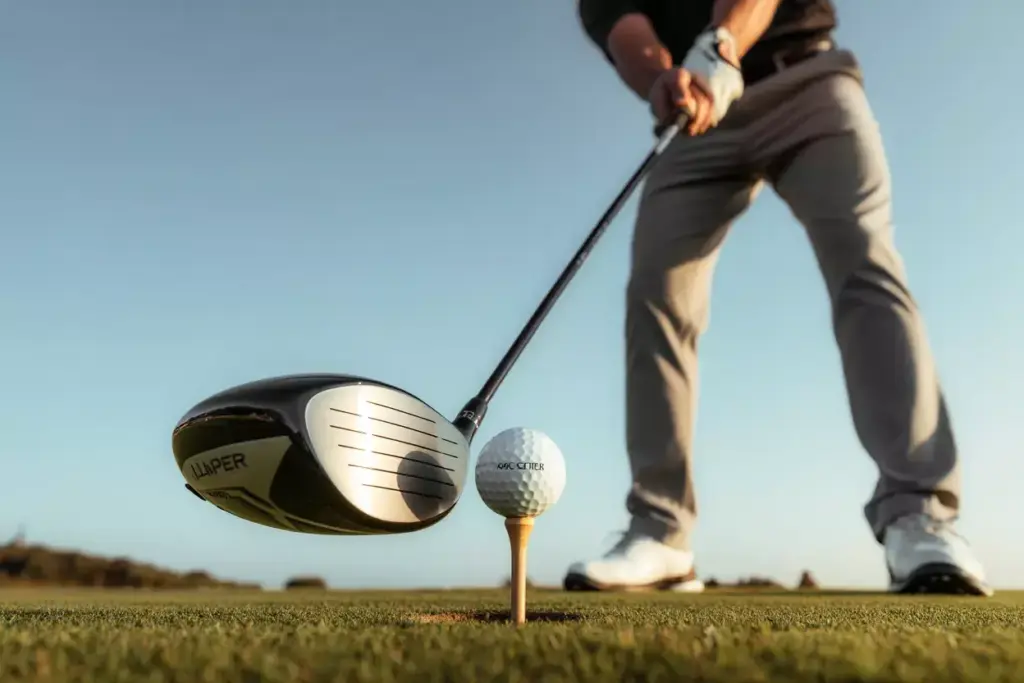
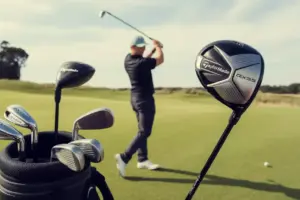
The driver stands as the most recognizable club in any golfer’s bag, designed specifically for those crucial tee shots on longer holes. With its large clubhead and longest shaft, the driver is engineered to maximize distance while launching the ball high into the air. Modern drivers feature advanced materials like titanium and carbon fiber, allowing manufacturers to create larger sweet spots that forgive minor mishits.
For beginners, the driver can be both exciting and intimidating. The key lies in understanding that distance means nothing without accuracy. Many golf professionals recommend starting with a driver that has a higher loft angle (10.5 to 12 degrees) to help get the ball airborne more easily. As skills develop, players can gradually move to lower-lofted drivers for more distance.
Key features to consider:
- Loft angle: Higher loft for beginners (10.5-12°), lower for experienced players (8.5-10.5°)
- Shaft flex: Regular flex for most amateur golfers, stiff for faster swing speeds
- Clubhead size: Maximum 460cc for optimal forgiveness
- Adjustability: Modern drivers often feature adjustable loft and lie angles
2. Fairway Woods – Versatility for Every Situation
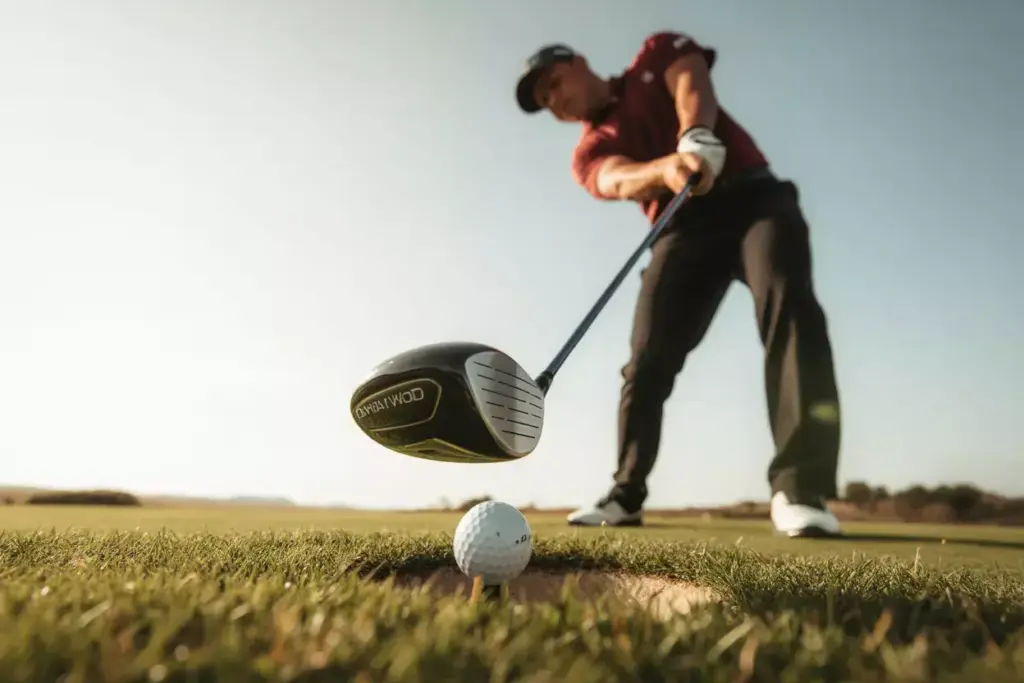
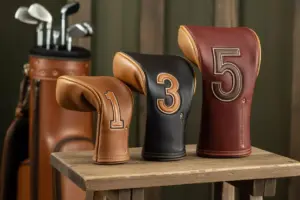
Fairway woods bridge the gap between your driver and irons, offering versatility for shots from the fairway, rough, or even the tee on shorter par-4 holes. The most common fairway woods are the 3-wood and 5-wood, though some players also carry a 7-wood for specific situations.
The 3-wood typically provides the most distance after the driver, making it invaluable for long approach shots on par-5 holes or as a more accurate alternative to the driver on tight tee shots. The 5-wood offers higher trajectory and softer landing, perfect for reaching elevated greens or stopping the ball quickly on firm surfaces.
What makes fairway woods essential is their ability to perform from various lies. Unlike irons, which can struggle in thick rough, fairway woods feature a design that helps the club glide through grass more effectively, making them reliable options when your ball doesn’t find the perfect fairway lie.
3. Irons (4-9) – Precision Tools for Approach Shots
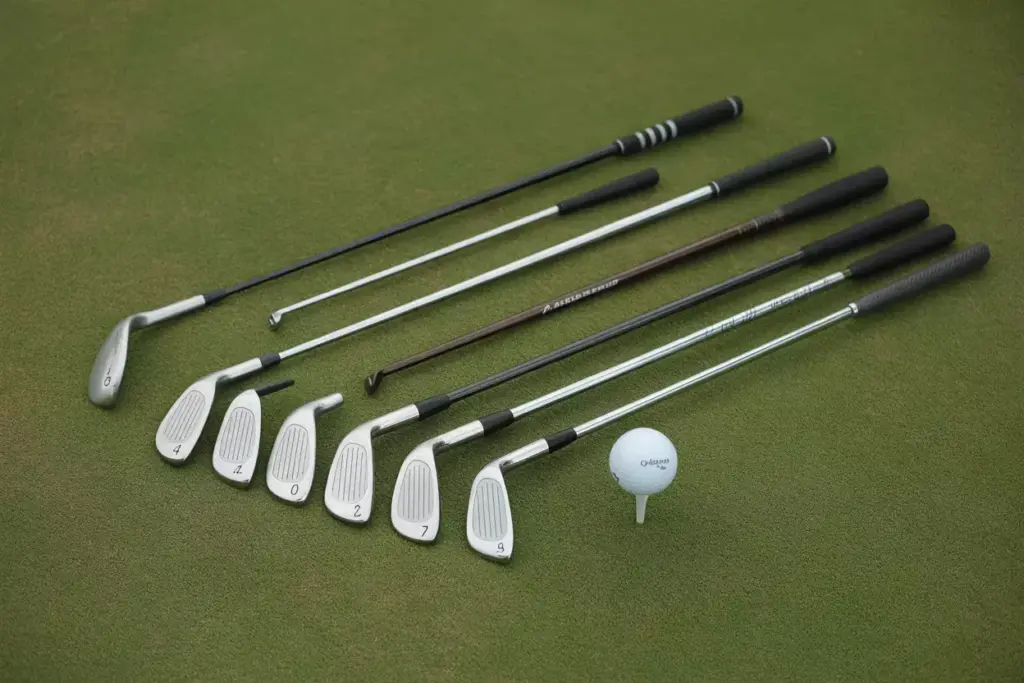
Irons form the backbone of any golf set, providing the precision and control needed for approach shots, shots from the rough, and various course conditions. A standard iron set typically includes clubs numbered 4 through 9, with each club offering different loft angles and distances.
The beauty of irons lies in their predictability. Once golfers understand their distances with each iron, they can make confident club selections based on yardage to the pin. Lower-numbered irons (4-6) are considered long irons, offering more distance but requiring better ball-striking skills. Higher-numbered irons (7-9) are shorter irons that provide more loft, higher ball flight, and greater accuracy.
Iron categories and their purposes:
- Long irons (4-6): Distance shots from 150-200 yards
- Mid irons (7-8): Approach shots from 100-150 yards
- Short irons (9): Precision shots from 80-120 yards
Modern iron technology offers options for every skill level. Game improvement irons feature larger clubheads, wider soles, and perimeter weighting to help beginners achieve better results. Players’ irons offer more compact designs for skilled golfers who prioritize feel and shot-shaping ability.
4. Wedges – Short Game Specialists

Wedges are the scoring clubs that can dramatically lower your scores once mastered. While technically part of the iron family, wedges deserve special attention due to their critical role in the short game. Most golfers carry at least two wedges: a pitching wedge (usually included with iron sets) and a sand wedge.
The pitching wedge typically has 44-48 degrees of loft and serves as the bridge between your 9-iron and more specialized wedges. It’s perfect for full approach shots from 80-110 yards and partial shots around the green.
The sand wedge features 54-58 degrees of loft and a wider sole designed to bounce through sand and soft turf. Despite its name, the sand wedge is equally valuable for shots around the green, bunker play, and even full shots from 60-80 yards.
Many players also add a gap wedge (50-52 degrees) to fill the distance gap between pitching and sand wedges, and a lob wedge (58-62 degrees) for high, soft shots over obstacles.
5. Putter – Where Scores Are Made
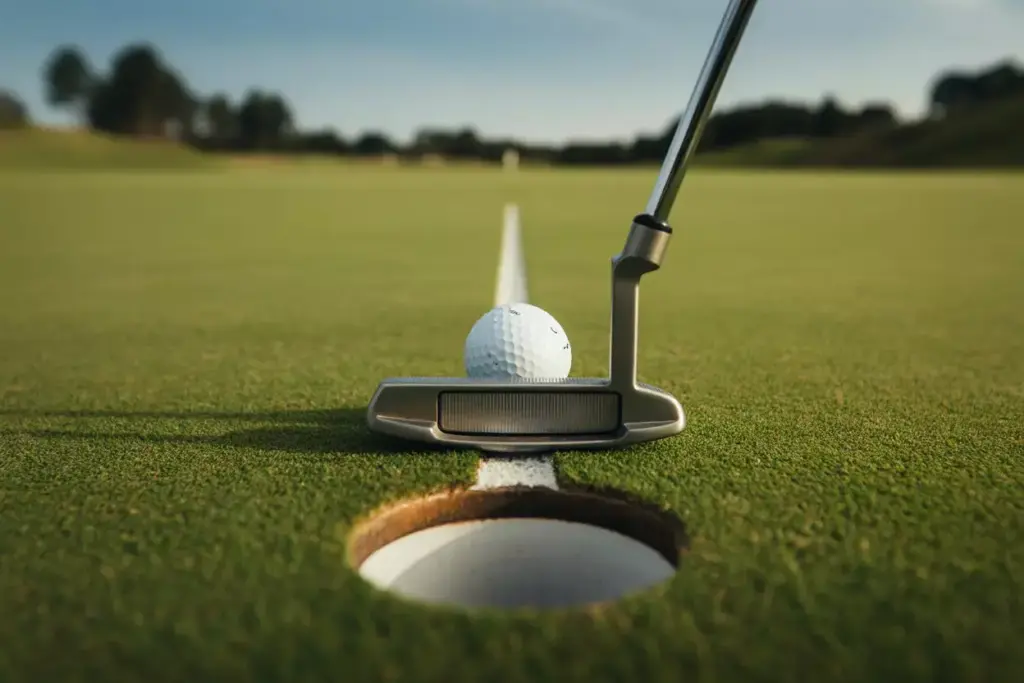
The putter might be the most important club in your bag, as it’s used on every hole and accounts for roughly 40% of all shots in a typical round. Unlike other clubs designed for distance, putters are precision instruments focused entirely on accuracy and distance control on the green.
Putters come in various head shapes and designs, but they generally fall into two categories: blade putters and mallet putters. Blade putters offer a traditional look and feel preferred by many skilled players, while mallet putters provide more forgiveness and alignment aids that benefit golfers of all skill levels.
The key to putter selection lies in finding a club that feels comfortable and helps you line up putts accurately. Many golf shops offer putting greens where you can test different models before making a decision.
Essential putter considerations:
- Length: Standard 34-35 inches for most golfers
- Weight: Heavier putters for fast greens, lighter for slow greens
- Alignment aids: Lines, dots, or other visual guides
- Face technology: Insert faces for softer feel, milled faces for consistent roll
Supporting Cast: Essential Golf Accessories
6. Golf Balls – The Heart of Every Shot
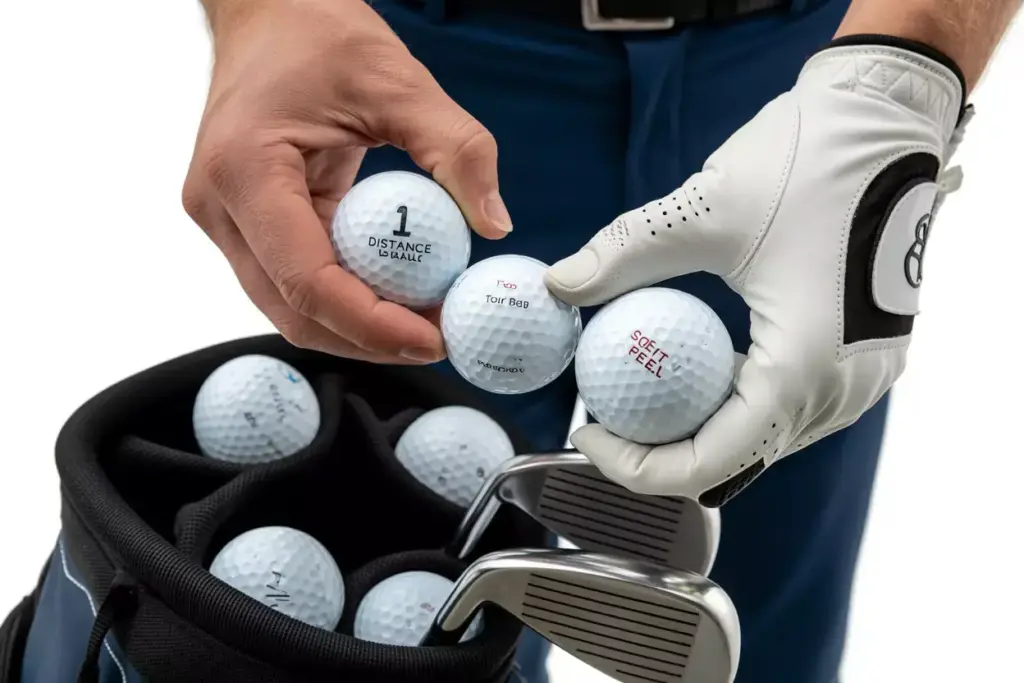
Golf balls might seem like simple accessories, but they’re actually sophisticated pieces of technology that significantly impact your game. Modern golf balls feature multiple layers designed to optimize performance for different aspects of the game, from distance off the tee to spin around the greens.
For beginners, the most important consideration is bringing enough balls to complete a round. Nothing ruins a golf outing faster than running out of balls on the back nine. Most new golfers should carry at least 12-15 balls per round, while experienced players might need only 3-4.
Golf ball categories:
- Distance balls: Designed for maximum length, ideal for beginners
- Tour balls: Multi-layer construction for advanced players seeking spin control
- Soft feel balls: Compromise between distance and feel for intermediate players
The choice between expensive tour-level balls and budget options depends largely on skill level. Beginners who frequently lose balls should focus on affordable options that still provide decent performance. As skills improve and ball loss decreases, investing in higher-quality balls can provide noticeable improvements in feel and control.
7. Golf Tees – Small but Mighty
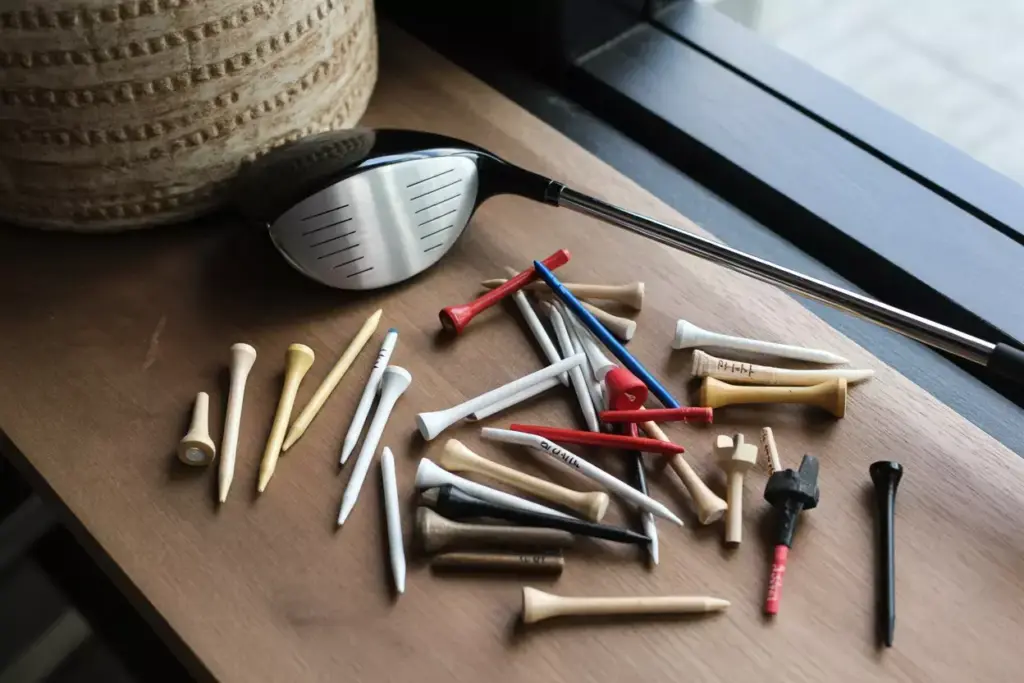
Golf tees represent one of golf’s most essential yet often overlooked pieces of equipment. These small accessories make it possible to elevate the ball for tee shots, providing a clean strike and optimal launch conditions. While they might seem insignificant, the right tees can actually impact your performance.
Wooden tees remain the traditional choice, offering biodegradability and a classic feel. They break easily but are inexpensive to replace. Plastic tees last longer and often feature innovative designs like reduced friction or specialized heights, but they’re less environmentally friendly.
Tee height plays a crucial role in shot success. For drivers, the general rule suggests teeing the ball so half of it sits above the clubface when the driver is soled behind it. For irons and fairway woods, lower tee heights work better to promote clean contact.
Tee selection guide:
- 2.75-inch tees: Standard height for drivers
- 2.125-inch tees: Fairway woods and long irons
- 1.5-inch tees: Short irons and specialty shots
- Castle tees: Multiple height options in one design
8. Golf Glove – Enhanced Grip and Control
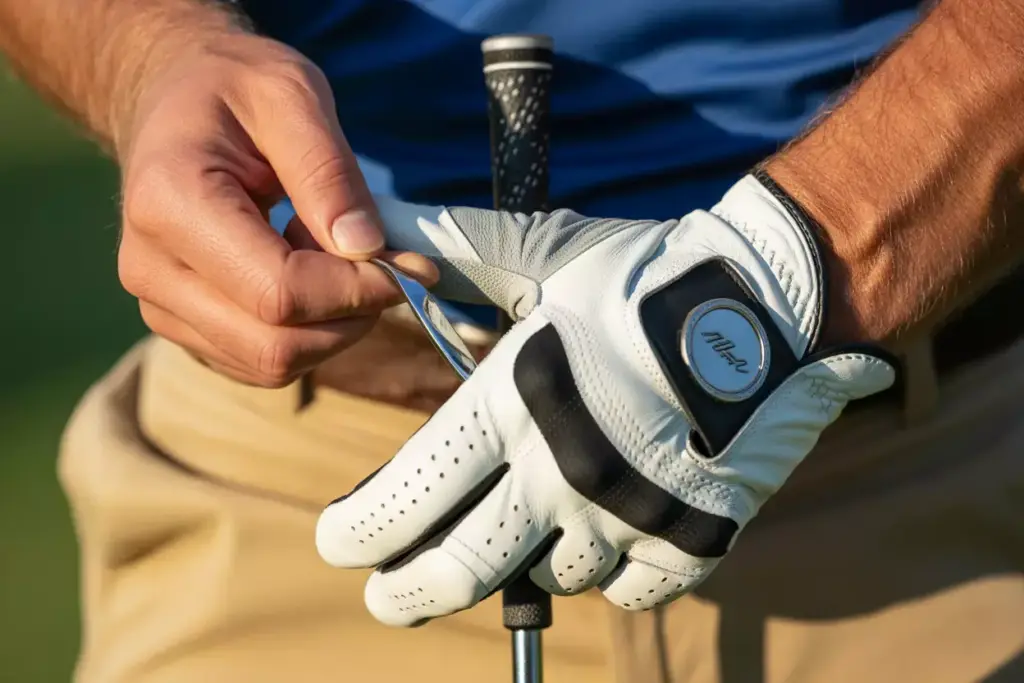
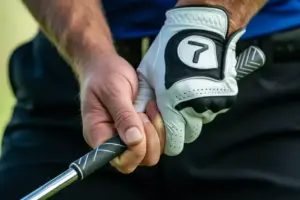
A golf glove might not be legally required to play, but it’s considered essential equipment by virtually every serious golfer. The glove serves multiple purposes: improving grip security, preventing blisters, and providing consistent feel shot after shot.
Most golfers wear a glove on their non-dominant hand (left hand for right-handed players), as this hand provides the primary grip pressure and control during the swing. The glove should fit snugly without being tight, with no bunching or loose areas that could cause discomfort or inconsistent grip pressure.
Glove materials and features:
- Leather: Premium feel and durability, preferred by most professionals
- Synthetic: More affordable, often more durable in wet conditions
- All-weather: Designed to maintain grip in rain or humidity
- Breathable: Mesh panels or perforations for comfort in hot weather
Quality golf gloves typically last 8-12 rounds of golf, depending on conditions and how often they’re worn. Many golfers keep a backup glove in their bag, as a worn or damaged glove can significantly impact grip security and shot confidence.
Nice-to-Have Equipment That Enhances Your Game
While the eight pieces above represent truly essential equipment, several additional items can significantly improve your golf experience:
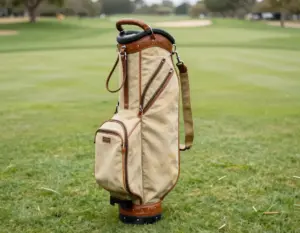
Golf bag: Essential for carrying and organizing equipment, with options ranging from lightweight carry bags to full-featured cart bags.
Golf towel: Keeps clubs and balls clean, typically attached to the golf bag for easy access.
Ball markers: Required for marking ball position on greens, often featuring team logos or personal designs.
Divot repair tool: Demonstrates proper course etiquette by repairing ball marks on greens.
Rangefinder or GPS: Provides accurate yardages for better club selection and course management.
Building Your Equipment Arsenal: A Strategic Approach
Understanding the 8 pieces of essential equipment for golf you can’t play without is just the beginning. The key to building an effective golf arsenal lies in strategic purchasing that matches your skill level, budget, and playing frequency.
For beginners, the recommendation is starting with a basic set that includes:
- Driver
- 5-iron, 7-iron, 9-iron
- Pitching wedge
- Putter
- Golf balls, tees, and glove
This simplified approach keeps initial costs manageable while providing clubs for every basic shot type. As skills develop and the game becomes more enjoyable, additional clubs can be added to fill distance gaps and provide more options around the course.
Intermediate players should focus on completing their iron set and adding specialized wedges. This might include filling out the 4-6 iron range and adding a sand wedge or gap wedge for improved short game options.
Advanced players can fine-tune their equipment selection based on specific course conditions and personal preferences. This might involve custom fitting, premium materials, or specialized clubs for unique shot situations.
Investment Considerations and Budget Planning
Golf equipment represents a significant investment, but smart purchasing decisions can provide years of enjoyable play. The key lies in balancing quality with budget constraints while prioritizing the most impactful purchases.
Budget allocation suggestions:
- 40%: Irons and wedges (most frequently used)
- 25%: Driver and fairway woods (high impact on distance)
- 20%: Putter (critical for scoring)
- 15%: Accessories (balls, gloves, bag, etc.)
Quality equipment holds its value better and often provides superior performance, but beginners shouldn’t feel pressured to buy the most expensive options immediately. Many manufacturers offer excellent game improvement equipment at moderate price points that can serve golfers well for years.
Money-saving strategies:
- Purchase previous year models when new releases arrive
- Consider certified pre-owned equipment from reputable sources
- Start with a basic set and add clubs gradually
- Take advantage of end-of-season sales and promotions
Maintenance and Care for Longevity
Proper equipment maintenance ensures your investment provides years of reliable service while maintaining optimal performance. Simple care routines can dramatically extend equipment life and preserve the performance characteristics that make golf enjoyable.
Club maintenance essentials:
- Clean clubs after every round with warm soapy water
- Dry thoroughly to prevent rust and corrosion
- Store in a dry environment with headcovers on woods
- Replace grips annually or when they become slick
- Check for loose clubheads or damaged shafts regularly
Accessory care:
- Rotate golf balls to prevent flat spots during storage
- Replace gloves when they become thin or lose grip
- Clean golf bags periodically and check zippers and straps
- Store equipment in temperature-controlled environments when possible
Conclusion
Mastering the 8 pieces of essential equipment for golf you can’t play without forms the foundation for enjoying this challenging and rewarding sport. From the power of a well-struck driver to the precision of a perfectly weighted putter, each piece of equipment serves a specific purpose in helping golfers navigate the course successfully.
The journey of building your golf equipment collection should be thoughtful and strategic, matching purchases to your current skill level while leaving room for growth and improvement. Remember that the most expensive equipment won’t automatically lower your scores – consistent practice and proper instruction remain the keys to improvement.
Your next steps:
- Assess your current equipment against this essential list and identify any gaps
- Visit a local golf shop to test different clubs and get properly fitted
- Start with basics if you’re new to golf, focusing on quality over quantity
- Invest in lessons to learn proper techniques that maximize your equipment’s potential
- Practice regularly with your equipment to build familiarity and confidence
Golf equipment technology continues advancing each year, but the fundamental principles remain constant. Focus on acquiring quality equipment that fits your game, maintain it properly, and most importantly, get out on the course to enjoy the game that has captivated players for centuries. With the right equipment foundation in place, you’ll be well-prepared to tackle any course and continue improving your game for years to come.
References
[1] United States Golf Association. “Rules of Golf: Equipment Standards.” USGA.org, 2025.
[2] Professional Golfers’ Association. “Equipment Guidelines for Beginning Golfers.” PGA.com, 2025.
[3] Golf Equipment Manufacturers Association. “Annual Equipment Survey and Trends Report.” GEMA Industry Report, 2025.