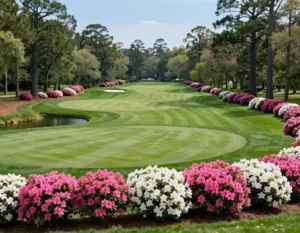
8 Natural Golf Poses for Pictures That Don’t Look Staged
Golf photography has evolved far beyond the traditional stiff poses that dominated the sport for decades. Today’s golfers want authentic, natural images that capture the genuine essence of their game and personality on the course. 8 Natural Golf Poses for Pictures That Don’t Look Staged represents a modern approach to golf photography that emphasizes spontaneity, authenticity, and the natural flow of the game.
Disclosure: This post contains affiliate links. As an Amazon Associate, we earn from qualifying purchases, and at no extra cost to you.

The key to capturing compelling golf photos lies in understanding the rhythm and movement inherent in the sport. Rather than forcing artificial positions, the best golf photographs emerge from genuine moments during play, practice, and course interaction. These natural poses not only look more appealing but also tell a better story about the golfer’s experience and skill level.
Key Takeaways
- Natural golf poses focus on authentic moments during play rather than forced positioning
- Timing and movement are crucial elements for capturing genuine golf photography
- Pre-shot and post-shot routines offer the most opportunities for natural, unposed images
- Environmental interaction with the golf course creates more compelling and contextual photos
- Candid expressions and body language convey more personality than traditional staged poses
Understanding Natural Golf Photography
The Evolution from Staged to Authentic
Traditional golf photography often relied heavily on posed shots that looked artificial and disconnected from the actual game. Modern golf photography has shifted toward capturing authentic moments that reflect the true nature of the sport. This evolution mirrors broader trends in photography where candid, lifestyle-oriented images have gained popularity over formal portraits.
Natural golf poses work because they capture the inherent beauty of golf’s movements and the genuine emotions that accompany the game. When photographers focus on real moments—the concentration before a putt, the satisfaction after a great drive, or the camaraderie between playing partners—the resulting images resonate more deeply with viewers.
Key Elements of Natural Golf Poses
Several fundamental principles guide effective natural golf photography:
Movement and Flow: Golf is a dynamic sport with natural rhythm and movement. The best poses capture this fluidity rather than stopping it artificially.
Emotional Authenticity: Genuine expressions and reactions create more compelling images than forced smiles or exaggerated gestures.
Environmental Context: Including the golf course setting helps tell a complete story and provides visual interest beyond just the golfer.
Timing Sensitivity: Natural poses often happen in brief moments between formal shots, requiring photographers to be ready and anticipatory.
The Complete Guide to 8 Natural Golf Poses for Pictures That Don’t Look Staged
1. The Pre-Shot Analysis Pose
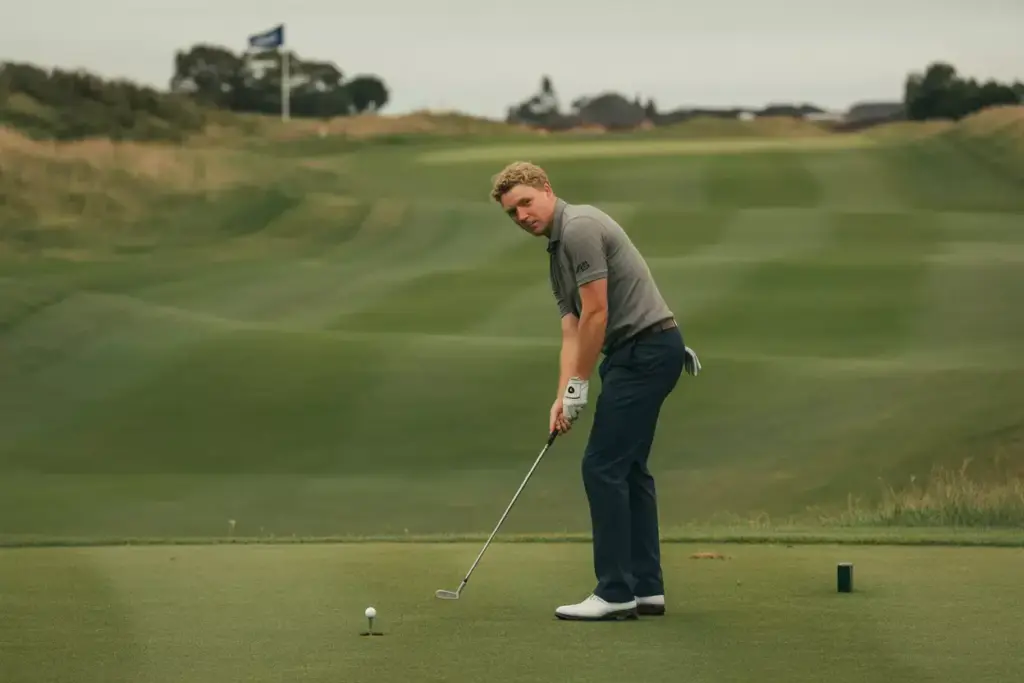
The moments before taking a shot offer some of the most naturally photogenic opportunities in golf. This pose captures golfers in their authentic pre-shot routine, whether they’re reading the green, analyzing wind conditions, or visualizing their shot.
To achieve this natural pose, golfers should focus on their actual pre-shot process rather than posing for the camera. Stand behind the ball, club resting casually at your side or held with both hands in front of you. Let your natural concentration show on your face as you assess the shot ahead.
The beauty of this pose lies in its genuine nature—every golfer has their own pre-shot routine, making each image unique and personal. Some golfers prefer to crouch down to read putts, while others stand tall and survey the entire hole. Both approaches create compelling, natural photographs.
Photographer’s tip: Capture multiple angles during this routine, as golfers naturally move and adjust their position while analyzing their shot.
2. The Address Position with Natural Stance
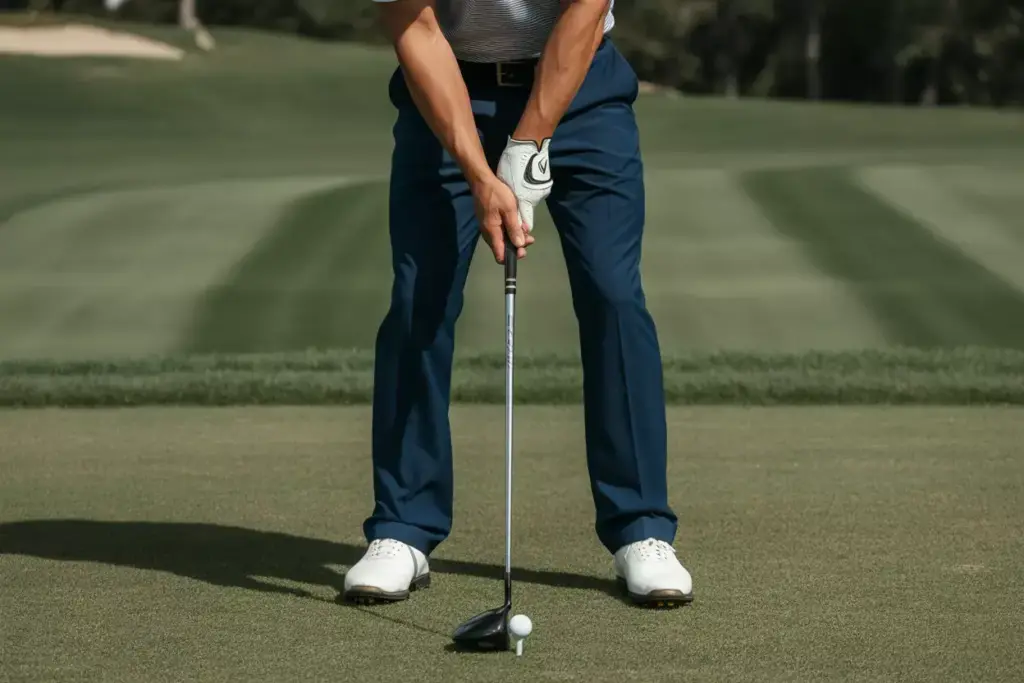
Unlike traditional golf instruction photos that emphasize perfect form, natural address position photos should capture the golfer’s individual stance and setup style. Every golfer has slight variations in their address position that reflect their personal technique and comfort level.
Focus on settling into your natural stance without overthinking the technical aspects. Allow your body to find its comfortable position over the ball, and let the photographer capture this authentic setup. The goal is to show your personal golf style rather than a textbook position.
This pose works particularly well when captured from multiple angles—side views show the golfer’s posture and alignment, while behind-the-ball shots emphasize the target line and course layout.
3. The Mid-Swing Capture
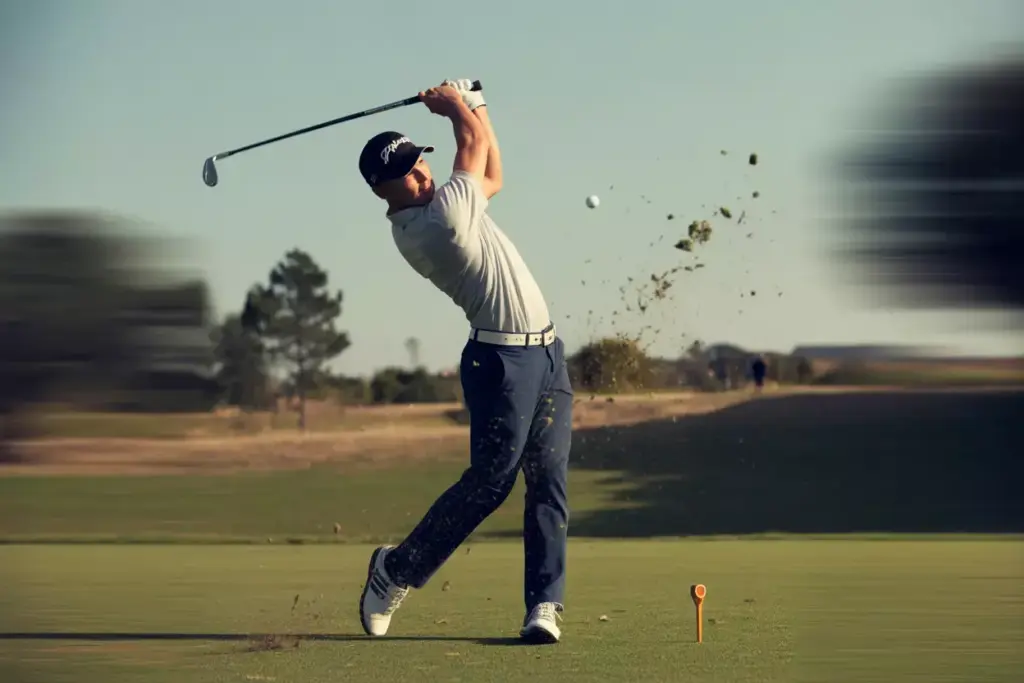
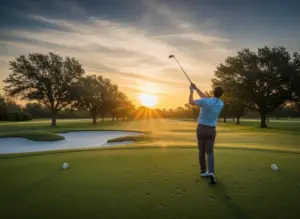
Capturing the golf swing in motion creates some of the most dynamic and natural golf photographs. Rather than stopping at specific positions, natural mid-swing poses focus on the fluid movement and athletic nature of the golf swing.
The key to natural mid-swing photography lies in taking actual swings rather than posing in swing positions. This approach ensures that body mechanics remain authentic and the resulting images show genuine athletic movement.
Different points in the swing offer various photographic opportunities:
- Backswing: Shows preparation and coiled energy
- Impact: Captures the moment of contact and concentration
- Follow-through: Demonstrates completion and natural finish
4. The Natural Follow-Through
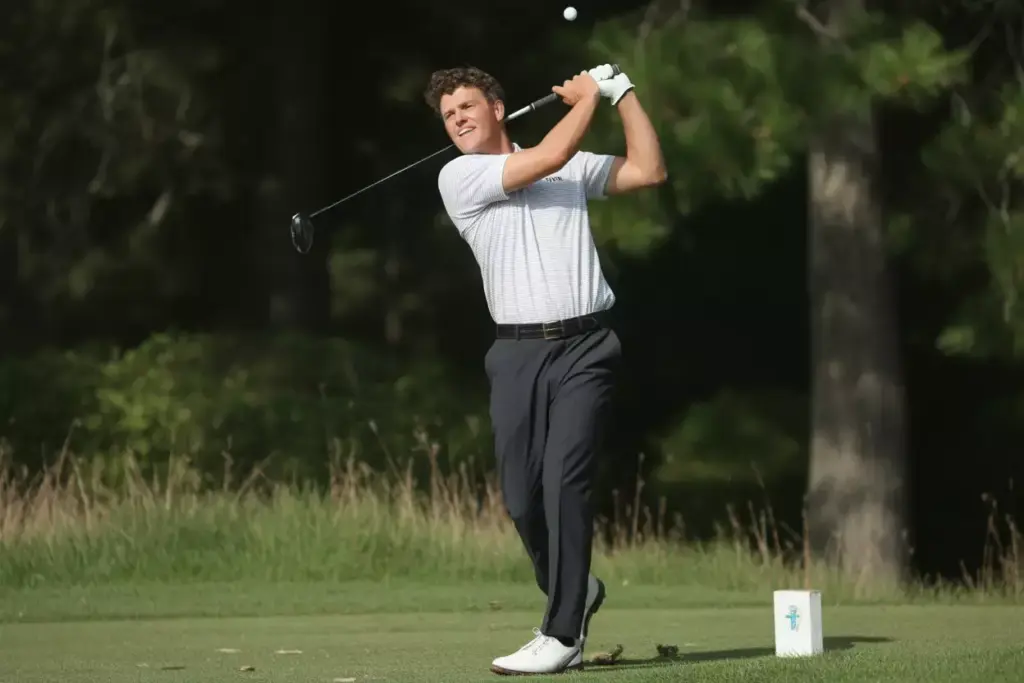
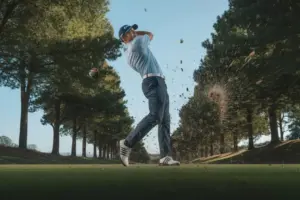
The follow-through position offers excellent opportunities for natural golf poses because it represents the completion of athletic movement and often includes genuine emotional reactions to the shot quality.
Rather than holding an artificial finish position, allow your natural follow-through to complete fully. Most golfers naturally hold their finish for a moment while watching their ball flight, creating an authentic pose that requires no staging.
This pose works especially well for capturing personality and playing style. Aggressive players might finish with high, powerful positions, while smooth swingers often display more controlled, balanced finishes.
5. The Reaction Shot

Golf naturally produces genuine emotional reactions—from satisfaction with great shots to disappointment with poor ones. These authentic emotional moments create some of the most compelling and natural golf photographs.
The key to natural reaction shots is allowing genuine emotions to show rather than forcing expressions. Whether celebrating a successful putt or analyzing a missed shot, authentic reactions tell the story of the golf experience better than any posed expression.
Photographers should be ready to capture these fleeting moments, as genuine reactions typically last only a few seconds before golfers compose themselves for the next shot.
6. The Walking Pose Between Shots
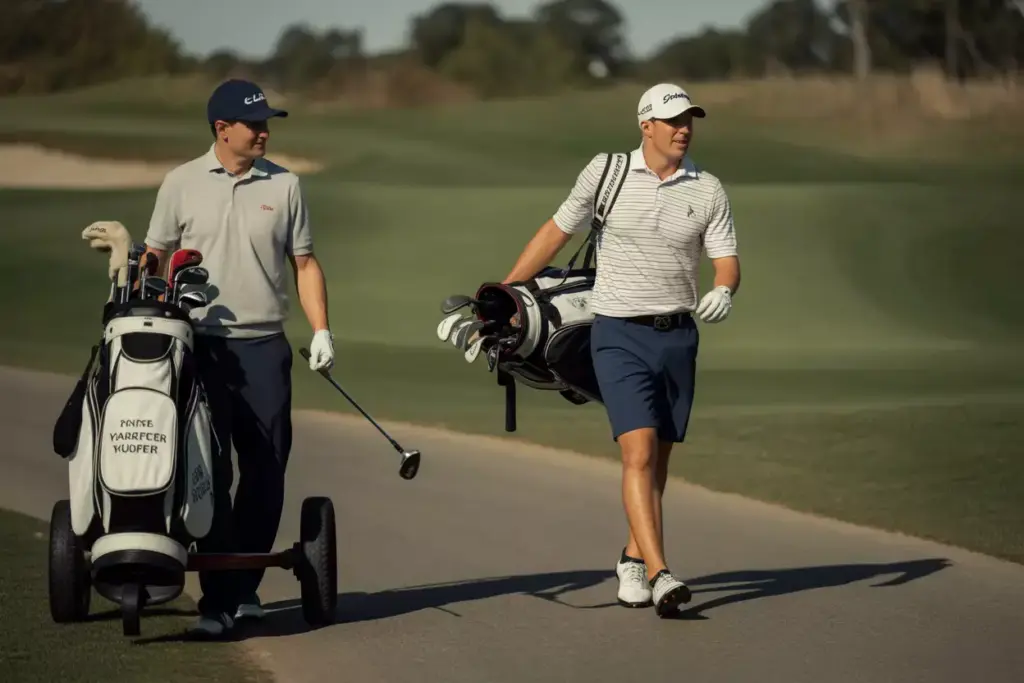
Golf involves significant walking between shots, providing numerous opportunities for natural, unposed photography during course navigation. These transitional moments often produce the most relaxed and authentic images.
Natural walking poses work best when golfers simply walk normally rather than trying to create specific poses. Carry your clubs naturally, engage in conversation with playing partners, and let the photographer capture these genuine moments of course interaction.
These poses are particularly effective for showing the golf course environment and the social aspects of the game. They also tend to be more flattering than static poses because the natural movement creates better body positioning.
7. The Course Interaction Pose
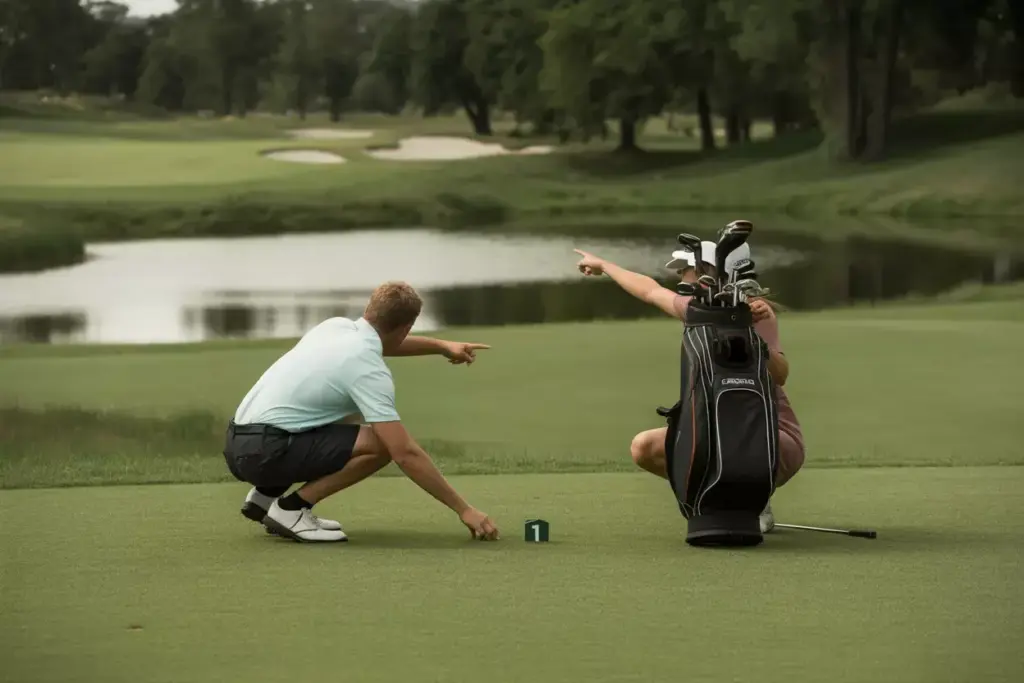
Golf courses provide beautiful natural settings that enhance photography when golfers interact authentically with their environment. Natural course interaction poses might include reading yardage markers, checking pin positions, or simply enjoying the scenery.
These poses work best when they serve actual purposes rather than being purely photographic. Check your yardage book naturally, point out course features to playing partners, or take a moment to appreciate a beautiful view. The authentic interaction with the course creates more compelling images than artificial positioning.
Environmental interaction poses also help tell the complete story of the golf experience, showing not just the athletic aspects but also the recreational and scenic elements that make golf enjoyable.
8. The Social Interaction Pose
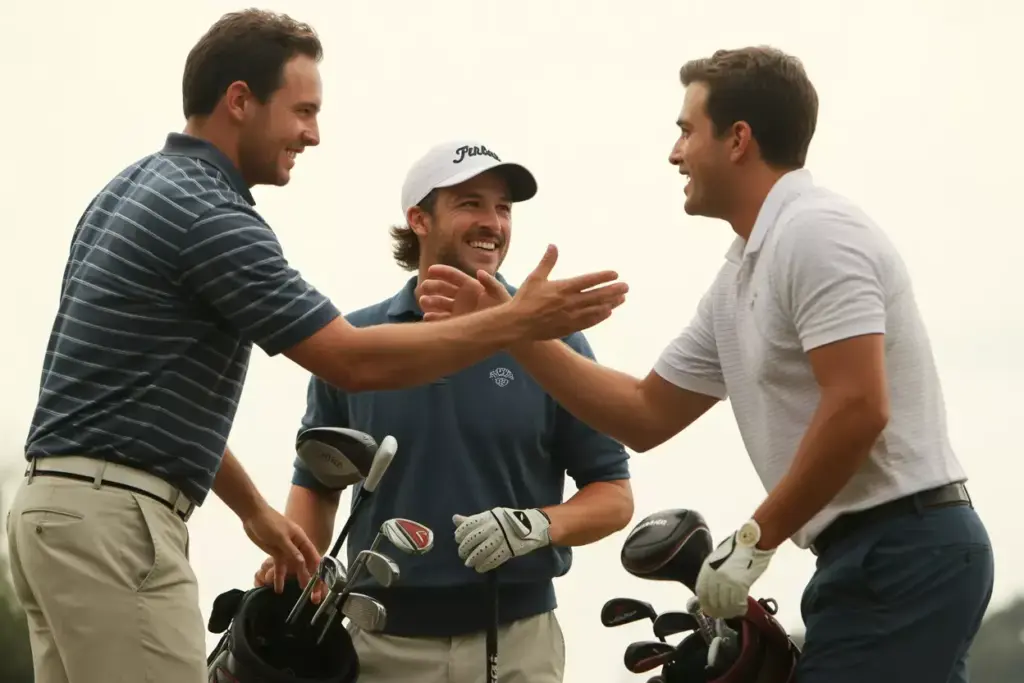
Golf is inherently social, and natural interactions between playing partners create some of the most engaging and authentic golf photographs. These poses capture the camaraderie and friendship that define much of the golf experience.
Natural social poses emerge from genuine interactions—discussing shot strategy, congratulating good shots, or simply enjoying conversation during the round. The key is to let authentic relationships show rather than forcing artificial group poses.
These images work particularly well for capturing the recreational and social aspects of golf that extend beyond pure athletic performance. They show golf as a social activity and lifestyle choice rather than just a sport.
Technical Tips for Achieving Natural Golf Poses
Timing and Rhythm
Understanding golf’s natural rhythm helps photographers and golfers work together to capture authentic moments without disrupting play. Golf has natural pauses and transitions that provide ideal opportunities for photography.
The best natural golf poses often occur during these transitional moments:
- Between shots while walking or planning
- During pre-shot routines before addressing the ball
- After shot completion during natural follow-through and reaction
- Between holes during relaxed conversation and course navigation
Camera Positioning and Angles
Natural golf photography benefits from varied camera angles that capture different aspects of the golf experience. Traditional golf photography often relies on predictable angles, while natural photography explores more creative positioning.
Effective angles for natural golf poses include:
- Low angles that emphasize athletic power and course background
- Behind-the-golfer perspectives that show target lines and course layout
- Side angles that capture swing mechanics and body positioning
- Environmental shots that place golfers within the broader course context
Lighting Considerations
Natural lighting enhances the authenticity of golf photography by creating realistic conditions that match the actual golf experience. Golden hour lighting during early morning or late afternoon rounds provides the most flattering and natural illumination.
Avoid harsh midday lighting that creates unflattering shadows and requires artificial flash. Instead, work with natural course lighting to create images that accurately represent the golf environment and experience.
Common Mistakes to Avoid
Over-Posing and Artificial Positioning
The biggest threat to natural golf photography is over-directing poses to the point where they become artificial. Natural poses should feel comfortable and authentic to the golfer, not forced or uncomfortable.
Avoid these common over-posing mistakes:
- Holding unnatural positions for extended periods
- Forcing expressions that don’t match the golf situation
- Ignoring individual golf style in favor of generic poses
- Stopping natural movement to create static poses
Ignoring Golf’s Natural Flow
Golf has an inherent rhythm and flow that should guide photography rather than being disrupted by it. Respect the natural pace of play and work within golf’s existing structure rather than forcing artificial timing.
Natural golf photography works best when it integrates seamlessly with actual play rather than requiring significant interruptions or artificial setups.
Focusing Only on Perfect Shots
Authentic golf photography should represent the complete golf experience, including both successful and challenging moments. Focusing exclusively on perfect shots creates an unrealistic portrayal of the game.
Natural golf poses should capture the full range of golf experiences:
- Successful shots and positive reactions
- Challenging situations and problem-solving moments
- Course management and strategic thinking
- Social interaction and recreational enjoyment
Equipment and Settings for Natural Golf Photography
Camera Equipment Recommendations
Natural golf photography benefits from equipment that can capture movement and authentic moments without being intrusive or disruptive to play.
Essential equipment includes:
- Fast autofocus lenses for capturing movement
- Telephoto options for maintaining distance during shots
- Image stabilization for handheld photography during walking
- Silent or quiet shooting modes to avoid disrupting concentration
Optimal Camera Settings
Natural golf photography requires camera settings that can adapt to changing conditions and capture authentic moments quickly.
Recommended settings:
- Shutter priority mode for controlling movement blur
- Continuous autofocus for tracking moving subjects
- Burst mode capability for capturing peak moments
- Higher ISO tolerance for natural lighting conditions
Advanced Techniques for Natural Golf Poses
Anticipating Natural Moments
Experienced golf photographers develop the ability to anticipate natural photographic moments before they occur. This skill comes from understanding golf’s rhythm and recognizing when authentic poses are likely to emerge.
Key anticipation skills include:
- Reading golfer body language to predict reactions
- Understanding course situations that create natural poses
- Recognizing pre-shot routines that offer photographic opportunities
- Timing social interactions for authentic group poses
Working with Different Skill Levels
Natural golf photography techniques must adapt to different golfer skill levels and playing styles. Beginners, intermediate players, and advanced golfers all have different natural movements and comfort levels on the course.
Adaptation strategies include:
- Adjusting timing for different swing speeds and routines
- Recognizing individual style variations in natural poses
- Working with comfort levels to maintain authenticity
- Capturing skill-appropriate moments that reflect actual ability
Seasonal and Environmental Considerations
Adapting to Different Course Conditions
Natural golf photography must adapt to varying course and weather conditions while maintaining authenticity. Different seasons and weather patterns create unique opportunities for natural poses.
Seasonal considerations:
- Spring conditions with fresh growth and mild weather
- Summer heat requiring different timing and hydration breaks
- Fall colors providing enhanced environmental backdrops
- Winter golf in appropriate climates with unique lighting
Weather-Specific Natural Poses
Different weather conditions create unique opportunities for authentic golf photography that wouldn’t be possible in perfect conditions.
Weather-specific opportunities:
- Windy conditions creating natural movement and challenge
- Overcast skies providing even, flattering lighting
- Morning dew adding environmental texture and freshness
- Late afternoon shadows creating dramatic lighting effects
Post-Processing for Natural Golf Photography
Maintaining Authenticity in Editing
Post-processing natural golf photography should enhance authenticity rather than creating artificial perfection. The goal is to optimize the natural beauty captured during photography while maintaining realistic representation.
Authentic editing principles:
- Preserve natural lighting and color balance
- Enhance rather than alter facial expressions and body positioning
- Maintain realistic course conditions and environmental factors
- Avoid over-smoothing or artificial perfection
Color and Contrast Optimization
Natural golf photography benefits from subtle color and contrast adjustments that enhance the natural beauty of golf courses and authentic moments.
Optimization techniques:
- Enhance green tones to showcase course beauty
- Balance sky exposure for dramatic but realistic backgrounds
- Adjust shadows and highlights to reveal natural detail
- Maintain skin tone accuracy for authentic portrait elements
Conclusion
Mastering 8 Natural Golf Poses for Pictures That Don’t Look Staged requires understanding golf’s inherent rhythm, respecting authentic moments, and working within the natural flow of the game. The most compelling golf photography emerges from genuine experiences rather than artificial setups, creating images that truly represent the golf lifestyle and experience.
The eight natural poses outlined in this guide—from pre-shot analysis to social interactions—provide a comprehensive framework for authentic golf photography. Each pose builds on golf’s natural movements and emotions, ensuring that resulting images feel genuine and engaging rather than forced or artificial.
Success in natural golf photography depends on patience, timing, and respect for the game’s natural pace. By focusing on authentic moments and genuine interactions, photographers and golfers can create compelling images that tell the complete story of the golf experience.
Take action today by practicing these natural poses during your next round of golf. Work with a photographer who understands the principles of authentic golf photography, or experiment with these techniques during casual practice sessions. Remember that the best natural golf poses emerge from genuine golf experiences, so focus on enjoying your game while allowing authentic moments to unfold naturally.
The future of golf photography lies in authenticity and genuine representation of this beautiful game. By embracing natural poses and authentic moments, golfers can create lasting images that truly capture their passion for golf and the unique experiences that make each round memorable.