8 Steps to the Perfect Indoor Golf Set Up on Any Budget
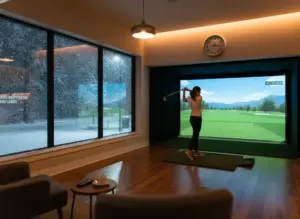
Picture this: it’s a cold winter morning in 2026, and while your golf buddies are hibernating until spring, you’re perfecting your swing in the comfort of your own home. Whether you’re dealing with harsh weather, a busy schedule, or simply want to improve your game year-round, creating the perfect indoor golf setup has never been more accessible or rewarding.
Disclosure: This post contains affiliate links. As an Amazon Associate, we earn from qualifying purchases, and at no extra cost to you.
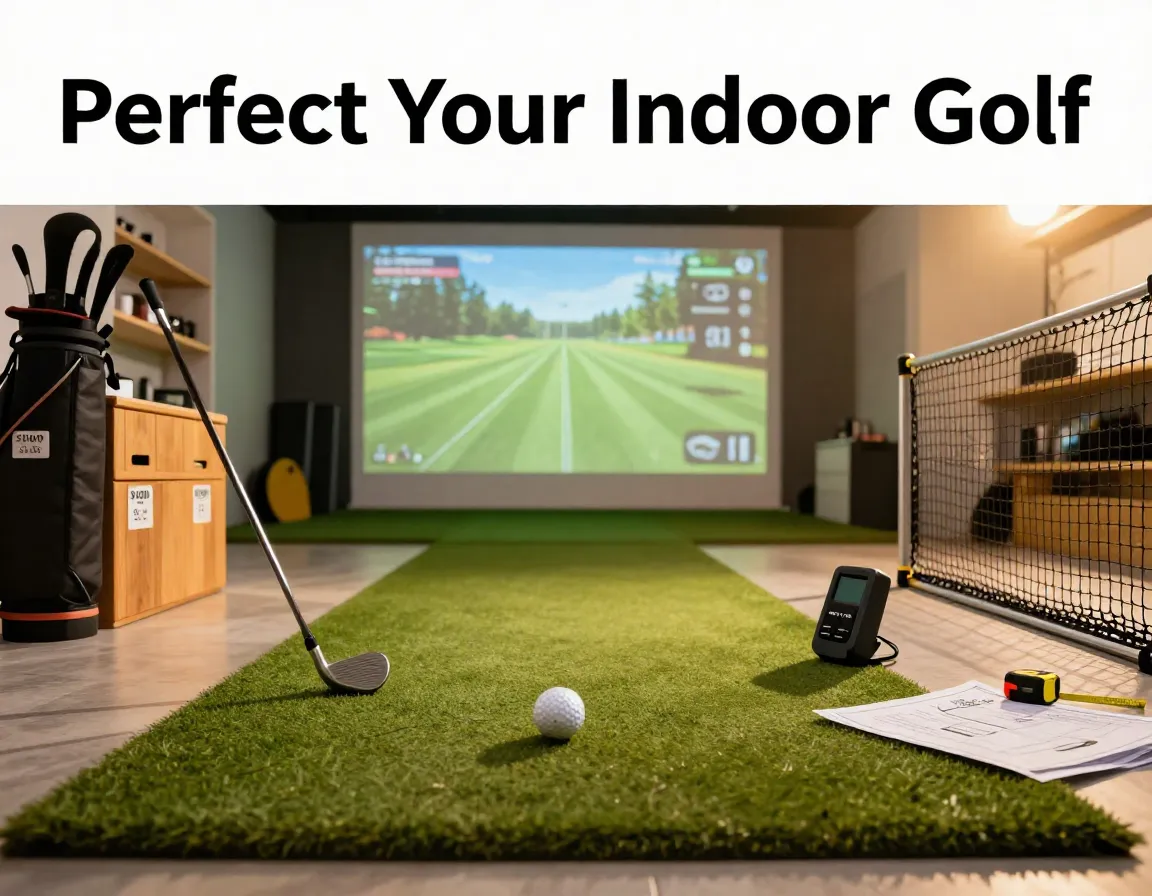
The beauty of following 8 Steps to the Perfect Indoor Golf Set Up on Any Budget lies in the flexibility to start small and grow your setup over time. From a basic $300 practice area to a professional-grade simulator costing tens of thousands, there’s an indoor golf solution for every golfer and every wallet.
Key Takeaways
- Space requirements are manageable: Most setups need just 10 feet wide, 15 feet deep, and 9-10 feet of ceiling height
- Budget flexibility: Start with a basic setup for $300-$1,000 or invest in premium systems up to $40,000+
- Essential components: Hitting mat, net or screen, launch monitor, and proper lighting form the foundation
- Room selection matters: Basements, garages, and spare rooms each offer unique advantages
- Scalable investment: Begin with basics and upgrade components over time as your budget allows
Understanding Your Space and Budget Requirements
1. Assess Your Available Space
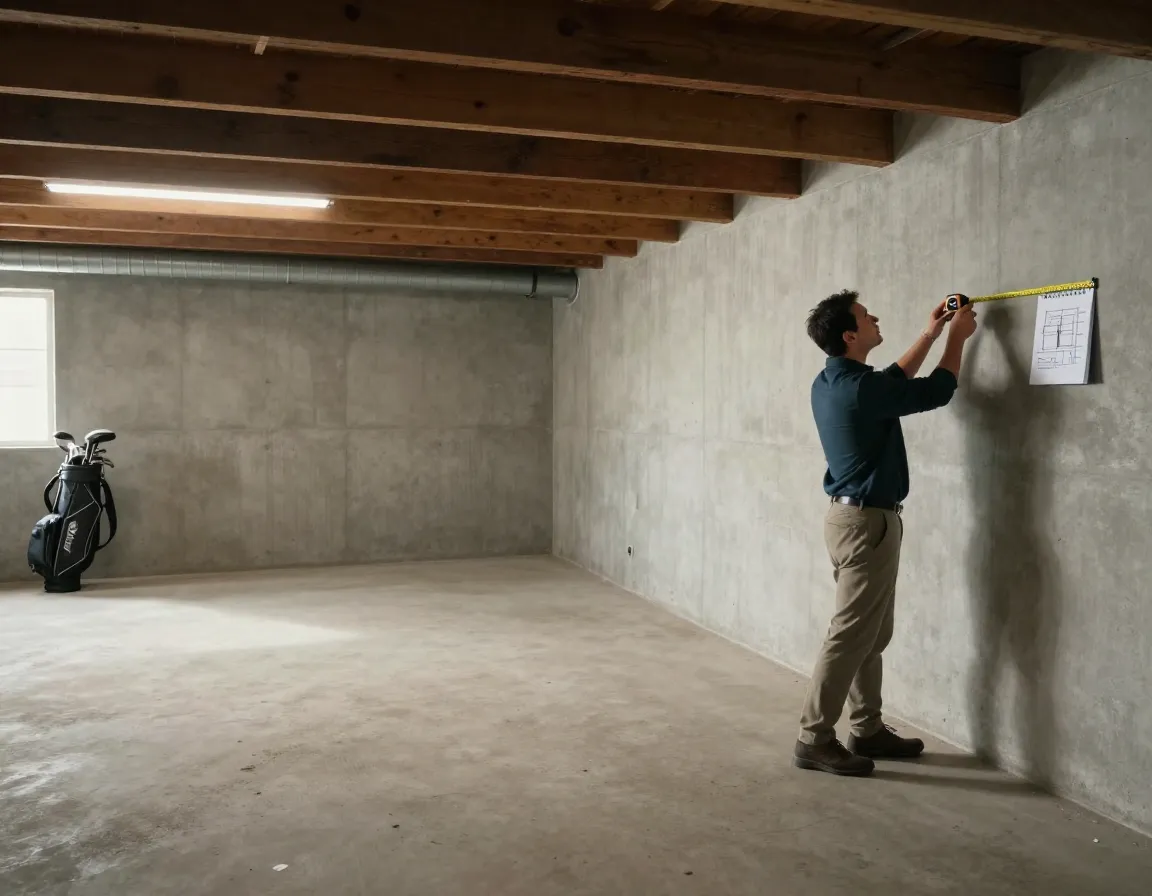
The foundation of any successful indoor golf setup starts with understanding your spatial constraints. According to industry standards, most golfers need at least 8.5-9 feet of ceiling height, though 10 feet or more is ideal [2]. For room dimensions, plan for a minimum of 10 feet wide and 15 feet deep for basic practice setups [1].
Ideal Room Locations:
- Basements: Quiet environment with proper ceiling height
- Garages: Plenty of room with ventilation considerations
- Spare bedrooms/offices: Perfect for net-based setups [2]
When measuring your space, don’t forget to account for your swing arc and follow-through. I recommend adding an extra 2-3 feet to the minimum requirements for comfortable practice sessions.
2. Determine Your Budget Range
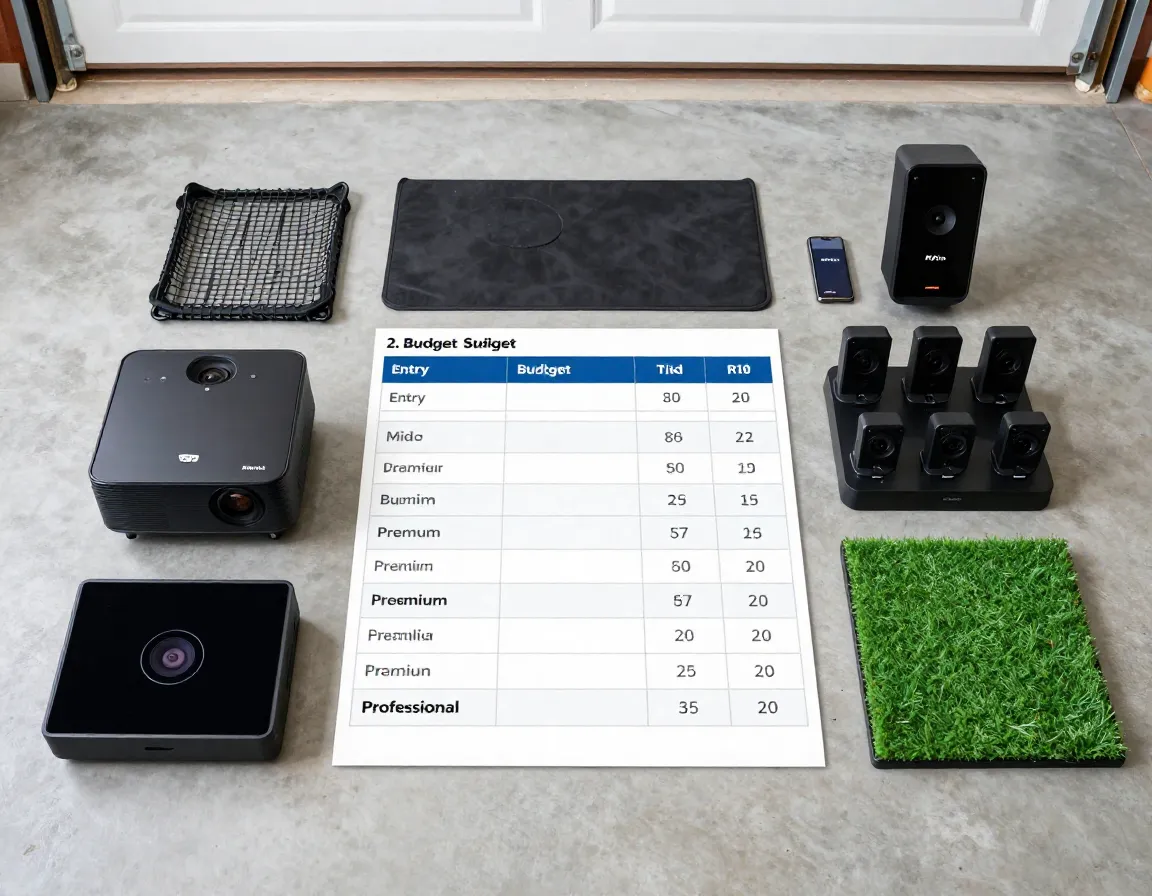
Understanding the 8 Steps to the Perfect Indoor Golf Set Up on Any Budget means recognizing that quality setups exist at every price point. Here’s how the budget tiers break down:
| Budget Tier | Price Range | Key Features |
|---|---|---|
| Entry Level | $300-$2,000 | Basic net, mat, simple launch monitor |
| Mid-Range | $5,000-$8,000 | Better screen, quality projector, advanced tracking |
| Premium | $15,000-$25,000 | Professional components, multiple sensors |
| Professional | $40,000+ | Commercial-grade equipment, custom installation |
You can create a simple home setup for as little as $300 with a mid-range practice net and mat [1]. The key is starting with essentials and upgrading components as your budget and interest grow.
Essential Equipment and Setup Components
3. Choose Your Hitting Surface

A quality hitting mat is non-negotiable for any indoor golf setup. The SKLZ Practice Mat at around $90 provides excellent value for beginners [1]. When selecting a mat, consider:
Key Features to Look For:
- ✅ Realistic turf feel that mimics course conditions
- ✅ Shock absorption to protect joints during practice
- ✅ Durability for long-term use
- ✅ Size appropriate for your swing style
For budget-conscious golfers, a basic mat will suffice initially. However, investing in a premium mat with replaceable turf sections can save money long-term and provide a more authentic experience.
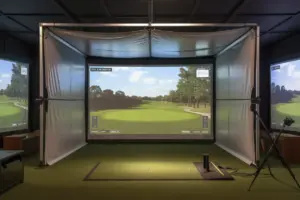
4. Select Your Net or Screen System
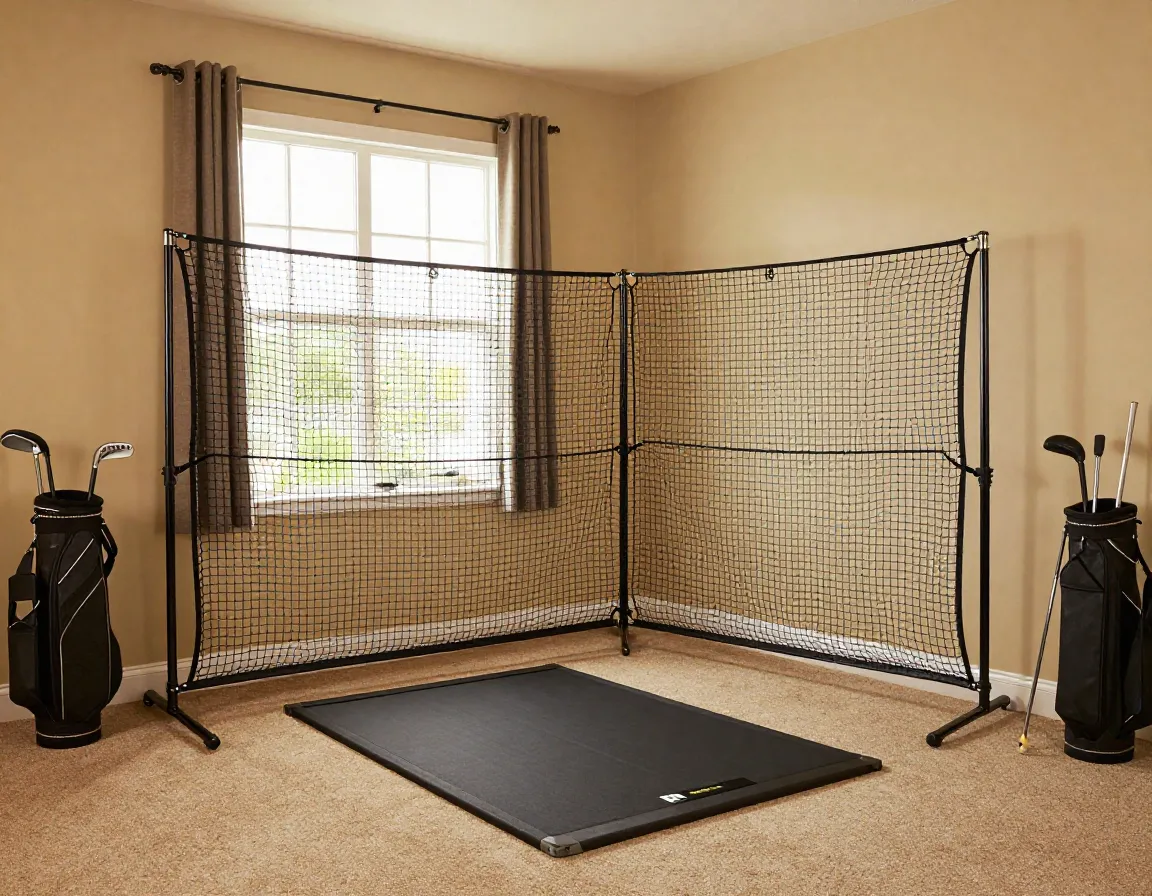
Your choice between a practice net or impact screen significantly affects both cost and functionality. For those following the 8 Steps to the Perfect Indoor Golf Set Up on Any Budget approach, consider these options:
Practice Nets (Budget-Friendly):
- Spornia SPG-8 practice net: Around $300 [1]
- Quick setup and breakdown
- Perfect for swing practice and ball striking
Impact Screens (Simulator-Ready):
- SimSpace Golf enclosures: $1,300-$2,300 [1]
- SimSpace Deluxe impact screen: Just over $500 [1]
- Enable full simulator experience with projector
The choice depends on whether you want simple practice or a full simulation experience. Many golfers start with nets and upgrade to screens later.
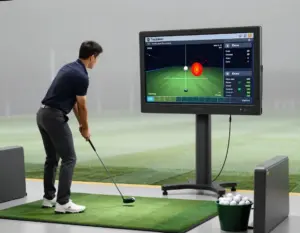
5. Invest in Launch Monitor Technology
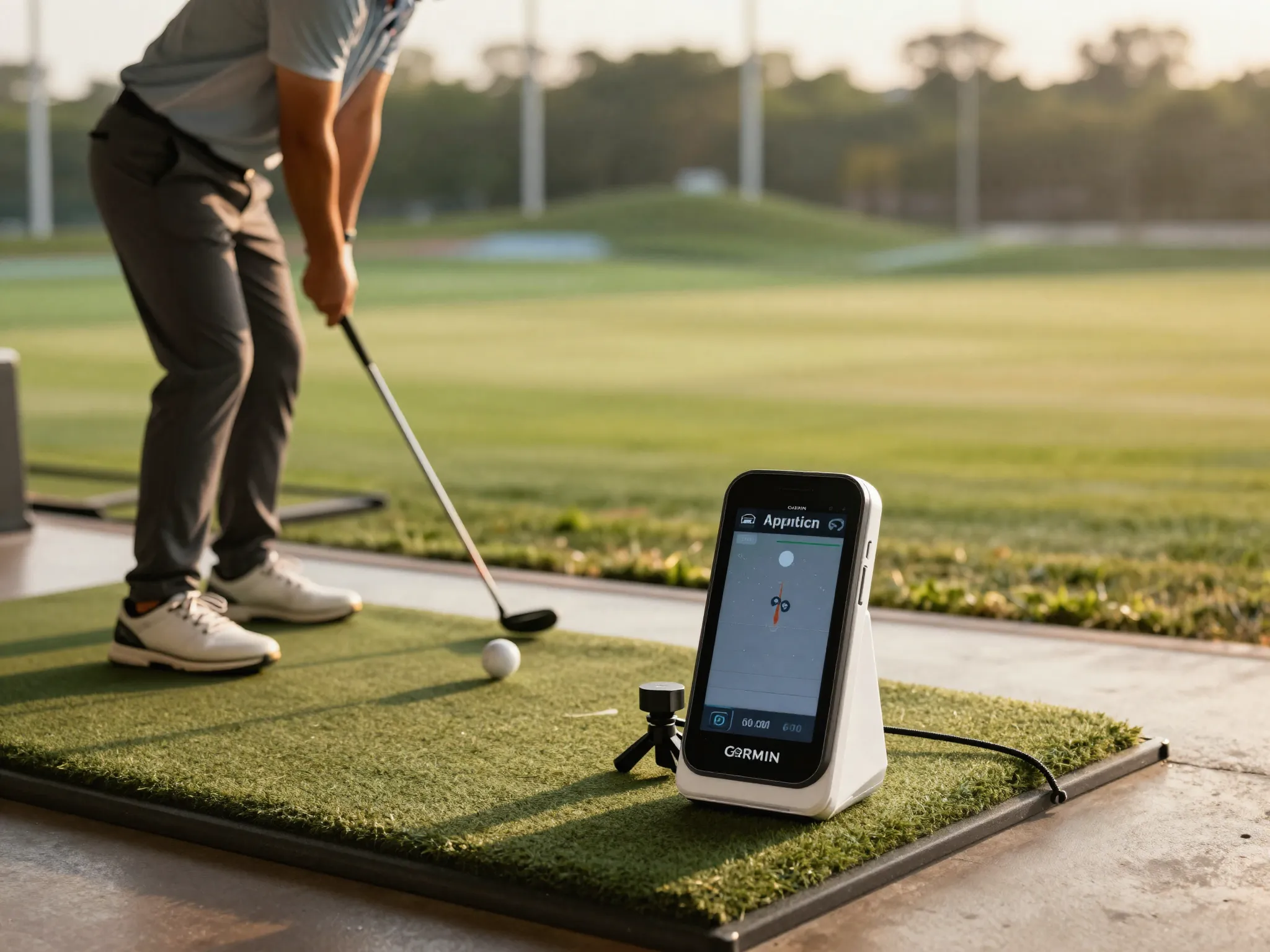
Modern launch monitors have revolutionized home golf practice by providing instant feedback on ball flight, club speed, and accuracy. The Garmin Approach R10 at $599 stands out as the best budget option [3], while the Garmin Approach R50 offers simulator capabilities with an annual subscription under $100/year to play over 43,000 courses [1].
Budget Build Options ($1,000-$3,000):
- Garmin R10 or Rapsodo MLM2 Pro
- Entry-level tracking with smartphone integration
- Basic swing metrics and ball flight data [2]
Premium Options:
- Multi-camera systems with advanced analytics
- Professional-grade accuracy
- Comprehensive swing analysis
6. Plan Your Visual Display System
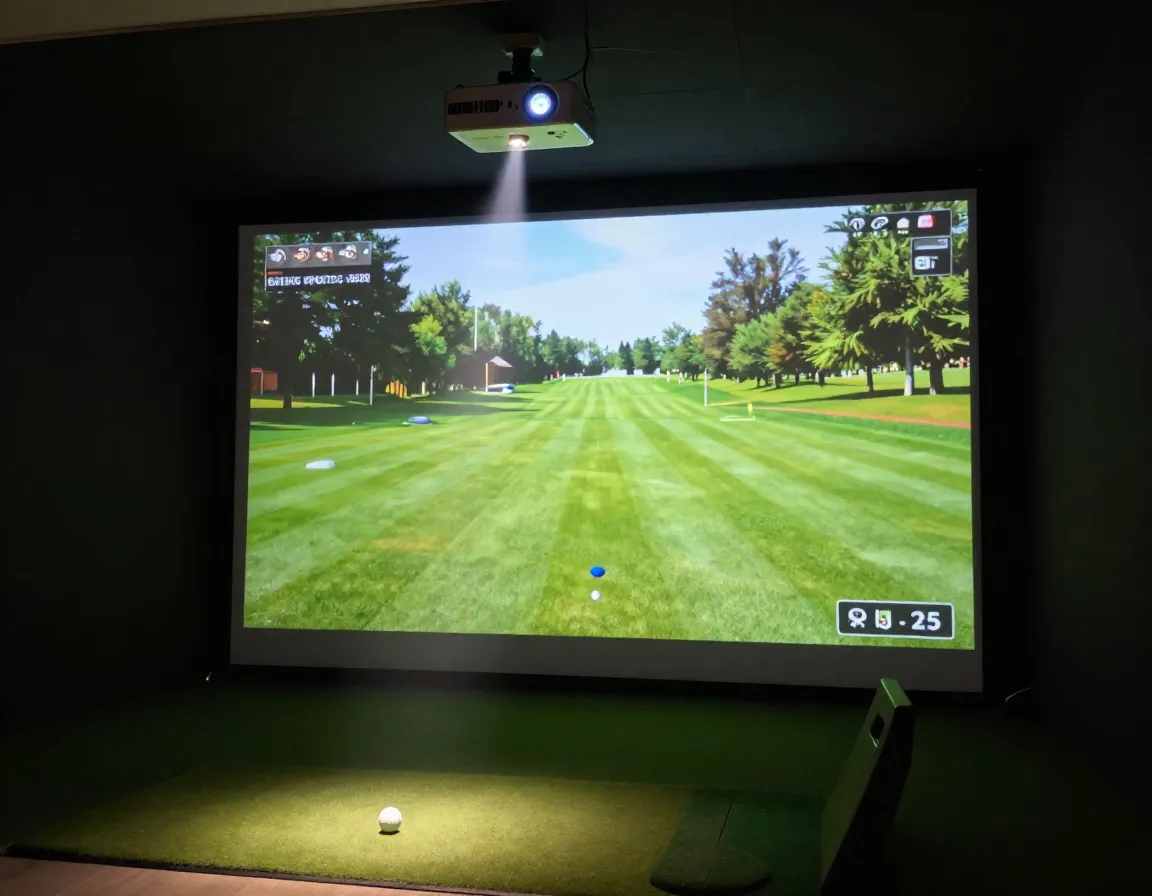
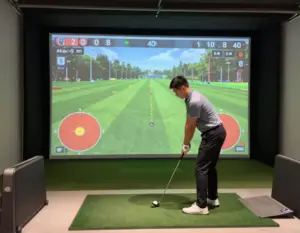
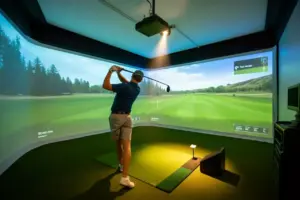
If you’re building a simulator rather than just a practice area, your visual display system becomes crucial. Budget considerations for screens and projectors include:
Screen Investment:
- Budget: $500-$2,000 [3]
- Professional: $2,000+ with custom enclosures
Projector Selection:
- Short-throw projector: $800-$2,500 [3]
- Ultra-short throw for space constraints
- 4K capability for premium experience
The key is matching your display quality to your launch monitor capabilities. A basic projector works fine with entry-level monitors, while premium systems benefit from high-resolution displays.
Advanced Setup Optimization
7. Perfect Your Lighting and Environment
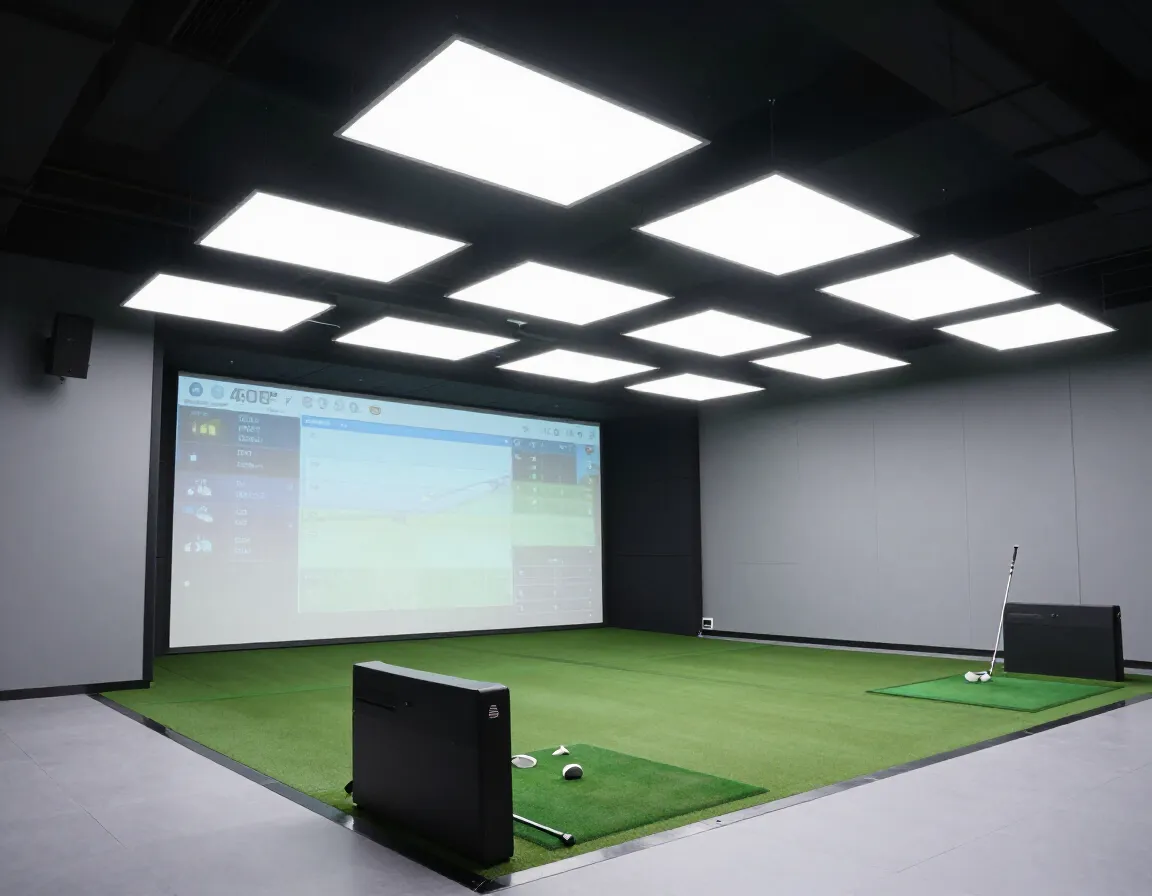
Proper lighting makes the difference between a functional practice space and a professional-grade training environment. Consider these lighting essentials:
Lighting Requirements:
- 🔆 Overhead lighting: Bright, even illumination without shadows
- 🔆 Side lighting: Reduces glare on screens and monitors
- 🔆 Adjustable intensity: Dimmer switches for different practice modes
- 🔆 Color temperature: 4000K-5000K for natural golf course feel
Avoid fluorescent lighting that can interfere with launch monitor sensors. LED panels provide consistent, adjustable lighting that enhances both practice sessions and simulator experiences.
Environmental Controls:
- Ventilation for air circulation
- Temperature control for year-round comfort
- Sound dampening materials for family harmony
- Flooring considerations for safety and comfort
8. Implement Safety and Maintenance Protocols
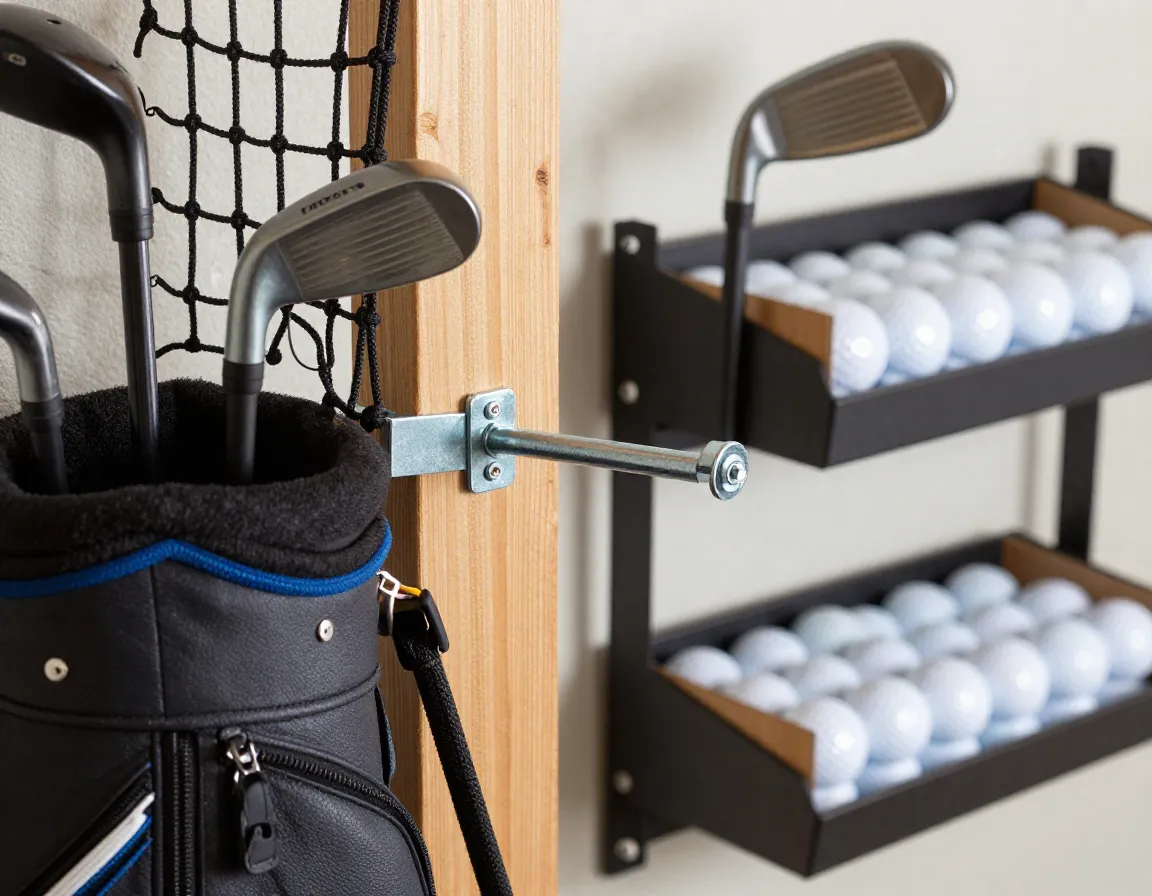
The final step in the 8 Steps to the Perfect Indoor Golf Set Up on Any Budget focuses on protecting both your investment and your family. Safety considerations include:
Safety Essentials:
- ⚠️ Secure net anchoring: Proper mounting prevents net failure
- ⚠️ Clear swing zones: Mark areas to avoid during practice
- ⚠️ Equipment storage: Organized storage prevents accidents
- ⚠️ Emergency stops: Easy access to power controls
Maintenance Schedule:
- Weekly: Clean mats and check net integrity
- Monthly: Calibrate launch monitors and inspect equipment
- Seasonally: Deep clean screens and update software
- Annually: Professional inspection for premium systems
“A well-maintained indoor golf setup not only performs better but also retains its value for years to come. Regular care prevents costly repairs and ensures consistent practice quality.”
Conclusion
Creating the perfect indoor golf setup doesn’t require breaking the bank or having a mansion-sized space. By following these 8 Steps to the Perfect Indoor Golf Set Up on Any Budget, you can build a practice environment that fits both your space and financial constraints while delivering real improvement to your game.
Your Next Steps:
- Measure your available space and confirm minimum requirements
- Set a realistic budget starting with essentials and planning upgrades
- Begin with basics: quality mat and net for under $500
- Add technology gradually: launch monitor, then display system
- Optimize your environment with proper lighting and safety measures
Remember, the best indoor golf setup is the one you’ll actually use consistently. Start small, focus on quality over quantity, and build your dream practice space one component at a time. Whether you’re working with a $300 budget or planning a $30,000 installation, the principles remain the same: proper planning, quality components, and attention to safety create the foundation for years of improved golf performance.
Your indoor golf journey starts today – grab your measuring tape, set your budget, and take the first step toward year-round golf improvement! 🏌️♂️
References
[1] Building The Perfect Home Golf Practice Set Up A Guide For Every Budget – https://www.golfmonthly.com/features/building-the-perfect-home-golf-practice-set-up-a-guide-for-every-budget
[2] How To Build A Golf Simulator – https://www.wickedsmartgolf.com/blog/how-to-build-a-golf-simulator
[3] Best Golf Simulators Home – https://thegolfinglad.com/best-golf-simulators-home/