9 Hip Stretches for Golf to Unlock More Power & Prevent Injury
Picture this: you’re standing on the first tee, feeling confident about your swing, when suddenly you feel that familiar tightness in your hips that limits your rotation and steals power from your drive. Sound familiar? If you’re like most golfers, hip mobility issues are secretly sabotaging your game and putting you at risk for injury. The good news is that implementing these 9 hip stretches for golf to unlock more power and prevent injury can transform your performance and keep you playing pain-free for years to come.
Disclosure: This post contains affiliate links. As an Amazon Associate, we earn from qualifying purchases, and at no extra cost to you.

Your hips are the powerhouse of your golf swing, acting as the engine that generates rotational force and transfers energy from your lower body to your upper body. When your hips are tight or restricted, you’re not just losing distance—you’re forcing other parts of your body, particularly your lower back, to compensate in ways that can lead to serious injury.
Key Takeaways
- Hip mobility directly impacts swing power – Better hip rotation allows for more efficient energy transfer and increased clubhead speed
- Injury prevention starts with the hips – Mobile hips reduce compensatory stress on the lower back and spine during rotation
- Consistency is crucial – Performing hip stretches 3 times per week with proper form yields the best results for golf performance
- Static stretches need time – Hold stretches for at least 20 seconds to allow muscles to relax and elongate effectively
- Progressive approach works best – Master bodyweight movements before adding resistance or advanced variations
Understanding Hip Mobility’s Role in Golf Performance
Before diving into the specific stretches, it’s important to understand why hip mobility is so critical for golfers. Your golf swing is essentially a complex rotational movement that requires your hips to move through multiple planes of motion. During the backswing, your trail hip needs to rotate internally while maintaining stability. On the downswing, your lead hip must clear quickly while your glutes fire to generate power.
When your hips lack mobility, several problems occur:
- Reduced rotation leads to shorter backswings and less power
- Compensatory movements put excessive stress on your lower back
- Early extension causes inconsistent ball striking
- Limited weight transfer reduces distance and accuracy
Research from the Titleist Performance Institute (TPI) shows that golfers with better hip mobility and hinge control can generate more speed with less strain on their bodies. This is why addressing hip mobility should be a priority for every golfer, regardless of skill level.
Essential Hip Stretches for Golf Power and Injury Prevention
1. The 90/90 Hip Mobility Drill
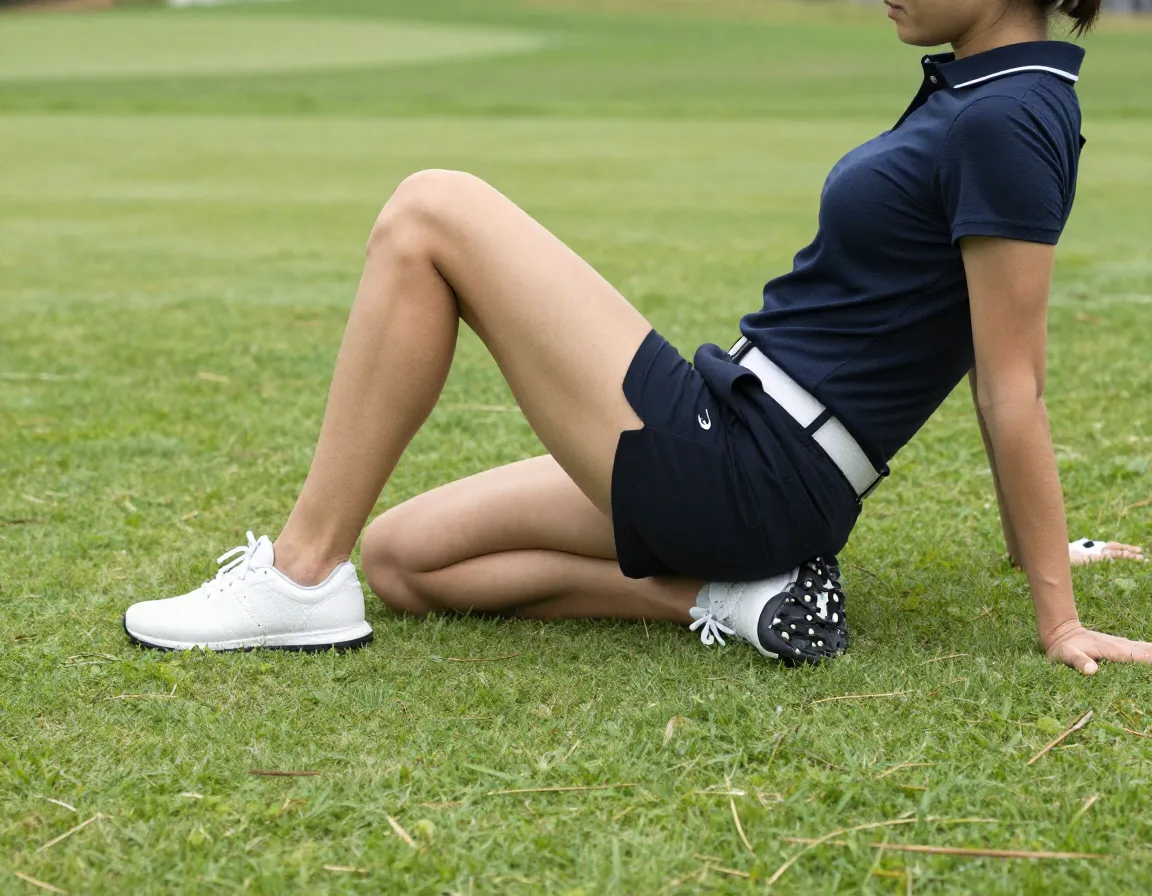
The 90/90 hip mobility drill is recommended by the PGA as a daily routine component because it effectively opens both internal and external rotation in your hips. This fundamental movement addresses the exact range of motion needed for an efficient golf swing.
How to perform:
- Sit on the ground with both knees and hips bent to 90 degrees
- Your front leg should have the knee pointing forward, ankle aligned with knee
- Your back leg should have the knee pointing to the side
- Lean forward over your front leg, then rotate toward your back leg
- Perform two sets of 20 reps, switching leg positions between sets
Golf benefits: This drill directly mimics the hip rotation patterns in your golf swing while improving both internal and external rotation simultaneously.
2. Figure Four (Pigeon-Style) Stretch
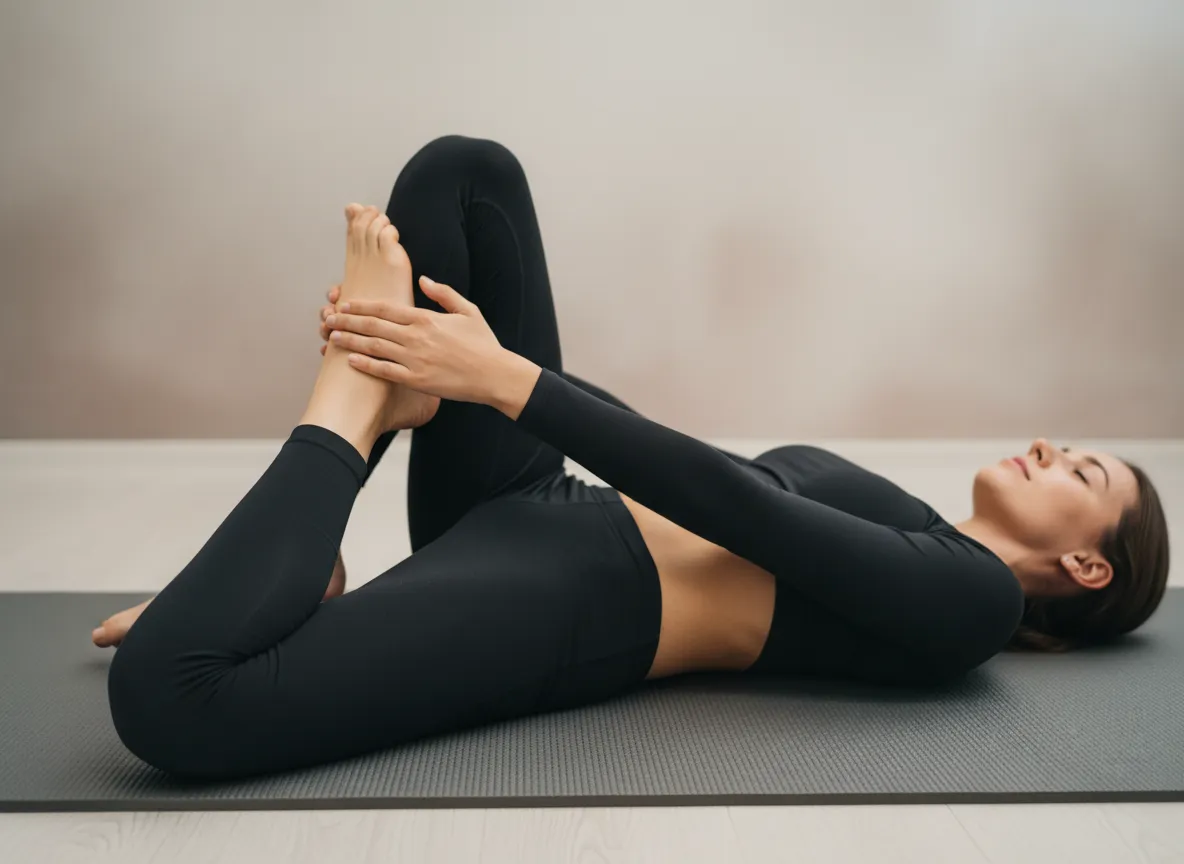
The figure four stretch is an effective static hold that opens the glutes and external rotators—muscles that often become tight from prolonged sitting and can severely limit your hip mobility.
How to perform:
- Lie on your back with both knees bent
- Cross your right ankle over your left knee, creating a “figure four” shape
- Reach behind your left thigh and gently pull toward your chest
- Hold for 20-30 seconds and repeat twice per side
Golf benefits: This stretch targets the deep hip rotators that are essential for maintaining posture and generating power throughout your swing.
3. Kneeling Hip Flexor Stretch with Rotation
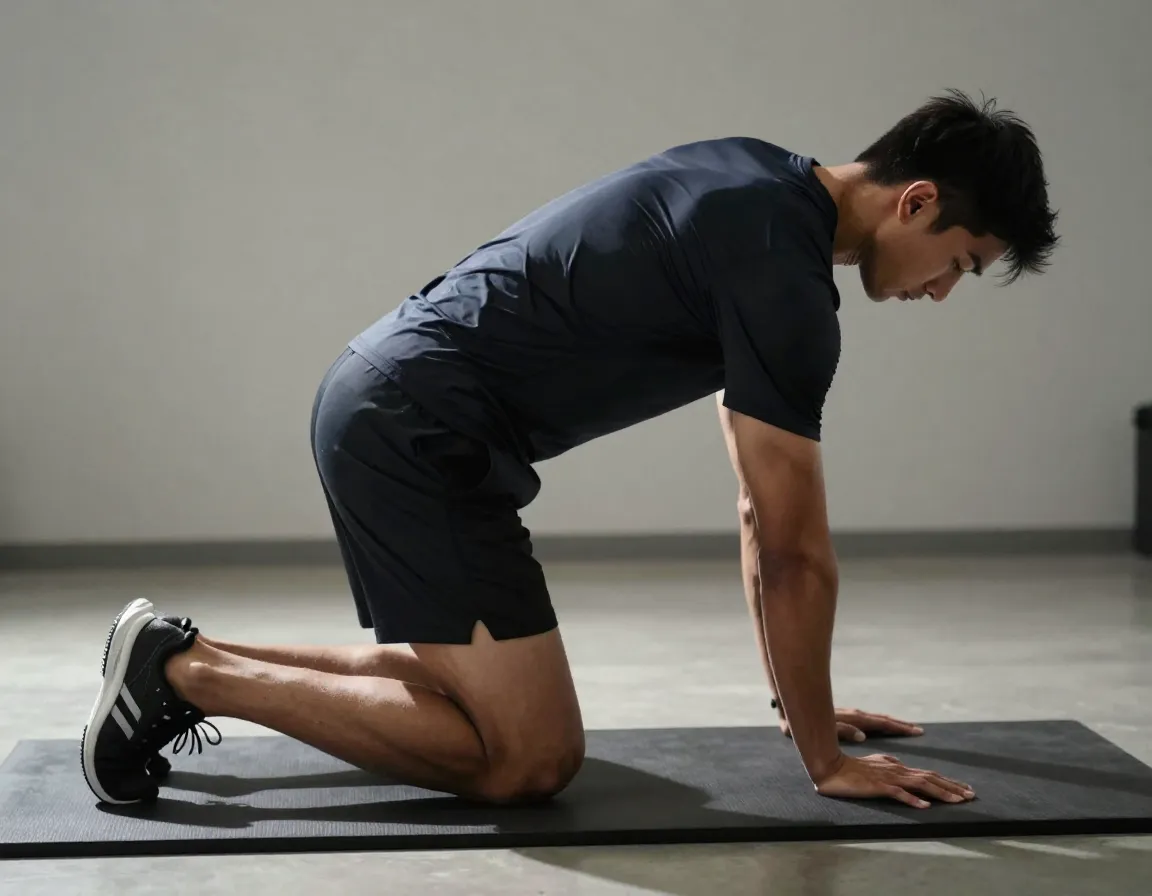
This dynamic stretch combines forward hip drive with torso rotation, addressing the hip flexor tightness that plagues many golfers while incorporating the rotational component crucial for golf performance.
How to perform:
- Start in a kneeling lunge position with your right foot forward
- Drive your hips forward to stretch the left hip flexor
- Add a gentle rotation toward your front leg
- Perform eight to ten reps per side with controlled movement
Golf benefits: This movement directly addresses the hip flexor tightness that can limit your ability to rotate properly and maintain posture throughout your swing.
4. Glute Bridge Hip Thrust
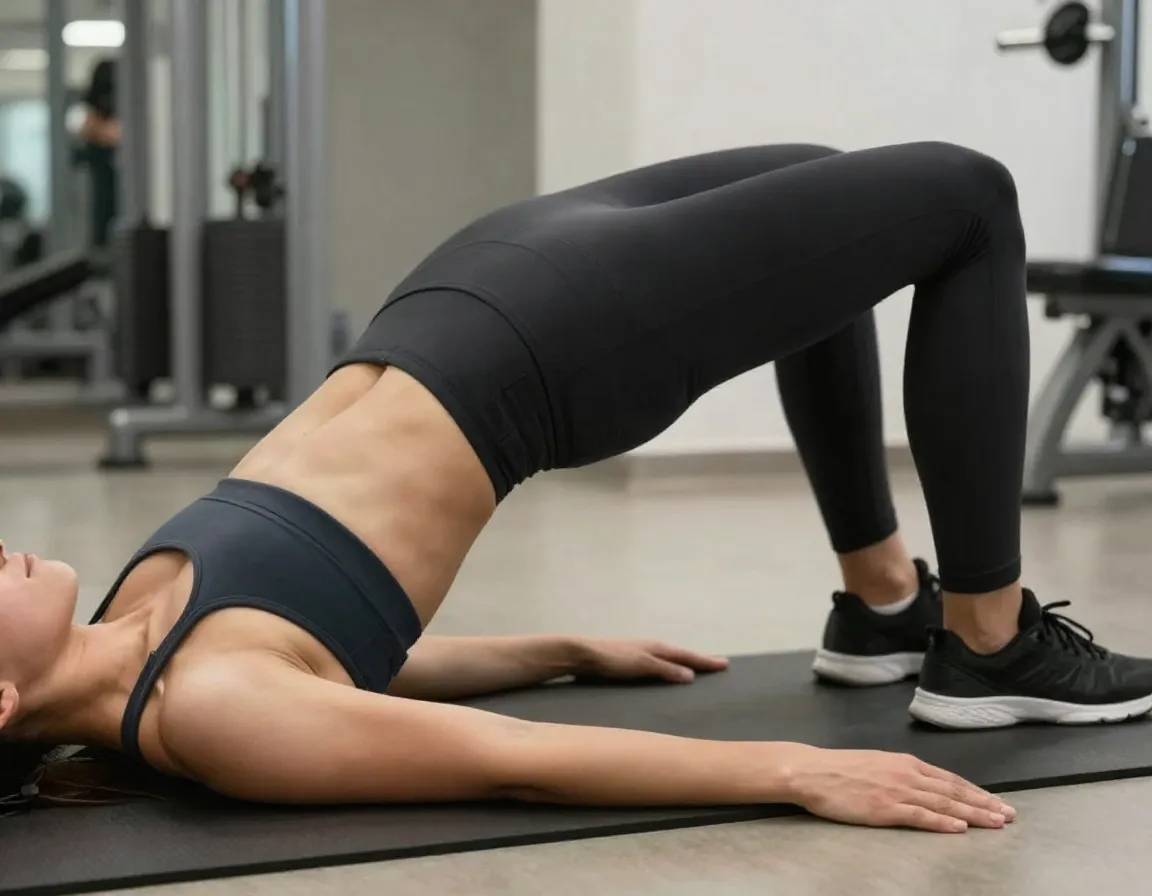
Glute bridge exercises directly strengthen the gluteus maximus and medius muscles that provide explosive power during the downswing and improve hip extension—a critical component of an efficient golf swing.
How to perform:
- Lie on your back with knees bent and feet flat on the ground
- Squeeze your glutes and lift your hips toward the ceiling
- Hold for 2-3 seconds at the top, focusing on glute activation
- Lower slowly and repeat for 15-20 repetitions
Golf benefits: Strong glutes are essential for generating power and maintaining stability throughout your swing while protecting your lower back.
5. Deep Squat Hip Mobility
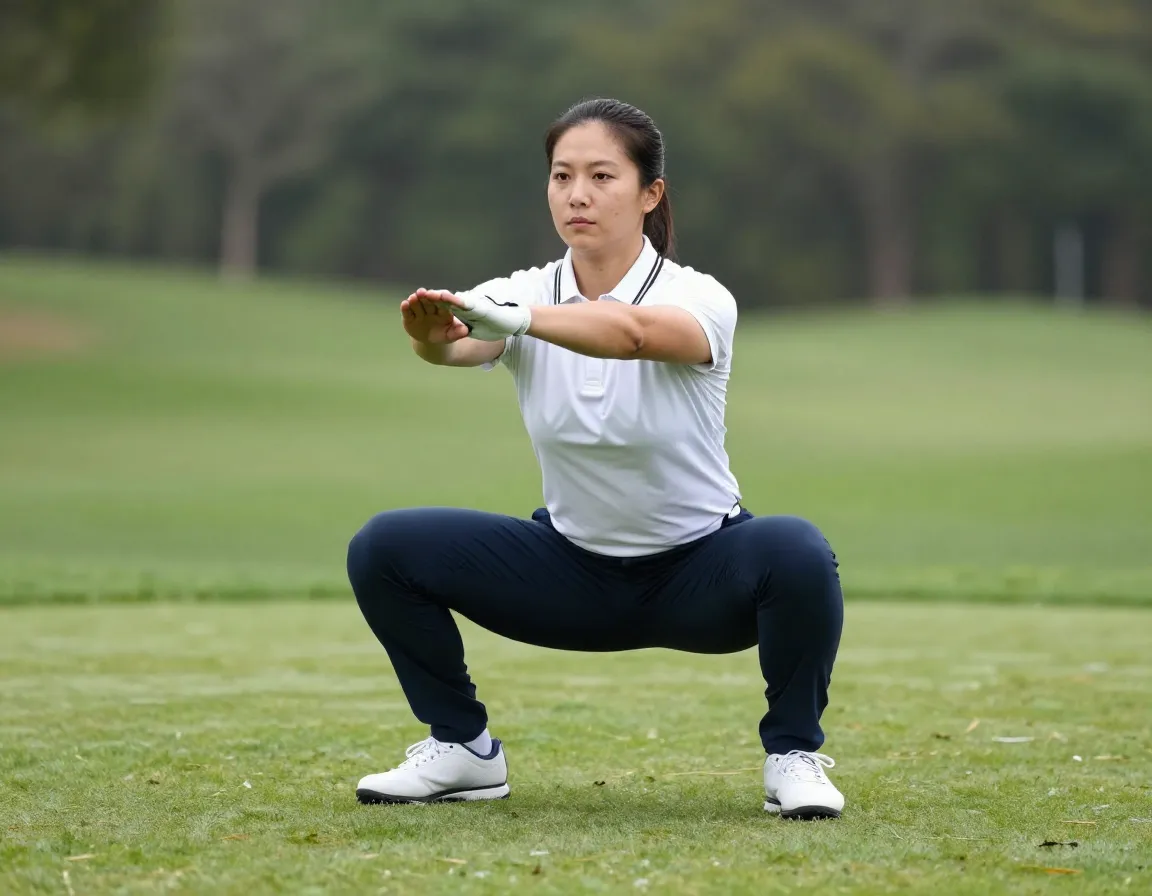
The deep squat position addresses multiple areas of hip restriction while improving ankle mobility and overall lower body flexibility that supports a stable golf stance.
How to perform:
- Stand with feet slightly wider than shoulder-width apart
- Lower into a deep squat, keeping your chest up and heels down
- Hold the bottom position for 30-60 seconds
- Use a golf club or wall for balance if needed
Golf benefits: This position improves the hip hinge pattern essential for proper setup and maintains hip mobility throughout the full range of motion.
6. Lying Hip Circles
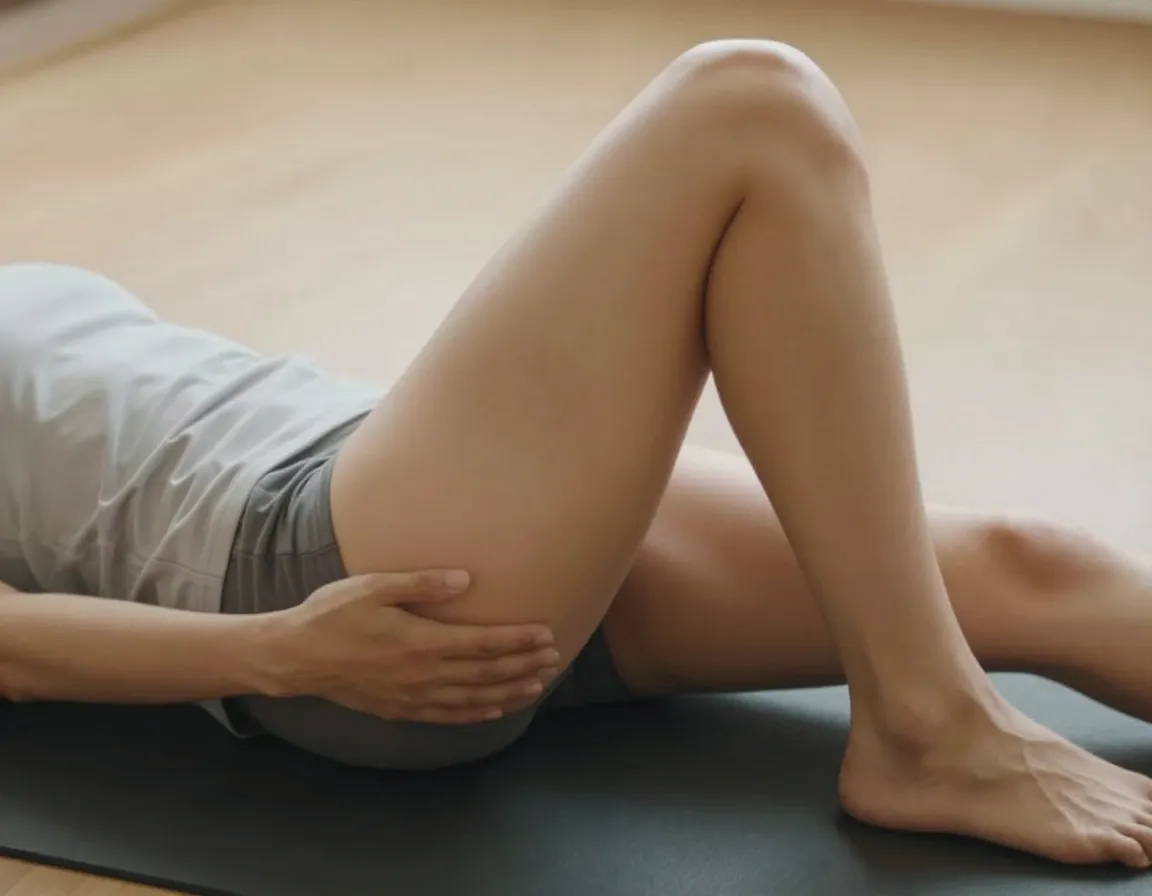
This gentle mobility exercise helps lubricate the hip joint while addressing restrictions in all planes of motion, making it an excellent warm-up or cool-down movement.
How to perform:
- Lie on your back with one knee pulled toward your chest
- Support your thigh with your hands and make slow, controlled circles
- Perform 10 circles in each direction per leg
- Focus on smooth, pain-free movement
Golf benefits: Hip circles improve joint mobility and can help identify specific areas of restriction that need additional attention.
7. Standing Hip Flexor Stretch
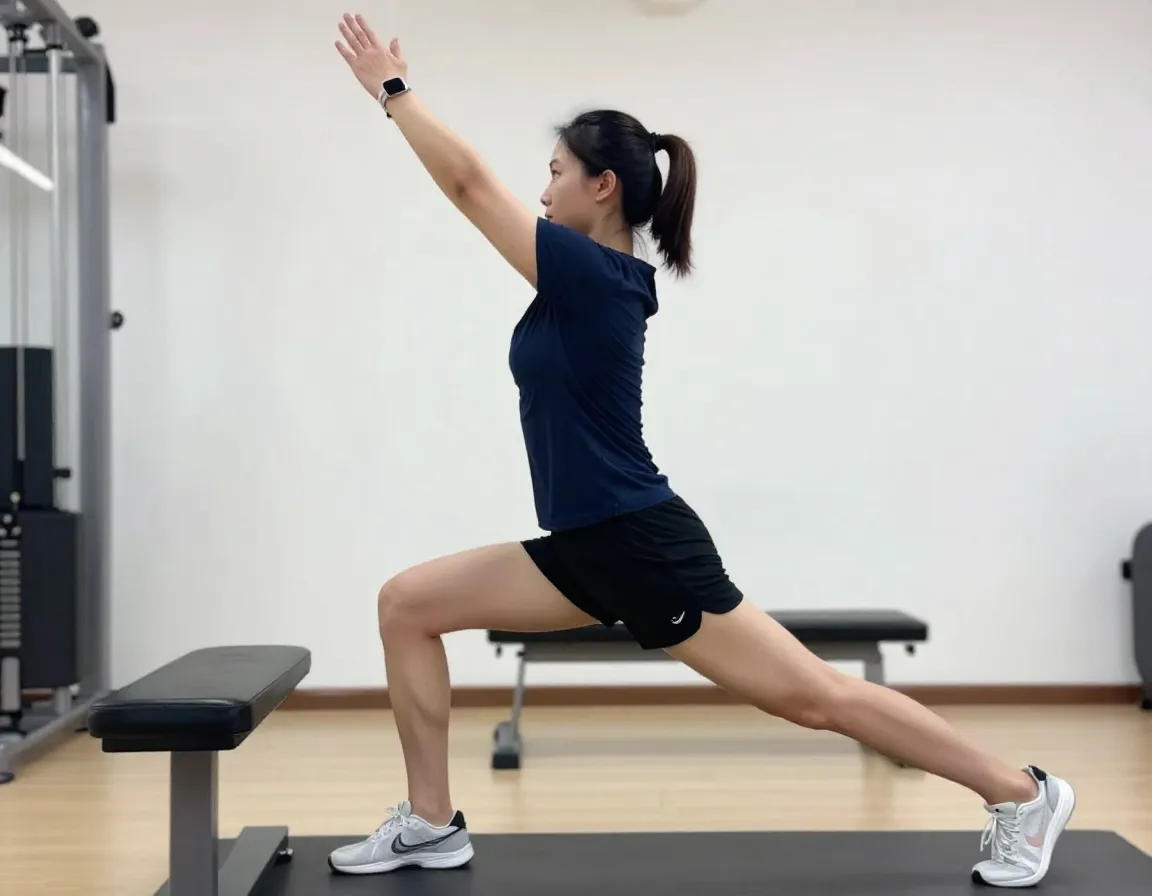
This standing variation allows you to stretch your hip flexors while maintaining a golf-like posture, making it particularly relevant for on-course preparation.
How to perform:
- Step into a lunge position with your back foot elevated on a bench or chair
- Keep your torso upright and drive your hips forward
- Hold for 20-30 seconds per side
- Add a gentle reach overhead for additional stretch
Golf benefits: This stretch can be performed as part of your pre-round warm-up and directly addresses the hip flexor tightness that can limit your backswing.
8. Seated Spinal Twist with Hip Focus
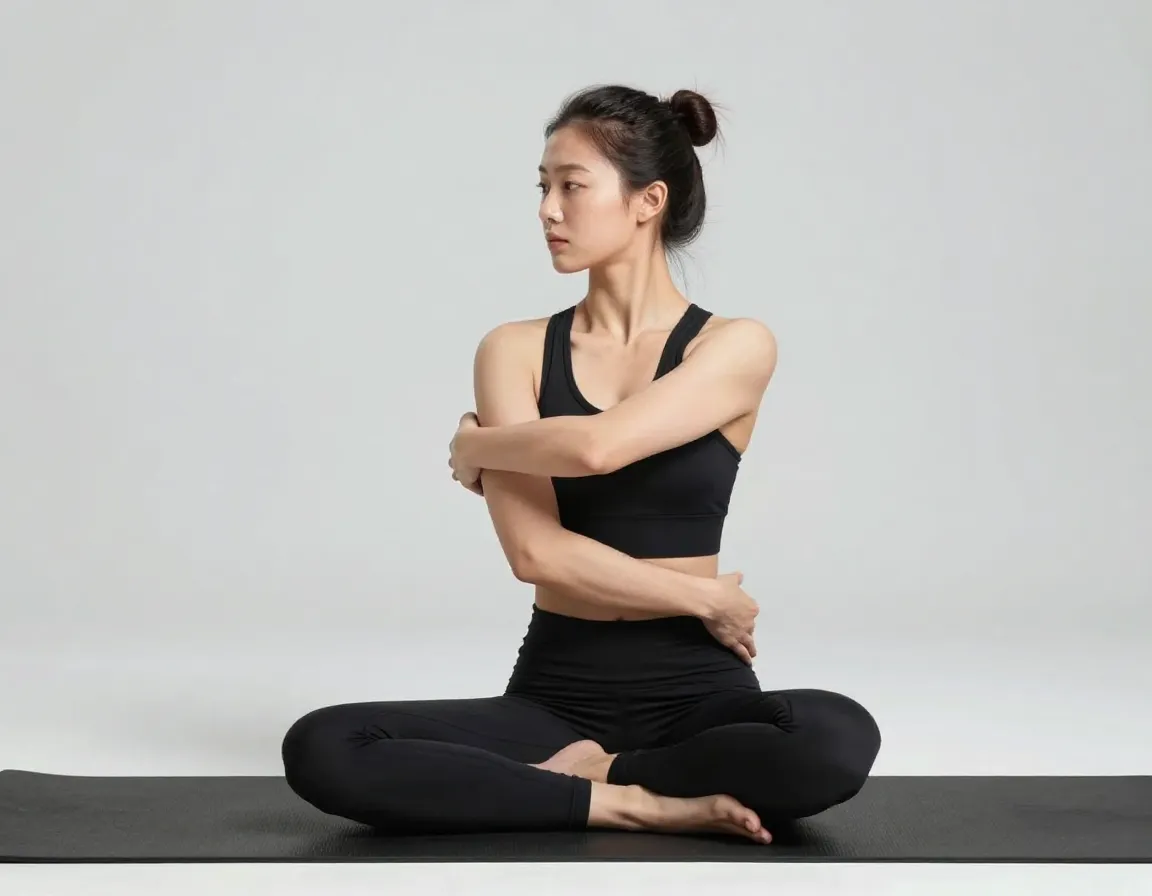
This seated stretch combines spinal rotation with hip mobility, addressing the interconnected nature of these movements in your golf swing.
How to perform:
- Sit with your legs extended in front of you
- Cross your right leg over your left, placing your right foot beside your left knee
- Rotate your torso to the right, using your left elbow against your right knee for leverage
- Hold for 20-30 seconds and repeat on the other side
Golf benefits: This stretch improves the coordination between hip and spinal rotation that’s essential for generating power and maintaining sequence in your swing.
9. Hamstring Stretch with Hip Hinge
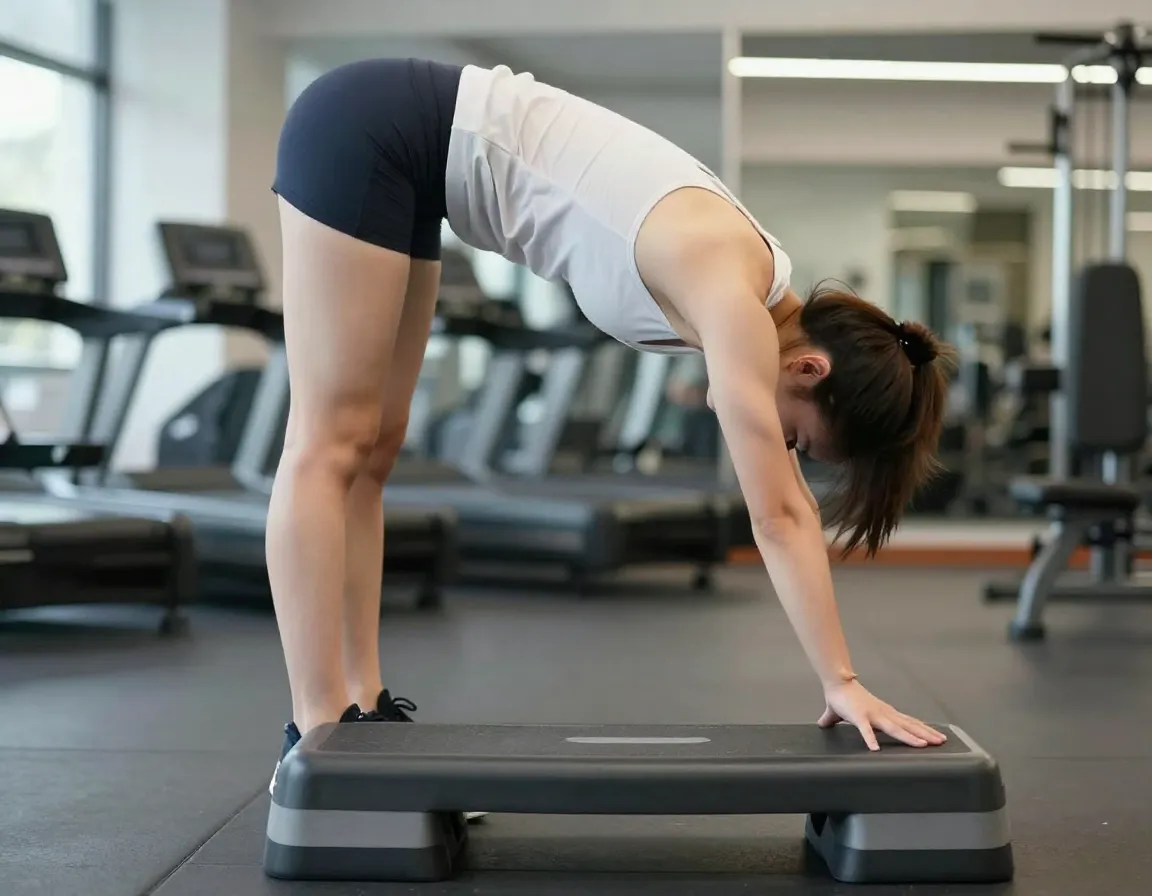
Since tight hamstrings limit the hip hinge and reduce rotational freedom, this stretch should be paired with hip flexor work using the recommended 3 x 20-second approach.
How to perform:
- Stand with one foot elevated on a low platform or step
- Keep your elevated leg straight and hinge forward at the hips
- Reach toward your toes while maintaining a straight back
- Hold for 20 seconds and repeat three times per leg
Golf benefits: Improved hamstring flexibility allows for better hip hinge patterns in your setup and throughout your swing, leading to more consistent ball striking.
Creating Your Hip Mobility Routine
To maximize the benefits of these 9 hip stretches for golf to unlock more power and prevent injury, consistency and proper programming are essential. Here’s how to structure your routine:
Weekly Schedule
A complete hip mobility routine should be performed three times per week with dynamic movements at the beginning and longer static holds at the end where tightness is felt. This frequency allows for adaptation while providing adequate recovery time.
Session Structure
- Warm-up (5 minutes): Light movement and dynamic stretches
- Main stretches (15-20 minutes): Focus on the areas where you feel the most restriction
- Cool-down (5 minutes): Static holds and relaxation
Progression Guidelines
Form mastery should precede progressive loading. Start with bodyweight hip hinge patterns before adding resistance through dumbbells, kettlebells, or resistance bands. This approach ensures you develop proper movement patterns before increasing the challenge.
Common Mistakes to Avoid
When implementing these hip stretches, avoid these common errors that can limit your progress:
- Rushing through movements – Quality over quantity always wins
- Ignoring pain signals – Stretch should feel good, not painful
- Inconsistent practice – Sporadic stretching won’t create lasting change
- Focusing only on tight areas – Balance is key for optimal function
- Skipping the warm-up – Cold muscles don’t stretch effectively
Conclusion
Implementing these 9 hip stretches for golf to unlock more power and prevent injury can be a game-changer for your golf performance and long-term health. Remember that hip mobility improvements reduce lower back strain by allowing the hips and glutes to absorb load instead of placing excessive stress on the spine during rotation.
Start with the stretches that feel most challenging for you, as these likely represent your biggest opportunities for improvement. Focus on consistency over intensity, and remember that static stretches require at least 20 seconds of holding time to allow muscles to relax and elongate effectively.
Your next steps:
- Assess your current hip mobility using the 90/90 position as a baseline
- Choose 4-5 stretches that target your specific restrictions
- Schedule three 20-30 minute sessions per week for the next month
- Track your progress by noting improvements in comfort and range of motion
- Gradually add more challenging variations as your mobility improves
By prioritizing hip mobility now, you’re investing in years of better golf performance and injury-free play. Your body—and your scorecard—will thank you for it.