6 Rewarding Golf Course Jobs That Let You Work on the Links
Picture waking up each morning to the sight of perfectly manicured greens glistening with dew, breathing in fresh air while the sun rises over rolling fairways. For golf enthusiasts who dream of turning their passion into a paycheck, 6 rewarding golf course jobs that let you work on the links offer the perfect blend of career satisfaction and lifestyle fulfillment. These positions combine competitive salaries with the unique opportunity to work in one of the most beautiful outdoor environments imaginable.

The golf industry generates over $84 billion annually in the United States alone, supporting hundreds of thousands of jobs across various skill levels and specializations [1]. From hands-on maintenance roles to customer-facing positions, golf courses offer diverse career paths that cater to different interests and expertise levels.
Key Takeaways
- Golf course careers offer competitive salaries ranging from $35,000 to $85,000+ annually, depending on experience and position level
- Outdoor work environment provides daily exposure to beautiful landscapes and fresh air, promoting better physical and mental health
- Professional development opportunities include certifications, continuing education, and advancement paths within the golf industry
- Seasonal flexibility allows for varied schedules and potential relocation opportunities in warmer climates
- Networking benefits connect professionals with influential business leaders and community members who frequent golf courses
The Appeal of Working on Golf Courses
Golf courses represent some of the most meticulously maintained landscapes in the world. These sprawling properties combine natural beauty with precision engineering, creating environments that require diverse skill sets to operate successfully. Working on the links means joining a community of professionals dedicated to maintaining standards of excellence that attract millions of golfers worldwide.
The golf industry has shown remarkable resilience, with participation rates increasing by 2% annually over the past five years [2]. This growth translates into stable employment opportunities and career advancement potential for dedicated professionals.
Benefits of Golf Course Employment
🌱 Health and Wellness Advantages
- Daily outdoor activity and fresh air exposure
- Natural vitamin D from sunlight
- Reduced stress from peaceful work environment
- Physical activity integrated into daily tasks
💼 Professional Growth Opportunities
- Industry-specific certifications and training programs
- Networking with business professionals and community leaders
- Transferable skills applicable to landscaping, hospitality, and recreation industries
- Potential for entrepreneurship and consulting opportunities
⚖️ Work-Life Balance
- Seasonal scheduling flexibility
- Early morning starts with afternoon availability
- Weekend work often compensated with weekday time off
- Opportunity to play golf at reduced rates or complimentary access
1. Golf Course Superintendent: The Master of the Links

Golf course superintendents represent the pinnacle of rewarding golf course jobs that let you work on the links. These highly skilled professionals oversee all aspects of course maintenance, from turfgrass management to environmental stewardship. With average salaries ranging from $65,000 to $120,000 annually, superintendents combine scientific knowledge with practical expertise [3].
Responsibilities and Daily Tasks
Turfgrass Management
- Developing and implementing comprehensive maintenance programs
- Monitoring soil conditions, pH levels, and nutrient requirements
- Managing irrigation systems and water conservation initiatives
- Overseeing pest control and disease prevention strategies
Team Leadership
- Supervising maintenance crews of 5-25 employees
- Training staff on equipment operation and safety procedures
- Scheduling work assignments and managing labor budgets
- Coordinating with golf professionals and course management
Environmental Stewardship
- Implementing sustainable practices and eco-friendly solutions
- Managing wildlife habitats and natural areas
- Ensuring compliance with environmental regulations
- Monitoring water usage and chemical applications
Required Qualifications and Skills
| Education | Experience | Certifications |
|---|---|---|
| Bachelor’s degree in Turfgrass Science, Agronomy, or related field | 5-10 years in golf course maintenance | Certified Golf Course Superintendent (CGCS) |
| Advanced coursework in soil science and plant pathology | Progressive leadership experience | Pesticide applicator licenses |
| Continuing education in sustainable practices | Budget management experience | First aid/CPR certification |
Essential Skills:
- Strong leadership and communication abilities
- Problem-solving and analytical thinking
- Technical knowledge of irrigation and equipment systems
- Understanding of business operations and budget management
Career Advancement Opportunities
Experienced superintendents often advance to head superintendent positions at prestigious private clubs or resort courses, with compensation packages exceeding $150,000 annually. Others transition into consulting roles, equipment sales, or educational positions with universities and professional organizations.
“Being a golf course superintendent means being both an artist and a scientist. Every day brings new challenges, from managing weather-related issues to creating playing conditions that challenge and delight golfers.” – Mike Davis, Former USGA Executive Director
2. Golf Course Maintenance Crew Member: Hands-On Course Care
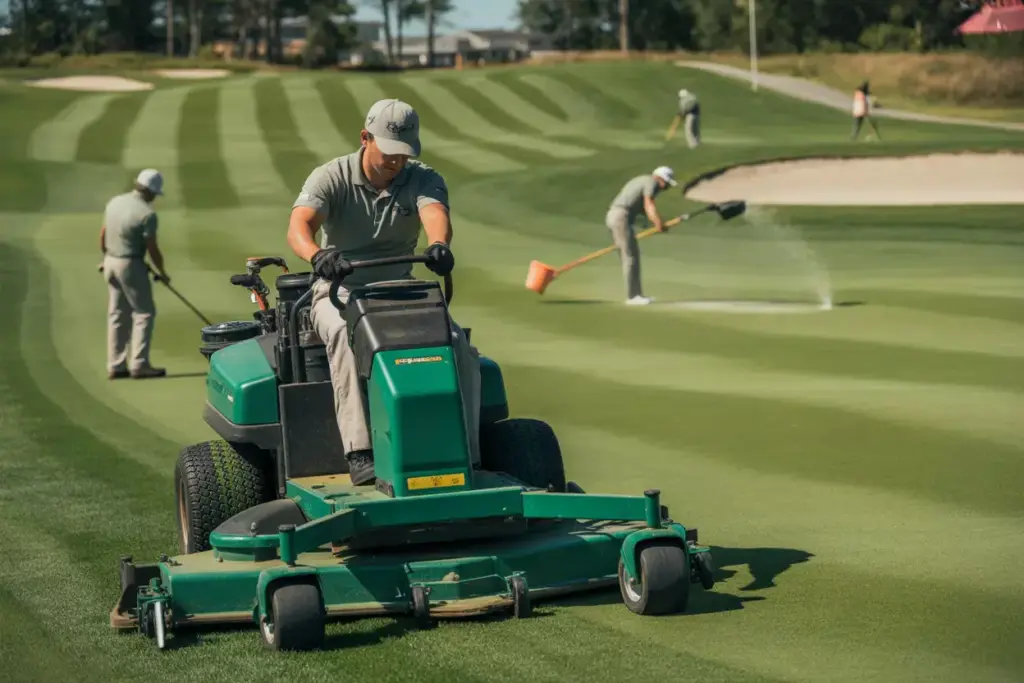
Maintenance crew positions form the backbone of golf course jobs that let you work on the links, offering entry-level opportunities with significant growth potential. These roles provide hands-on experience with specialized equipment and direct involvement in creating championship-quality playing conditions.
Core Responsibilities
Daily Maintenance Tasks
- Mowing greens, tees, fairways, and rough areas
- Raking and maintaining sand bunkers
- Operating irrigation systems and hand-watering specific areas
- Repairing ball marks, divots, and other course damage
Equipment Operation
- Learning to operate specialized mowing equipment worth $50,000-$200,000
- Maintaining and performing basic repairs on machinery
- Following strict safety protocols and equipment care procedures
- Assisting with equipment storage and winterization
Course Preparation
- Setting up daily pin positions and tee markers
- Installing course signage and yardage markers
- Preparing courses for tournaments and special events
- Supporting seasonal projects like tree care and landscaping
Compensation and Benefits
Entry-level maintenance positions typically offer:
- Starting salaries: $28,000-$40,000 annually
- Experienced crew: $35,000-$50,000 annually
- Benefits packages including health insurance and retirement plans
- Golf privileges at reduced rates or complimentary access
- Overtime opportunities during peak season and tournament preparation
Skills Development and Training
Technical Training Programs
- Equipment operation certification courses
- Turfgrass management workshops
- Pesticide application training and licensing
- Irrigation system maintenance and repair
Professional Development
- Golf Course Superintendents Association of America (GCSAA) membership
- Industry conference attendance and networking opportunities
- Mentorship programs with experienced superintendents
- Potential tuition assistance for continuing education
Career Progression Pathways
- Equipment Operator Specialist – Focus on specific machinery operation
- Assistant Superintendent – Supervisory responsibilities and advanced training
- Golf Course Superintendent – Full management and operational oversight
- Specialized Consulting – Independent contractor for multiple courses
3. Golf Professional (PGA): Teaching and Course Management Excellence

Golf professionals represent one of the most visible and rewarding golf course jobs that let you work on the links. These certified instructors and course managers combine their passion for golf with business acumen to enhance the overall golf experience for players of all skill levels.
Professional Responsibilities and Duties
Instruction and Coaching
- Providing individual and group golf lessons
- Developing comprehensive improvement programs for students
- Utilizing modern technology including video analysis and launch monitors
- Organizing clinics and specialized training sessions
Pro Shop Management
- Overseeing merchandise inventory and sales operations
- Managing golf equipment fitting and customization services
- Coordinating tournament registration and event planning
- Maintaining relationships with equipment manufacturers and vendors
Course Operations Support
- Managing tee time reservations and pace of play
- Organizing member tournaments and social events
- Providing course knowledge and playing tips to guests
- Collaborating with food and beverage operations
PGA Certification and Requirements
Professional Golfers’ Association (PGA) Certification Process:
- PGA Golf Management Program – 4.5-year university degree program
- Playing Ability Test (PAT) – Demonstrate competitive golf skills
- Work Experience – Complete supervised internships and employment
- Continuing Education – Ongoing professional development requirements
Alternative Pathway:
- Apprentice Program – Work-based learning with PGA mentor
- Associate Membership – Entry-level certification with advancement opportunities
- Specialized Certifications – Teaching, club fitting, and course management
Earning Potential and Compensation Structure
| Position Level | Base Salary | Additional Income | Total Potential |
|---|---|---|---|
| Assistant Golf Professional | $35,000-$45,000 | $10,000-$20,000 | $45,000-$65,000 |
| Head Golf Professional | $50,000-$75,000 | $15,000-$35,000 | $65,000-$110,000 |
| Director of Golf | $70,000-$100,000 | $20,000-$50,000 | $90,000-$150,000 |
Additional Income Sources:
- Private lesson fees ($75-$150 per hour)
- Golf equipment sales commissions
- Tournament organization and management
- Corporate golf event coordination
Professional Development and Networking
Industry Connections:
- Access to PGA professional network and mentorship opportunities
- Relationships with equipment manufacturers and golf industry leaders
- Connections with members who are often business professionals and community leaders
- Opportunities for guest professional positions at prestigious courses
“Working as a golf professional allows you to share your passion while building lasting relationships with people who love the game as much as you do.” – Suzy Whaley, PGA Professional and Former PGA President
4. Golf Cart Attendant and Course Services: Customer Experience Excellence

Golf cart attendants and course service professionals play a crucial role in golf course jobs that let you work on the links by ensuring exceptional customer experiences from arrival to departure. These positions offer excellent entry points into the golf industry while developing valuable customer service and hospitality skills.
Primary Responsibilities and Customer Interaction
Cart Fleet Management
- Maintaining and cleaning golf cart fleet (typically 50-150 carts)
- Performing daily safety inspections and basic maintenance
- Managing cart assignments and ensuring proper distribution
- Coordinating cart staging for tournaments and events
Customer Service Excellence
- Greeting golfers and providing course information
- Assisting with bag loading and equipment organization
- Offering local knowledge about course layout and conditions
- Handling special requests and accommodation needs
Course Support Services
- Restocking on-course beverage stations and snack areas
- Monitoring pace of play and providing assistance when needed
- Communicating course conditions and temporary rules
- Supporting tournament operations and special events
Skills Development and Training Opportunities
Technical Skills:
- Golf cart maintenance and troubleshooting
- Basic electrical system knowledge for cart charging stations
- Point-of-sale system operation for cart rentals
- Radio communication and course coordination
Customer Service Excellence:
- Professional communication and conflict resolution
- Golf etiquette and rules knowledge
- Cultural sensitivity and hospitality standards
- Emergency response and first aid procedures
Compensation and Career Advancement
Starting Compensation:
- Hourly wages: $12-$18 per hour
- Seasonal bonuses based on performance and customer feedback
- Tips from satisfied customers can add $50-$200 weekly
- Employee benefits including golf privileges and pro shop discounts
Career Progression Opportunities:
- Lead Cart Attendant – Supervising other attendants and training new employees
- Outside Services Manager – Overseeing all course service operations
- Assistant Golf Professional – Transitioning to PGA certification track
- Club Management – Moving into administrative and operational roles
Seasonal Considerations and Flexibility
Peak Season Advantages:
- Increased hours and overtime opportunities
- Higher tip potential during busy periods
- Tournament and event participation bonuses
- Networking opportunities with regular members and guests
Off-Season Options:
- Cross-training in pro shop or food service operations
- Equipment maintenance and facility improvement projects
- Educational opportunities and certification programs
- Potential relocation to warm-weather destinations
5. Irrigation Technician: Water Management Specialist
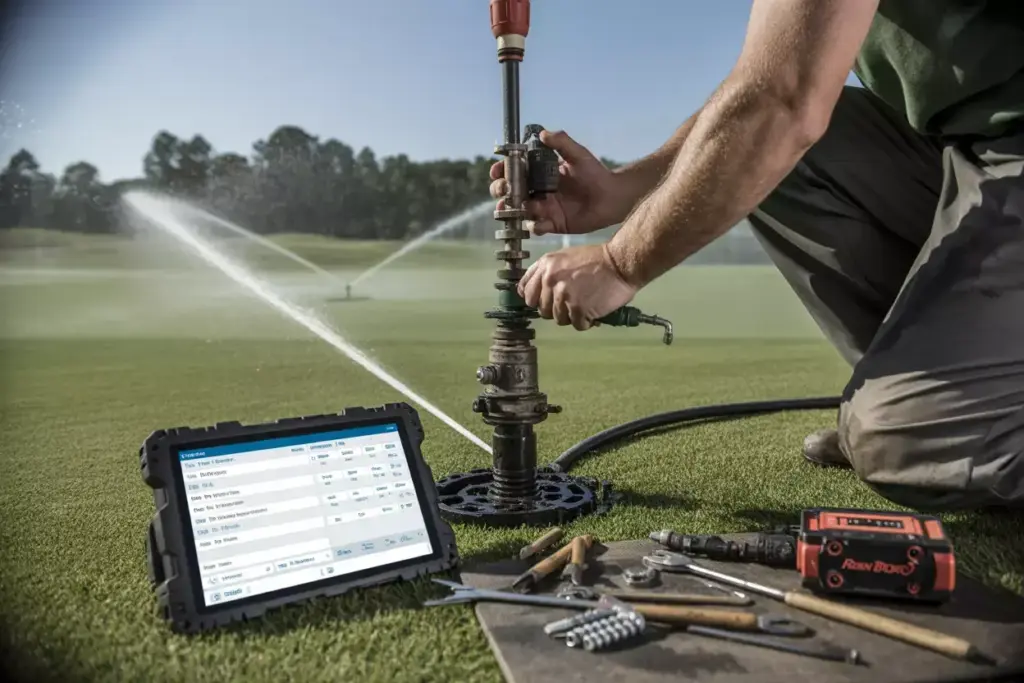
Irrigation technicians represent one of the most technically demanding rewarding golf course jobs that let you work on the links, combining mechanical expertise with environmental stewardship. These specialists ensure optimal water distribution across hundreds of acres while maintaining sustainable practices and cost efficiency.
Technical Responsibilities and System Management
Irrigation System Operation
- Managing computerized irrigation control systems worth $500,000-$2 million
- Programming watering schedules based on weather conditions and turf needs
- Monitoring water pressure, flow rates, and distribution patterns
- Conducting regular system audits and efficiency assessments
Maintenance and Repair Operations
- Troubleshooting and repairing sprinkler heads, valves, and control systems
- Installing new irrigation components and system upgrades
- Performing seasonal system startup and winterization procedures
- Maintaining pump stations and water storage facilities
Water Conservation and Environmental Compliance
- Implementing water-saving technologies and practices
- Monitoring water usage and reporting consumption data
- Ensuring compliance with local water restrictions and regulations
- Managing recycled water systems and alternative water sources
Required Technical Skills and Certifications
Essential Qualifications:
- High school diploma or equivalent education
- 2-4 years experience in irrigation, plumbing, or electrical work
- Understanding of hydraulics, electronics, and computer systems
- Valid driver’s license and clean driving record
Preferred Certifications:
- Certified Irrigation Technician (CIT) through Irrigation Association
- Landscape Irrigation Auditor certification
- Backflow Prevention Device Tester license
- OSHA 10-Hour Safety Training completion
Technical Competencies:
- Proficiency with irrigation control software (Rain Bird, Toro, Hunter systems)
- Basic electrical troubleshooting and wiring skills
- Plumbing and pipe installation experience
- GPS and mapping software familiarity
Compensation and Professional Growth
Salary Ranges by Experience Level:
- Entry Level (0-2 years): $35,000-$45,000 annually
- Experienced (3-7 years): $45,000-$60,000 annually
- Senior Level (8+ years): $55,000-$75,000 annually
- Lead Technician/Supervisor: $65,000-$85,000 annually
Additional Compensation Benefits:
- Overtime pay during peak season and emergency repairs
- On-call pay for after-hours system monitoring
- Performance bonuses based on water conservation achievements
- Company vehicle and tool allowances
Career Advancement and Specialization
Advancement Opportunities:
- Irrigation Supervisor – Managing multiple technicians and system operations
- Water Management Consultant – Providing expertise to multiple golf courses
- Equipment Sales Representative – Selling irrigation systems and components
- Golf Course Superintendent – Advancing to overall course management
Specialization Areas:
- Smart Irrigation Technology – Focusing on sensor-based and automated systems
- Water Recycling Systems – Specializing in reclaimed water and treatment systems
- Drainage and Pumping – Expertise in water removal and storage systems
- System Design and Installation – Planning and implementing new irrigation projects
“Modern irrigation technology allows us to maintain championship-quality conditions while using 30-40% less water than traditional systems. It’s both environmentally responsible and cost-effective.” – Dr. Michael Kenna, USGA Senior Director of Research
6. Clubhouse and Food Service Staff: Hospitality Excellence on the Links

Clubhouse and food service positions round out the 6 rewarding golf course jobs that let you work on the links by focusing on hospitality and member services. These roles combine traditional restaurant and hospitality skills with the unique atmosphere and clientele of golf course environments.
Service Excellence and Member Relations
Food and Beverage Operations
- Preparing and serving breakfast, lunch, and dinner in clubhouse restaurants
- Managing beverage cart operations for on-course service
- Coordinating special event catering and tournament hospitality
- Maintaining high standards for food quality and presentation
Member and Guest Services
- Providing exceptional customer service to members and guests
- Managing dining reservations and special accommodation requests
- Coordinating with golf operations for seamless service integration
- Building relationships with regular members and their preferences
Event Management and Catering
- Supporting wedding receptions, corporate events, and private parties
- Coordinating tournament hospitality and awards ceremonies
- Managing large-group dining and specialized menu requirements
- Ensuring smooth service during high-volume periods
Skills Development and Training Programs
Culinary and Service Skills:
- Food safety certification and proper handling procedures
- Wine service and beverage knowledge training
- Point-of-sale system operation and payment processing
- Menu knowledge and dietary restriction accommodation
Golf-Specific Training:
- Understanding golf terminology and course operations
- Learning member names and preferences for personalized service
- Coordinating service timing with golf play and tournament schedules
- Maintaining appropriate atmosphere and noise levels
Compensation Structure and Benefits
Hourly Positions:
- Food Service Staff: $14-$20 per hour plus tips
- Beverage Cart Operators: $12-$16 per hour plus tips (often $100-$300 daily)
- Banquet Servers: $15-$25 per hour for special events
- Kitchen Staff: $16-$22 per hour based on experience
Management Positions:
- Assistant Food & Beverage Manager: $40,000-$55,000 annually
- Food & Beverage Director: $55,000-$85,000 annually
- Executive Chef: $60,000-$100,000 annually
Additional Benefits:
- Health insurance and retirement plan options
- Meal allowances and employee dining privileges
- Golf course access and reduced rates
- Flexible scheduling around seasonal demands
Career Advancement in Golf Hospitality
Internal Advancement Opportunities:
- Lead Server/Supervisor – Training new staff and managing service teams
- Assistant Manager – Supporting daily operations and inventory management
- Food & Beverage Director – Overseeing all dining and hospitality operations
- Club Manager – Managing entire clubhouse operations and member relations
Industry Transition Opportunities:
- Resort and Hotel Management – Transferring skills to broader hospitality industry
- Event Planning and Catering – Starting independent catering businesses
- Restaurant Management – Applying experience to traditional restaurant operations
- Corporate Hospitality – Managing dining and event services for businesses
Unique Aspects of Golf Course Hospitality
Clientele and Networking:
- Serving business professionals and community leaders
- Building relationships with influential members
- Learning about various industries and business practices
- Developing professional references and networking connections
Seasonal Variety:
- Tournament and event excitement during peak seasons
- Quieter periods allowing for training and facility improvements
- Holiday and special occasion celebrations
- Opportunity for seasonal employment in different climates
Getting Started in Golf Course Careers
Entering the golf industry requires strategic planning and understanding of available pathways. These rewarding golf course jobs that let you work on the links offer multiple entry points depending on individual interests, skills, and career goals.
Entry-Level Strategies and Preparation
Education and Training Options:
- Community College Programs – Turfgrass management and hospitality courses
- University Degrees – Agronomy, business management, and PGA Golf Management
- Industry Certifications – GCSAA, PGA, and specialized technical certifications
- Apprenticeship Programs – Hands-on learning with experienced professionals
Building Relevant Experience:
- Volunteering at local golf tournaments and events
- Working part-time or seasonal positions at golf courses
- Participating in golf-related internships and co-op programs
- Developing customer service skills in hospitality or retail environments
Networking and Professional Development
Industry Organizations and Resources:
- Golf Course Superintendents Association of America (GCSAA)
- Professional Golfers’ Association (PGA)
- Club Managers Association of America (CMAA)
- National Golf Course Owners Association (NGCOA)
Professional Development Activities:
- Attending industry conferences and trade shows
- Participating in continuing education workshops
- Joining local golf industry chapters and associations
- Building relationships with current golf course professionals
Application and Interview Strategies
Resume Development:
- Highlighting relevant outdoor work and customer service experience
- Emphasizing physical fitness and ability to work in various weather conditions
- Showcasing any golf knowledge or personal playing experience
- Including certifications, training, and educational achievements
Interview Preparation:
- Researching specific golf course operations and clientele
- Demonstrating knowledge of golf terminology and etiquette
- Expressing genuine passion for golf and outdoor work environments
- Preparing questions about advancement opportunities and training programs
Conclusion: Your Path to Working on the Links
The 6 rewarding golf course jobs that let you work on the links represent diverse opportunities for individuals seeking meaningful careers in beautiful outdoor environments. From the technical expertise required for irrigation management to the interpersonal skills essential for hospitality roles, golf courses offer pathways that accommodate various interests and skill sets.
These positions provide more than just employment – they offer the opportunity to be part of a tradition that brings joy to millions of golfers while maintaining some of the most pristine landscapes in the world. With competitive compensation, professional development opportunities, and the unique benefits of working in golf environments, these careers can provide long-term satisfaction and growth.
Next Steps for Your Golf Course Career
Immediate Actions:
- Research local golf courses and their current employment opportunities
- Visit courses in person to speak with current employees and managers
- Identify relevant training programs or certifications in your area
- Network with golf industry professionals through local associations and events
Long-term Planning:
- Develop a 5-year career plan with specific goals and milestones
- Consider seasonal employment opportunities to gain diverse experience
- Build relationships within the golf community through volunteering and participation
- Stay current with industry trends and technological developments
The golf industry continues to evolve with new technologies, environmental practices, and customer expectations. Professionals who embrace continuous learning and adapt to these changes will find abundant opportunities for career growth and personal satisfaction in these rewarding golf course jobs that let you work on the links.
Whether your passion lies in the science of turfgrass management, the art of golf instruction, or the hospitality that makes every round memorable, golf courses offer career paths that combine professional success with personal fulfillment in one of the world’s most beautiful work environments.
References
[1] National Golf Foundation. (2025). Golf Industry Economic Impact Report. Retrieved from https://www.ngf.org/economic-impact
[2] Golf Course Industry Magazine. (2025). Annual Employment and Salary Survey. Retrieved from https://www.golfcourseindustry.com/salary-survey
[3] Golf Course Superintendents Association of America. (2025). Compensation and Benefits Report. Retrieved from https://www.gcsaa.org/resources/compensation