Golf Skirt vs Tennis Skirt: 6 Key Differences Every Golfer Needs to Know
Picture this: You’re standing in the women’s athletic wear section, holding two seemingly identical skirts. One is labeled “golf,” the other “tennis.” They look almost the same, but the price tags tell a different story. Before you assume they’re interchangeable and grab the cheaper option, understanding the Golf Skirt vs Tennis Skirt: 6 Key Differences Every Golfer Needs to Know could save you from course embarrassment and performance issues that might affect your game.
Disclosure: This post contains affiliate links. As an Amazon Associate, we earn from qualifying purchases, and at no extra cost to you.
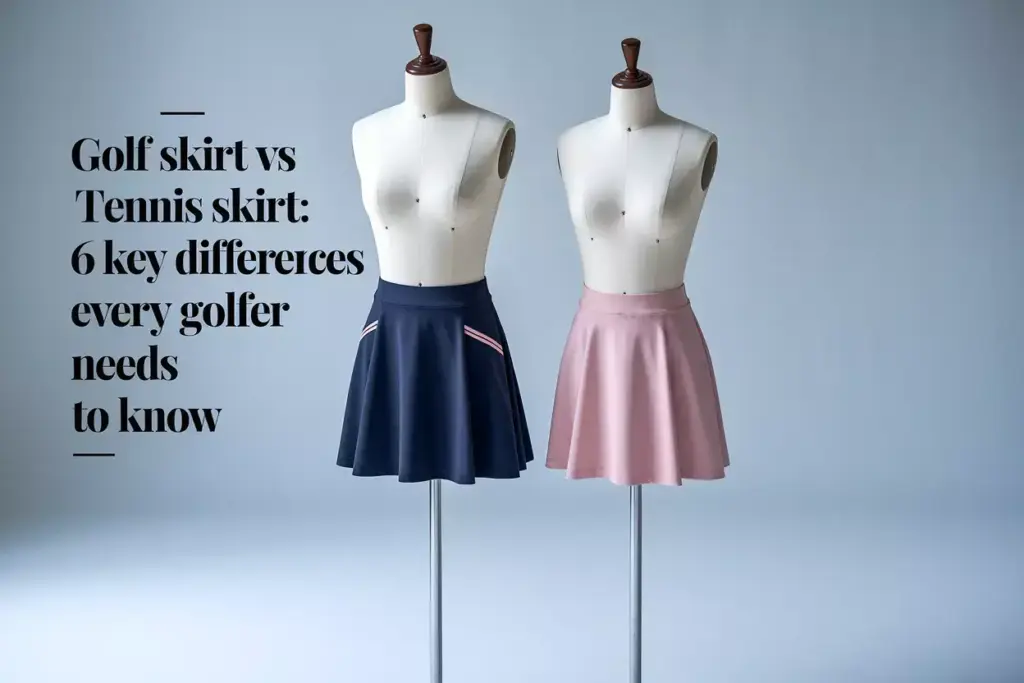
The world of athletic skirts has evolved dramatically over the past decade. What once seemed like simple pieces of fabric have transformed into highly specialized garments engineered for specific sports. While both golf and tennis skirts serve the purpose of keeping female athletes comfortable and stylish, their design philosophies differ significantly based on the unique demands of each sport.
Key Takeaways
- Length matters: Golf skirts typically measure 16-18 inches, while tennis skirts range from 11-14 inches due to different sport requirements and dress codes
- Pocket placement is strategic: Golf skirts feature specialized ball pockets and tee holders, whereas tennis skirts focus on ball storage during play
- Fabric technology differs: Golf skirts prioritize UV protection and weather resistance, while tennis skirts emphasize moisture-wicking and quick-dry properties
- Built-in shorts vary: Golf skirts often include longer compression shorts for modesty during swings, while tennis skirts have shorter, lighter built-ins
- Movement requirements: Golf skirts accommodate rotational swing movements, while tennis skirts allow for explosive lateral and vertical movements
Understanding the Foundation: Why Sport-Specific Design Matters
Before diving into the specific differences that make up our Golf Skirt vs Tennis Skirt: 6 Key Differences Every Golfer Needs to Know guide, it’s essential to understand why these distinctions exist. Each sport demands unique movements, follows different etiquette standards, and presents distinct environmental challenges.
Golf requires precise, controlled movements with significant torso rotation during swings. Players spend 4-5 hours outdoors, often walking several miles across varied terrain. The sport maintains traditional dress codes that emphasize modesty and professionalism.
Tennis, conversely, demands explosive movements in all directions—quick sprints, sudden stops, high jumps, and deep lunges. Matches can last anywhere from one to three hours with intense physical exertion throughout. The sport has embraced more progressive athletic wear that prioritizes performance over tradition.
These fundamental differences drive every design decision manufacturers make when creating sport-specific skirts.
1. Length and Coverage: The Most Visible Difference
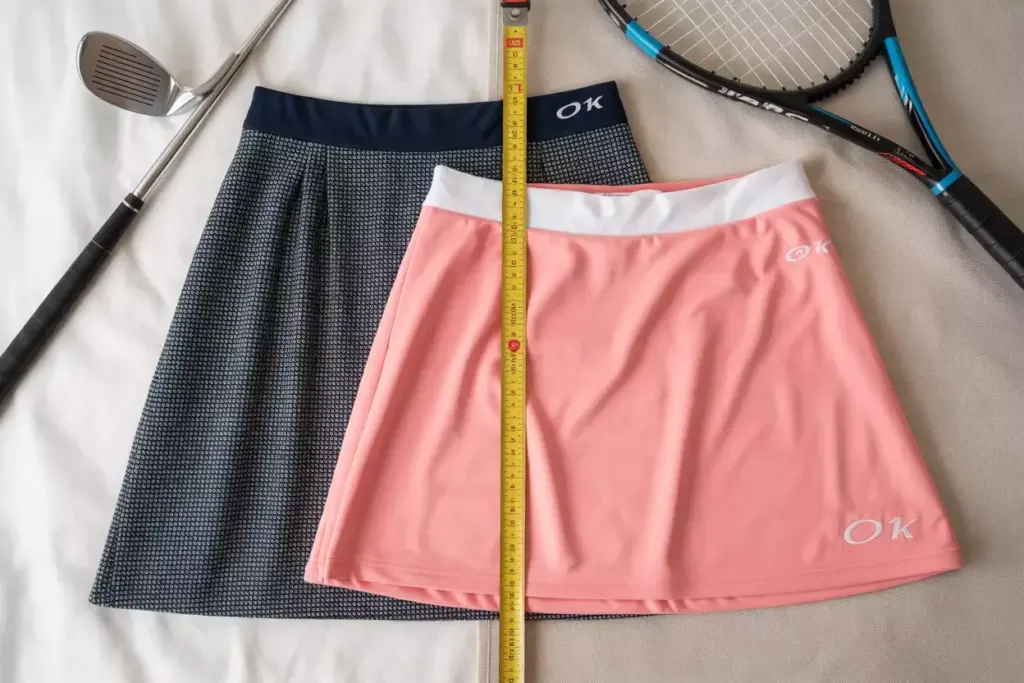
The most immediately noticeable distinction in our Golf Skirt vs Tennis Skirt: 6 Key Differences Every Golfer Needs to Know comparison is length. This isn’t merely about fashion preferences—it’s about functionality and sport-specific requirements.
Golf Skirt Length Standards
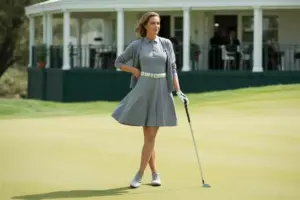
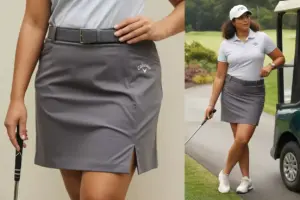
Golf skirts typically measure 16-18 inches from waist to hem, though some extend to 19 inches for players preferring maximum coverage. This length serves multiple purposes:
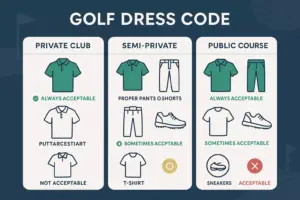
- Dress code compliance: Most golf courses maintain strict dress codes requiring skirts to reach mid-thigh or longer [1]
- Swing mechanics: Longer length provides coverage during the golf swing’s follow-through motion
- Sun protection: Extended coverage protects more leg area during long rounds
- Professional appearance: Maintains the sport’s traditional emphasis on conservative, elegant attire
Tennis Skirt Length Specifications
Tennis skirts range from 11-14 inches in length, with many competitive players preferring the shorter end of this spectrum. The reduced length offers several advantages:
- Unrestricted movement: Shorter length eliminates fabric interference during serves, volleys, and quick directional changes
- Cooling efficiency: Less fabric coverage promotes better heat dissipation during intense rallies
- Athletic performance: Reduced weight and bulk enhance speed and agility
- Modern sport evolution: Reflects tennis’s embrace of performance-first design principles
The Coverage Compromise
This length difference represents each sport’s unique balance between modesty, tradition, and performance. Golf prioritizes coverage and tradition, while tennis emphasizes unrestricted athletic performance.
2. Pocket Design and Placement: Functionality Meets Sport Requirements
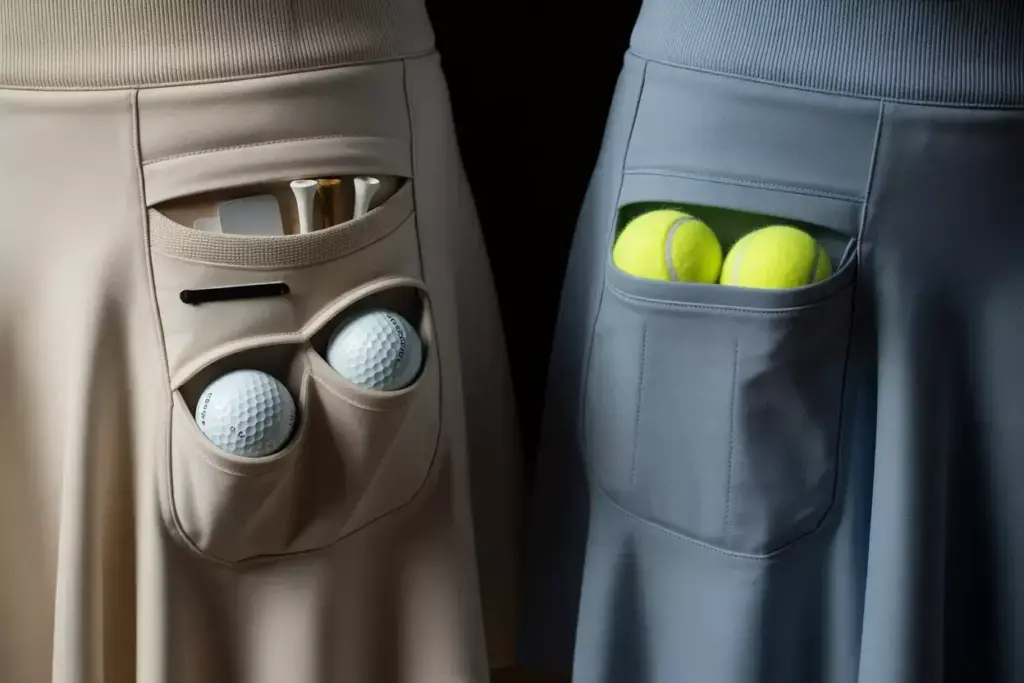
Perhaps no feature better illustrates the Golf Skirt vs Tennis Skirt: 6 Key Differences Every Golfer Needs to Know than pocket design. Each sport’s equipment needs drive dramatically different pocket configurations.
Golf Skirt Pocket Innovation
Modern golf skirts feature sophisticated pocket systems designed for the golfer’s specific needs:
Ball Pockets:
- Usually located on the back waistband or side seams
- Designed to hold 2-3 golf balls securely without bouncing
- Often include elastic or magnetic closures to prevent loss during swings
Tee Storage:
- Small, specialized pockets or loops for golf tees
- Typically positioned for easy access during play
- Some designs include magnetic tee holders
Scorecard Compartments:
- Flat pockets sized specifically for scorecards and pencils
- Usually positioned to avoid interference with swing mechanics
- Often include water-resistant linings
Multi-Purpose Pockets:
- Standard pockets for personal items like keys, phone, or gloves
- Strategically placed to maintain skirt silhouette
- Often include secure closures for walking the course
Tennis Skirt Pocket Essentials
Tennis skirt pockets focus on immediate game needs with different priorities:
Ball Storage:
- Designed to hold 1-2 tennis balls during serves
- Positioned for quick, easy access between points
- Often integrated into built-in shorts rather than skirt exterior
Minimalist Approach:
- Fewer pockets overall to reduce bulk and weight
- Focus on essential storage only
- Streamlined design for maximum movement freedom
Strategic Placement:
- Pockets positioned to avoid interference with racket swings
- Easy access during quick game transitions
- Secure enough to prevent ball loss during explosive movements
The Equipment Factor
The pocket differences reflect each sport’s equipment reality. Golfers carry multiple balls, tees, and accessories throughout their round, while tennis players need immediate access to just one or two balls during service games.
3. Fabric Technology and Weather Considerations
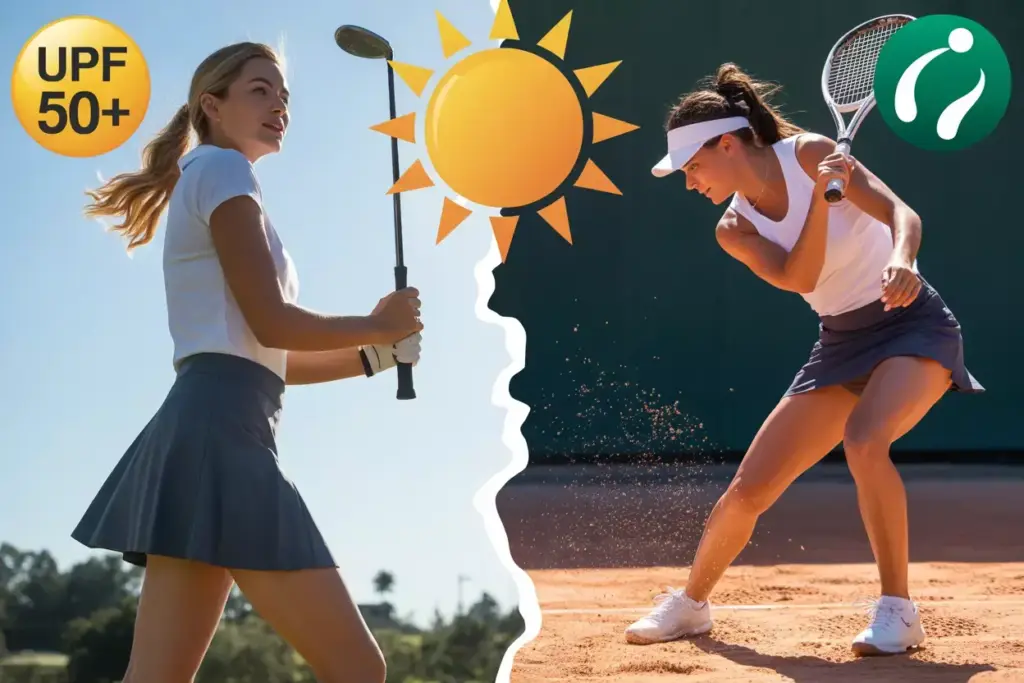
The third major difference in our Golf Skirt vs Tennis Skirt: 6 Key Differences Every Golfer Needs to Know analysis involves fabric technology and weather protection features.
Golf Skirt Fabric Priorities
Golf skirts emphasize long-term comfort and protection during extended outdoor exposure:
UV Protection:
- UPF ratings typically range from 30-50+
- Specialized fabric weaves block harmful sun rays
- Essential for 4-5 hour rounds in direct sunlight
- Often includes chemical UV treatments for enhanced protection
Weather Resistance:
- Water-resistant or quick-dry treatments for morning dew and light rain
- Wind-resistant fabrics to maintain modesty and comfort
- Temperature regulation for varying weather conditions
- Wrinkle-resistant properties for travel and storage
Durability Features:
- Reinforced stress points for repeated swing motions
- Fade-resistant colors for long-term appearance
- Easy-care fabrics for frequent washing
- Stretch recovery to maintain shape over time
Tennis Skirt Fabric Focus
Tennis skirts prioritize immediate performance and cooling during intense physical activity:
Moisture Management:
- Advanced moisture-wicking properties to pull sweat away from skin
- Quick-dry technology for rapid moisture evaporation
- Antimicrobial treatments to prevent odor during long matches
- Breathable fabric construction for maximum airflow
Performance Enhancement:
- Four-way stretch for unrestricted movement
- Lightweight construction to reduce fatigue
- Compression elements for muscle support
- Seamless or flat-seam construction to prevent chafing
Cooling Technology:
- Mesh panels or ventilation zones for enhanced airflow
- Cooling fibers that actively reduce skin temperature
- Lightweight materials that don’t trap heat
- Strategic fabric placement for maximum cooling efficiency
Climate Considerations
These fabric differences reflect each sport’s environmental challenges. Golfers face prolonged sun exposure and variable weather conditions, while tennis players battle intense heat generation from explosive movements and quick rallies.
4. Built-in Shorts: Coverage and Compression Variations
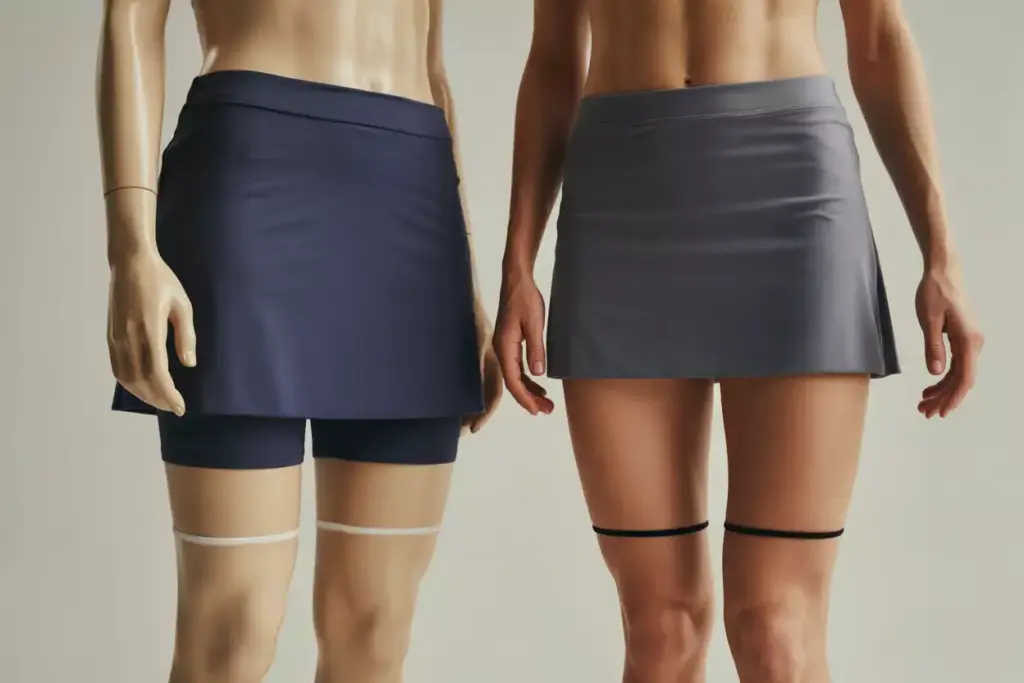
The fourth key difference in our Golf Skirt vs Tennis Skirt: 6 Key Differences Every Golfer Needs to Know examination focuses on the built-in shorts that have become standard in both sports.
Golf Skirt Built-in Shorts
Golf skirts typically feature longer, more substantial built-in shorts designed for specific golf requirements:
Length Specifications:
- Usually 4-6 inches in length
- Extend well beyond the skirt hem for complete coverage
- Provide modesty during golf swings and course navigation
- Offer sun protection for upper thigh areas
Compression and Support:
- Moderate compression for comfort during long walks
- Support without restriction during swing mechanics
- Moisture-wicking properties for all-day comfort
- Seamless construction to prevent chafing over 18 holes
Functional Features:
- Often include additional pockets for ball storage
- May feature silicone grippers to prevent riding up
- Designed to maintain position during golf swings
- Sometimes include specialized padding for cart comfort
Tennis Skirt Built-in Shorts
Tennis skirts incorporate shorter, lighter built-in shorts optimized for athletic performance:
Performance Design:
- Typically 2-4 inches in length
- Minimal bulk for maximum movement freedom
- High-stretch materials for explosive movements
- Ultra-lightweight construction
Athletic Features:
- High compression for muscle support during intense rallies
- Advanced moisture-wicking for sweat management
- Seamless construction for comfort during quick movements
- Often include ball pockets integrated into the shorts
Movement Optimization:
- Designed for lateral movements, jumps, and quick direction changes
- Minimal fabric to reduce weight and bulk
- Strategic seam placement to enhance flexibility
- Quick-dry properties for between-set comfort
The Modesty vs. Performance Balance
This difference highlights each sport’s approach to balancing coverage with performance. Golf prioritizes modesty and all-day comfort, while tennis emphasizes athletic performance and minimal interference.
5. Waistband Design and Fit Philosophy
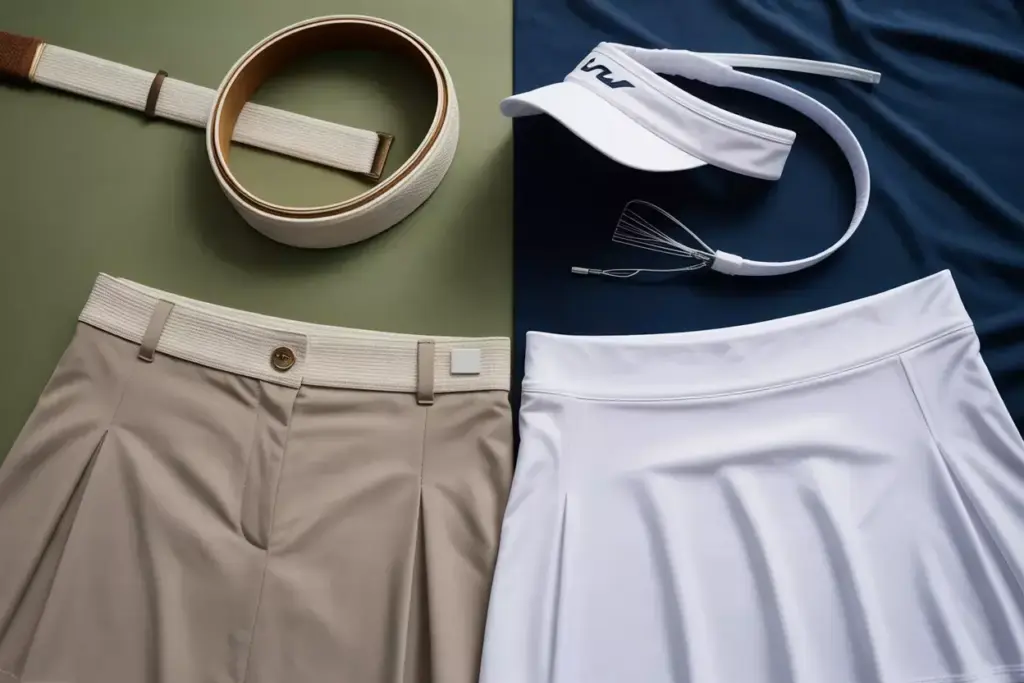
The fifth distinction in our Golf Skirt vs Tennis Skirt: 6 Key Differences Every Golfer Needs to Know analysis involves waistband construction and fit philosophy.
Golf Skirt Waistband Features
Golf skirts emphasize comfort and stability for extended wear:
Comfort-First Design:
- Wider waistbands (typically 2-3 inches) for weight distribution
- Softer, more forgiving materials for all-day comfort
- Minimal compression to prevent discomfort during long rounds
- Often include belt loops for traditional golf belt accessories
Stability Features:
- Designed to stay in place during golf swings
- May include silicone grippers or stay-put technology
- Structured enough to support pocket contents without sagging
- Maintains position during walking and cart riding
Traditional Elements:
- Classic styling that complements golf’s traditional aesthetic
- Often includes button, zipper, or hook-and-eye closures
- May feature logo placement consistent with golf fashion
- Designed to work with tucked-in polo shirts
Tennis Skirt Waistband Innovation
Tennis skirts focus on performance and flexibility:
Athletic Performance:
- Narrower waistbands (1-2 inches) for freedom of movement
- High-stretch materials that move with the body
- Compression elements for core support during play
- Seamless or low-profile construction
Movement-Focused Design:
- Engineered to flex during serves, volleys, and groundstrokes
- Lightweight materials that don’t add bulk
- Often feature wide, flat waistbands that distribute pressure
- May include drawstring or elastic-only closures
Modern Athletic Aesthetic:
- Clean, streamlined appearance
- Minimal hardware or closures
- Logo placement optimized for athletic wear
- Designed to work with fitted athletic tops
Fit Philosophy Differences
These waistband differences reflect fundamental fit philosophies: golf skirts prioritize sustained comfort, while tennis skirts emphasize athletic performance and body-hugging fit.
6. Price Points and Value Considerations
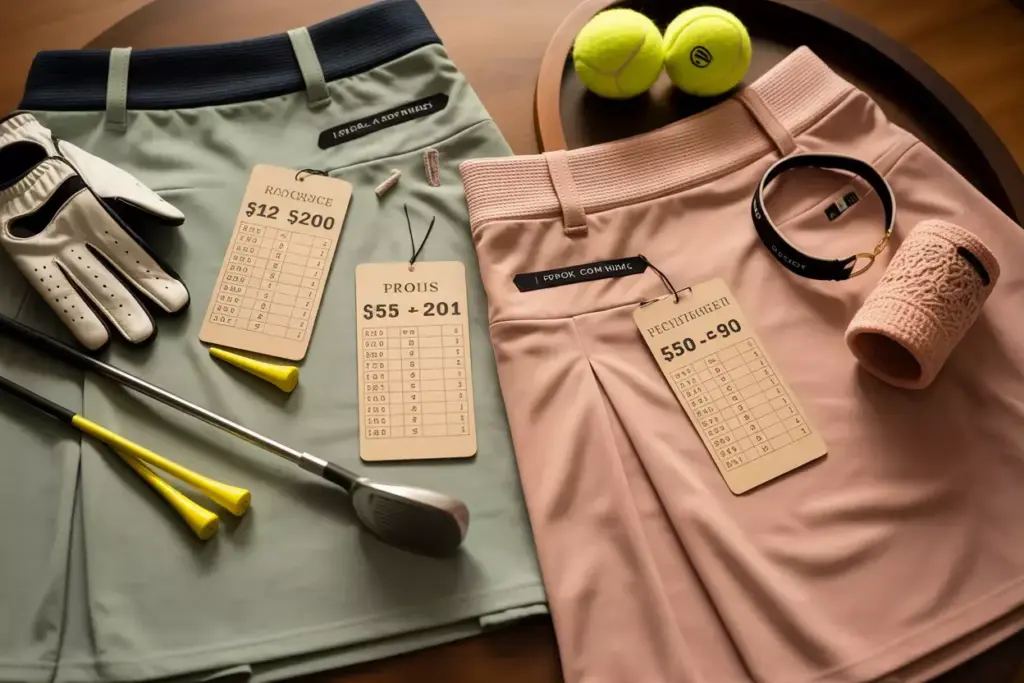
The final difference in our Golf Skirt vs Tennis Skirt: 6 Key Differences Every Golfer Needs to Know guide examines pricing and value propositions.
Golf Skirt Pricing Structure
Golf skirts typically command higher price points due to several factors:
Premium Materials:
- Advanced UV protection technologies increase manufacturing costs
- Weather-resistant treatments add to production expenses
- Longer-lasting fabrics justify higher initial investment
- Specialized pocket systems require additional engineering
Price Ranges:
- Entry-level: $40-70 for basic designs with standard features
- Mid-range: $70-120 for enhanced UV protection and better fabrics
- Premium: $120-200+ for designer brands with advanced technologies
- Luxury: $200+ for high-end materials and exclusive designs
Value Factors:
- Longer lifespan due to durable construction
- Versatility for both golf and casual wear
- Advanced sun protection for health benefits
- Comprehensive pocket systems add functionality value
Tennis Skirt Economics
Tennis skirts often feature more competitive pricing despite advanced performance features:
Performance Focus:
- Emphasis on moisture-wicking over UV protection reduces some costs
- Simpler pocket systems lower manufacturing complexity
- Shorter length requires less fabric
- Mass market appeal drives competitive pricing
Price Ranges:
- Entry-level: $25-50 for basic athletic designs
- Mid-range: $50-90 for enhanced performance features
- Premium: $90-150 for professional-grade materials
- Designer: $150+ for fashion-forward athletic brands
Value Considerations:
- Lower initial cost but may require more frequent replacement
- Specialized for tennis performance
- Fashion-forward designs with broader athletic appeal
- Advanced moisture management for intense activities
Investment Decision Factors
When choosing between golf and tennis skirts, consider:
- Frequency of use: How often will you wear the skirt?
- Multi-sport versatility: Do you play both sports?
- Climate considerations: Will you need UV protection?
- Durability requirements: How long do you expect the skirt to last?
- Performance priorities: What features matter most for your activities?
Making the Right Choice: Practical Recommendations
Understanding these six key differences empowers golfers to make informed decisions about their athletic wear investments. Here are practical recommendations based on different scenarios:
For Dedicated Golfers
Choose golf-specific skirts when:
- Playing regularly (2+ times per week)
- Participating in tournaments or club events
- Playing in sunny climates requiring UV protection
- Needing comprehensive pocket systems for equipment
- Prioritizing all-day comfort over athletic performance
For Multi-Sport Athletes
Consider your primary sport and frequency:
- Golf-focused: Invest in 2-3 quality golf skirts and 1 tennis skirt
- Tennis-focused: Build a tennis skirt collection with 1-2 golf options
- Equal participation: Maintain separate collections for optimal performance
For Casual Players
Budget-conscious options:
- Choose versatile designs that work for both sports
- Focus on comfort and basic functionality over advanced features
- Consider entry-level options from reputable athletic brands
- Prioritize fit and basic moisture-wicking over specialized features
For Climate-Specific Needs
Hot, Sunny Climates:
- Prioritize UV protection and cooling technologies
- Golf skirts with UPF 50+ ratings provide superior sun protection
- Look for moisture-wicking properties in both styles
Moderate Climates:
- Focus on versatility and comfort
- Standard moisture-wicking properties sufficient
- Emphasize durability and multi-season wear
Conclusion
The Golf Skirt vs Tennis Skirt: 6 Key Differences Every Golfer Needs to Know comparison reveals that these seemingly similar garments are actually highly specialized pieces of athletic equipment. From length and pocket design to fabric technology and pricing, each difference serves specific sport requirements and player needs.
Golf skirts excel in providing comprehensive coverage, extensive storage solutions, superior UV protection, and all-day comfort for extended outdoor play. Tennis skirts prioritize unrestricted movement, advanced moisture management, lightweight construction, and performance-focused features for intense athletic activity.
Take Action Today:
- Assess your needs: Determine which sport you play most frequently and what features matter most for your playing style
- Try before buying: Visit a specialty athletic retailer to compare fit and feel between golf and tennis skirts
- Invest strategically: Choose 2-3 high-quality pieces rather than many lower-quality options
- Consider climate: Factor in your local weather conditions and sun exposure when selecting fabric technologies
- Read reviews: Research specific brands and models to understand real-world performance and durability
Remember, the right athletic skirt enhances both performance and confidence on the course or court. By understanding these six key differences, golfers can make informed decisions that improve their comfort, functionality, and overall playing experience. Whether you choose golf-specific designs or opt for tennis skirts, prioritize fit, quality, and features that align with your specific athletic needs and playing frequency.
References
[1] Professional Golfers’ Association. “Dress Code Guidelines for Golf Courses.” PGA Guidelines, 2025.